
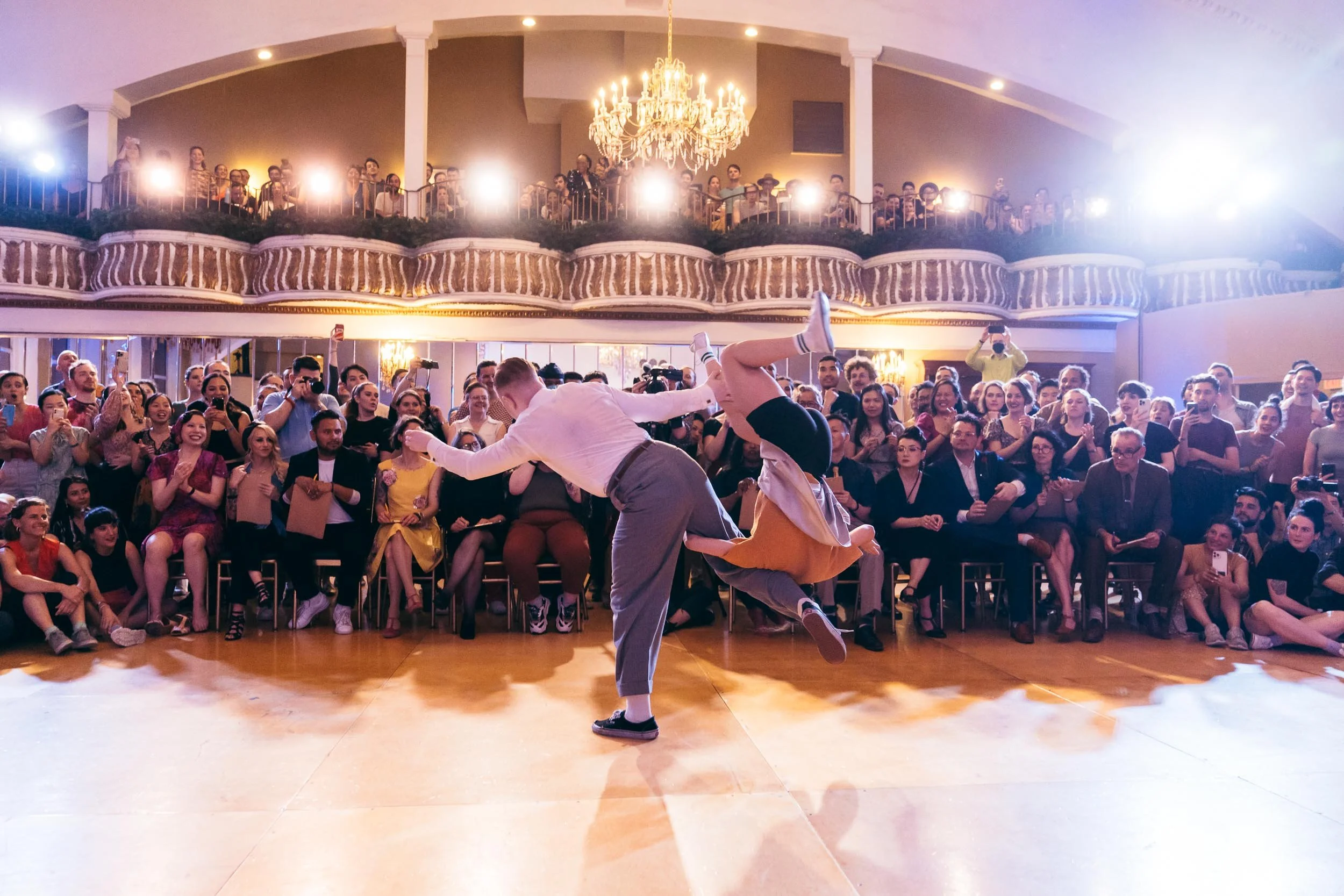
With ILHC returning this year, I thought this would be a good opportunity to take you behind the scenes of one specific type of contest: The Strictly Lindy Hop divisions.
I’m mostly known these days as a photographer, but I also worked for The International Lindy Hop Championships from 2008 through 2017. I had a bunch of titles (event manager, logistics coordinator, chief of staff), but essentially my role was to make the event happen. The event directors from 2008-2024, Tena Morales and Sylvia Sykes as well as Nina Gilkenson in the early years, provided the overall vision of the event and made all the major decisions. Then I, along with Yvonne Evvard who served as head of registration, put those pieces together into a cohesive weekend experience. For example, the event directors would decide what contests to have each year and then leave the more granular choices to me, like when the preliminary rounds would take place or how fast each of the divisions were.
What is a Strictly Lindy Hop contest?
Other than a celebration of all things that make life worth living, it is the name of a dance competition where the main rule is right there in the title. As a person with free will, you can do balboa, collegiate shag or flamenco in these contests, but the organizer reserves the right to tap the sign, thank you for giving them your money and disqualify you for not following the one simple rule that also serves as the name of the competition.
If you're here, I assume you know about the lindy hop. The community has different kinds of competitions for the dance. In some you may randomly change partners; in others you choose your own music and maybe choreograph a routine to it. Typically, in strictly lindy hop contests, you enter with a partner of your own choosing, but dance to whatever music is chosen by the organizer. Usually these contests are done to Swing era jazz music, but even if they play Charlie XCS or Kendrick Lamar, you just have to read the name of the competition to know what dance you will be judged on.
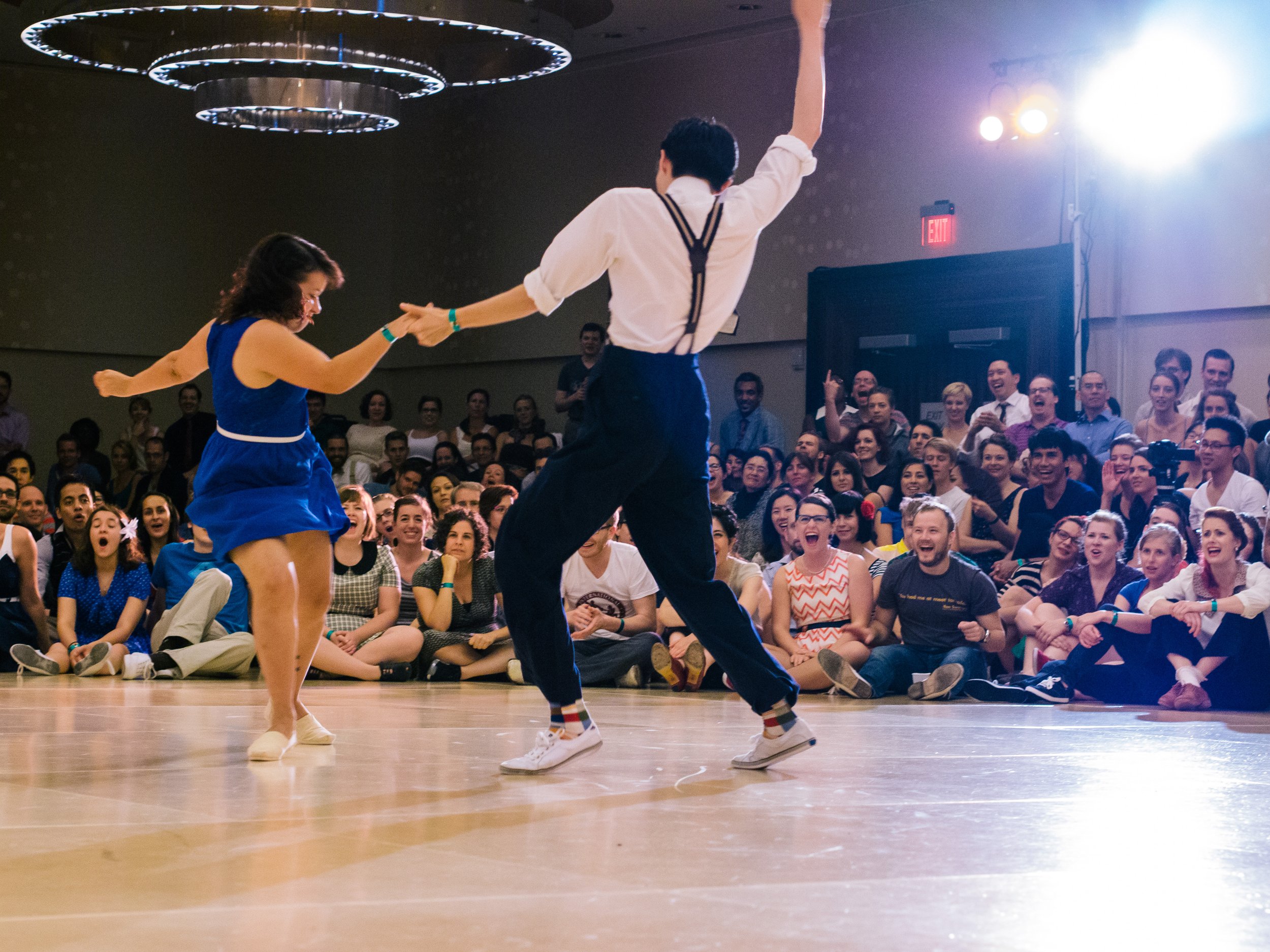
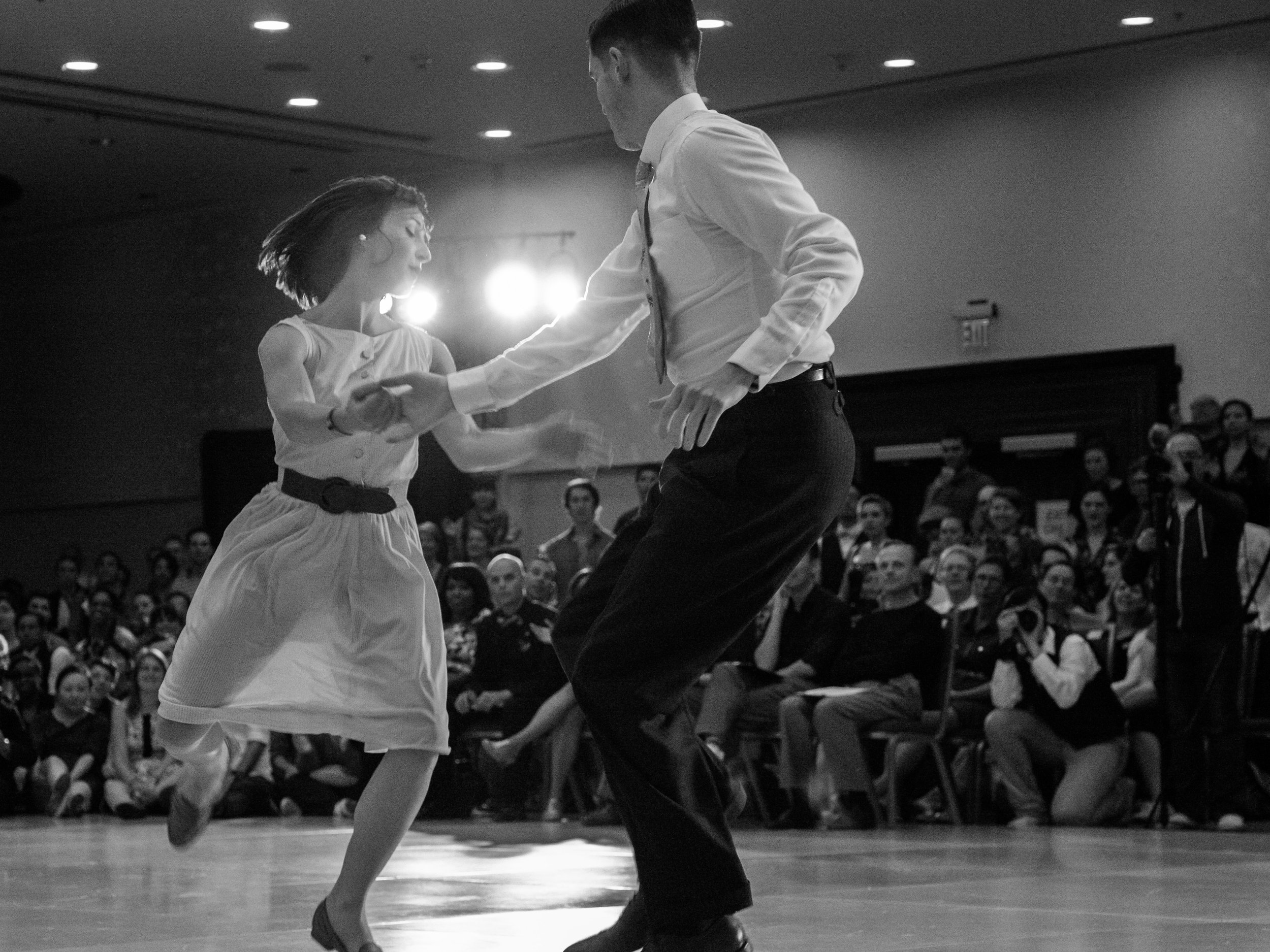
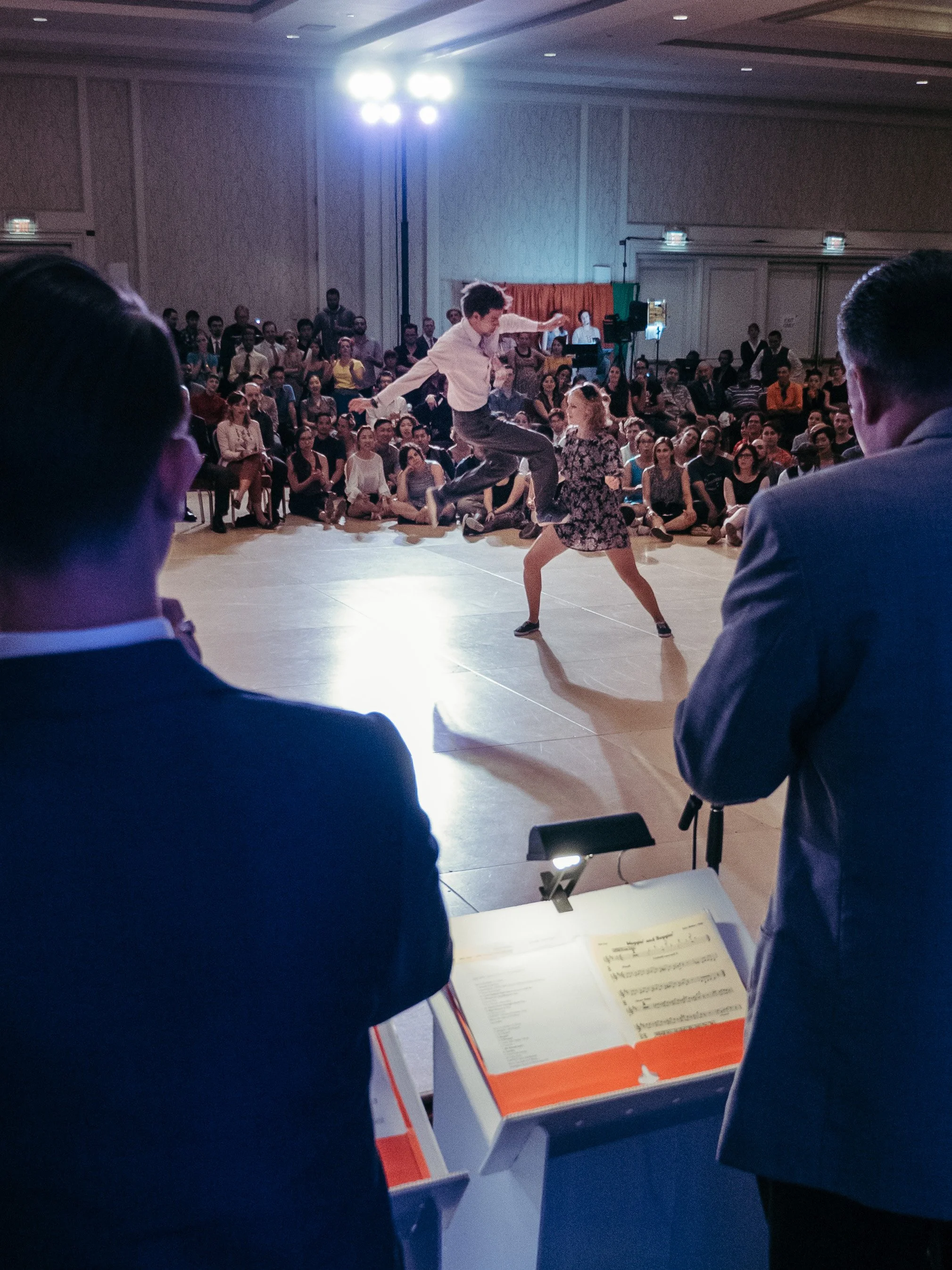
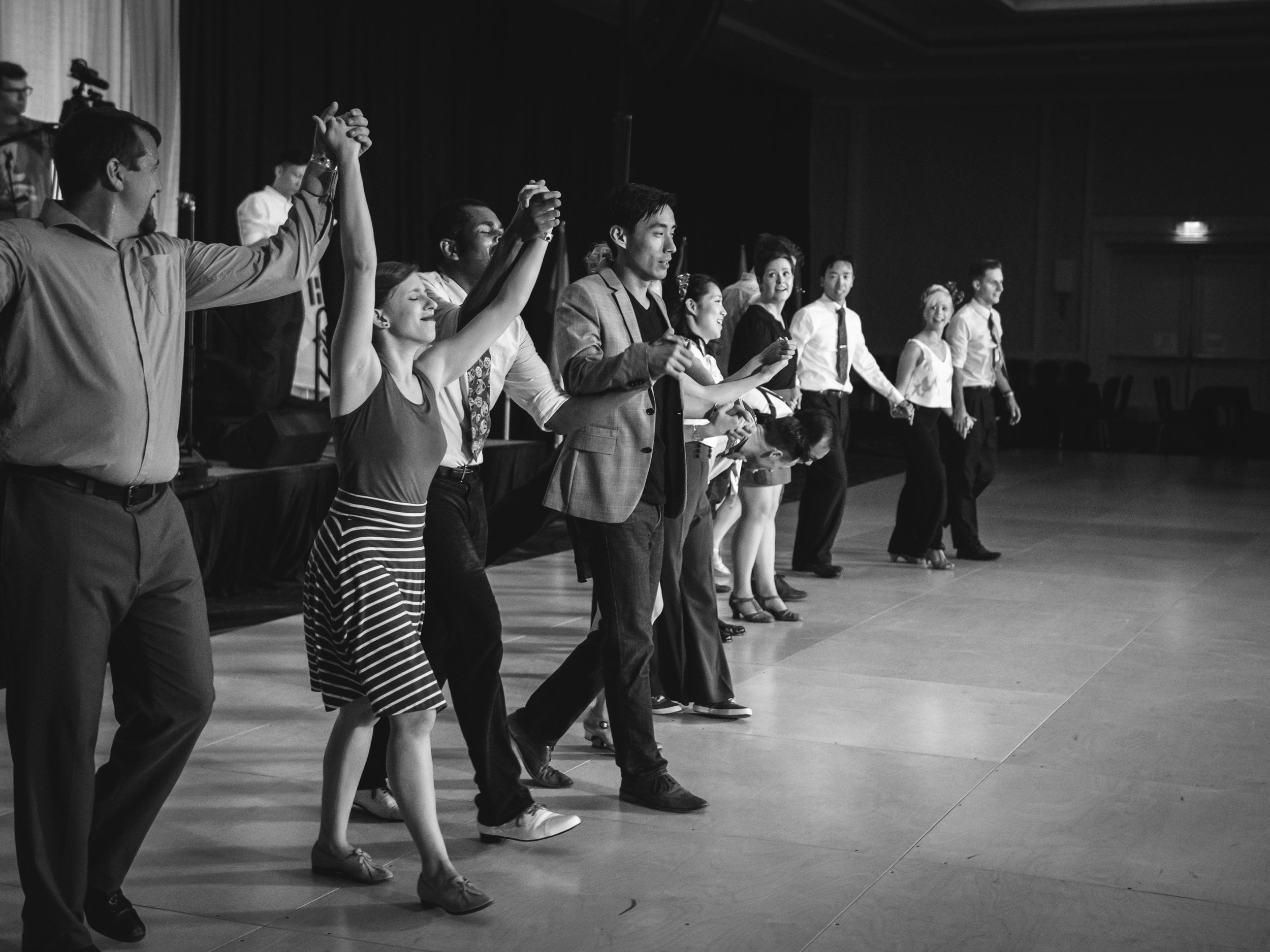
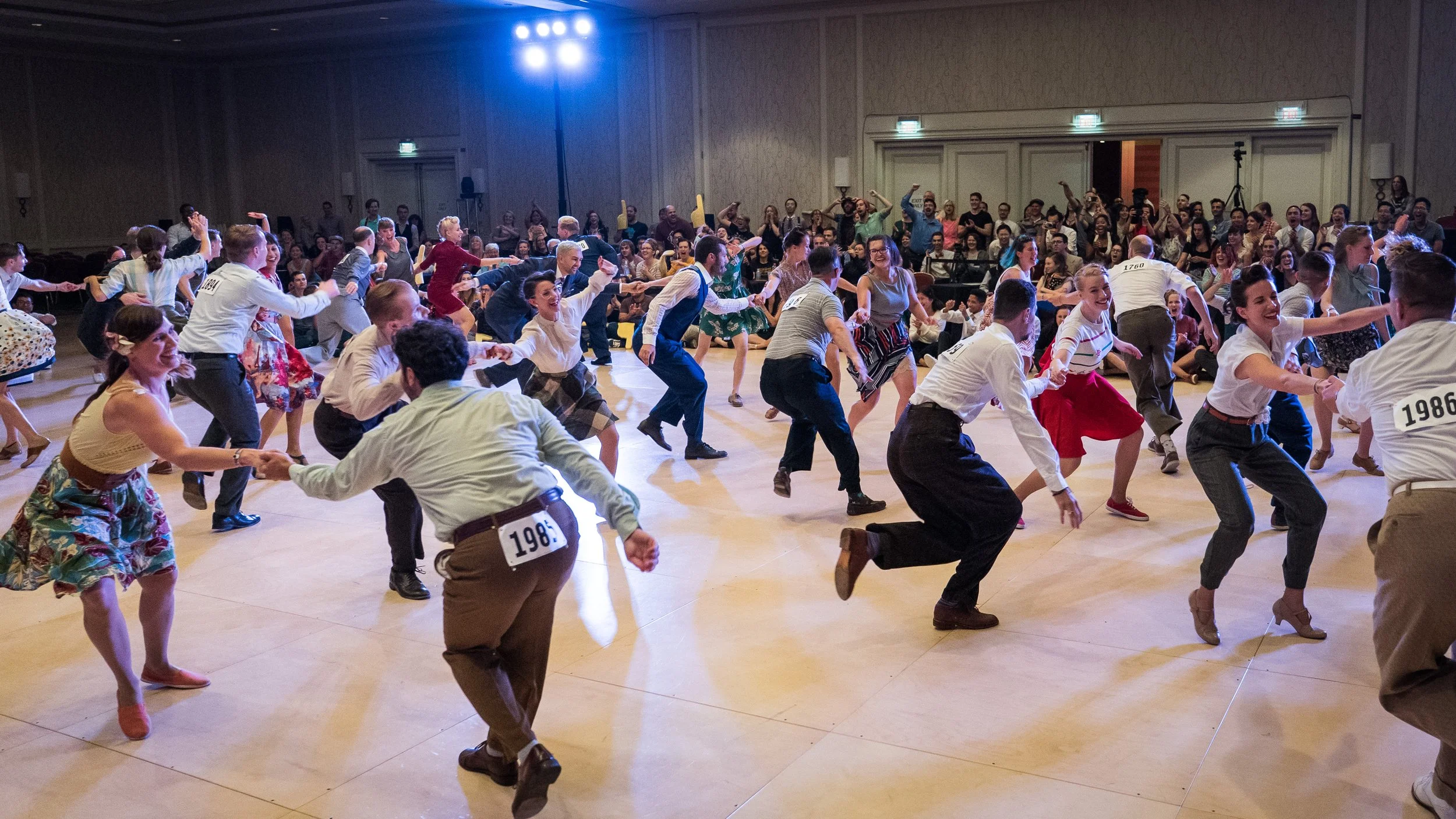
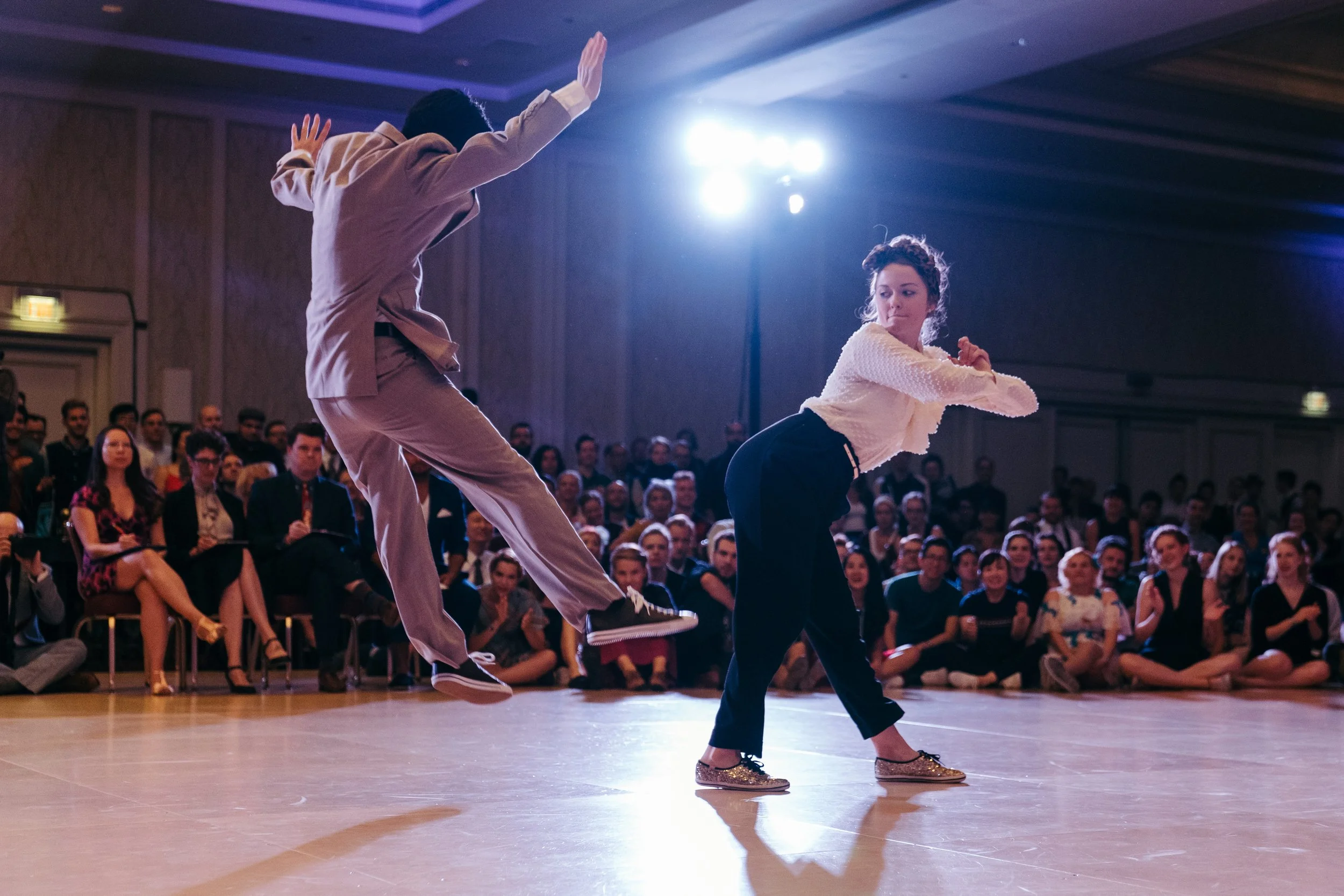
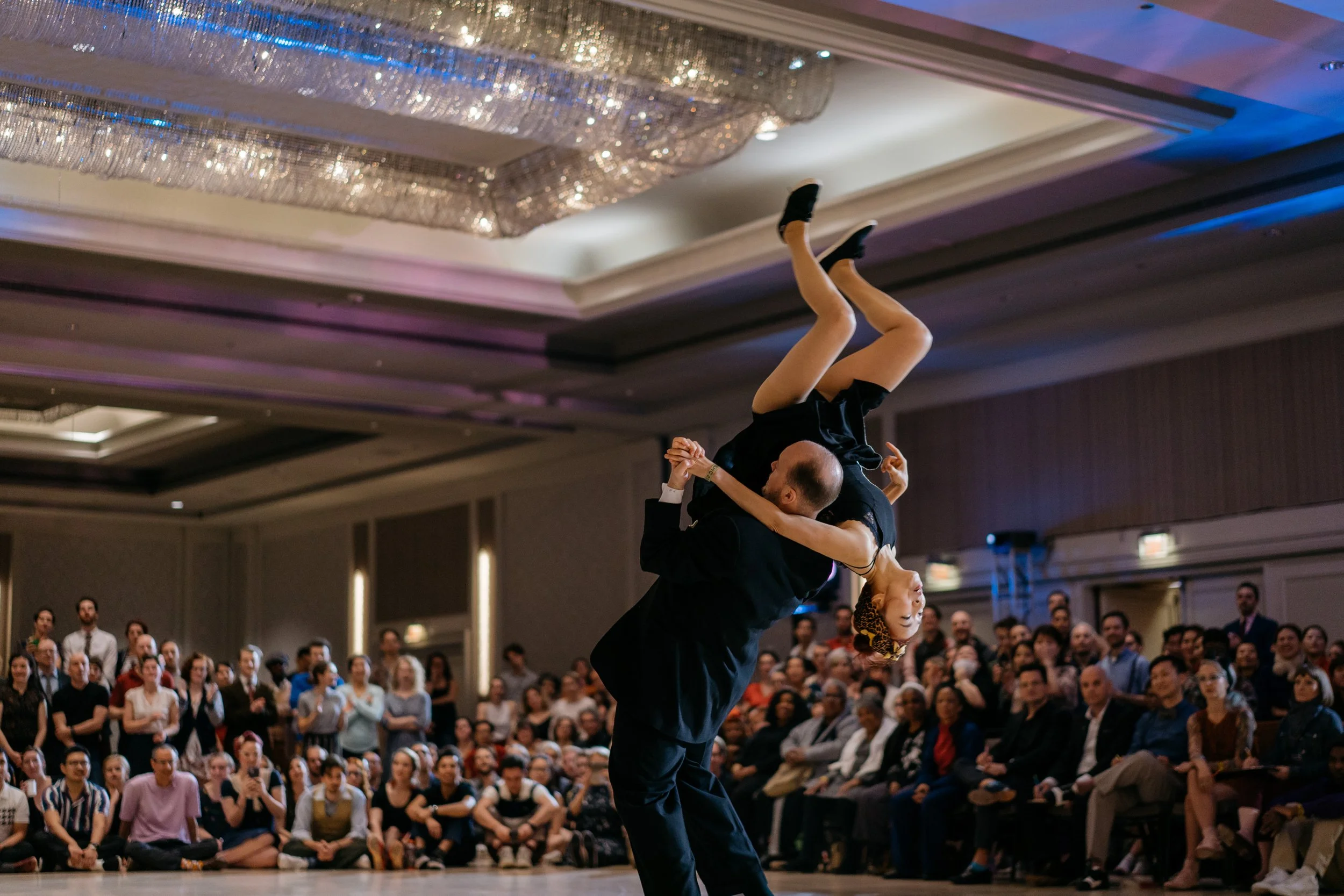
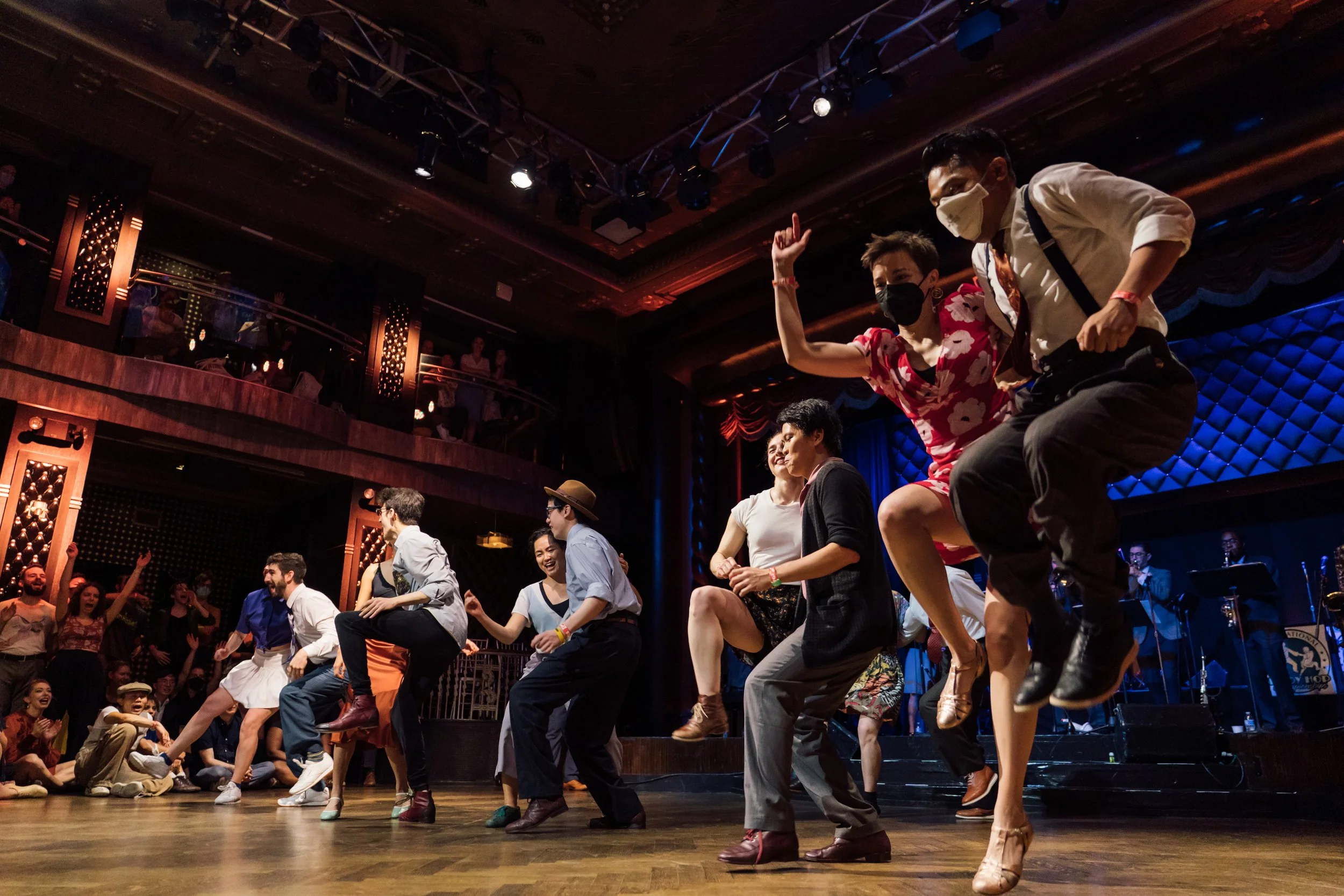
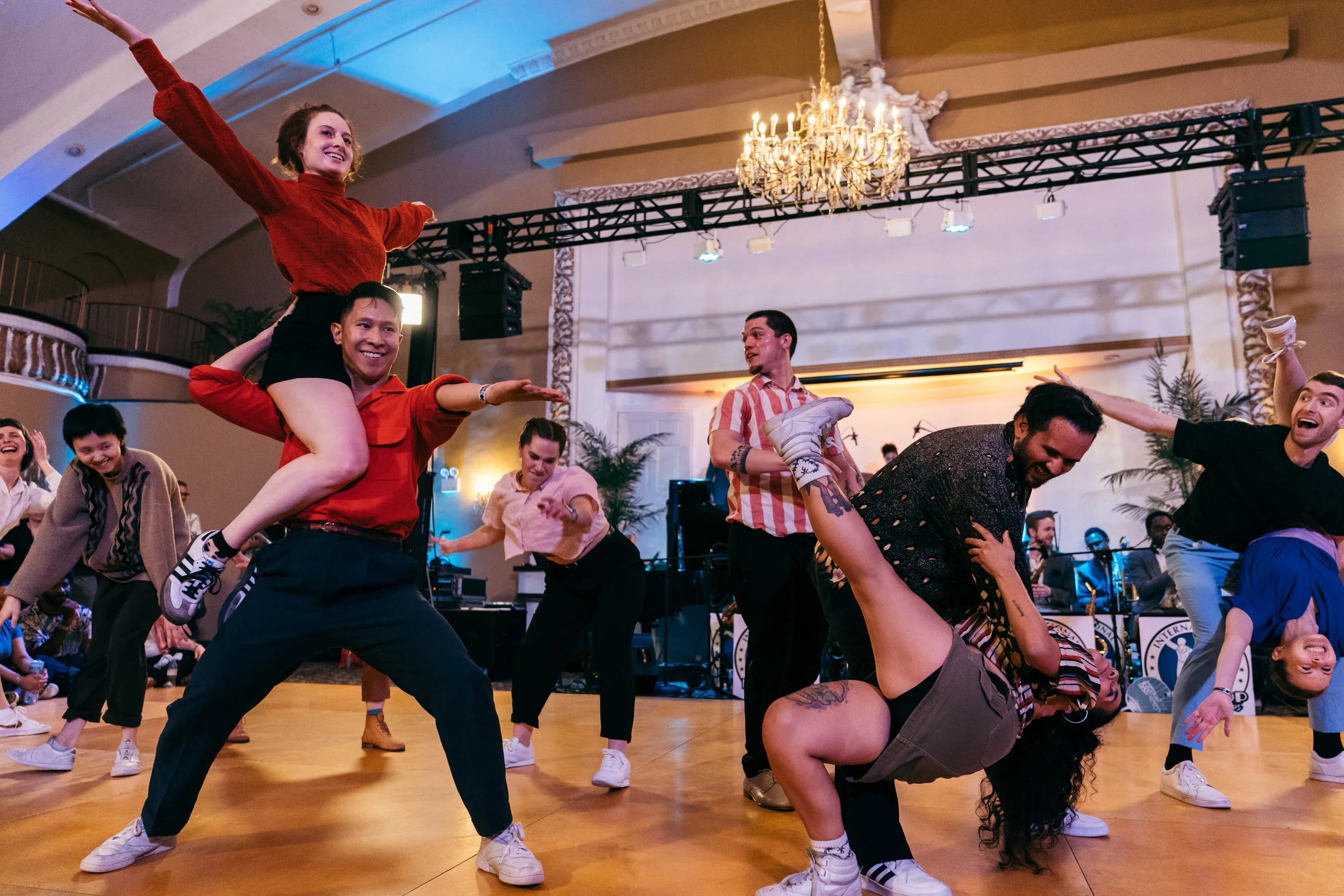
We got the phrase “strictly lindy hop” from west coast swing events. I would guess they got it from ballroom dance competitions, but that is beyond the scope of this essay. As WCS events grew in the 80s and 90s and began attracting dancers from other dance communities, it was an easy way to delineate all the different contests. Some of the larger events had competitions for Carolina Shag, DC Hand Dance, Hustle, or Lindy Hop. The word “strictly” was often used interchangeably with the phrase “Just Dance” from event to event (E.g. Just Dance Carolina Shag, Strictly Hustle, etc) They all mean the same thing: you choose your partner, the event chooses the song, and you dance the dance in the name.
As time has passed, it has become more common for people to use "strictly” as a noun as opposed to its actual role modifying the dance right after it. I’ve noticed this happen in both WCS and lindy hop. This is probably because it is a convenient shorthand that has evolved over time as the dances spread throughout the world, bringing many non-English or ESL speakers into the community. It’s gotten to a point that even the ILHC website now calls them “Strictly Contests.” I will not be doing that for the rest of this essay because I have some self respect.
Strictly lindy hop competitions can come in different forms, but I'm here to talk about the way they are done at the International Lindy Hop Championships. At Camp Hollywood they have Open and Amateur Lindy contests that are essentially the same thing. At the Ultimate Lindy Hop Showdown they used to have three contests based on tempos called Freedom (slow), Revolution (medium) and Liberation (fast). This was actually my favorite competition naming convention, but I must confess that I could never remember which name belonged to which tempo.
Strictly ILHC
ILHC began in 2008 featuring a number of contests including two levels of strictly lindy hop divisions: Open and Champions. Both divisions required people to go through a preliminary round earlier in the weekend where judges would select finalists from larger groups of couples. This involved all the couples dancing to a series of songs of varying tempos and styles of swing music.
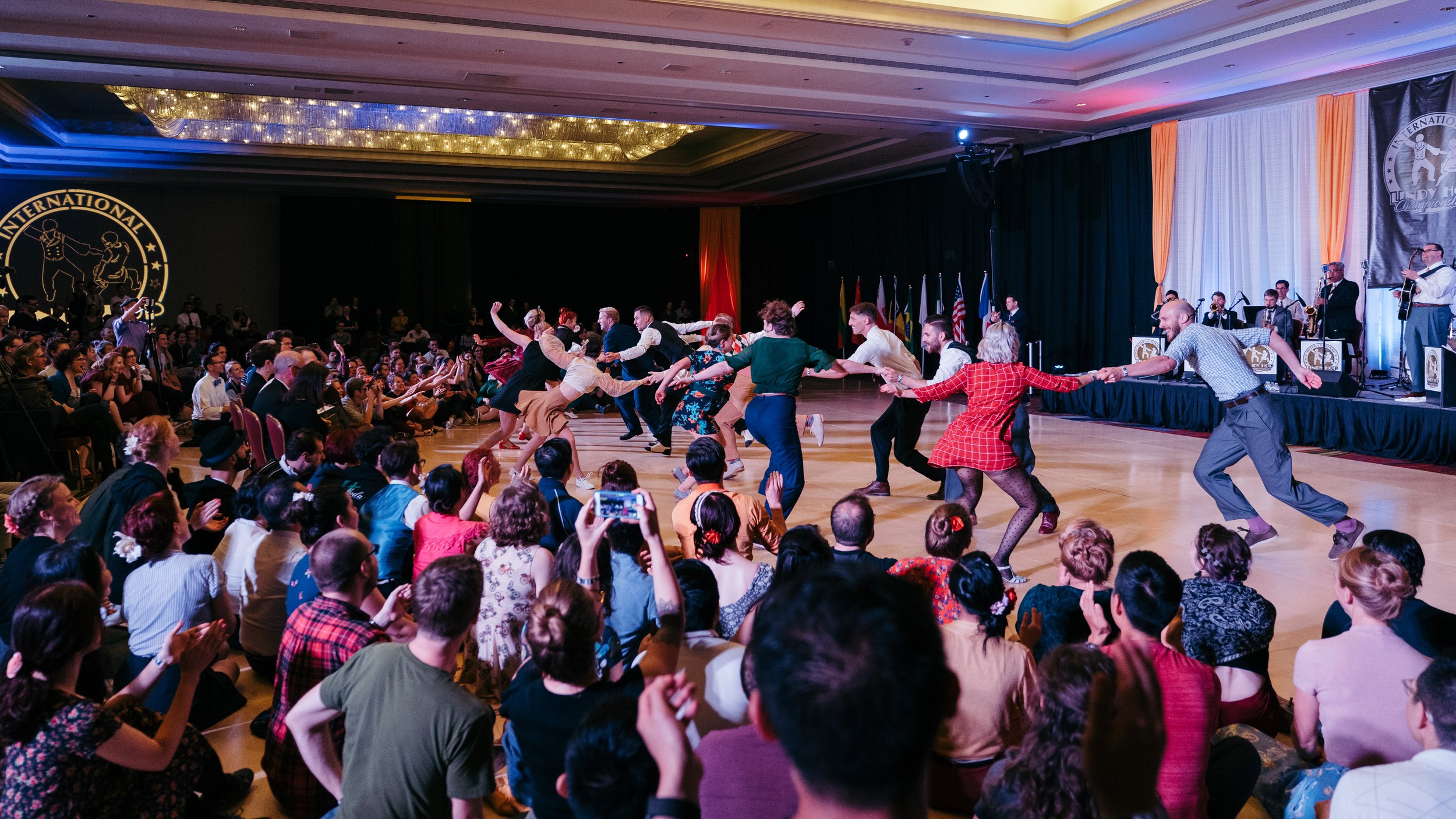
The final round is typically done in prime time in the evening to a live band. It usually starts with an “all skate” where all the finalists warm up to a mid tempo song for about 2 minutes. The main part of the contest is done in a jam format, a.k.a phrase battle, where couples take turns dancing in the spotlight in a predetermined order for a predetermined amount of musical bars. Once everyone is done for the predetermined number of rounds, they all dance together again in a final all skate in the last chorus.
The first strictly Lindy Hop contest at ILHC 2008
I was going to write up a whole history of the development of the jam format/phrase battle, but then I remembered that I already did that.
In the spirit of competitions from the Swing era era, ILHC has few other rules for these contests. The judges can judge on whatever criteria they want to. It is a dance contest. A wise maternal figure once said that it is not what you do in life, it is how you execute it, and that will produce an outcome that echoes through eternity.
The Relative Placement website has a good summary of the scoring system and how preliminary rounds work. When I was working ILHC, Sylvia Sykes, the head judge and co-event director, used to explain that judges were selected mostly based on how much they trusted them and how well that person could articulate a clear point of view about the dance. Ideally, they wanted many different experienced points of view to be represented. She also didn’t formally instruct anyone on how to judge a contest. Other than giving tips on how to write notes quickly, she tended to be fairly hands off about the process of judging.
Quite a few competitors have complained that they didn’t know exactly how they would be judged, but that’s pretty much the point. The very nature of competition breeds some level of conformity over time, so the hope is to combat that by keeping the judging as open ended as possible.
Leveling Up
ILHC's inaugural year featured two levels of strictly lindy hop divisions: Open and Champions. Anyone could enter the Open division regardless of experience level. For Champions, one had to have won or placed at ILHC or in another major competition. This is not very hard to track since there are not that many large events in the entire world that feature these kinds of contests.
The Advanced level was added in 2011 as attendance grew and the level of dancers in the Open division stratified to a clear breaking point. However, there was never been much gatekeeping between who entered open versus advanced. ILHC has relied on competitors to self assess where they want to compete, and it has generally worked out. The reputation of the event tends to intimidate dancers into not punching above their weight class. There has been some concern about more experienced dancers competing in lower levels in order to have a better chance at making the finals. Despite its growth, the lindy hop community is still small enough for people to identify those dancers. My favorite game whenever I see those kinds of potentially questionable dancers is to guess is to guess their intentions. In the few cases where I just ask them, I usually find out that it's low self esteem. Not a lot of swagger in the lindy hop community I’ve discovered.
The first advanced division at ILHC 2011.
In 2012, ILHC added an invitational level. Like the other levels, the champions level always featured a preliminary round that competitors had to go through to qualify for finals regardless of their achievements. Eventually, ILHC had the good problem of attracting more and more elite dancers. Invitationals are very common at west coast swing events. The main reason is to provide a surefire centerpiece for an evening or an entire weekend. They unofficially serve as a failsafe in case the rest of the competitions are not very exciting. It allows an event director to load up at least one contest with dancers they know will put on a good show. Because of that, the invitational level tends to be less of a competition and more of a showcase.
What the invitational is not is a final level that a dancer achieves after dancing a number of years or winning a certain number of competitions. It is inherently a very political division, and not one every organizer is comfortable with because the criteria for them is completely and totally arbitrary to each organizer running them. I remember when a different large event hosted an invitational jack & jill, but opted to only select the people they hired to be instructors at that event to be in that contest despite other very comparable dancers in attendance. The organizers just did not want the smoke of having to pick and choose who was included and who was not.
Invitationals do give an organizer some flexibility in regards to people who don't quite fit the criteria for qualifying. At one west coast swing event, Dawn Hampton was selected to be in the then new champions lindy hop division. Dawn was a revered elder who never competed or performed lindy hop professionally. She was more of a musician and social dancer. But this was also in 1999, and there were not that many lindy hop champion dancers, so the director of that event just made the call to include her and her partner. They came in first place.
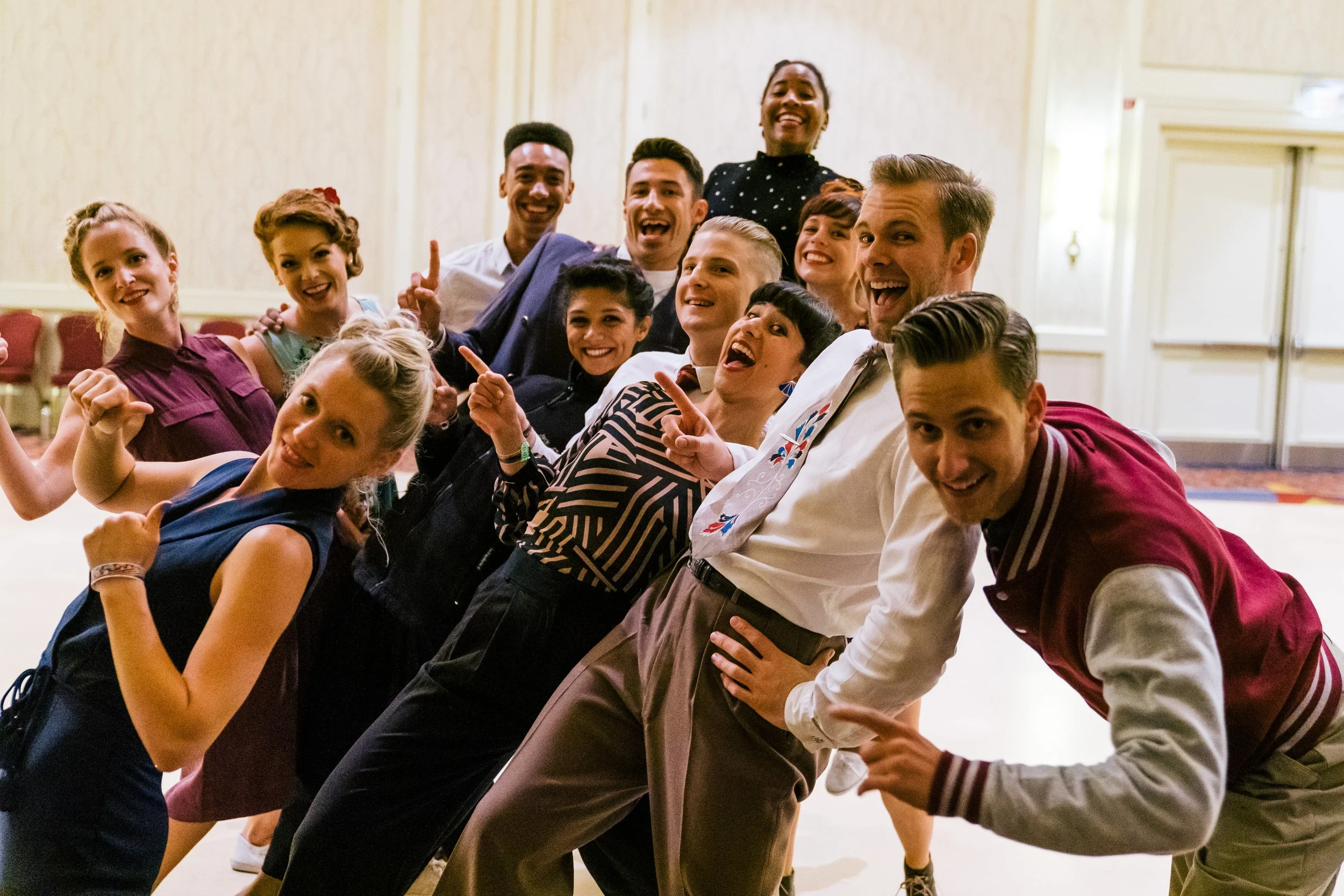
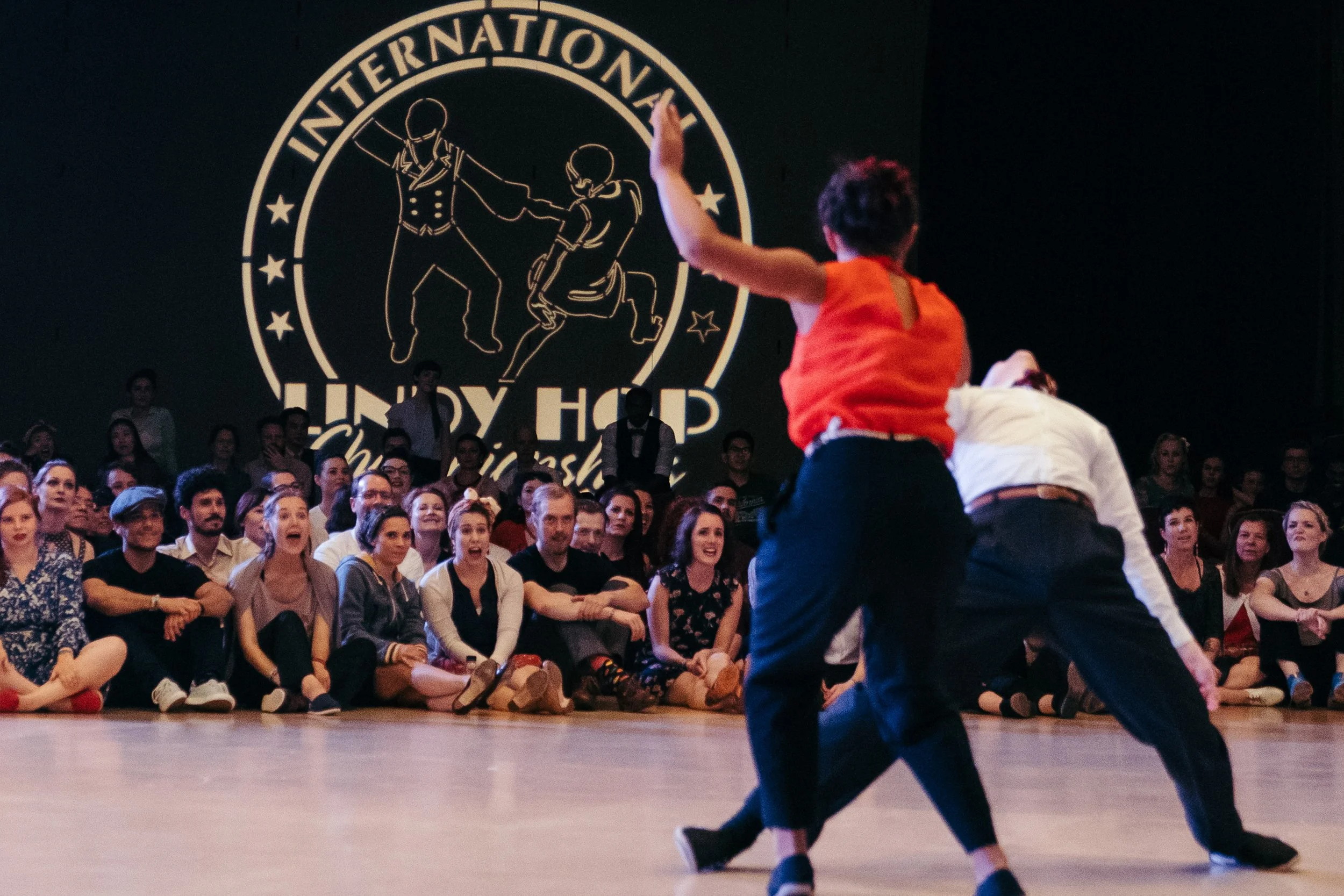
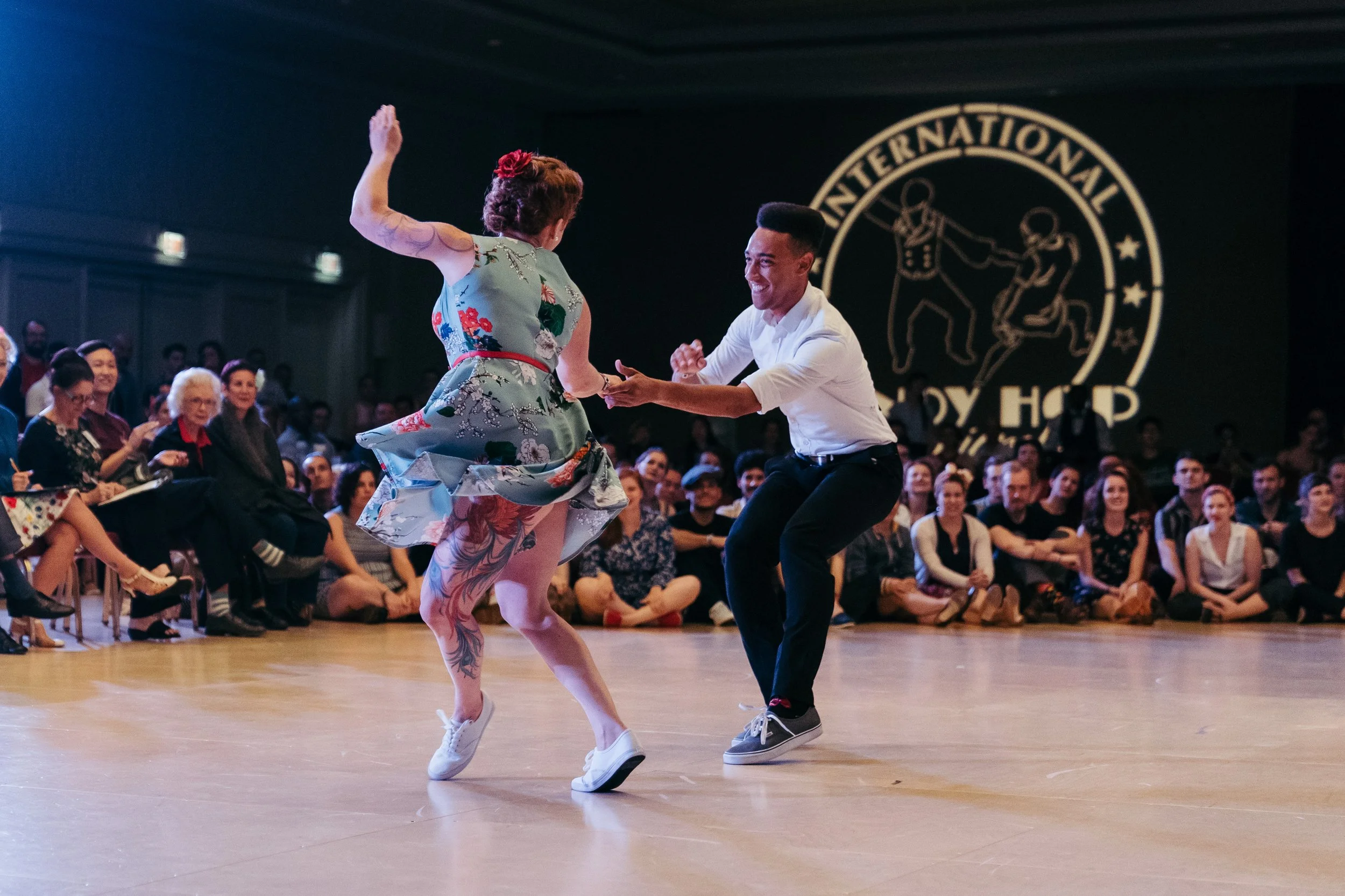
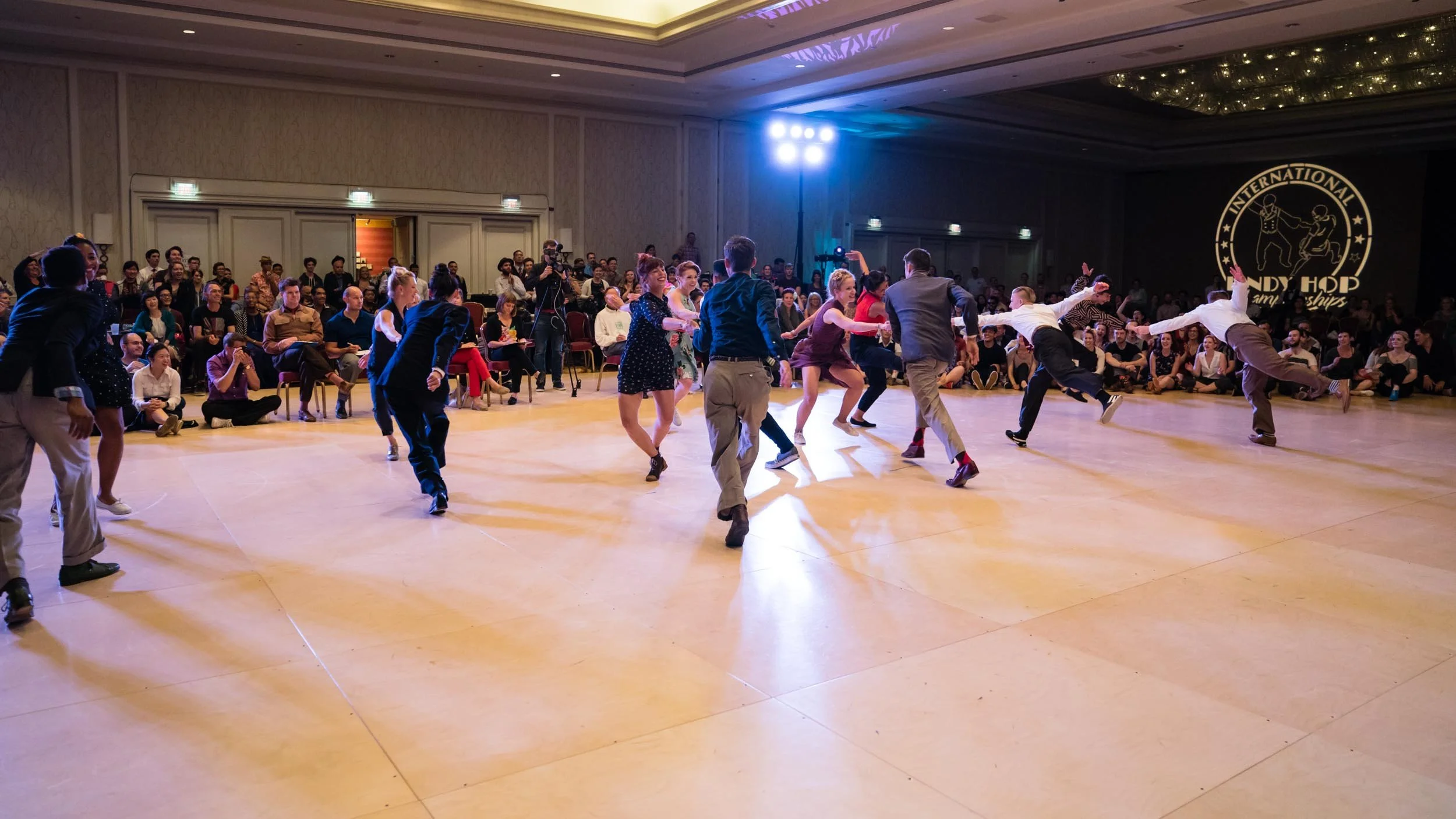
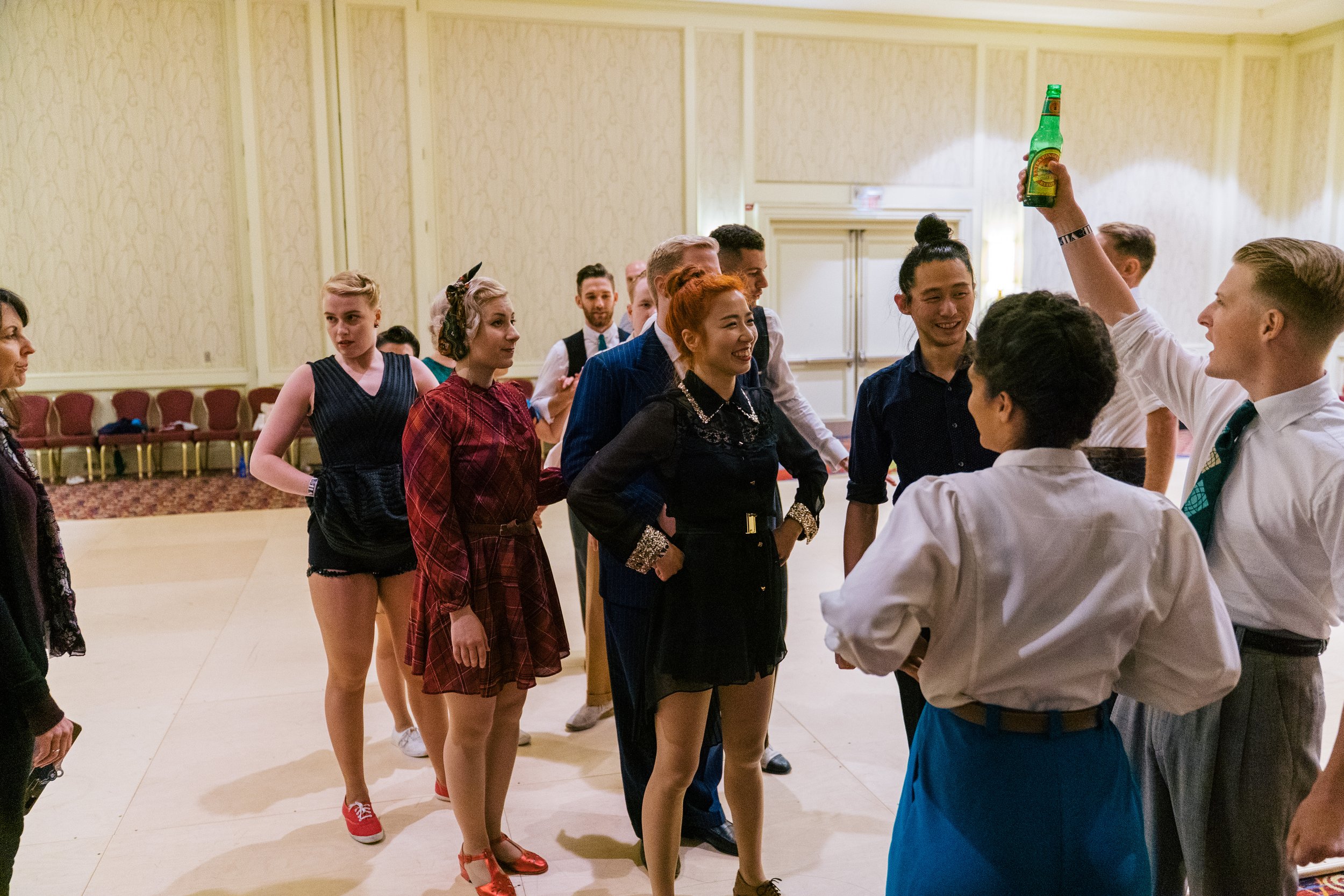
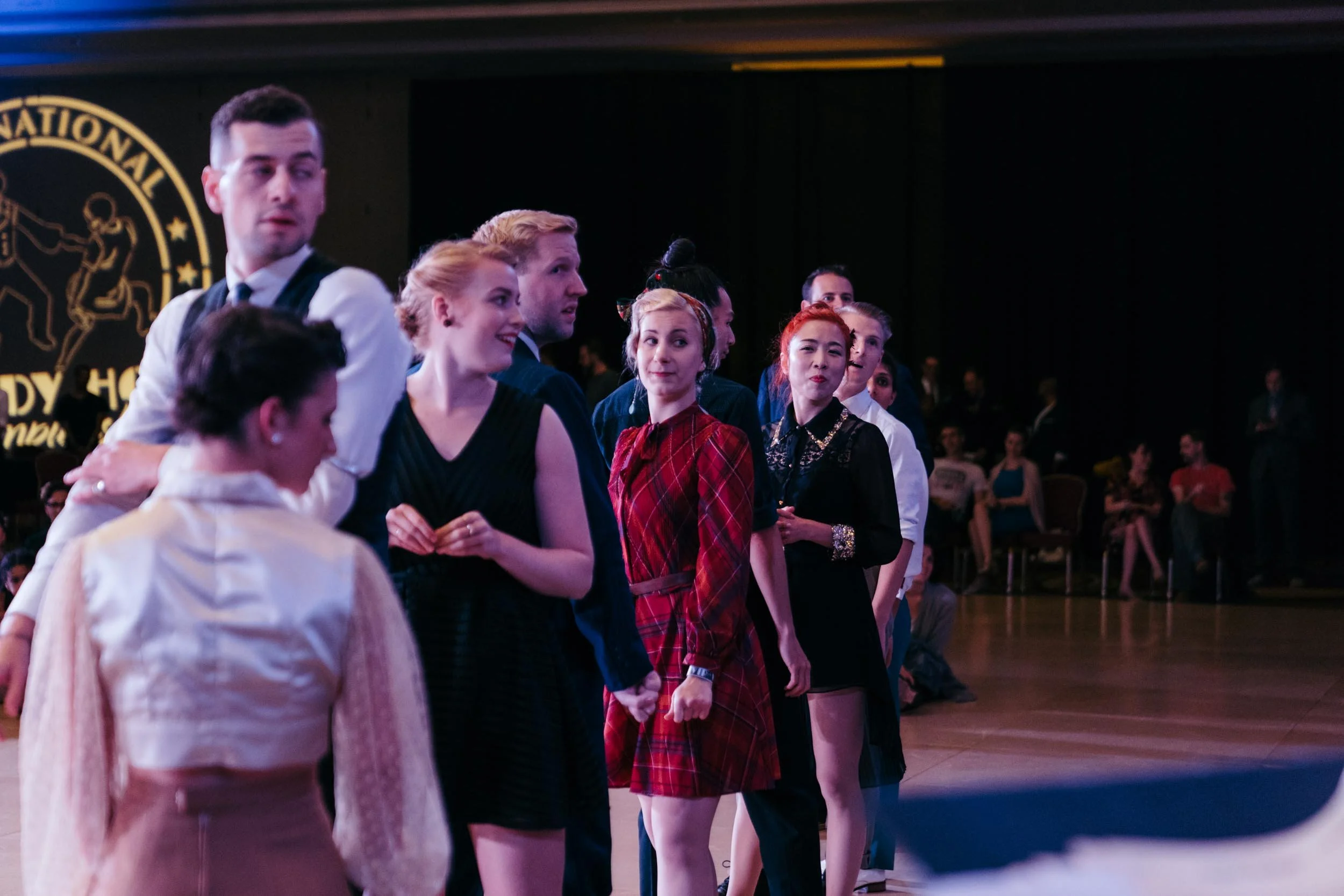
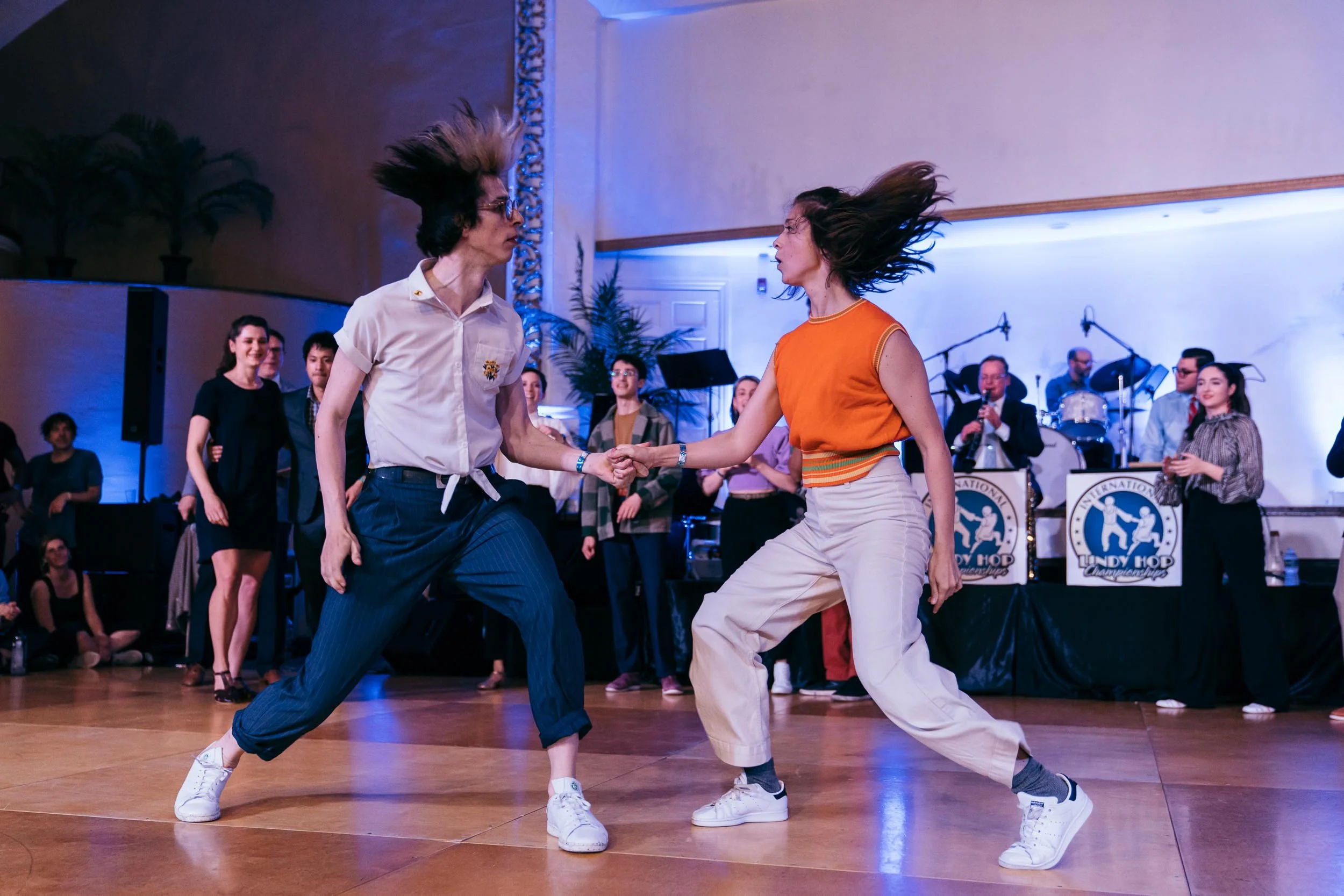
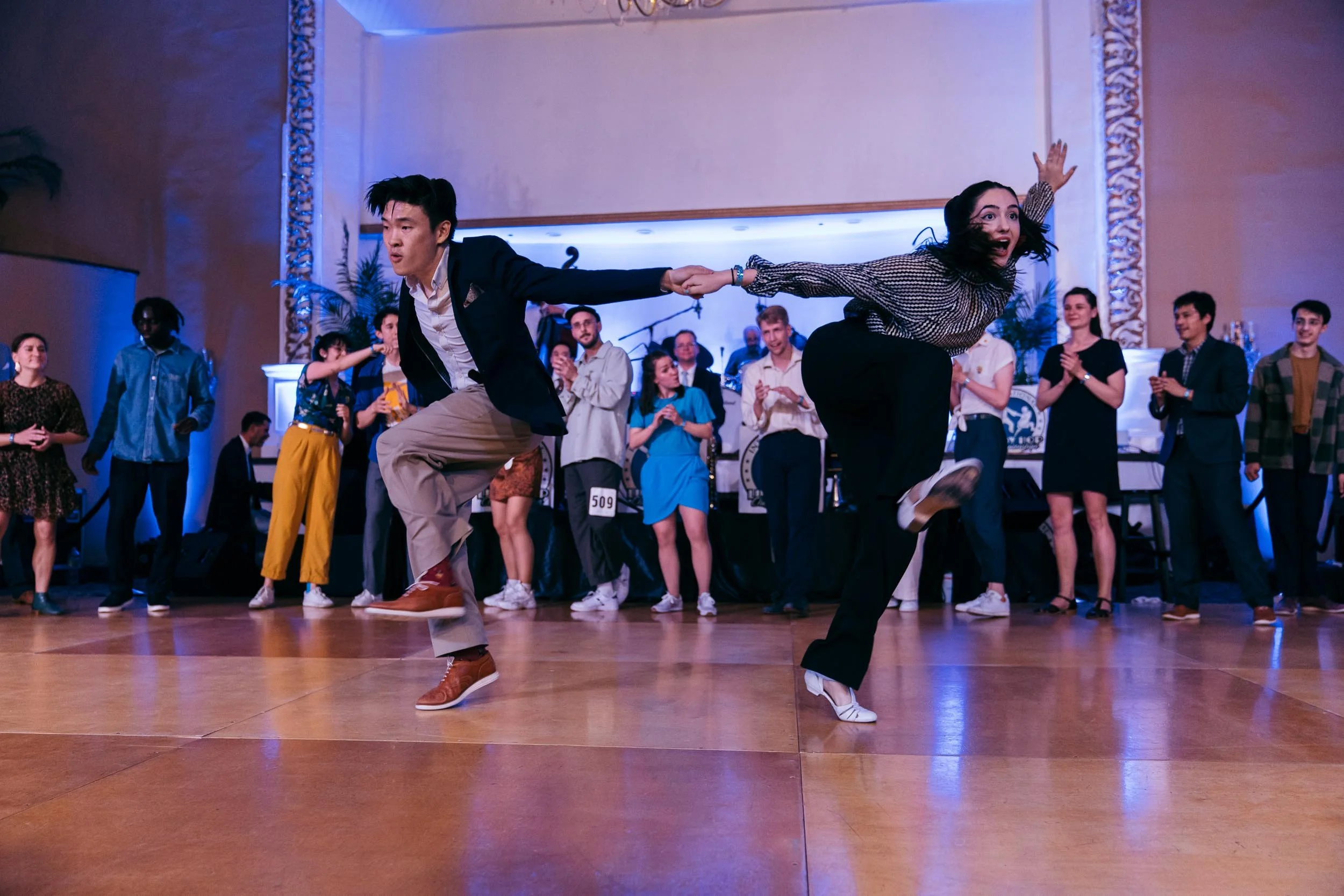
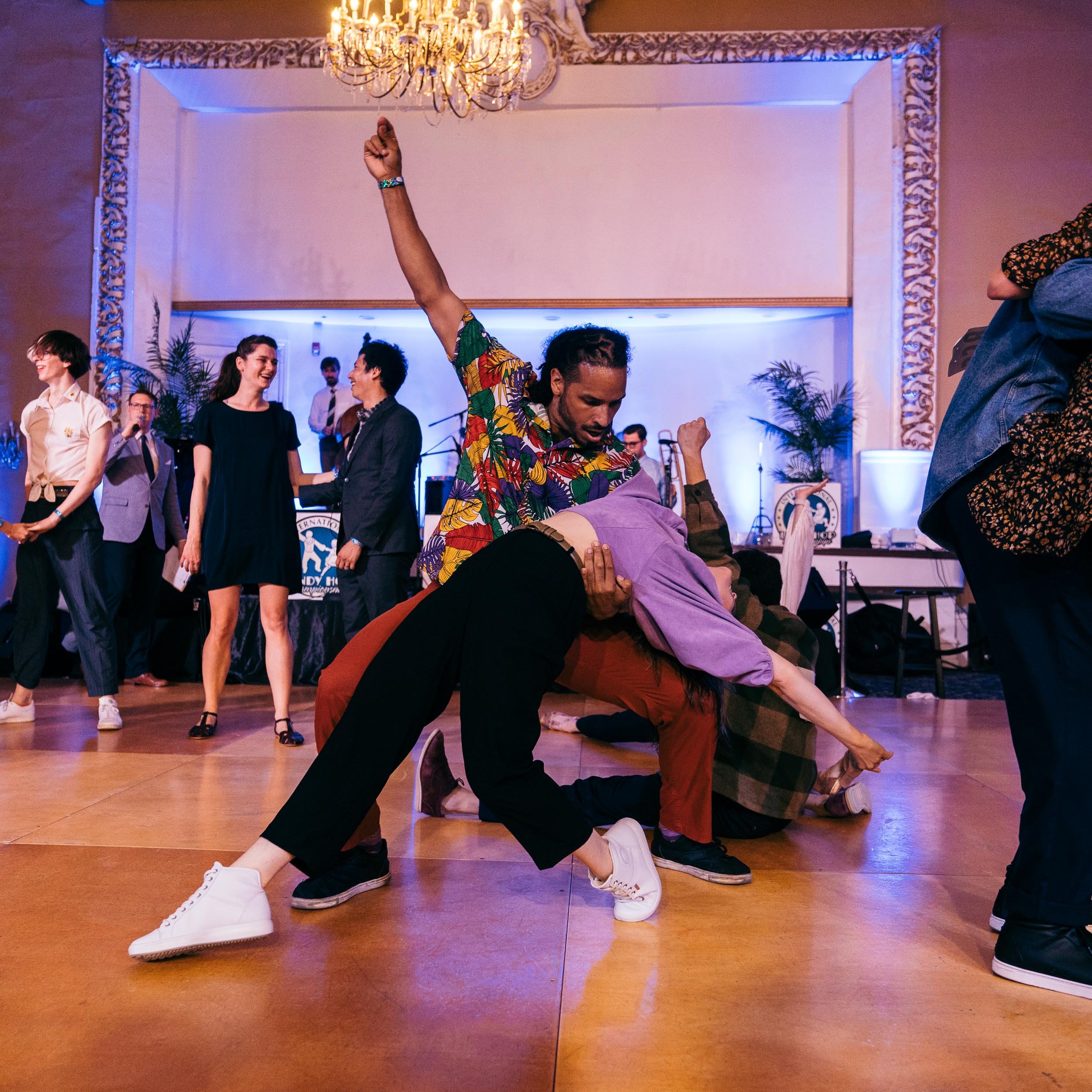
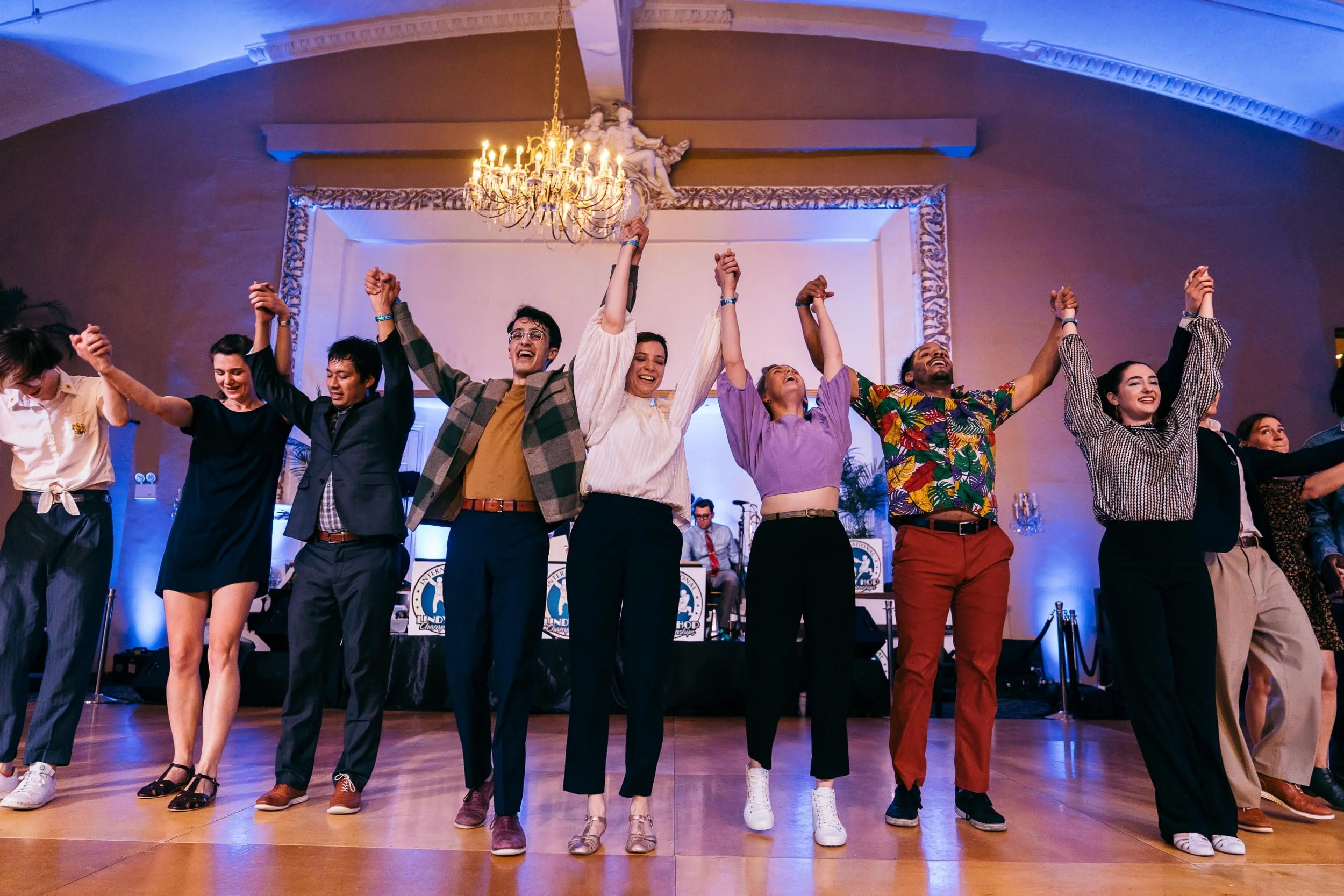
The more common problem when ILHC started was getting dancers to participate in the champions/invitational level. Not every high level dancer wants to deal with the added pressure of competing that weekend because most of the dancers don't necessarily have anything to prove. Plus, their weekends were already packed with other performances, teaching, or judging. However, this was more of an issue with the invitational strictly lindy hop contests because in the invitational level draws/jack & jills there is usually no added pressure to prepare a mind blowing trick or aerial ahead of time. Of course there have been those people who have actively petitioned to be in those contests, but as someone else I know once said, “It’s not an Ask-itational.”
Lindy Hop Rules?
Traditionally, there are not usually a lot of rules in Lindy Hop contests. Theoretically, it allows for maximum creative freedom within the structure of the contest. The more practical reason is that if you try to legislate every possible way people can or cannot dance, then you will get bogged down in a lot of semantic arguments or disagreements in enforcement. Ultimately, that only serves to draw attention away from what happens on the dancefloor. Case in point: #improvrespect.
The champions division was renamed “all star” in 2013 just because. But in 2014, a new stipulation was added: "The top two couples will be entered into the Invitational Strictly Saturday night." Then for the 2015 edition, they added this line to the contest description: "Although choreographed sequences are not disallowed, the judges will be looking for spontaneity, creativity and connection to the music." These two stipulations were directly linked to each other.
ILHC 2014 - All-Star Strictly Lindy - Finals
The change in 2014 allowed ILHC to have an avenue for dancers in the all star level to get themselves into the invitational. That year, two sets of dancers from Sweden qualified, which allowed people to see them dance twice in a final in the same weekend. Both couples re-used sections of choreography in both contests which led to an extensive online discussion under the hashtag #improvrespect.
Bobby White posted a pretty extensive run down of the dialogue at the time and then Max Ramirez over on his newsletter, First Alternate, revisited the issue 10 years later.
I’ll only add that the issue of improvising vs preplanned choreography in lindy hop competitions has been a common point of contention in the modern era, and has shaped how contests have been conducted at ILHC since its beginning. At the time that ILHC started, there were two other major competition events in the US: The Ultimate Lindy Hop Showdown and The National Jitterbug Championships at Camp Hollywood. The main take away from those contests over the years is that the faster the music, the more likely competitors will employ choreography and aerials and other flashy gimmicks.
Turn the Beat Around
With that said, ILHC has tried to influence dancers with choices in tempo and structure. If you look over the tempos for the ILHC divisions over the years, you'll notice that they're not blazing fast (sometimes), at least not compared to a contest at ULHS at the time.
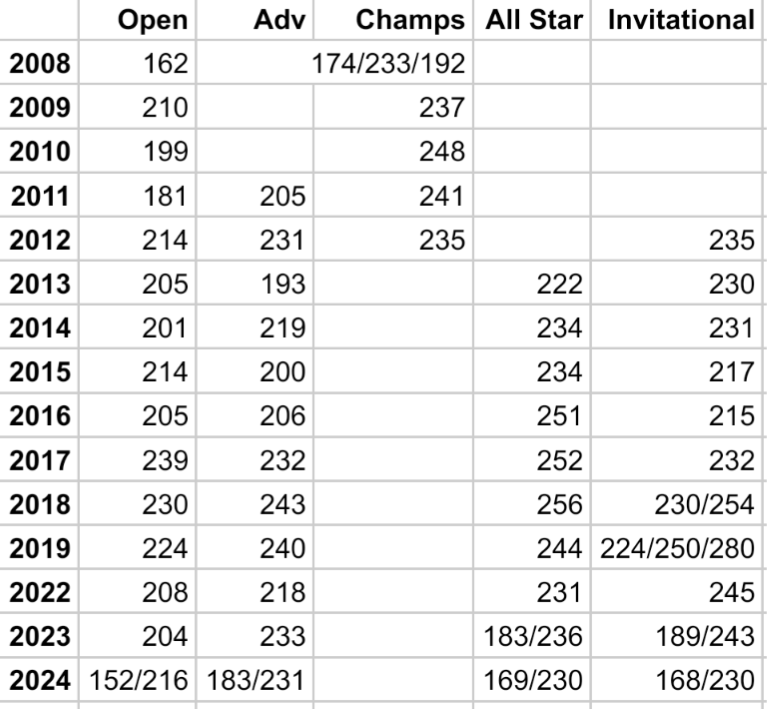
Approximate Beats per minute (BPM) for every Strictly Lindy Hop competition at ILHC
We tinkered with the tempo quite a bit over the years, trying to find that sweet spot that 1) challenged competitors, while also 2) keeping the contest exciting to watch and 3) interesting to judge based on dancing that didn’t rely on air steps and aerials. This process included a lot of back and forth between myself and the event directors every year. Then we would turn it over to the band leaders, but sometimes our suggestions would not quite translate. I'll take most of that responsibility since it was my job to communicate that stuff to the band leaders, but sometimes musicians can just get caught up in the moment. I talked to the drummer of one of these contests after I noticed the BPM get noticeably faster through the contest, and they admitted that they just get excited sometimes.
At some point Jonathan Stout started using a metronome app to count off the bands. He knows that tempos for competitions are chosen for specific reasons. I have worked with other band leaders who have taken those BPMs as a mere suggestion, and one band leader just straight up admitted to me that he had no idea what BPMs were. That being said, I spent a lot of time tapping out the BPMs for all these contests for this post, and I still noticed how much tempo drift can happen even when everyone is trying to keep to it.
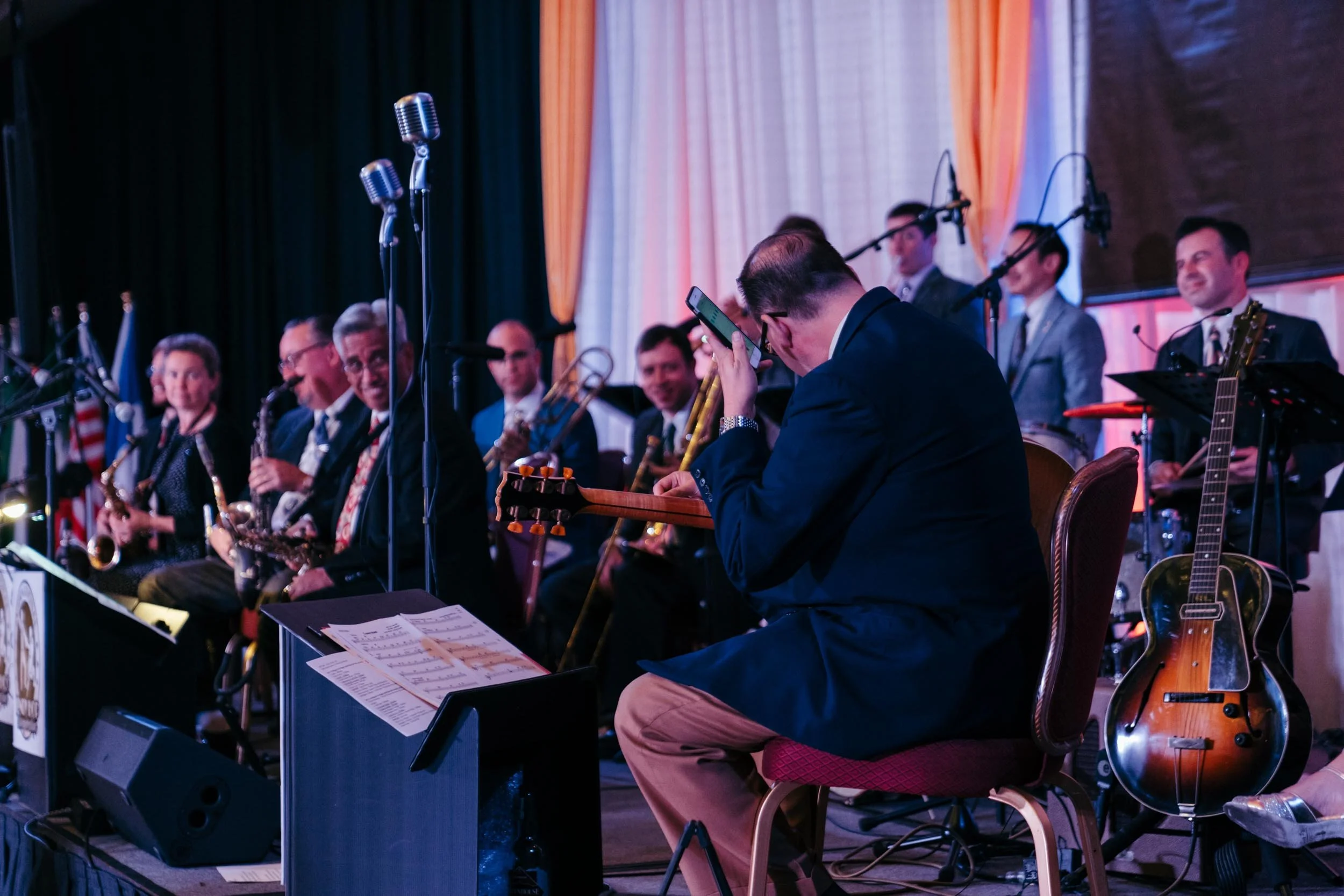
Jonathan Stout confirming the BPM right before counting off the band at ILHC 2018.
It's interesting looking back at these tempos and trying to remember what we were trying to accomplish year to year. For example, the tempo drops in the invitational division after the #improvrespect year of 2014, but that only lasts a few years. By my last year in 2017, we were cranking it back up.
Over the years we just figured out this simple formula:
fast=exciting,
not as fast=interesting to debate the merits of each dancer, but not as exciting
In 2018, you can see where ILHC decide to do two tempos for the Invitational finals. They tweaked it over the years to the point where they eventually felt comfortable enough to expand it into all the levels by 2024.
The fastest strictly lindy hop division on record so far clocked in at 280 bpm for the Invitational Strictly Lindy Finals at ILHC 2019. This is also the second year where the band purposefully sped up for the second round.
Bar Hopping
The other way to influence contests is how you structure them; mostly in terms of how many times you make couples go into the spotlight and for how long. If you want to see people improvise, then you leave them out there longer. But the point of using a jam format is to keep things moving. Before that, a more common format was to have couples dance to their own individual song for 45 seconds to a minute and a half. This is a “spotlight” formatted contest. Those were much more slow moving overall, which is why the jam format became popular.
By 2008, eight eights (one half chorus=16 bars of a standard 32 bar structured song) was already pretty common for a lot of phrase battle competitions. ILHC contests followed suit at first, but it didn't take long for us to start messing around with it. We never stopped tinkering with the structure because we were always trying to calibrate between the competitor skill level and how much we wanted to encourage improvised dancing versus choreographed sequences.
Typically, we run these contests with each couple going twice through. In 2012 we did three rounds for all the contest levels, but it became apparent that was one round too many. It's also something I've observed in other contests that go more than twice. Lindy Hop is a pretty high energy dance both for the contestants and the crowd and it's hard for everyone to sustain it for a lengthy period of time. Plus it didn't give judges that much more to work with, so two rounds have been standard ever since.
For quite a few years, we didn't settle on contest structures until the day of the competition because 1) we first needed to see how many couples qualified from the preliminary rounds, and 2) to discourage dancers from pre-planning out sequences beforehand. For the 2009 final of the champions division, Paul Cosentino, the main bandleader for the first few ILHCs, told me in a thread about this topic last year that: " . . . [Sylvia Skyes] asked us to do that {play a blues structured song] about 5 minutes before the competition."
Eventually Jonathan Stout successfully lobbied ILHC to decide formats earlier, before the event weekend, so he could have time to properly write band arrangements for the contests. This became more necessary for the larger big bands that he was hired to lead by the middle of the 2010s. By 2019, ILHC commissioned him to write an original song for the invitational contest, and that required much more lead time.
When the event moved to New York City in 2022, ILHC commissioned more and more original works, and by 2024, they were commissioning all the bands to write original arrangements or entirely new songs for every contest including several preliminary rounds, resulting in over 30 new pieces of modern swing music from that year alone. In 2024, Danny Jonokuchi announced before the start of the Normalizer final that he would be naming the song he composed for that contest after whoever won it.
On The NORMAlizer and Throwdowns
In 2019, ILHC added the NORMAlizer in honor of Norma Miller's 100th birthday. ILHC wanted to do something that was more of a reflection of Norma who was definitely more of the "Go Hard or Go Home" school of Lindy Hop. Patterned after similar contests in urban dance communities, ILHC selects a number of couples out of a large preliminary round who are then slotted into an elimination style tournament. This format actually translated fairly well online and was a way to keep ILHC going through the 2020 and 2021 pandemic years.
In 2022, the world was still coming out of the pandemic, so that reduced the number of contests at the first ILHC in New York City. To make up for that, they added the Strictly Throwdown which pitted the top placing couples of both the All Star and Invitational levels. This was also the first time when they prohibited aerial's and air steps in the slower first round of dancing, but encouraged it in the second.
The Strictly Throwdown was going to be a one time occurrence, but with the addition of qualifying rounds in different parts of the world, it returned in 2024 as the final round to determine a world champion.
For this year’s event in Montreal, ILHC has opted to not have an invitational level strictly lindy hop contest. Instead the “Strictly Throwdown” essentially combines the All Star and Invitational levels. In theory, this is supposed to be more of an improvised, social dance contest. The NORMAlizer contest returns as the faster contest that encourages dancers to employ more choreography and aerials. It’ll be interesting to see how this plays out in practice.
Takeaways
I’m assuming most people reading this will not be involved in planning a high level lindy hop competition. In fact, I know most of the ones that do have some difference of opinion with how it is done at ILHC. I’ve not always agreed with all the choices we’ve made at ILHC, but the experience has given me an appreciation for the amount of time and thought it takes to balance:
What is fair to the competitors
How to make it legible for the judges to judge
Entertainment value to watch both live, in person and online afterwards.
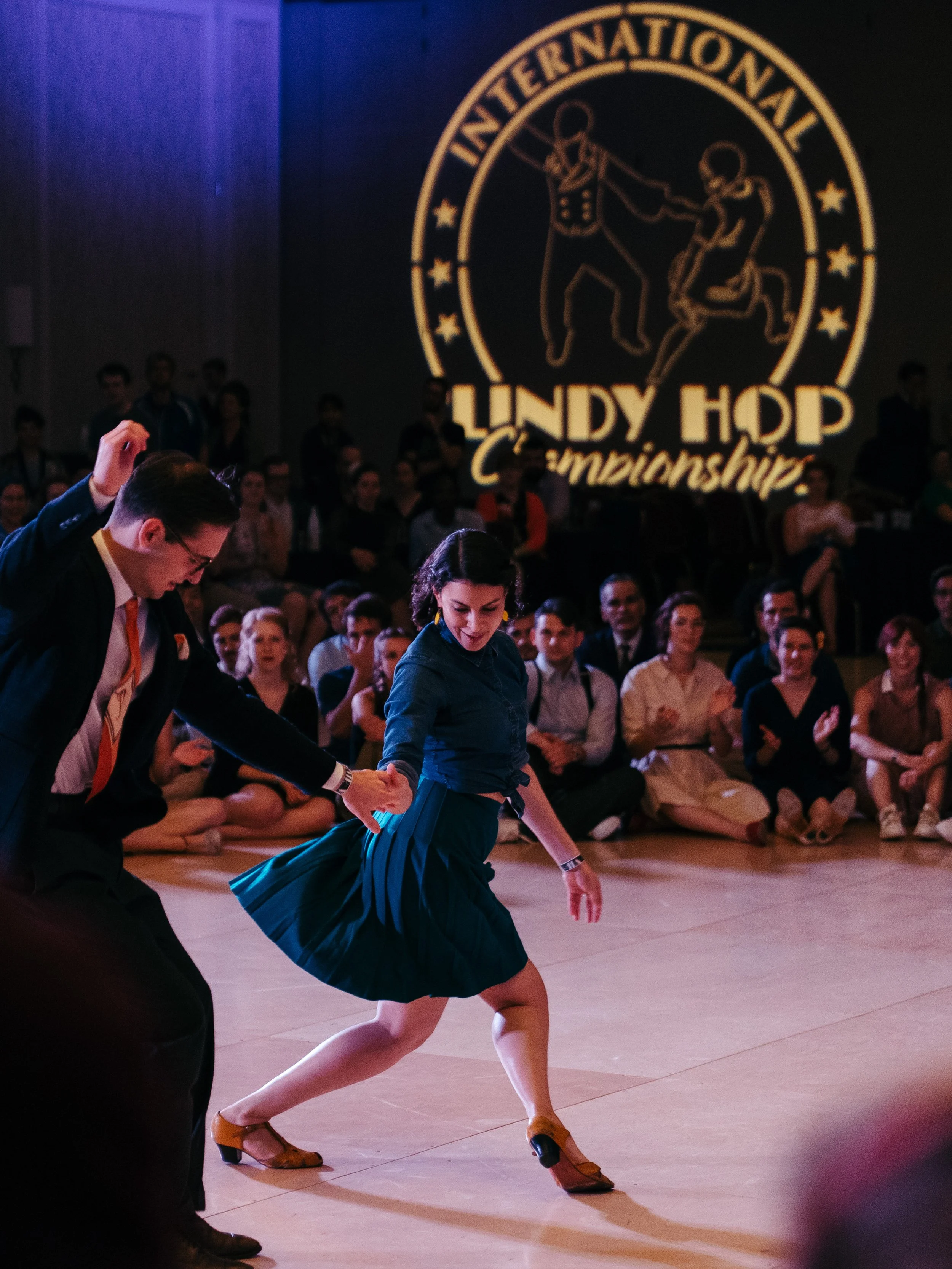
Pj Ryan & Amira Selim in The ILHC 2018 Open Strictly Lindy Hop Finals
My main advice to an organizer thinking of having any kind of dance competition at their event is to really interrogate why you would want to do that to yourself. Then ask what do you hope to accomplish? Is it to draw higher level dancers to your event? Give up and coming dancers an opportunity to test themselves? Inspire the audience? Rally the community? Increase the visibility of the event?
The way you answer those questions should dictate how you execute the contest. I have observed many contests where it is apparent that they were organized by people whose only experience with competitions is either being in them or watching them. That’s just not enough. Even after reviewing all the work we did at ILHC for this essay, I still have a bunch of different ideas for how to do them.
Most importantly, I think organizers should 1) know that you’ll need more help than you think, and then 2) game plan it out ahead of time because no one pays to watch disorganized people languish in their bullshit.
There are exceptions like Mobtown Ballroom which does a dance contest every few months and despite the fact that they’ve done these for years, they always seem to fuck up at least one thing about them every single time. It happens so often that it’s become part of the vibe. What they don’t mess up is that no matter what happens, they always keep it moving.
For those of competitors looking for some sort of hack to make finals, I’m sorry to disappoint you. ILHC vice president and head judge, Sylvia Sykes, is fond of advising people that the best way to win a dance contest is to dance better than everyone else. For some reason, people always think that she’s joking. I assure you, she is not.
Far from being an experienced competitor myself, for lindy hop competitions, my only advice is to dance (taps the sign again) strictly lindy hop.
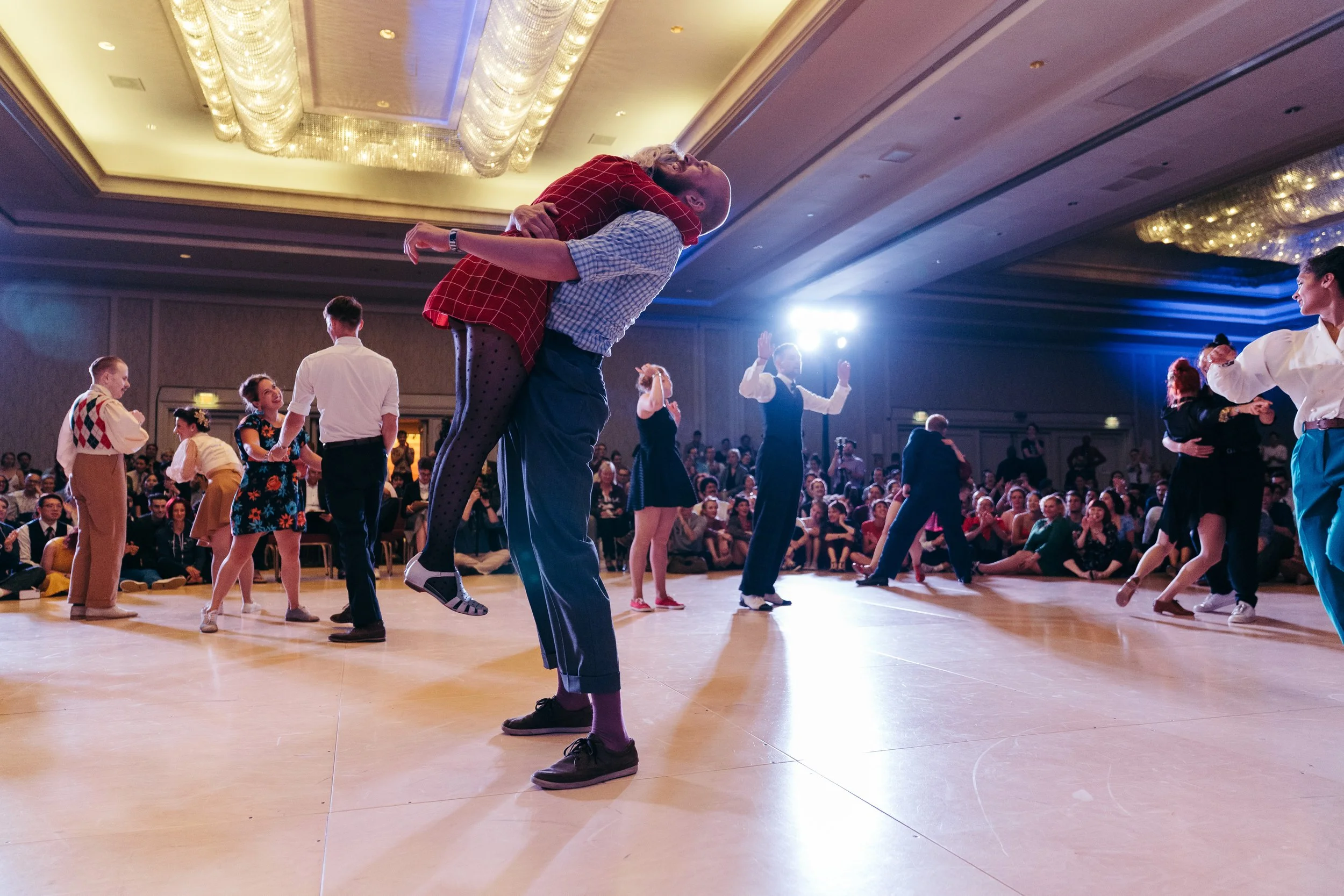
The end of the All Star Strictly Lindy Hop contest at ILHC 2018