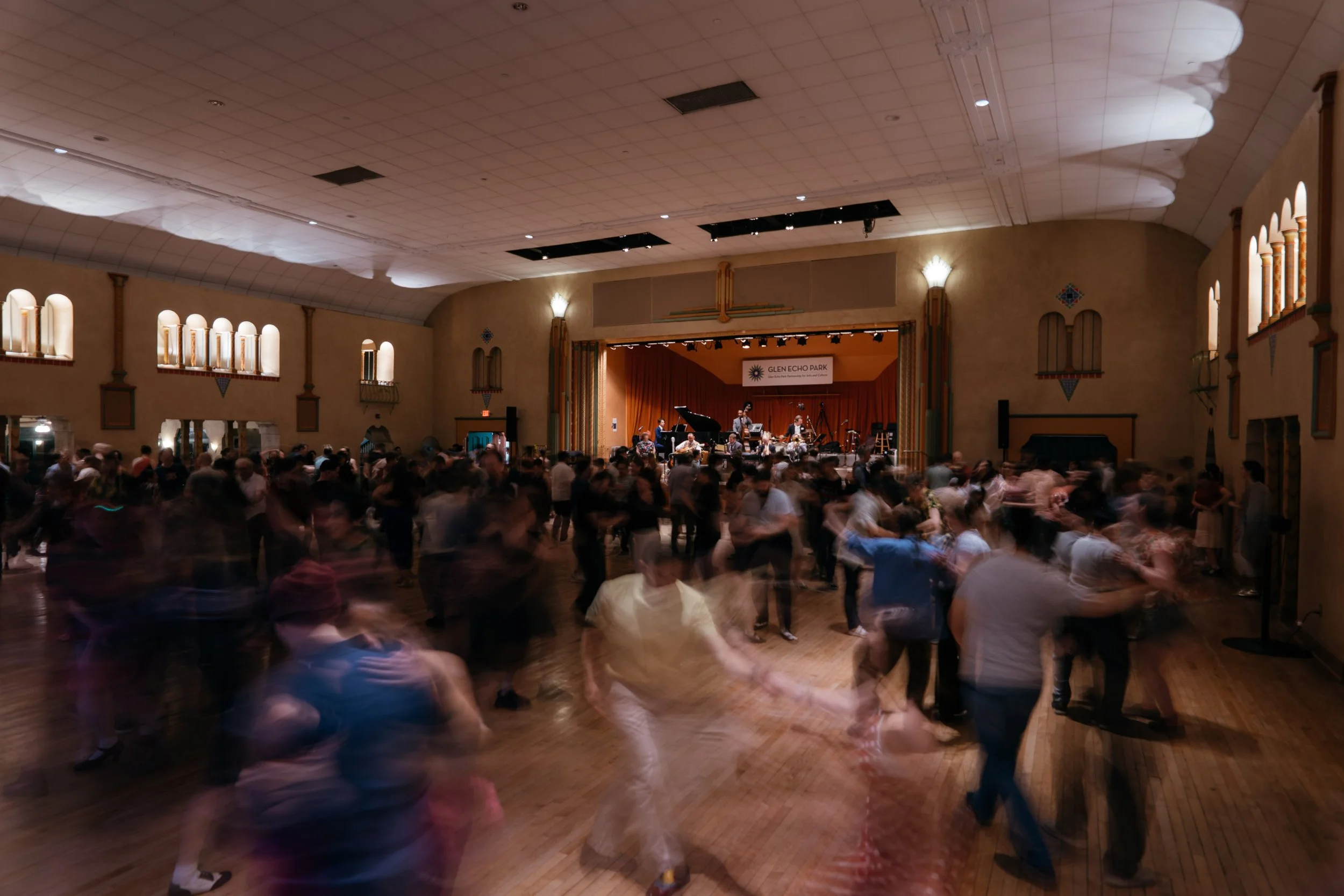
With DCLX, The Washington DC Lindy Exchange, celebrating 25 years next year, I thought it would be fun to look back at ALL of the bands that have played the event.
I have a special affinity for the event since I was on the committee for the first one in 2002. It's pretty wild to see it grow into an event like no other in the world. Especially since the number of exchanges seem to have dramatically fallen off in the post pandemic world.
Btw, some people think an exchange is a generic term for a dance event. But an exchange is very specifically a dance event where there is nothing but social dancing. If there are workshops or competitions, then it is a different kind of dance event.
The first exchange happened in 1998 and involved dancers from Chicago visiting the San Francisco scene. The second exchange happened when Chicago dancers went to DC. That one was before I really got into dancing, so its shrouded in mystery until someone who was there can chime in. The original intent of an exchange was for one city to host dancers from one other specific city to “exchange” ideas about the dance. But that definition only lasted exactly 3 times before cities just made them open invitation weekend parties.
Because of the longevity and success of DCLX, I think we can look at its history to see where it either reflected or drove musical trends in the overall Lindy Hop scene.
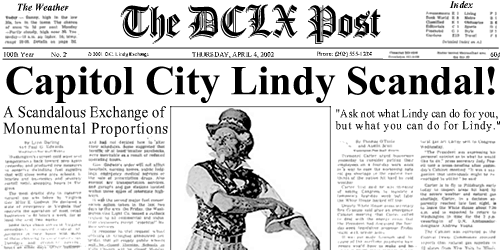
Original first DCLX website front page
DCLX April 5-7 2002: Capital City Lindy Scandal
Chairman: Mike Miloszewski
Friday Night Main Band: The J St Jumpers
Saturday Night Main Band: Big Joe & The DC All-Stars
Saturday Late Night Band: Three Martini Lunch
Sunday Night Main Band: The Tom Cunninham Orchestra
I wrote up the origin story of DCLX in a separate blog post quite some time ago. The first DCLX committee worked with the main local dance organizations at the time who were already running regular dances on Fridays, Saturdays and Sundays. Part of the early concept of exchanges was to simply use existing infrastructure rather than creating an event from scratch. However, as some exchanges became more successful and exchanges became more popular, like DCLX, that became less feasible. This first DCLX committee mostly coordinated registration for the whole weekend and provided additional volunteers, but each organization ran their own dance, including selecting which bands they hired.
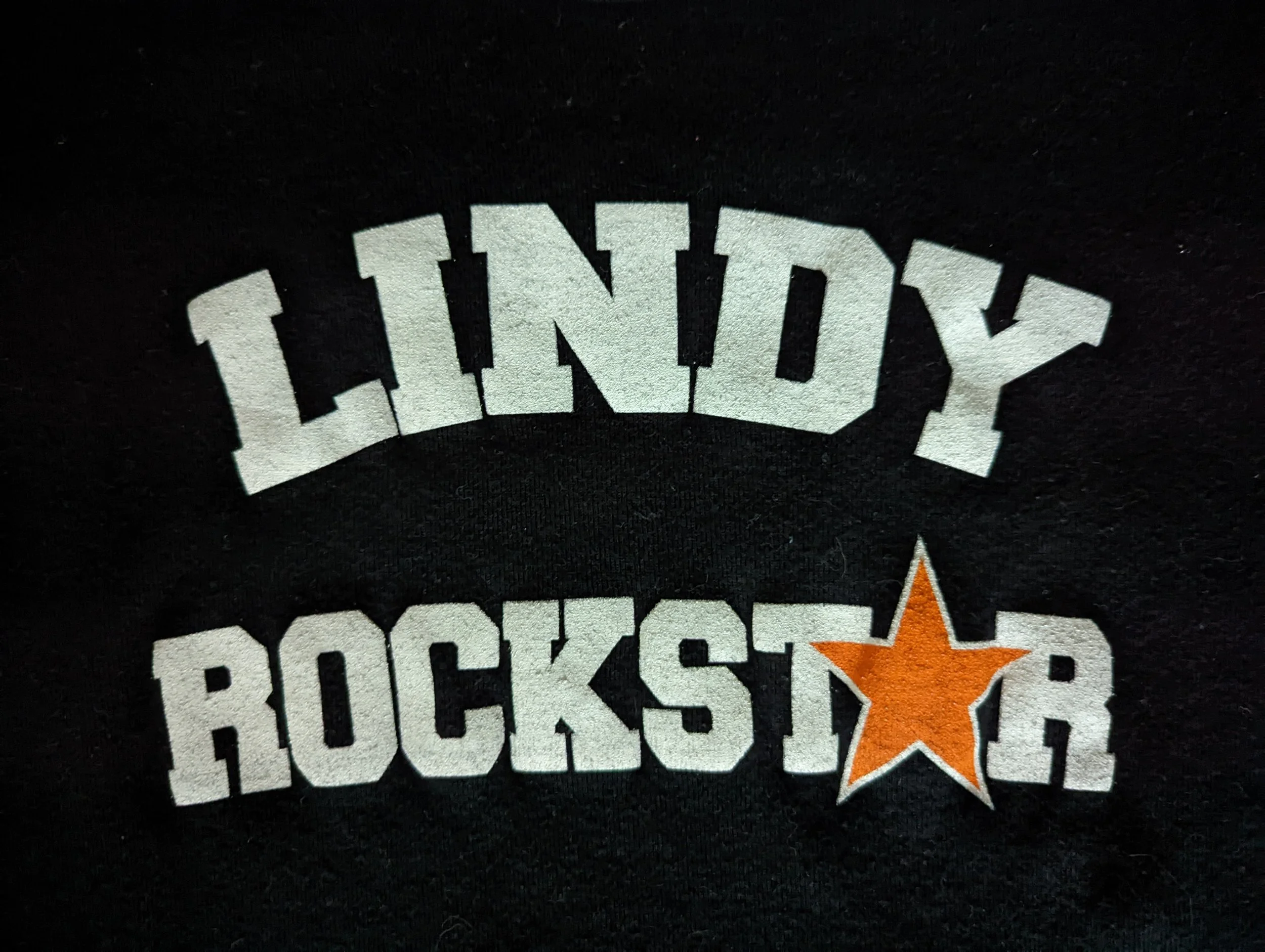
First DCLX T-Shirt Design
The Friday night venue, Zoots & Dolls out in Fairfax, VA, featured The J St Jumpers, a popular, local jump blues band. Most of the bands that came out of the 90s Neo-Swing era were punk and ska bands capitalizing on the fad by playing a mostly a 40s-50s jump blues repertoire. The J St Jumpers were mostly local jazz and blues musicians, who I think better captured the the sound of that era. At one point, they had vocalist who sang a version of “Please send me Someone To Love” that still haunts my dreams.
The Washington Swing Dance Committee commissioned Big Joe Maher to assemble an all star band to play the main dance on Saturday night. Big Joe is a highly regarded drummer in the DMV area. Based on what I could find, there were only four people on that band stand that night. This was a time where some people preferred smaller jazz combo music for dancing.
Very late in the process, WSDC also offered to pay for a late night band as well, which is how we ended up with Three Martini Lunch. They were a small jazz, lounge band who played in bars and restaurants around the area.
The Tom Cunningham Orchestra wrapped up the weekend on Sunday night. Tom passed away just this past spring, but he was a legendary figure to the DC lindy hop community. He started hosting dances in the Spanish Ballroom at Glen Echo starting in the late 1980s, and was THE reason why the DC scene has been a bastion of vintage big band music. A scene that was well established by the time neo swing swept the world in the late 1990s.
Additional photos from DCLX 2002.
DCLX 2003, April 11-13
Chairpeople: Angela Carpenter/Jerry S. Almonte
Friday Night Main Band: Blue Sky 5
Saturday Night Main Band: The Brooks Tegler Big Band
While I was doing research for this post, I was sad to discover that very little info about DCLX 2003 survives online. That’s mostly due to the fact that most communication and information about many things that happened before the rise of social media was posted to message boards. Unfortunately, most of those boards don’t exist anymore. Fortunately, I have some firsthand experience since I was one of the co-chairs of DCLX this year.
One of the things that I realized from being a part of the event the year before, was that working with the other organizers was not going to be sustainable going forward. Let’s just say that they didn’t play well together, so DCLX 2003 essentially started over from scratch. On top of that, we did not have access to The Spanish Ballroom because it was closed for renovations, so we had two dances in a high school gym. We were in negotiations for a good deal on a venue on a military base, but with the country preparing to go to war, we were warned that our reservation would be subject to cancellation in case of a national emergency, like invading a middle eastern country, which did happen that spring. All we had in terms of resources was the glowing reputation from the first event, which is why we only hired two bands for this year.
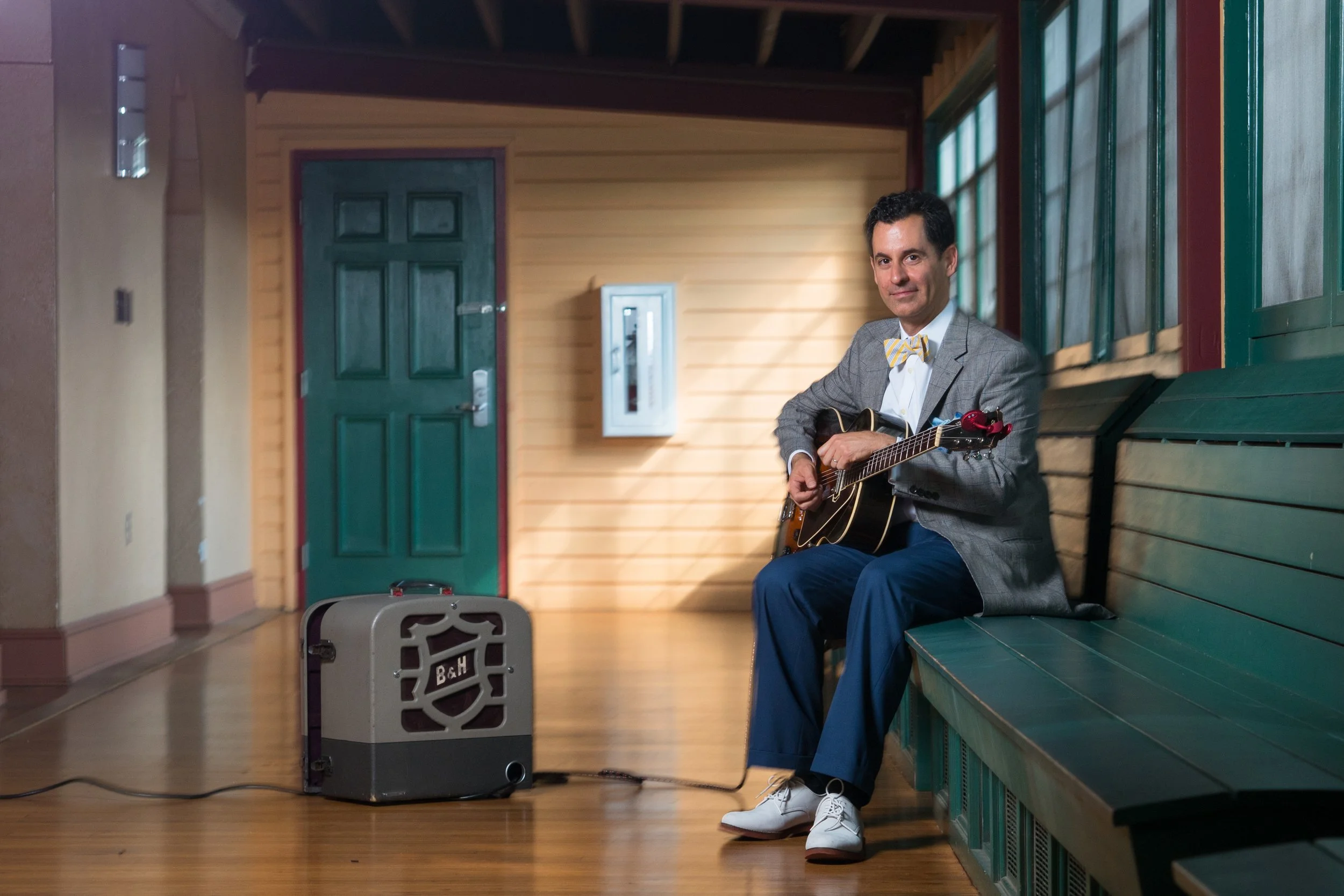
Photo of Craig Gildner I took in 2015 for his CD, Sittin’ Pretty.
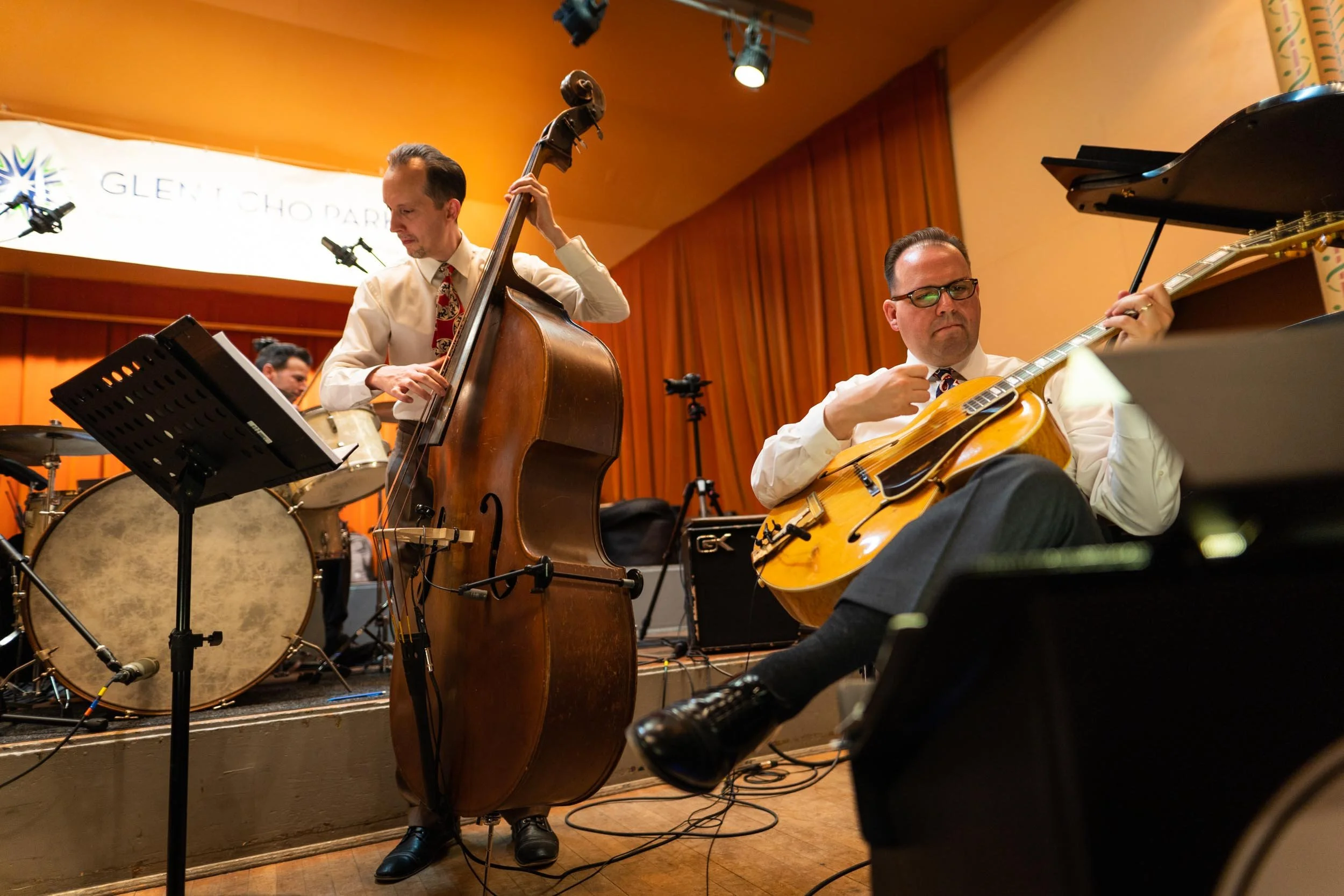
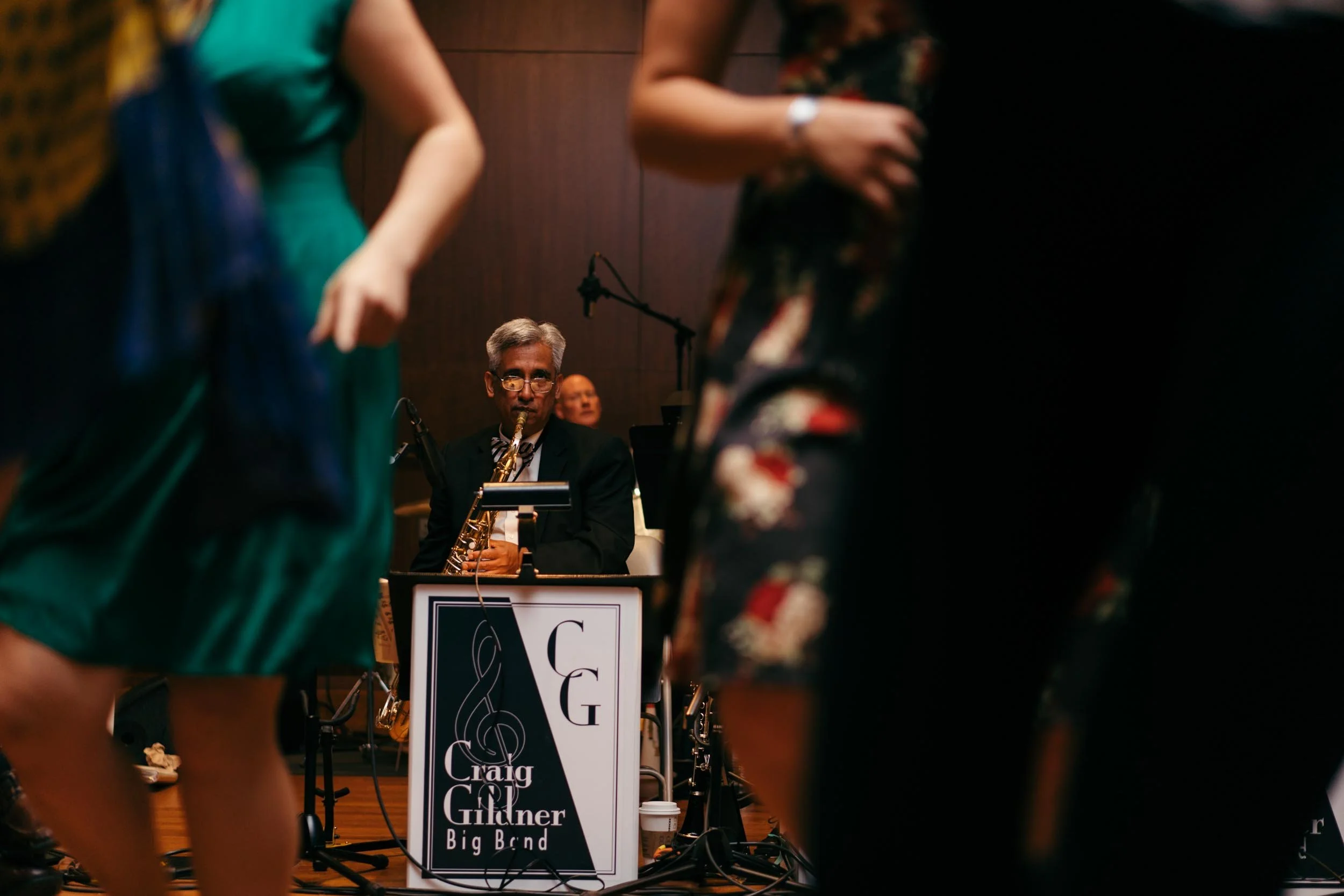
Blue Sky 5 led by Craig Gildner opened the weekend on Friday night. DC is incredibly fortunate to have a musician like Craig who has so much passion for jazz from the 1920s all the way through the 60s. His original Blue Sky 5 had a mostly late 30s and 40s sound, but as you will see, he has been able to put together different kinds of bands over the years to cater to the changing tastes of the scene as well as his own. He’s the only musician who has played every DCLX, either leading a band 20 different times or playing as a sideman for other bands.
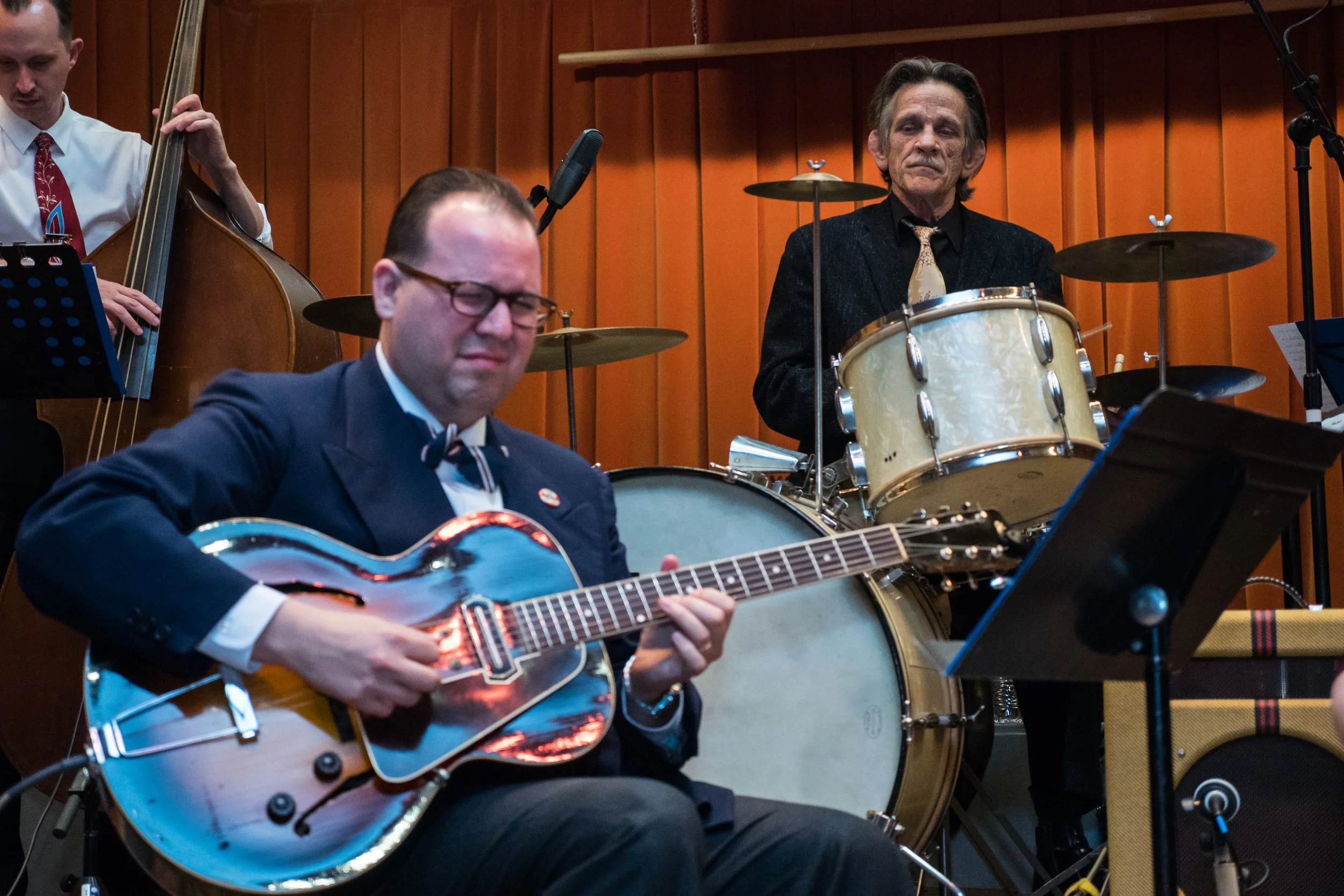
Brooks Tegler playing with the Jonathan Stout Orchestra at DCLX 2016
Despite our many challenges that year, we were determined to anchor DCLX in the big band sound, which is why we chose Brooks Tegler to lead his band on Saturday night. Josh Collazo is generally regarded as one of the best vintage swing style drummers today, but before him, we were lucky enough to have Brooks Tegler in DC. If you wanted to honor Benny Goodman, Brooks was one of the go to drummers for those projects, even internationally. He was also very well connected to the local jazz scene, and was often able to recruit some great players. I’m not sure if he played these early DCLX’s, but my first experience of hearing future DCLX big band leader, Scott Silbert, was definitely on one of Brooks Tegler’s gigs.
DCLX 2004, April 2-4
Chairwoman: Rita Shah
Friday Night Main Band: The Boilermaker Jazz Band
Saturday Night Main Band: The Brooks Tegler Big Band
Sunday Night Main Band: Blue Sky 5
This is the first year DCLX was able to bring in an out of town band. The Pittsburgh based Boilermaker Jazz Band was an instant hit with DC dancers from their first performance in the area sometime in the year before. Some people confused them as a traditional jazz band because they had a banjo player at the time, but band leader Paul Cosentino has prided himself with the ability to play a huge swath of the jazz canon. In particular, he has had a fondness for the Duke Ellington small group repertoire and the American Song Book. The rhythm section consisting of main drummer, Rich Strong, idolized bop era drummer Philly Joe Jones. Bassist Ernest McCarty toured with Errol Garner, and pianist Mark Kotishon largely played cabaret style lounge gigs around the area. Anytime I’ve seen someone ask about the style of jazz his bands play, Paul usually just replies, “It’s just jazz, man!” Also the version of The Boilermakers from the mid 2000s through the early 2010s was maybe the jazz equivalent of the 1990s Chicago Bulls or late 2000s FC Barcelona. Almost every dance they played during that period was a heater.
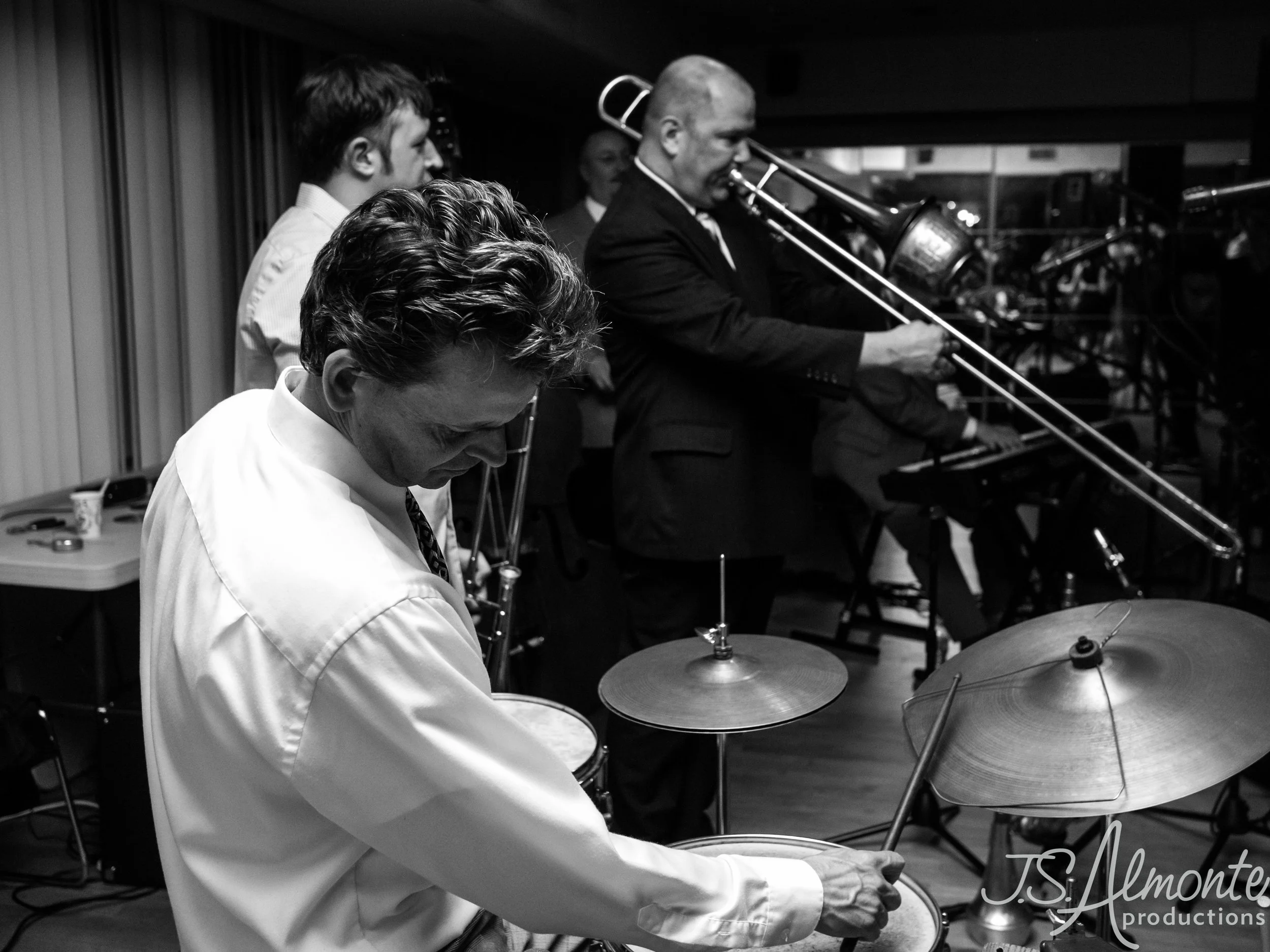
Boilermaker Jazz Band at DCLX 2014
With The Boilermakers opening the event on Friday, Blue Sky 5 was able to bring live music back to the Sunday slot. Brooks Tegler returned to anchor the Saturday night dance, which also marked the return of DCLX to The Spanish Ballroom at Glen Echo after renovations to the ballroom were completed in 2003.
DCLX 2005, April 8-10
President: Hyong Lee
Friday Night Main Band: The Boilermaker Jazz Band
Friday Late Night Band: Special Surprise Band
Saturday Night Main Band: The Tom Cunninham Orchestra
Saturday Late Night Band: The Midiri Brothers
The success of the previous events allowed for the return of live music to the late nights since the first year. This year was also DCLX’s first “Avengers Assemble” moment when members of the Boilermaker Jazz Band joined Craig Gildner to form a “surprise” late night band after the Friday night dance. This jam band sounds like it should not have worked because there was no drummer, so the trombonist for BMJB played the sousaphone for the whole night. Instead of playing a traditional two beat, New Orleans style, he played it 4/4 all throughout, which was already after he put in full night playing trombone for the main dance. It was one of the most impressive single night performances I’ve witnessed at DCLX.
The Tom Cunningham Orchestra returned to play the Saturday night main dance. Music for the Saturday late night was provided by the famously multi-instrumentalist Midiri Brothers from Philadelphia. This was a significant choice since most events, especially exchanges, would often switch gears to slower or bluesier music. Instead DCLX doubled down and often featured more classic jazz of a variety of tempos.
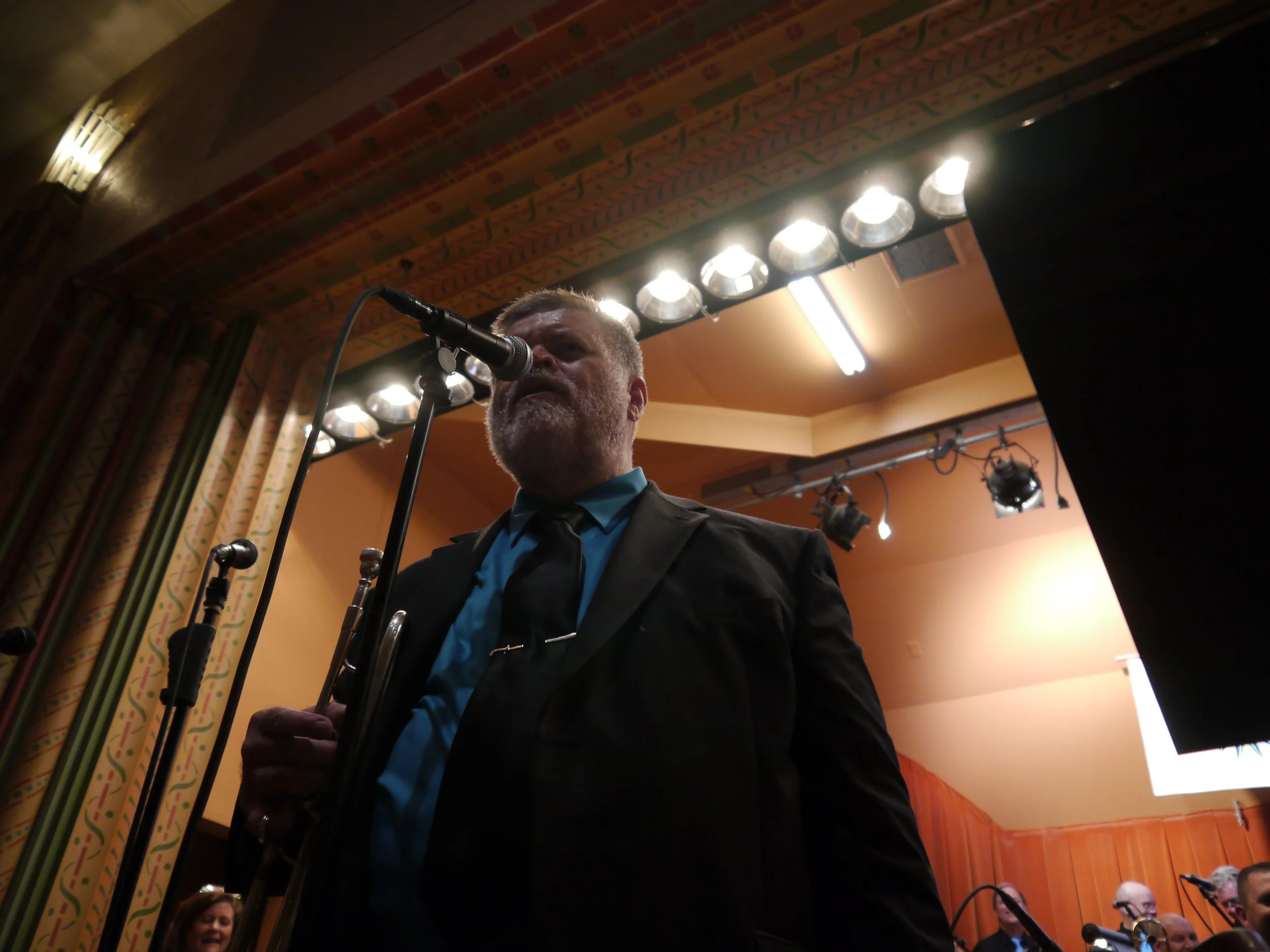
Tom Cunningham at DCLX 2012
While this whole post focuses mainly on the live music at DCLX, I do want to mention briefly the role of DJ music at exchanges. Around this time, it was not uncommon for DJs to provide the majority of music for an event weekend. In a few cases, sometimes they would consist of the entire music line up. A small handful of DJs became “headliner” names where an event would need at least one of them to help market the event as a serious one.
One of those influential DJs came out of the DC area, Rayned Wiles. A true gentleman and a scholar of jazz and how it interacts with dance. He was the house DJ at K2, the most popular weekly dance in the DMV area in the early 2000s, but he always welcomed other DJs to pop in and play short sets during the night. This allowed him to impart some incredible insight to the music and the art of DJing in real time to the dozen of us wannabees who may roll up in a night. He was a truly generous mentor. We were incredibly lucky to have him anchor the DCLX DJ line ups for so long. His presence and reputation for playing more late night friendly, groovier swing helped to balance the oftentimes faster, vintage live music programmed by the event.
Rayned Wiles at DCLX 2013
I don't have too much else to say about DJs at DCLX even though I actually DJed most of the DCLXs prior to the pandemic, with the lone exception to the one where I served as co-chairman. I think the honor of DJing most, if not all of the DCLXs belongs to Mike Marcotte because of his impeccable taste in both swing and blues music.
DCLX 2006, April 7-9
President: Hyong Lee
Friday Night Main Band: Jonathan Stout & His Campus Five
Friday Late Night Band: The Boilermaker Jazz Band
Saturday Afternoon Band: Blue Sky 5
Saturday Night Main Band: The Boilermaker Jazz Band
George Gee & His Jump, Jivin' Wailers
Saturday Late Night Band: The Clarence Turner Blues Band
Outside of the DC based blues band for late night, this line up is filled with only nationally known bands.
This is the debut of Jonathan Stout at DCLX. Stout was a pretty big name at this point from headlining Camp Hollywood, but the Saturday night band featured a double bill of The Boilermakers playing alongside George Gee’s Jump Jive & Wailers. This marks the beginning of DCLX taking advantage of its proximity to New York City and the huge community of jazz musicians based there. Gee has been a mainstay of the NYC lindy hop and jazz scenes for decades. Based on his affinity for the later Basie sound for his big band and jump blues for this smaller version, this would seem like an odd pairing with BMJB. However, Paul and George came to DCLX with this idea because Paul used to play in George Gee’s Make Believe Ballroom Orchestra while they were both studying music in Pittsburgh back in the 1980s.
This year also featured one of the rare DCLX performances during the Saturday night dance. It is just a small taste of why DC was probably one of the best concentrations of lindy hop talent in the mid-late 2000s. DCLX the event definitely benefited from the local DC scene being home to numerous internationally known instructors.
This year, you can also see a purely blues band hired to play for the late night, another first for DCLX. I vaguely remember this decision being a little divisive, not because of the quality of music, but more because of the late night space, The Hollywood Ballroom, was just one big room that could not accommodate two different rooms with different kinds of music. DCLX has always had a large blues dancing contingent, but the committee learned the hard way that they needed to figure out a way to accommodate both swing and blues rather than just choosing one for the late night.
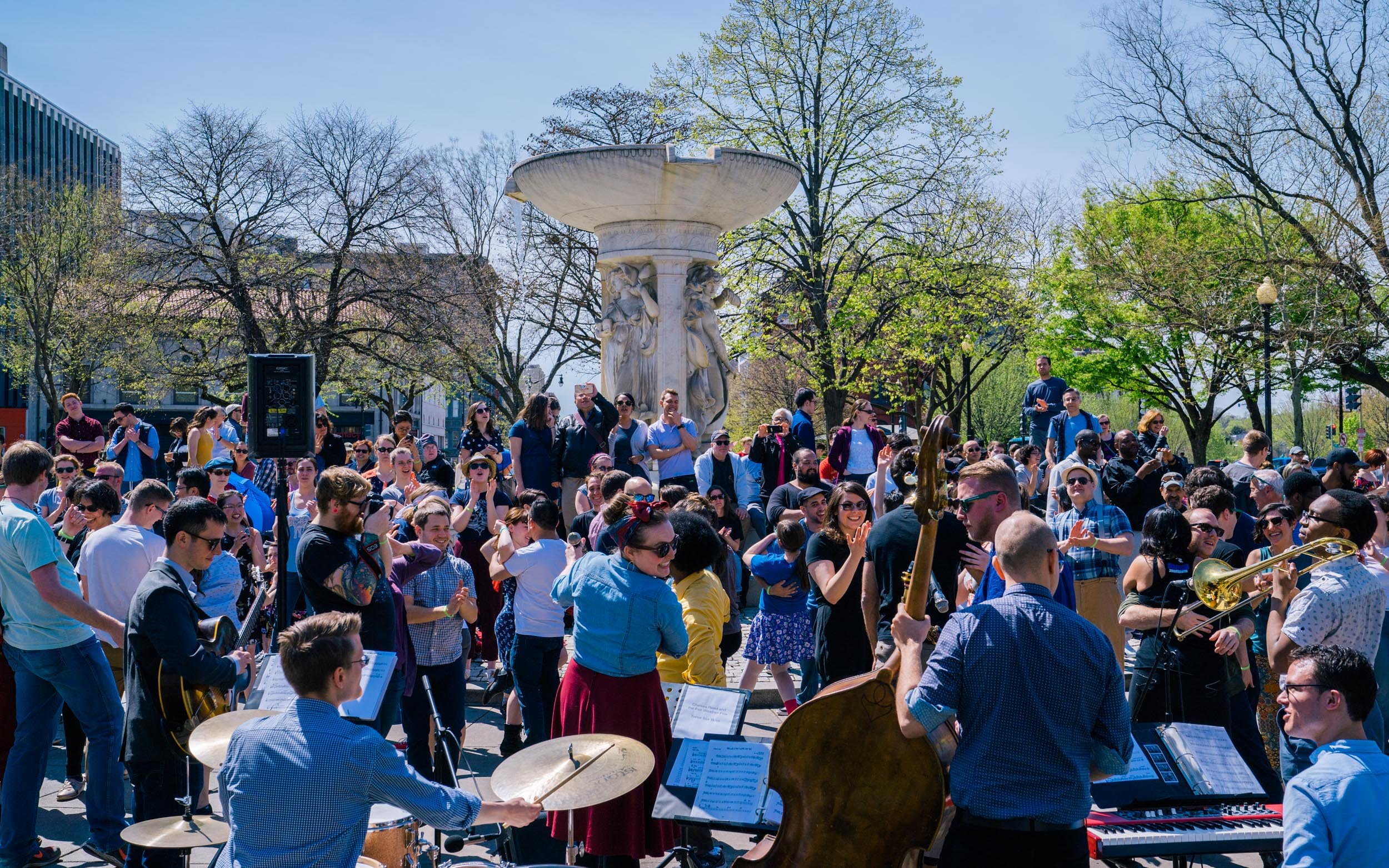
This was also the year of the surprise brass band that suddenly appeared when we couldn’t get the power going for the afternoon dance in Dupont Circle. This is just a fun story that shows how much luck plays into pulling off an event.
Also of note, this was the first year DCLX had a dance at the National Museum of American History because it was combined with an exclusive showing of an early cut of a documentary about Norma Miller’s life for Jazz Appreciation Month. She then later showed up to the Sunday night dance just to hang out.
DCLX 2007, April 13-15
President: Tom O’Brien
Friday Night Main Band: Michael Arenella & His Dreamland Orchestra
Saturday Night Main Band: The Boilermaker Jazz Band & Friends
Saturday Late Night Band: Blue Crescent Quintette
Sunday Night Main Band: The Robert Bell and Erin Schwab Hot Swing Combo
Here you can see the growing popularity of older forms of jazz reach DCLX. Michael Arenella & His Dreamland Orchestra is a NYC based band that specializes in more hot jazz music from the 1920s and early 1930s. This year is also the debut of The Blue Crescent Quintette which is Craig Gildner’s more traditional jazz band. The Robert Bell and Erin Schwab Hot Swing Combo was a band out of Minneapolis that had played several events out there including Midwest Lindyfest and the Ultimate Lindy Hop Showdown. You’re seeing how nationalized the scene and this event were starting to become.
DCLX 2008, April 4-6
President: Robert Patch
Friday Night Main Band: New Orleans Jazz Vipers with Linnzi Zaorski
Friday Late Night Band: Gordon Webster Quintet w/Brianna Thomas
Saturday Night Main Band: The Blue Crescent Septet
The New Orleans Jazz Vipers
Saturday Late Night Band: The Cangelosi Cards
Sunday Night Main Band: The Boilermaker Jazz Band
In 2008, DCLX just full on embraced the growing New Orleans influence in the scene by bringing in a band straight from that city. The New Orleans Jazz Vipers got to play twice that weekend, with the second sharing the stage with Craig Gildner’s Blue Crescent Septet on Saturday night.
The first late night also featured the debut of Gordon Webster at DCLX, but it would be a few more years before he would go on to be a staple of the event. The second late night featured The Cangelosi Cards, a quirky trad jazz band out of NYC. Lead singer, Tamar Korn, is a voice to behold. That band featured several well known NYC jazz musicians, but her vocal acrobatics were the main attraction. Also of note, this is the first year where DCLX is able to have live music for both the Friday and Saturday late night dances.
DCLX 2009, April 16-19
President: Jes Simpson
Friday Night Main Band: Brooks Tegler Quartet
Friday Late Night Band: The Blue Crescent Quintet
Saturday Night Main Band: Phil Ogilvie's Rhythm Kings
Saturday Late Night Band: The Cangelosi Cards
Sunday Night Main Band: The Boilermaker Jazz Band
A lot of familiar names this year, but I think Phil Ogilvie's Rhythm Kings probably qualifies as DCLX’s biggest reach as a featured band. Out of Ann Arbor with many musicians on faculty at the University of Michigan, that band plays mostly hot dance orchestra music from the late 1920s and early 1930s similar to the Cotton Club bands led by Duke Ellington or Cab Calloway. Incredible musicians playing great music, but I think this is the year when DCLX discovered how far back and for how long modern lindy hoppers wanted to dance to pre-Swing Era jazz.
DCLX 2010, April 9-11
Presidents: Susan Brannigan/Anna Lorch/Tom O'Brien
Friday Night Main Band: The Boilermaker Jazz Band
Friday Late Night Band: Jonathan Stout & His Campus Five, featuring Hilary Alexander
Saturday Night Main Band: Jonathan Stout & His Campus Five, featuring Hilary Alexander
Saturday Late Night Band: Red Hot Rhythm Chiefs
Sunday Night Main Band: Blue Vipers of Brooklyn
The reaction to the previous year seems to have been to bring back Jonathan Stout and his band to play not once, but twice at this DCLX. This included his first appearance on the main stage on Saturday night. This is also the debut of Craig’s third incarnation with the Red Hot Rhythm Chiefs, which is his Django music inspired band. DCLX also continued its run of bringing in young jazz bands from NYC with The Blue Vipers of Brooklyn.
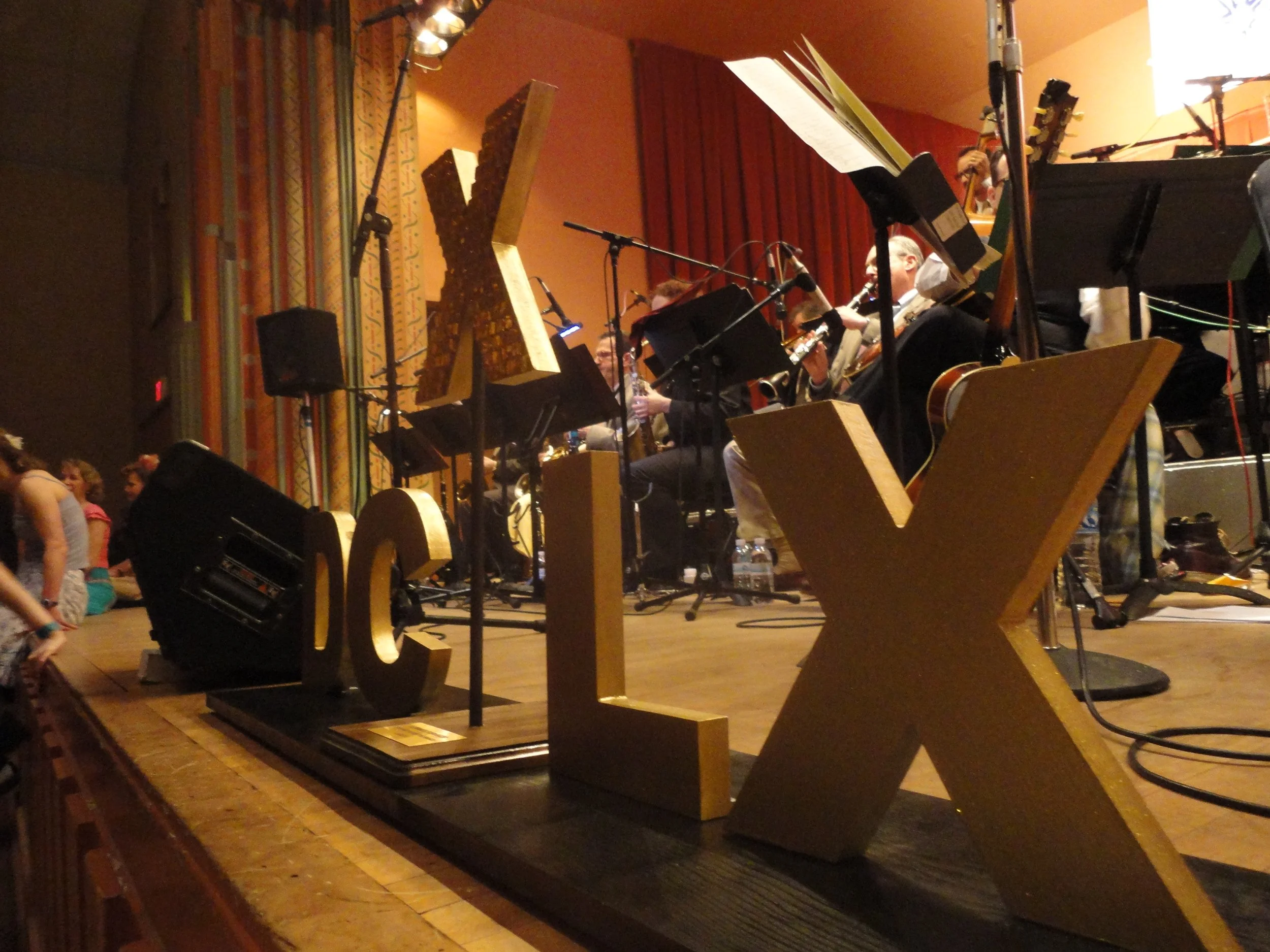
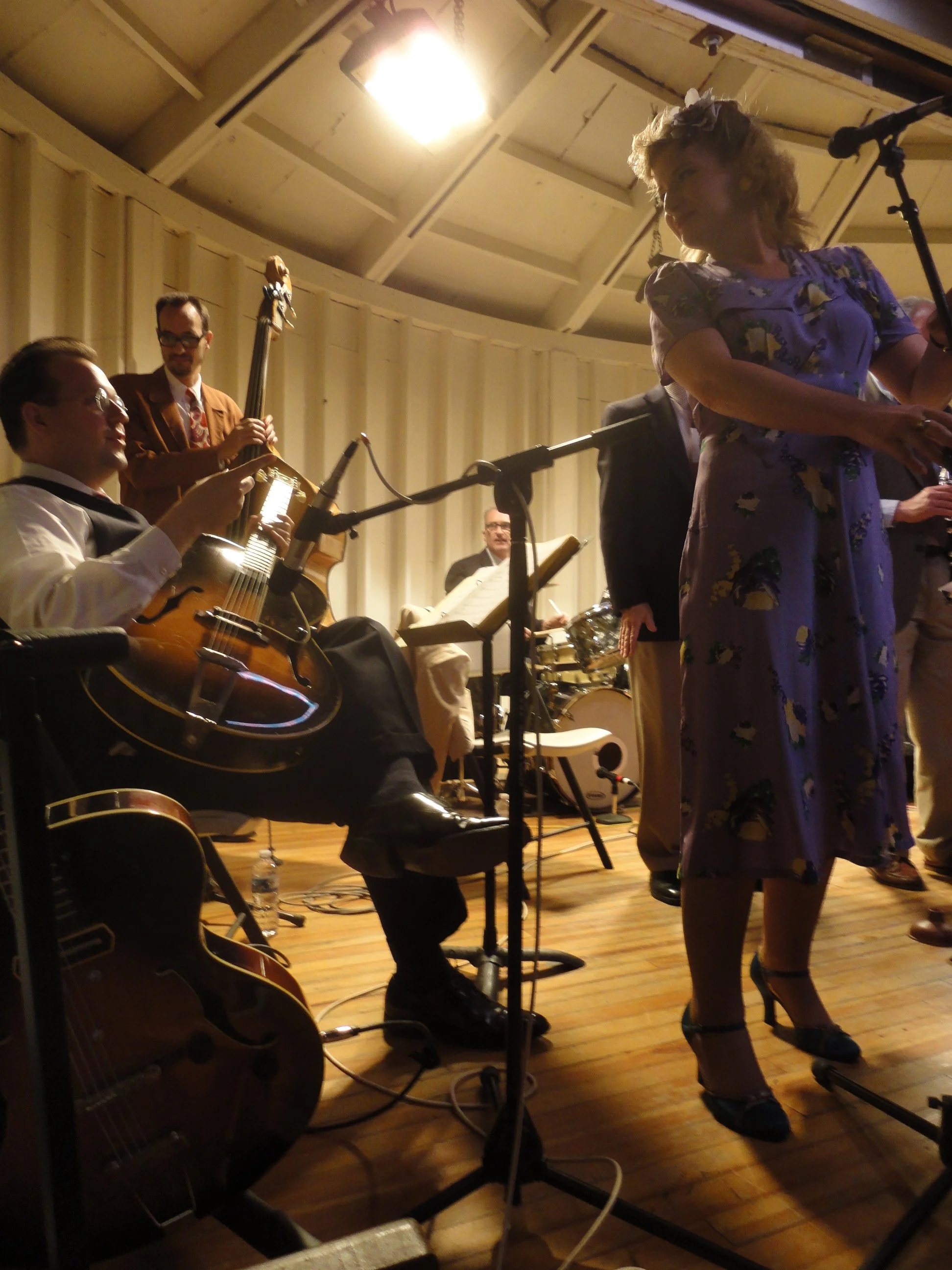
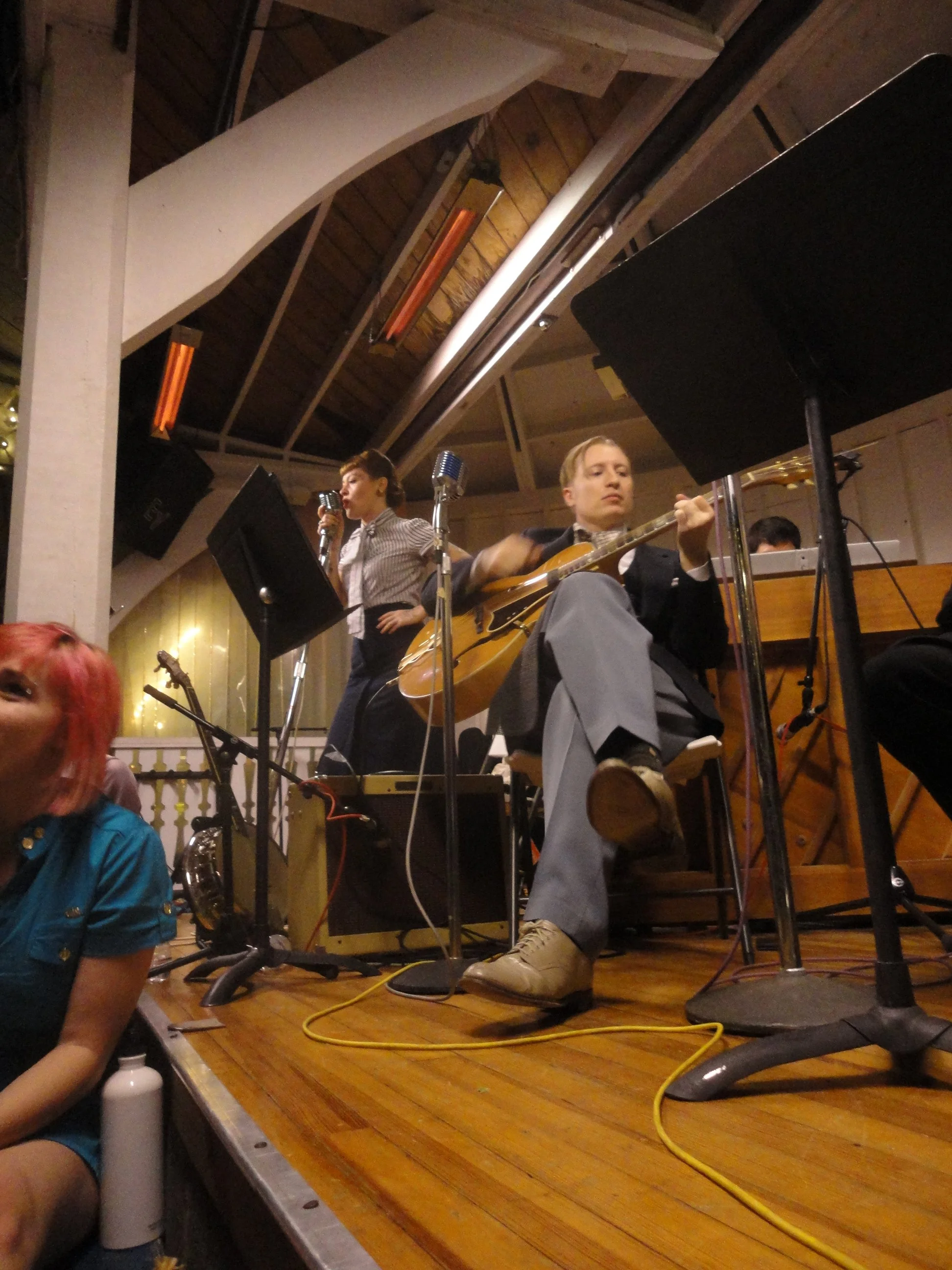
DCLX 2011, April 15-17: Celebrating 10 Years of Dancing in The District
President: Hyong Lee
Friday Night Main Band: Glenn Crytzer and his Syncopators featuring Meschiya Lake
Jonathan Stout & His Campus Five, featuring Hilary Alexander
Friday Late Night Band: The Gordon Webster Septet
Saturday Night Main Band: The Jonathan Stout Orchestra, featuring Hilary Alexander
Crytzer’s Blue Rhythm Band featuring Meschiya Lake
Saturday Late Night Band: Blue Sky 5 +2
Saturday Blues Room Band: Stacy Brooks
Sunday Night Main Band: The Boilermaker Jazz Band
The 10th DCLX was planned to be the last, but instead inspired a renewal. Previously I wrote:
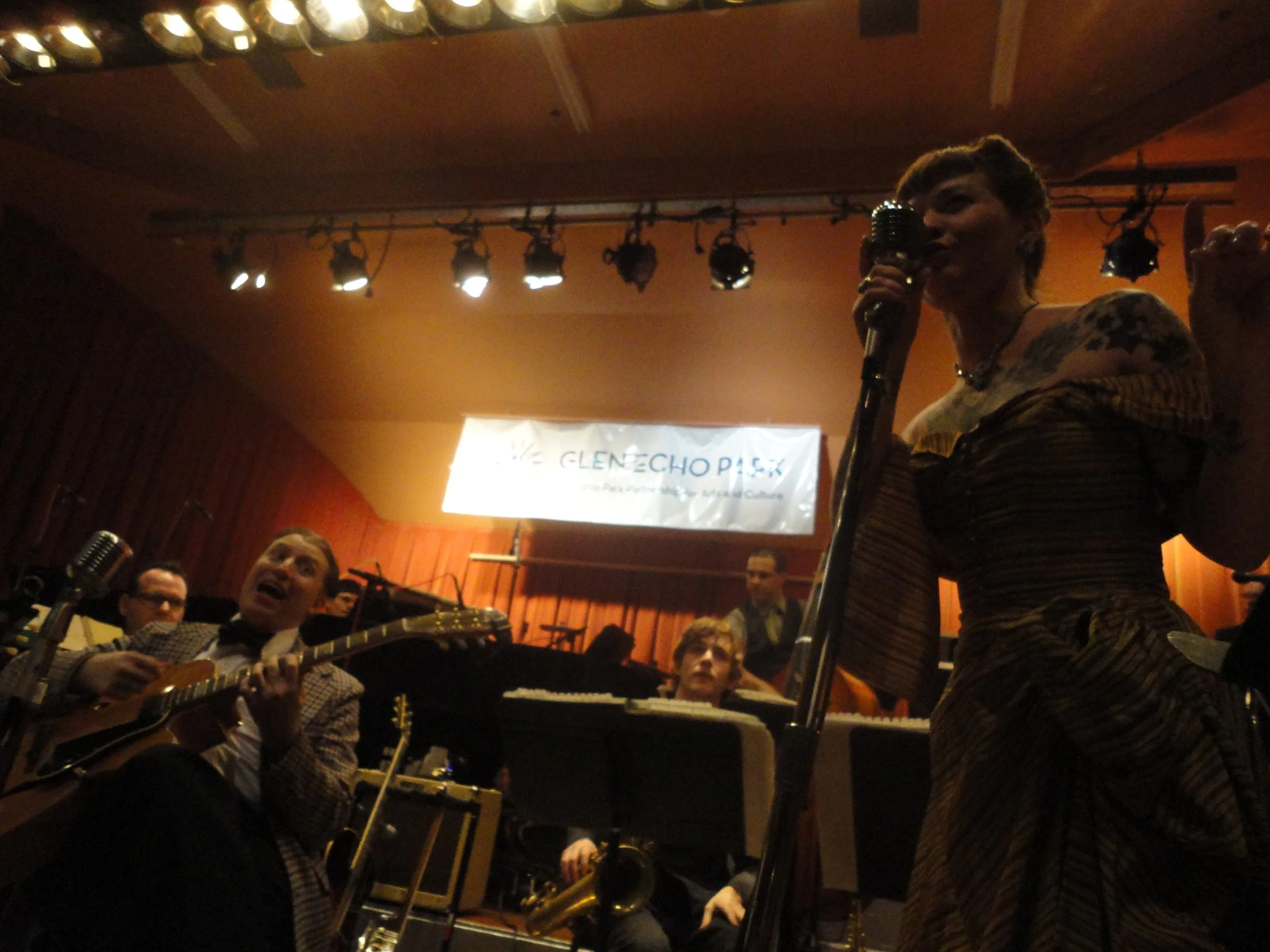
“The 10th anniversary battle of the bands was an act of desperation by a DCLX core that was growing weary of the year to year grind with few new members replenishing their ranks. They decided that the 10th DCLX would be its last and that they would go out with a flourish. With no regard to future financial sustainability, they booked two entire swing big bands from the other side of the country to share the stage at Glen Echo Park. However, the spectacle of so many talented musicians inspired new people to volunteer and also re-energized a few veterans to stay on.”
DCLX went all out for this weekend with THREE double bills. In addition to the main event between their respective big bands, Cryzter and Stout split the Friday main dance with their smaller bands to kick off the weekend. Not only was there live music for both late nights, but the Saturday late night was the first to feature separate live bands for both the main room and also for the blues room. Even the Boilermakers on Sunday night had a wild energy since everyone was expecting that to be the last DCLX dance ever. However, by that night, it seemed like a few committee members were already thinking that the show could go on.
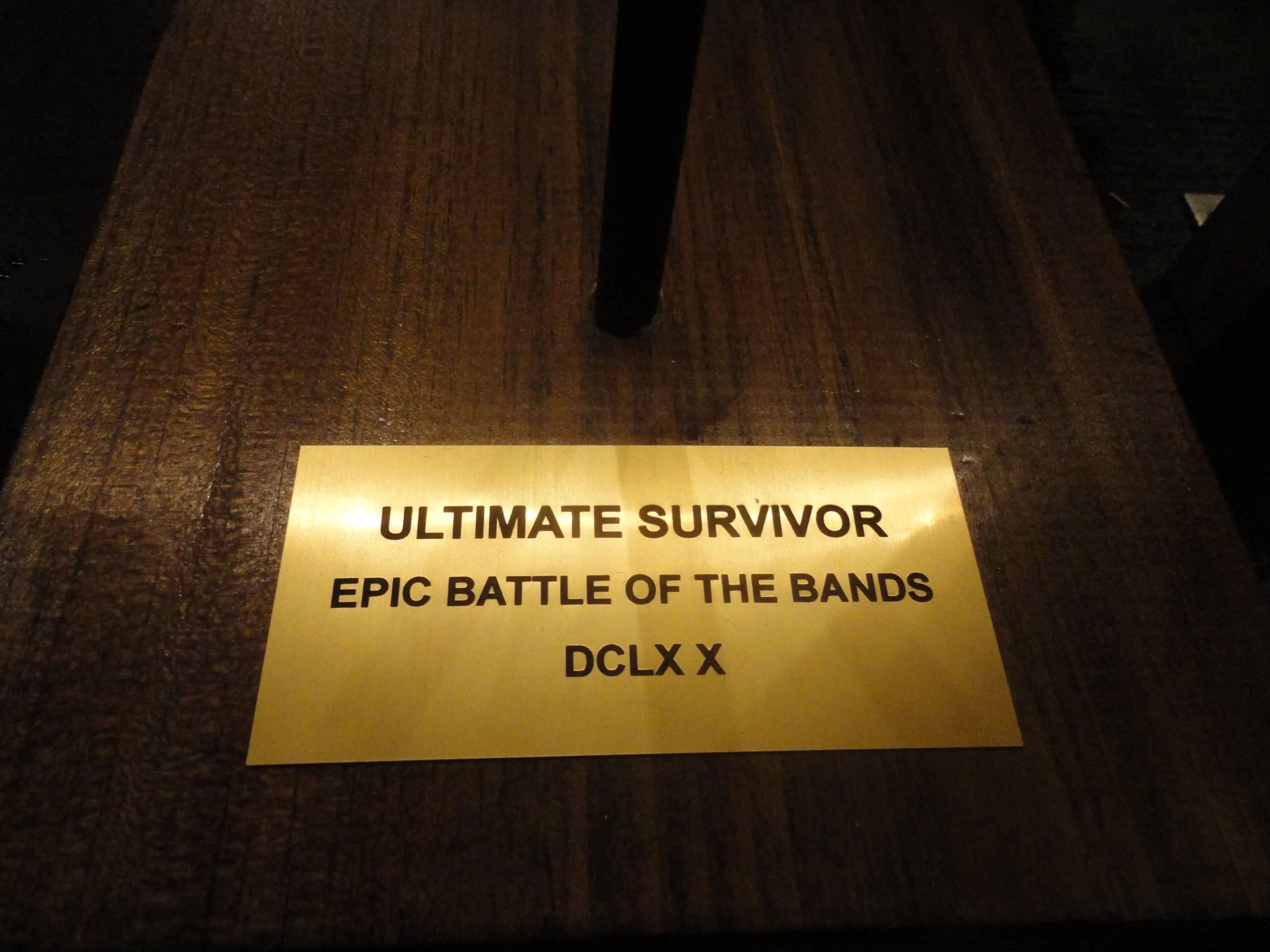
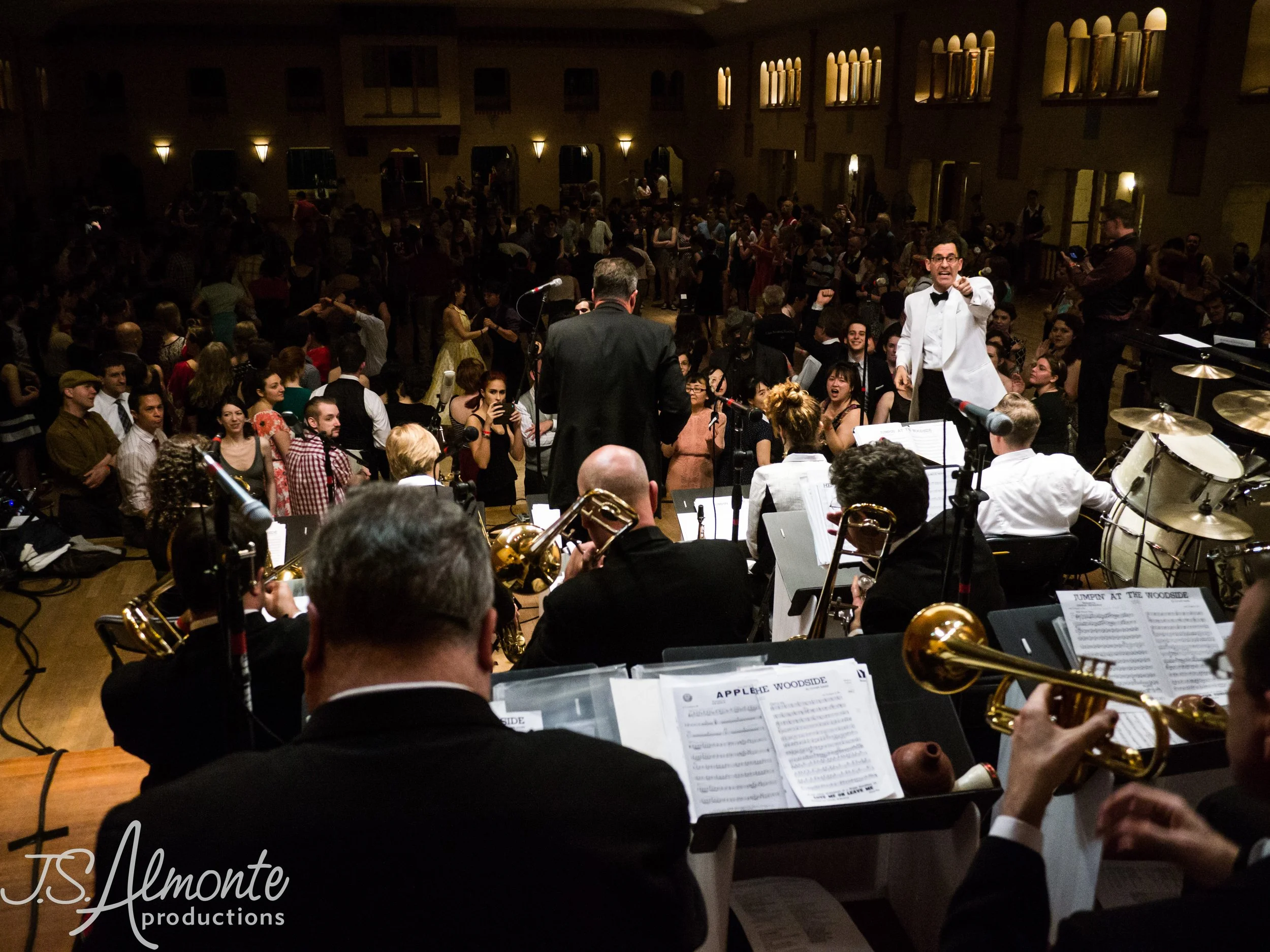
The battle on Saturday night was the main event, and 15 years later, I can say that it was probably one of the most electrifying nights of live music that I’ve ever experienced. The spectacle and energy from that night probably powered DCLX to keep going to this day.
The 2011 battle of the bands had far ranging implications for the rest of the lindy hop scene. It helped to inspire the start centering big band line ups at Lindy Focus, which in turn birthed the Heritage Sounds transcription project. That funded the transcriptions of the big band arrangements of Chick Webb, Jimmie Lunceford, Lionel Hampton and Erskine Hawkins which are all now available for anyone to bring to life on any dancefloor or concert around the world. You can draw a straight line between the 2011 battle and the Earl Hines transcription project slated to debut at this year’s Lindy Focus.
I thought about ranking these DCLXs, but then I realized I don’t remember enough details about each individual event to distinguish many of them. However, I can still say with confidence that DCLX 2011 would be my clear number 1.
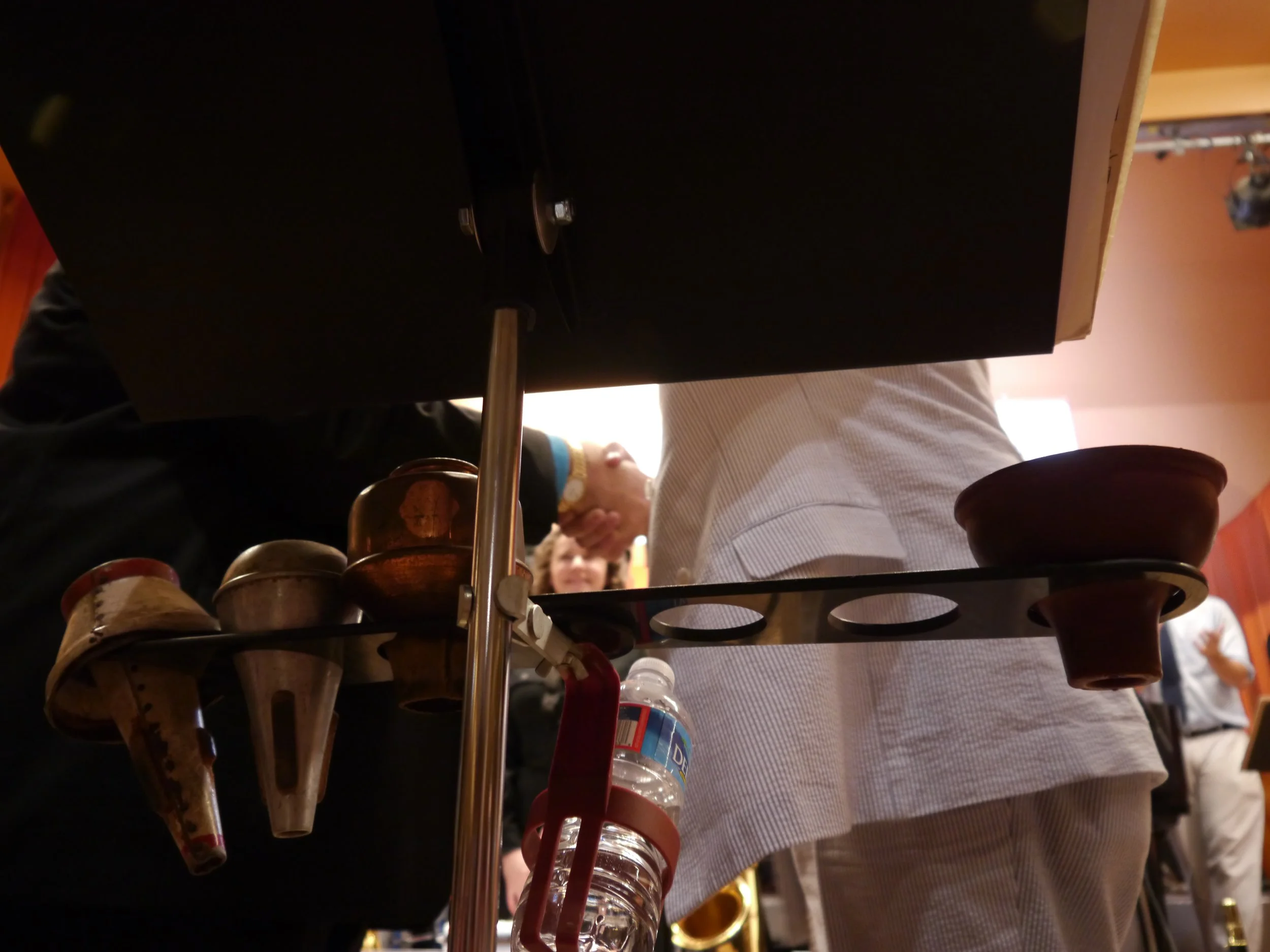
DCLX 2012, April 19-22: We're Not Dead Yet
President: Robert Patch
Friday Night Main Band: Craig Gildner’s Blue Crescent Syncopators
Friday Late Night Band: Brooks Tegler’s Joy of Sax
Saturday Night Main Band: The Tom Cunningham Orchestra
Crytzer’s Blue Rhythm Band featuring Meschiya Lake
Saturday Late Night Band: The Careless Lovers
Sunday Afternoon Band: The Bitter Dose Combo
Sunday Night Main Band: The Boilermaker Jazz Band
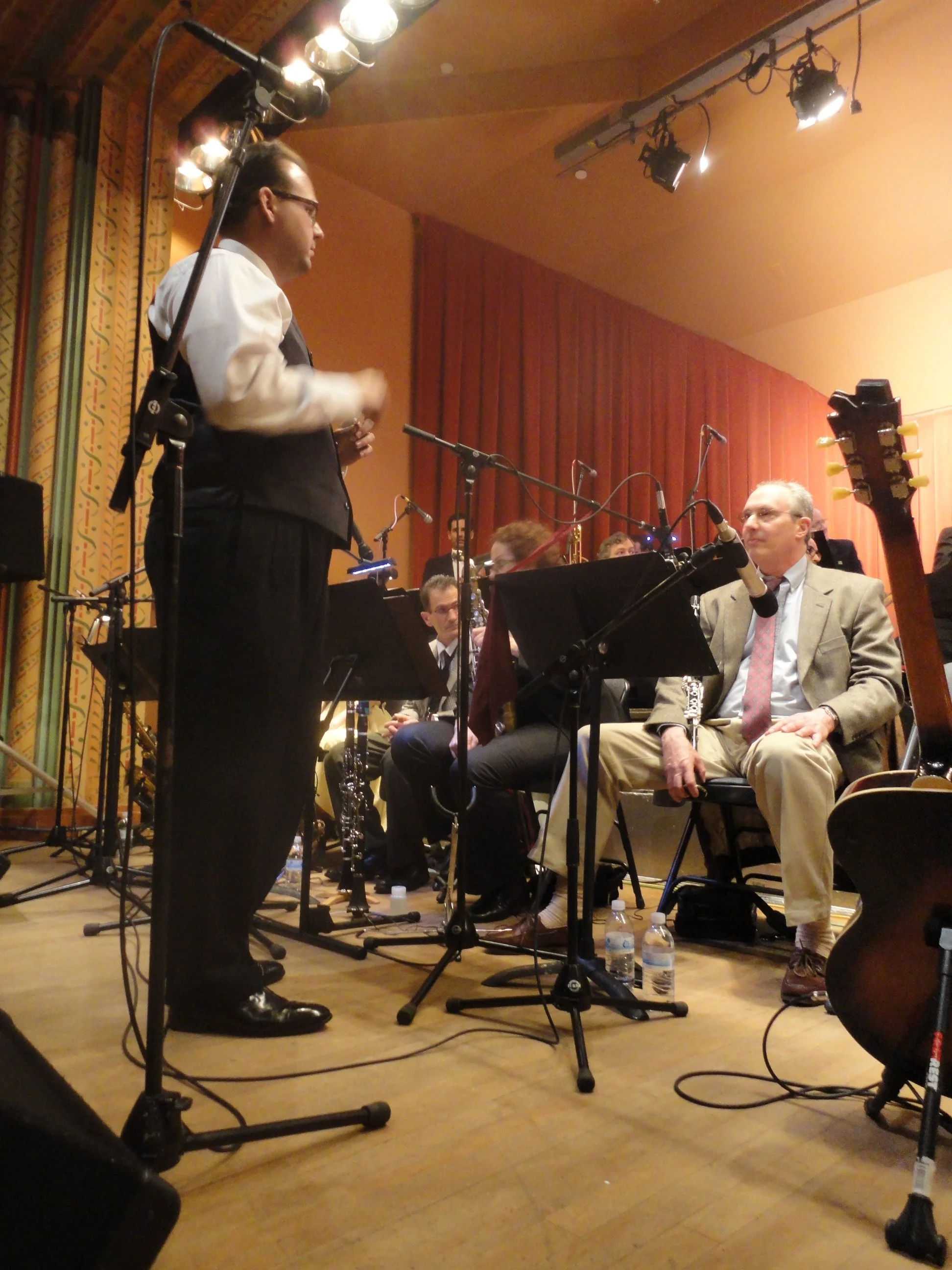
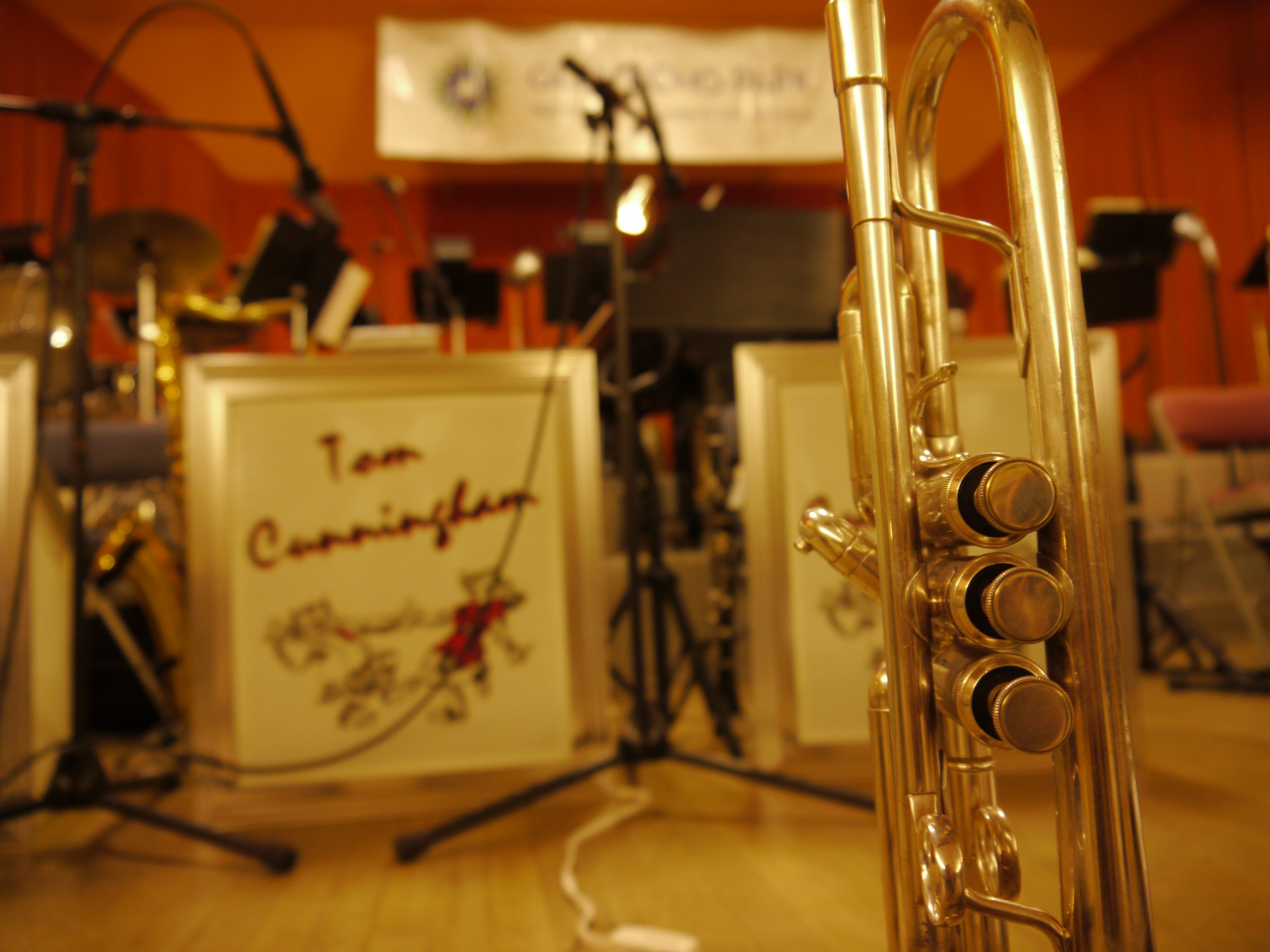
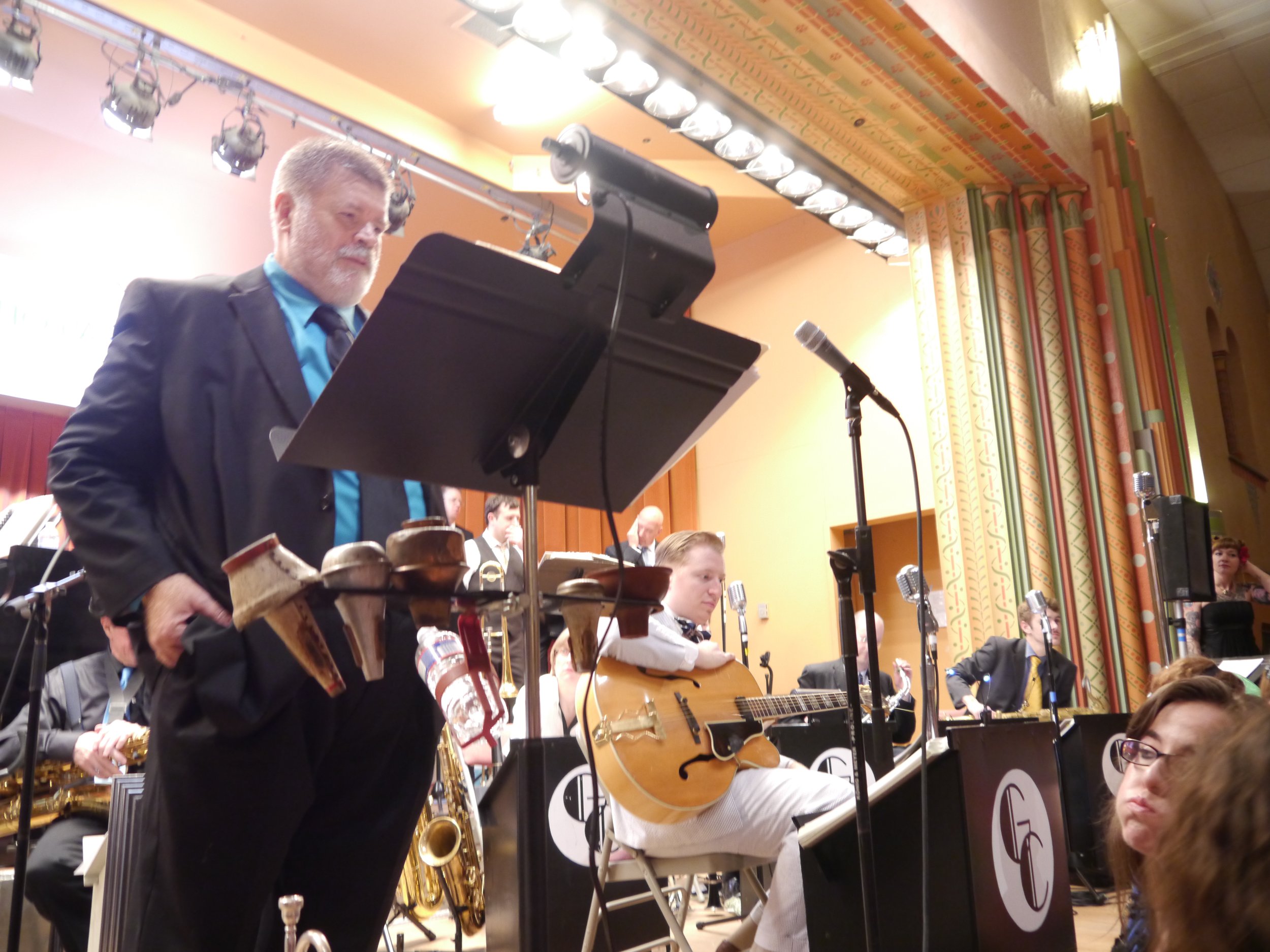
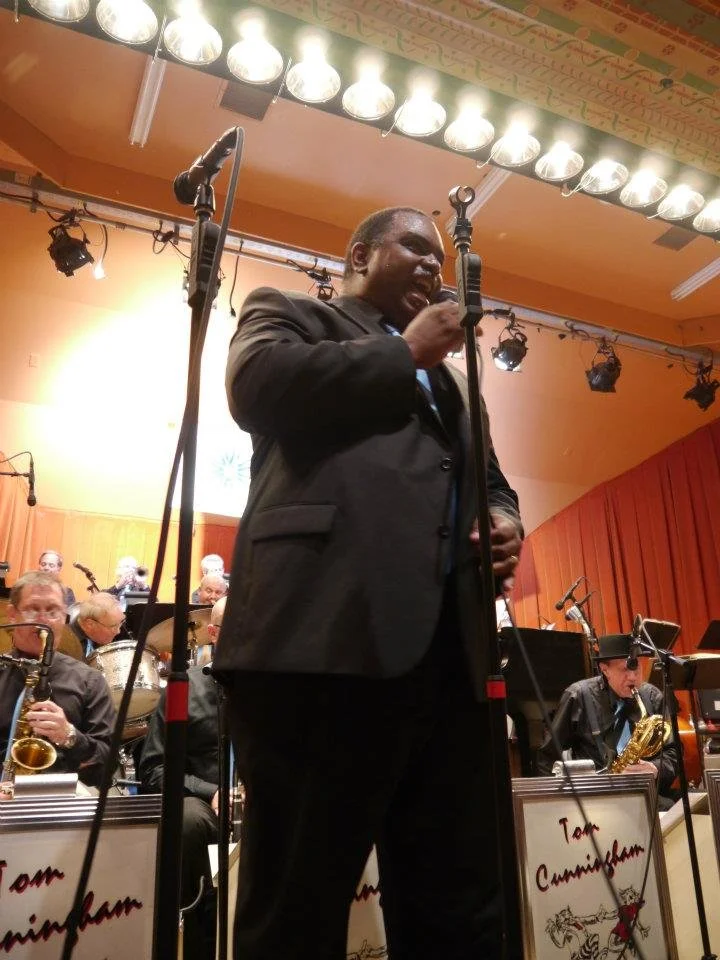
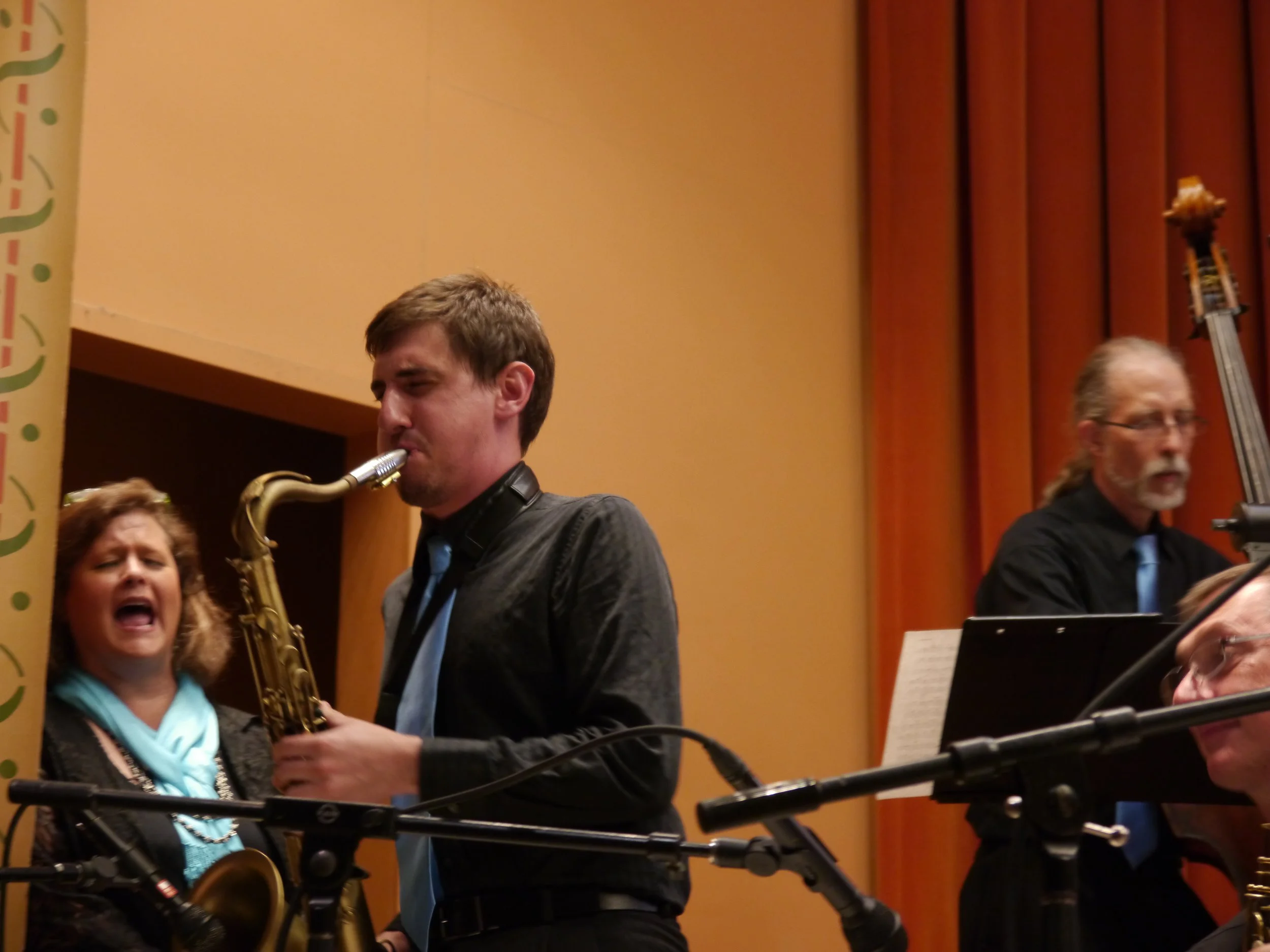
2011 was a tough act to follow. DCLX was inspired to return, but was not in a position to blow all their resources again. The challenge was to live up to the growing legend of the last event, but still keep the energy going. They decided to split the difference by having a second big band battle, but with Cryzter, the declared winner of the last battle, facing off against hometown favorite Tom Cunningham. This provided a worthy opponent while not having to spend more money flying in a second band. Although lower profile than the previous edition, I actually thought this battle was more compelling of the two because it highlighted the tension a lot of events experience when they opt to hire more well known, out of town bands over their local musicians. Because of that, Cunningham definitely brought a more competitive vibe to this battle, which I think brought out the best in both sides in the end.
The late night was the debut of the Seattle based Careless Lovers at DCLX. Front man Mike Faltesek was a former resident of DC and noted dance instructor at the time. This was also the first year DCLX was able to hire live music for one of the afternoon dances. That was provided by The Bitter Dose Combo, a local band specializing in Django inspired music.
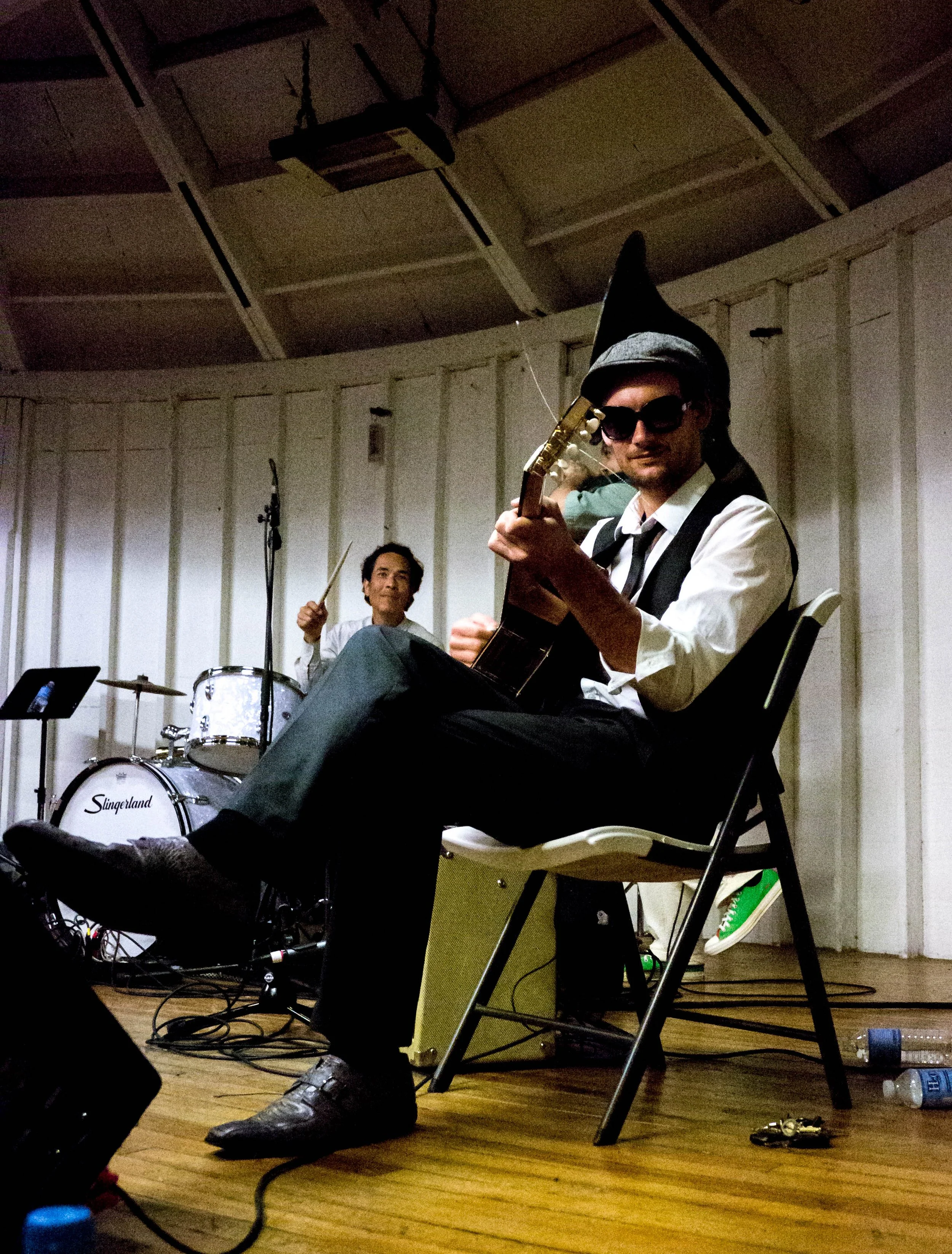
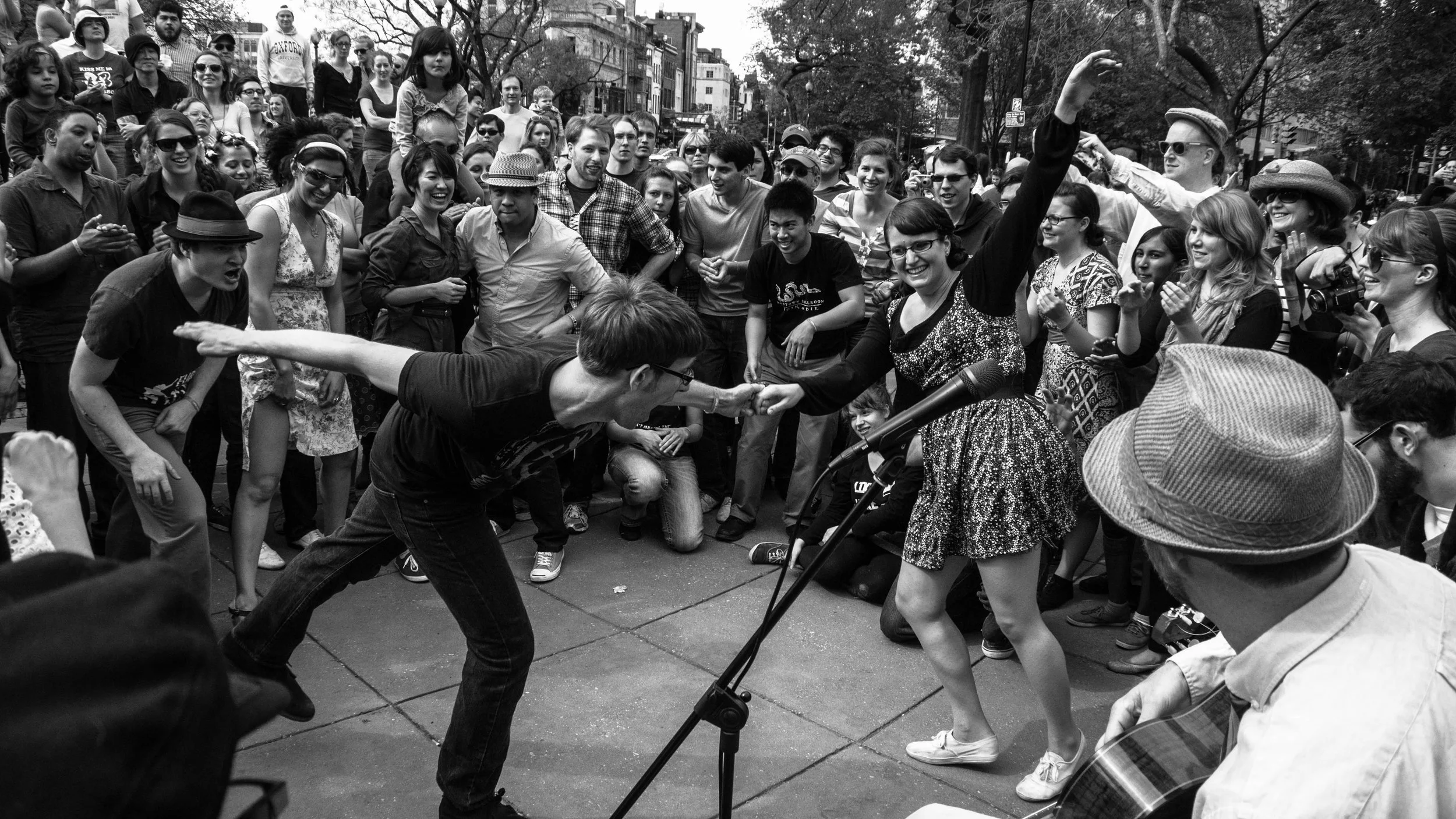
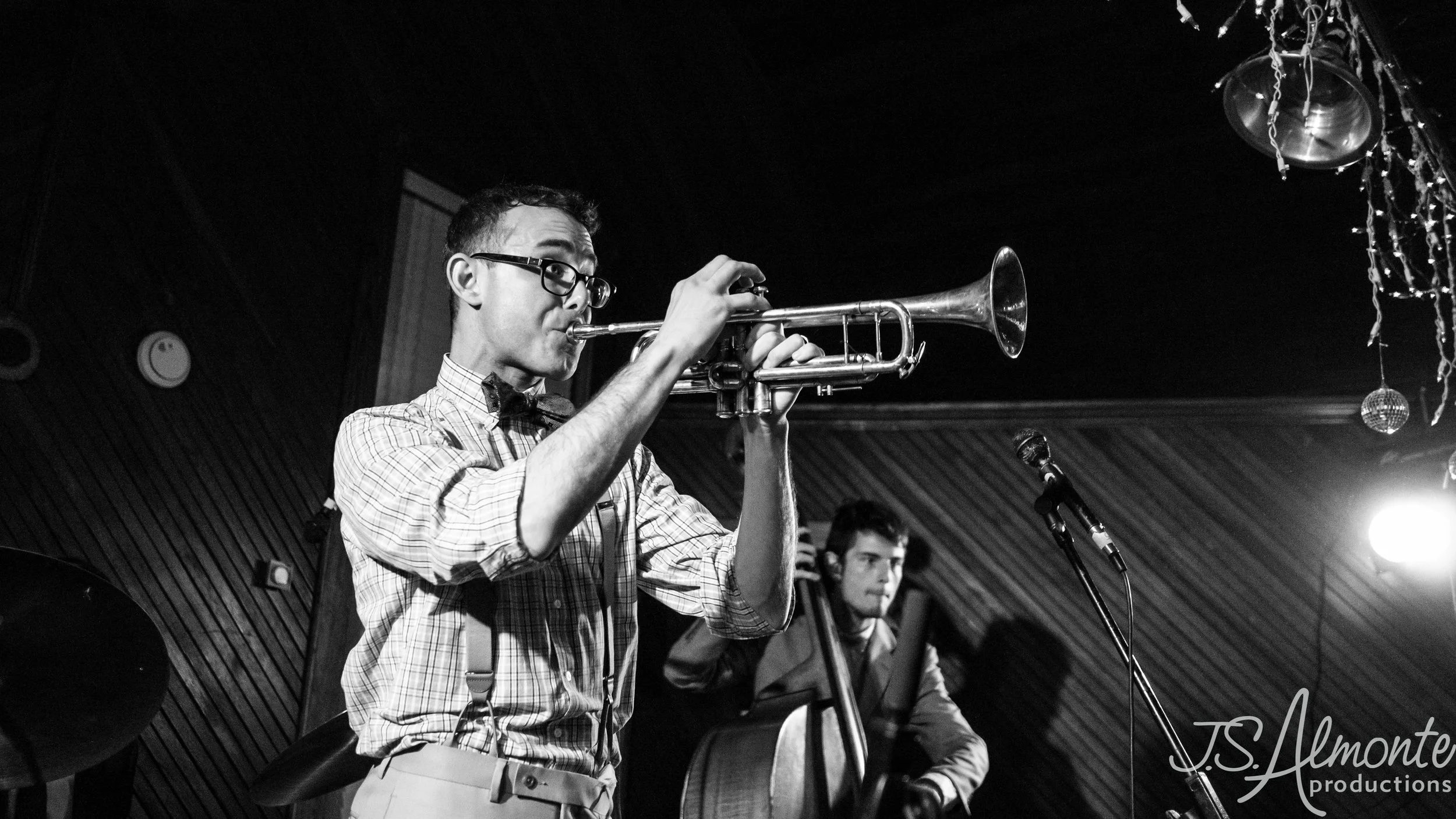
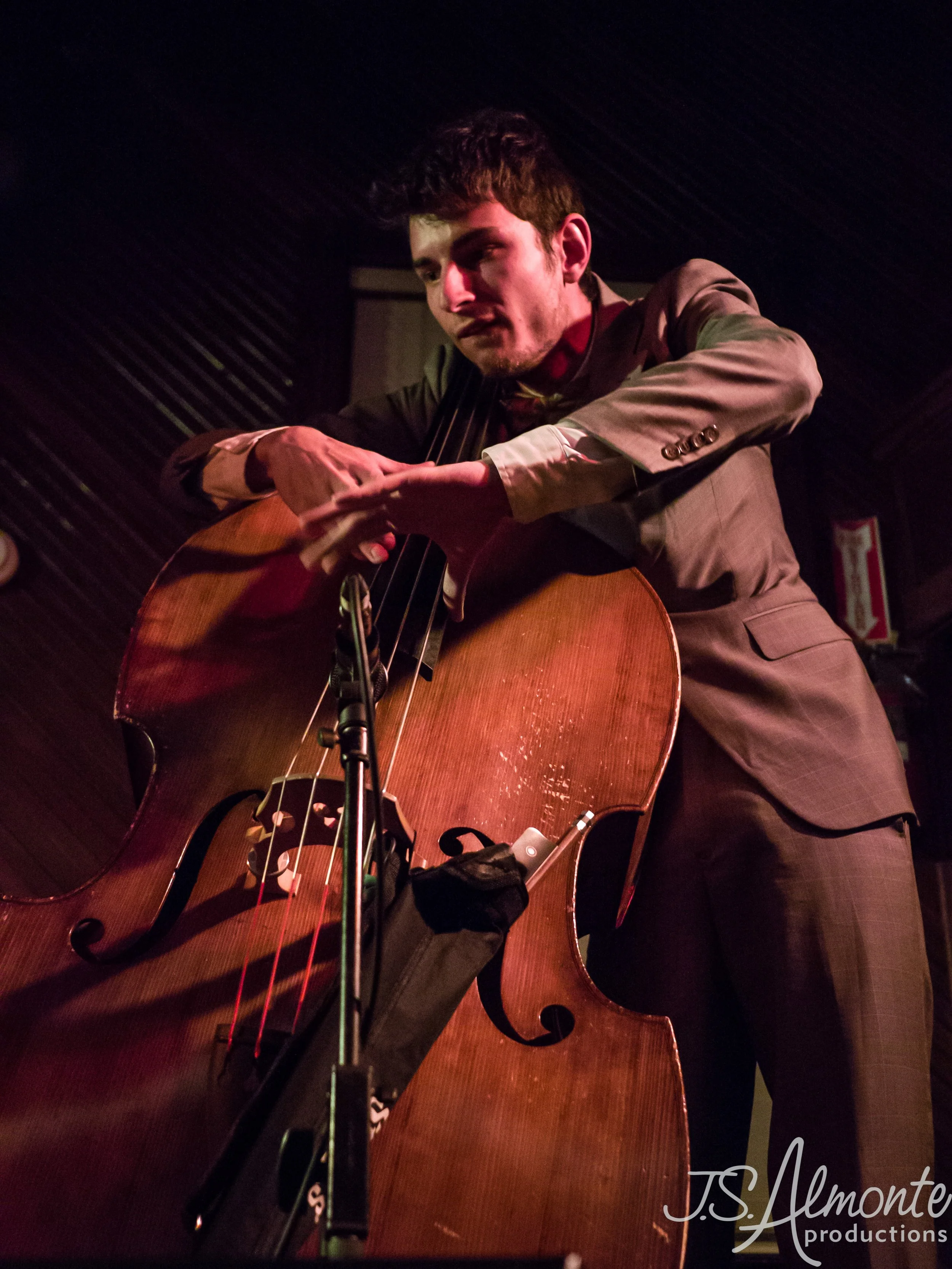
DCLX 2013, April 19-21: Alive and Kickin' It Frankie Style
President: Robert Patch
Friday Night Main Band: Meschiya Lake & The Little Big Horns
Friday Late Night Band: Sly Blue
Saturday Night Main Band: Bria Skonberg’s Hot Five
The Blue Crescent Syncopators
The Boilermaker Jazz Band
Saturday Late Night Band: Meschiya Lake & The Little Big Horns
Sunday Afternoon Band: The Bitter Dose Combo
Sunday Night Main Band: Jason Prover & The Sneak Thievery Orchestra
This is a super interesting line up with DCLX going with the simple theme that three is more than two. After back to back years featuring big band battles, DCLX went all in on small group hotter sounding jazz. It was a clever way to increase the number of bands on stage at the same time.
I think it would be unfair to lump all of these groups under the umbrella of “trad jazz” or New Orleans style music, although a large number of these musicians were splitting time between NYC and New Orleans.
From what I could gather, many of the hot jazz musicians that came into prominence in the 2000s came up through a music camp infrastructure built up by the trad jazz community in the 1980s and 90s. Many of those students carried that background with them when they learned to play more modern jazz when they got into college music programs. After Hurricane Katrina devastated New Orleans in 2006, it inspired a lot of people including a large number of these new music school graduates to do their part to celebrate and uplift the music and culture of New Orleans.
Inspired by the same sentiment, a dancer named Amy Johnson moved to post Katrina New Orleans. She was also the organizer behind Ultimate Lindy Hop Showdown, which was probably the most important dance event of the 2000s. After she connected with a band called the Loose Marbles, she began to feature them more and more at ULHS. They blew away the dancers with their energy, and from there, they spread the New Orleans jazz gospel to every corner of the lindy hop scene.
The Loose Marbles themselves were a sort of incubator for this generation of young jazz players. Being an informal group, I remember one of the band members speculating that maybe 100 musicians may have played under that name over the years, many of whom went on to form their own bands, some of which were featured at DCLX.
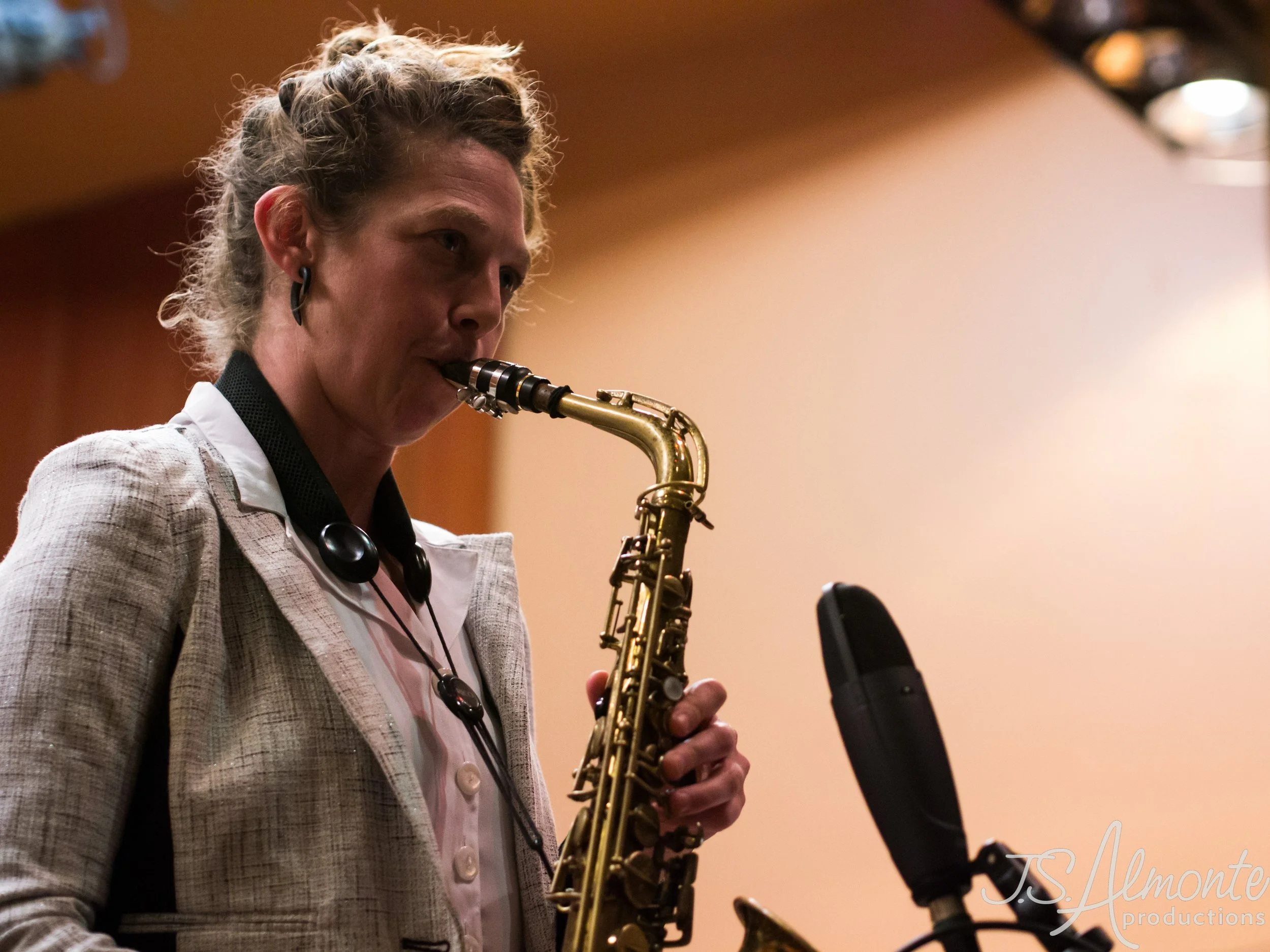
Probably the most famous one was Meschiya Lake and The Little Big Horns. Meschiya’s voice is absolutely legendary, and she has been recognized as one of the best singers in New Orleans throughout the 2000s and 2010s. Her band was on a roll by the time of when they were invited to join DCLX 2013 for two nights.
Sly Blue and The Sneak Thievery Orchestra continued the NYC to DCLX hot jazz band connection. But out of all of them, Bria Skonberg has probably had the most mainstream jazz success, which people were just starting to recognize by 2013. Her appearance at DCLX was hyped by a full write up in the Washington Post right before the event, which was probably the most publicity the event got outside of the lindy hop community.
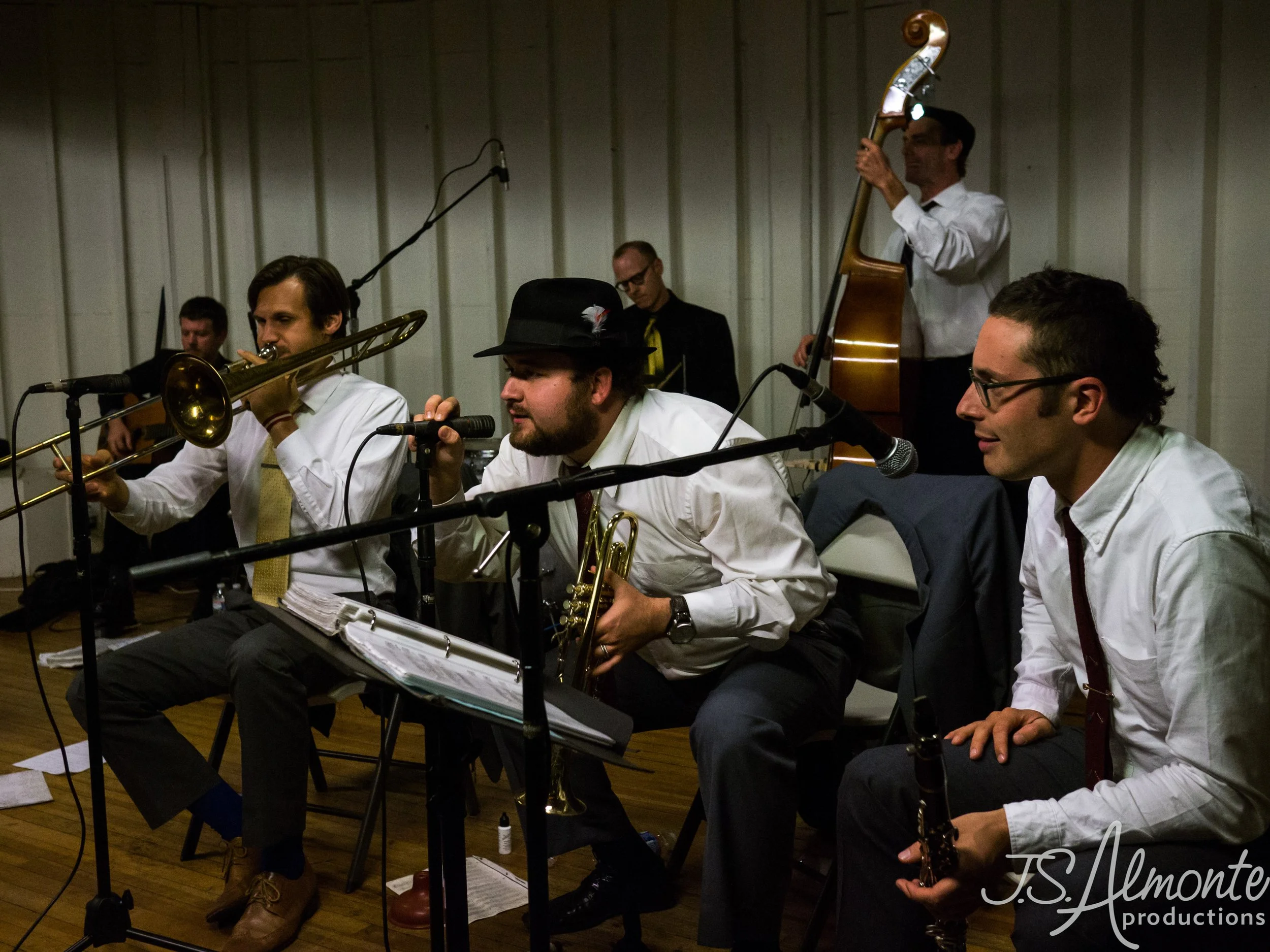
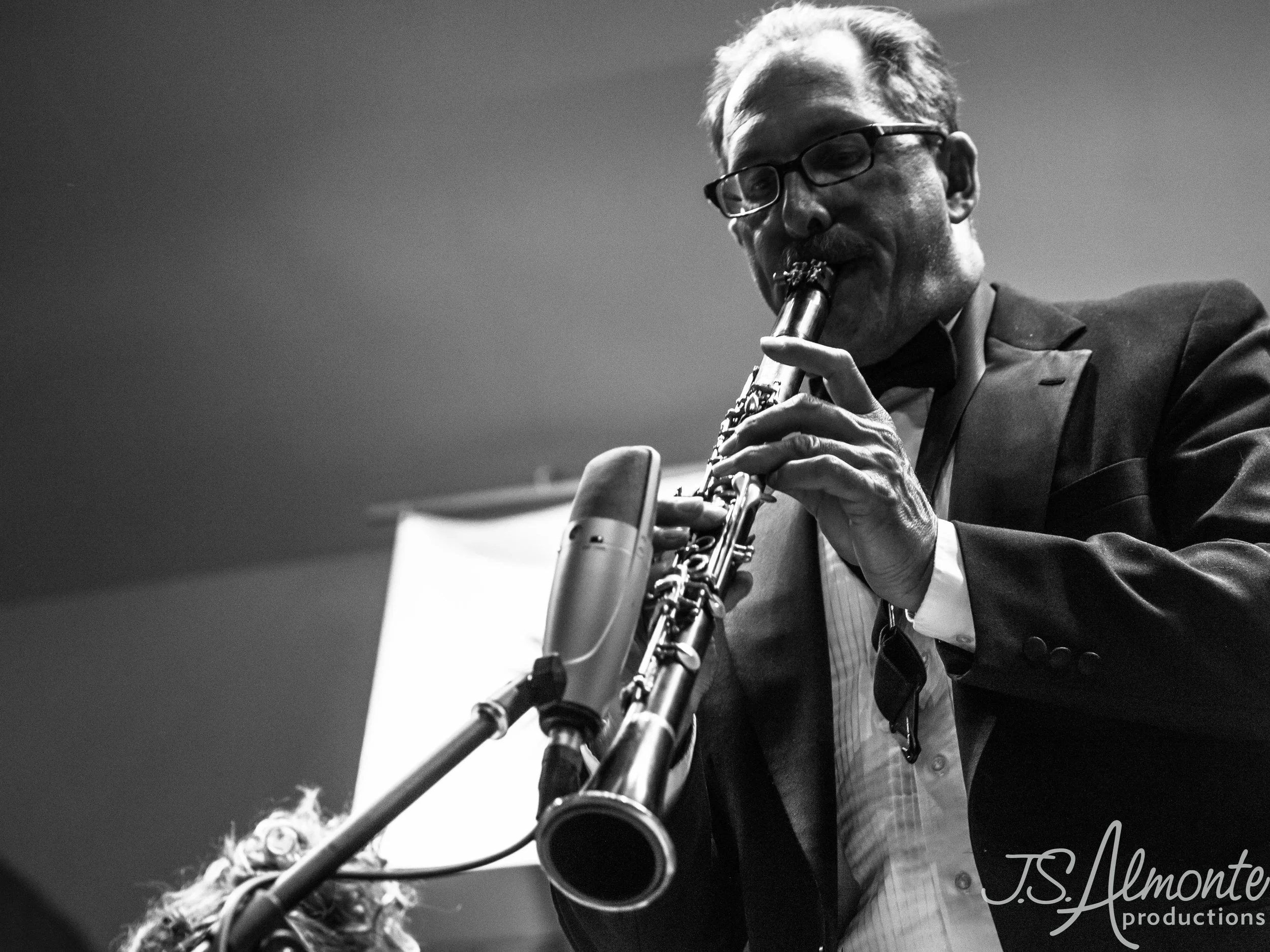
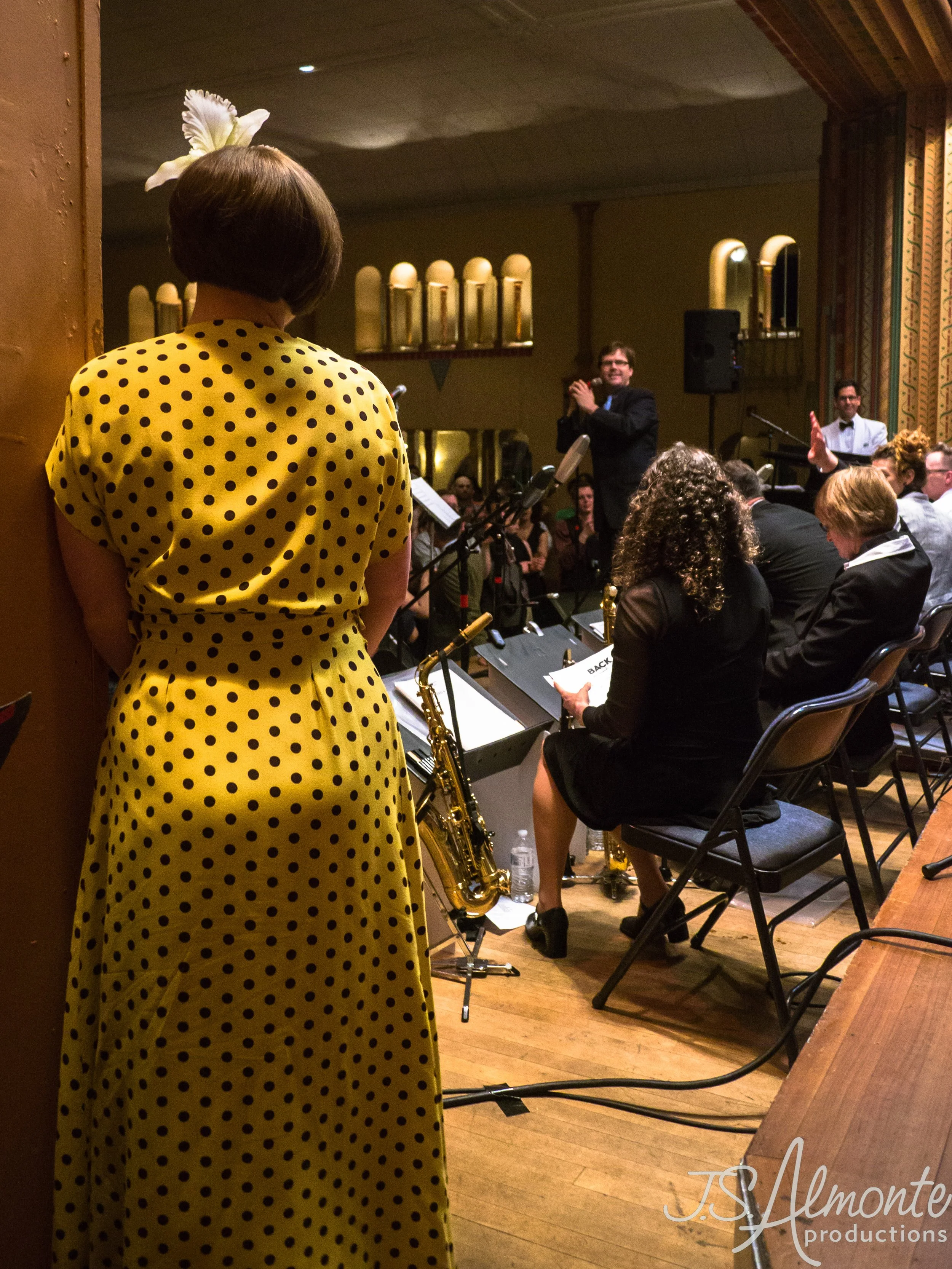
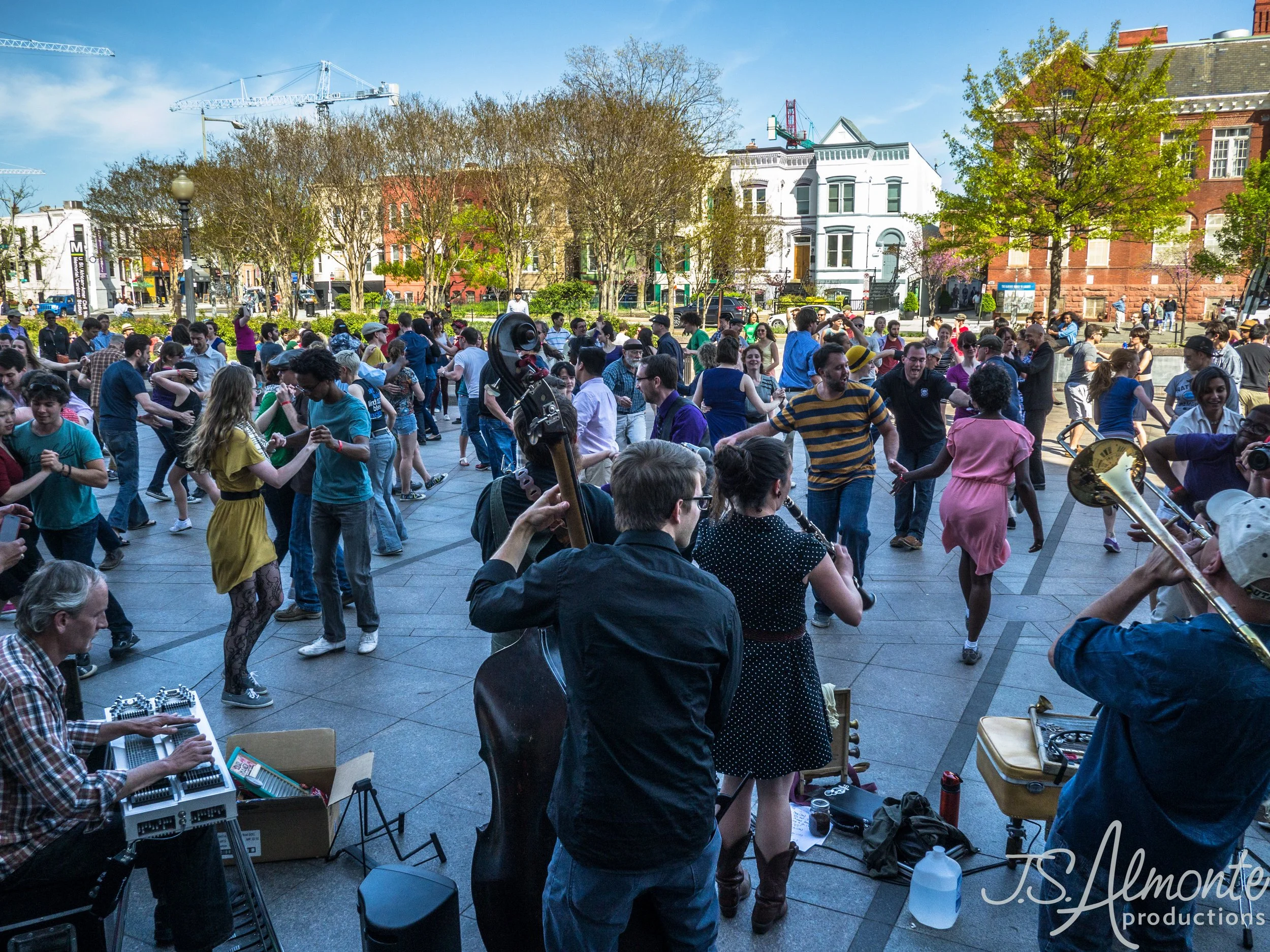
DCLX 2014, April 25-27
President: Mike Marcotte
Friday Night Main Band: The Smoking Time Jazz Club
Friday Late Night Band: The Boilermaker Jazz Band
Saturday Afternoon Band: The Bitter Dose Combo
Saturday Night Main Band: Craig Gildner & Laura Windley, feat. Aurora Nealand
Saturday Late Night Band: The Smoking Time Jazz Club
Sunday Afternoon Band: The Bumper Jacksons
Sunday Night Main Band: Gordon Webster & Friends
Aurora Nealand was another incredible New Orleans based singer and reed player who impressed lots of people with her stint in the big band line ups at Lindy Focus the year before. This unintentionally made her the perfect bridge as she was a featured musician in the return of big band music to the main night of DCLX while also playing with The Smoking Time Jazz Club at the Friday night main dance and the Saturday late night.
I know I just went deep on the New Orleans hot jazz influence on lindy hop, but 2014 will mark the end of that era at DCLX at least. You may have noticed that a few bands have gotten featured twice during a weekend. Most of them were from New Orleans. From my discussions with some people involved on both sides, they mentioned that the bands could make more money playing at home for the same amount of time that they would be traveling for out of town gigs. People will talk about how trends come and go, but economics played as much of a part in the end the run of that style of music at this event and many others.
That being said, you can tell the event is doing well because this is the first year where they feature a live band at both afternoon dances. In fact, from this point forward, DCLX has live music at all of its dances as you can see with The Bumper Jackson's who were a local band that filled out the Sunday afternoon dance with their quirky blend of folk, country and jazz.
DCLX 2015, April 24-26: The Department of Lindy Hop
President: Mike Marcotte
Friday Night Main Band: The Boilermaker Jazz Band
Craig Gildner's Blue Crescent Syncopators
Friday Late Night Band: Michael Gamble & the Rhythm Serenaders
Saturday Afternoon Band: DCLX Jam Band
Saturday Night Main Band: Jonathan Stout Orchestra
Saturday Late Night Band: Falty & The Defects
Sunday Afternoon Band: The Butler Parks Hot Serenaders
Sunday Night Main Band: Gordon Webster
In what will become a permanent shift to highlighting big band music, Jonathan Stout returned to DCLX leading his all star orchestra in 2015. I believe this capped off a year-long campaign where he headlined almost every major event in the United States including Lindy Focus, The International Lindy Hop Championships, and the final Ultimate Lindy Hop Showdown. With him, you’ll notice the line up is dominated by bands led by people who primarily identified themselves as dancers before their music careers.
A lot of dancers had musical backgrounds before they discovered lindy hop, and the dance gave many of them an opportunity to explore and grow that interest to the point where they became confident enough to start their own bands. Often they were bolstered by full time musicians, but some others like The Butler Parks Hot Serenaders, were made up completely of dancer/musicians.
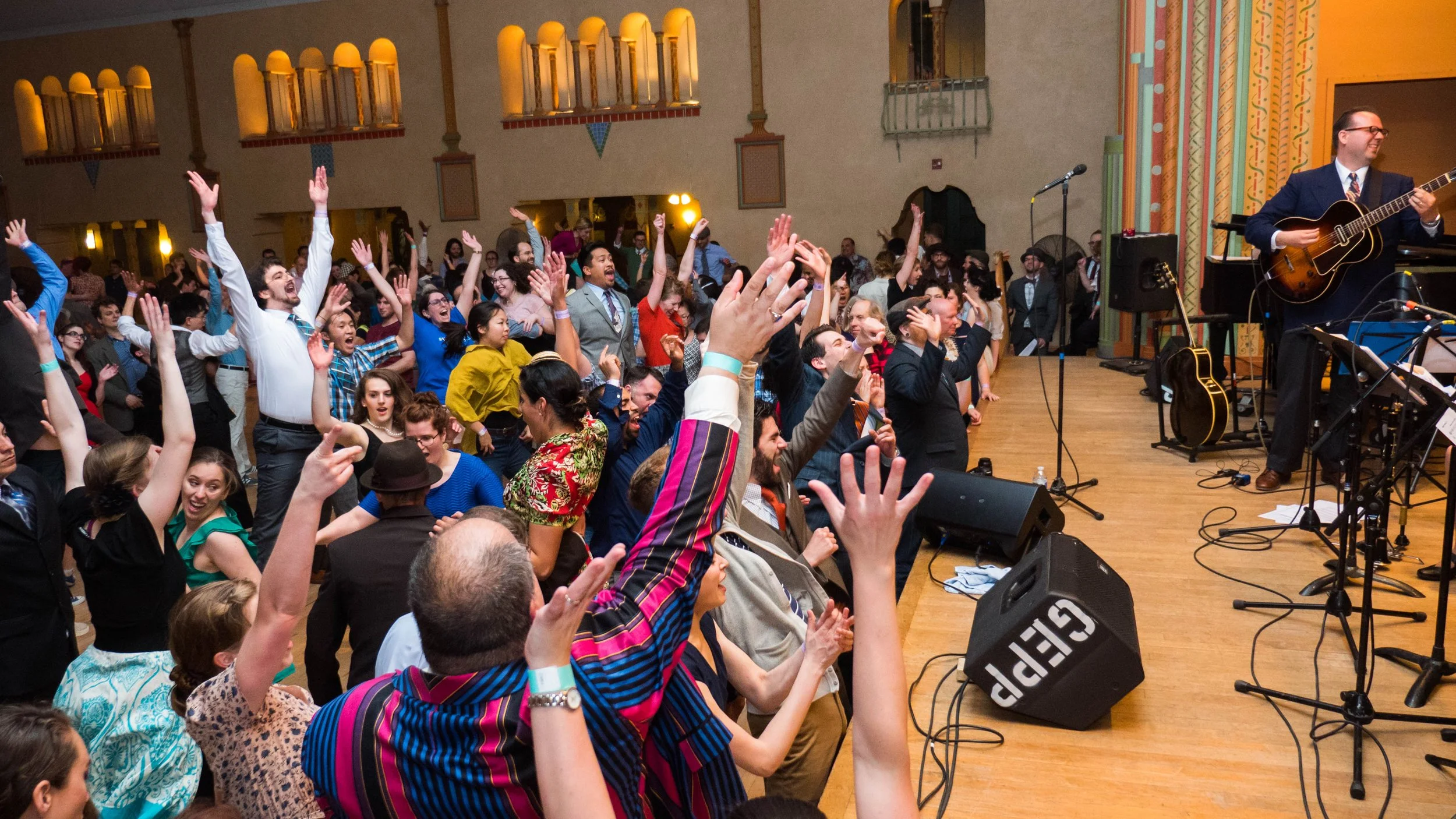
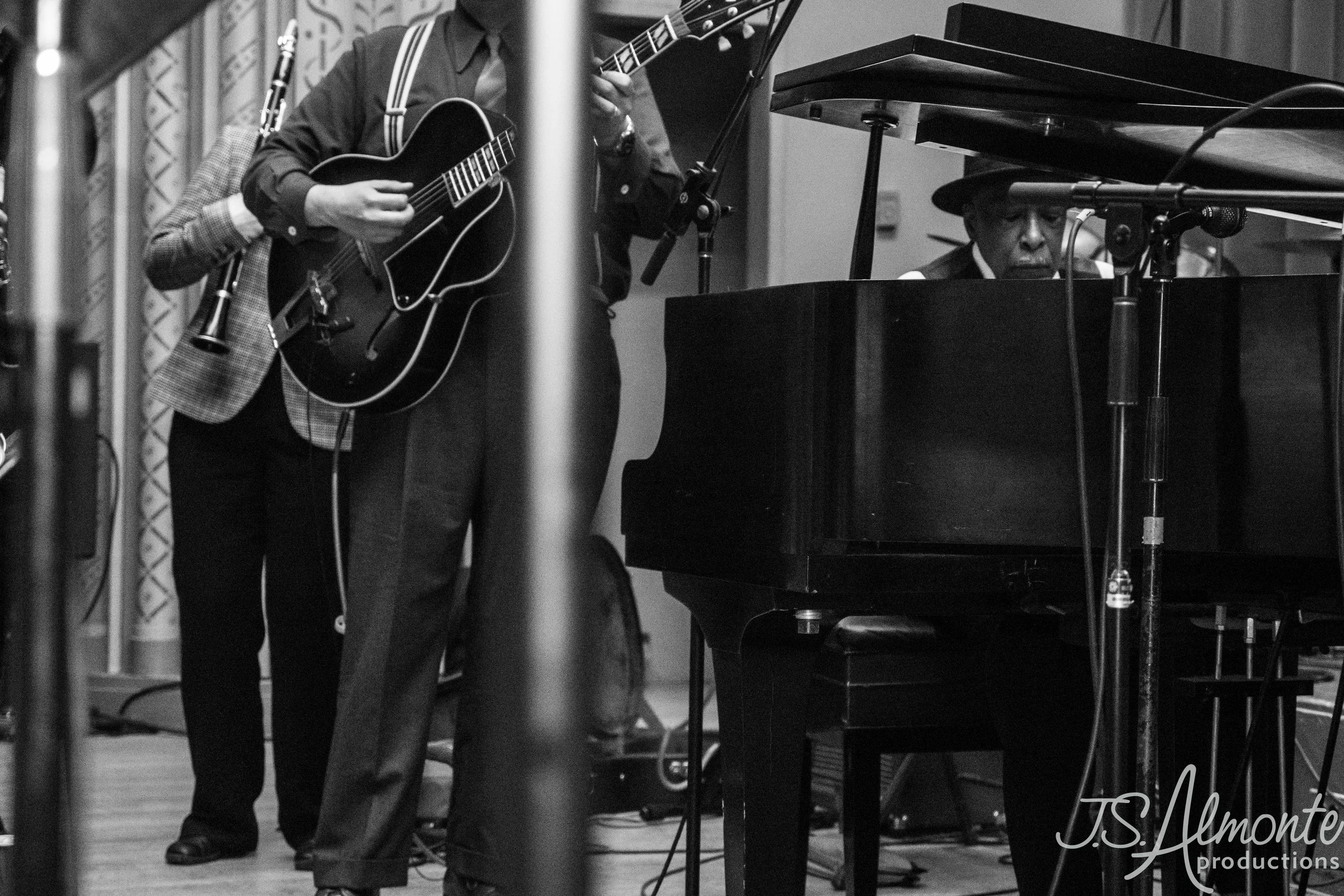
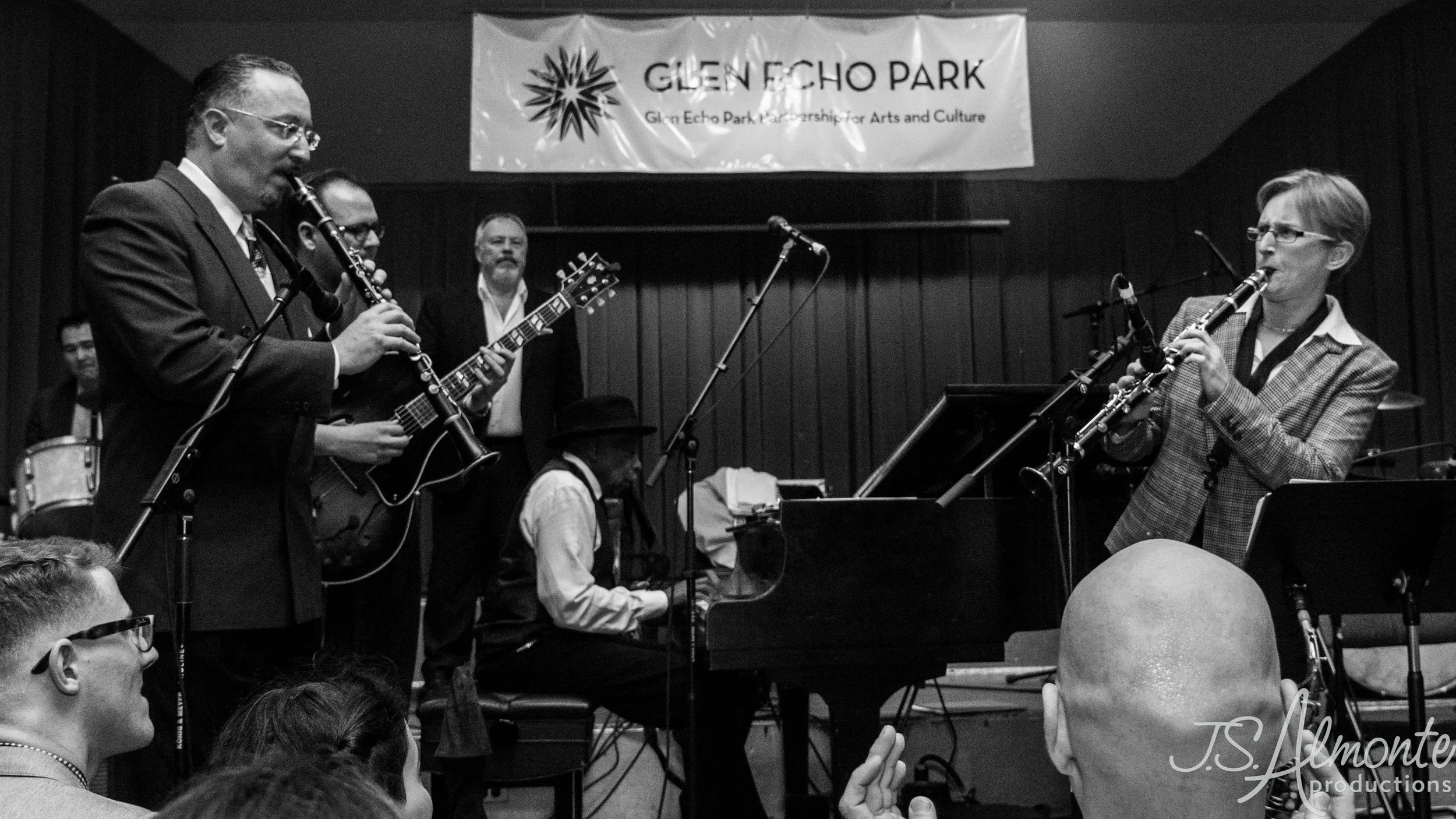
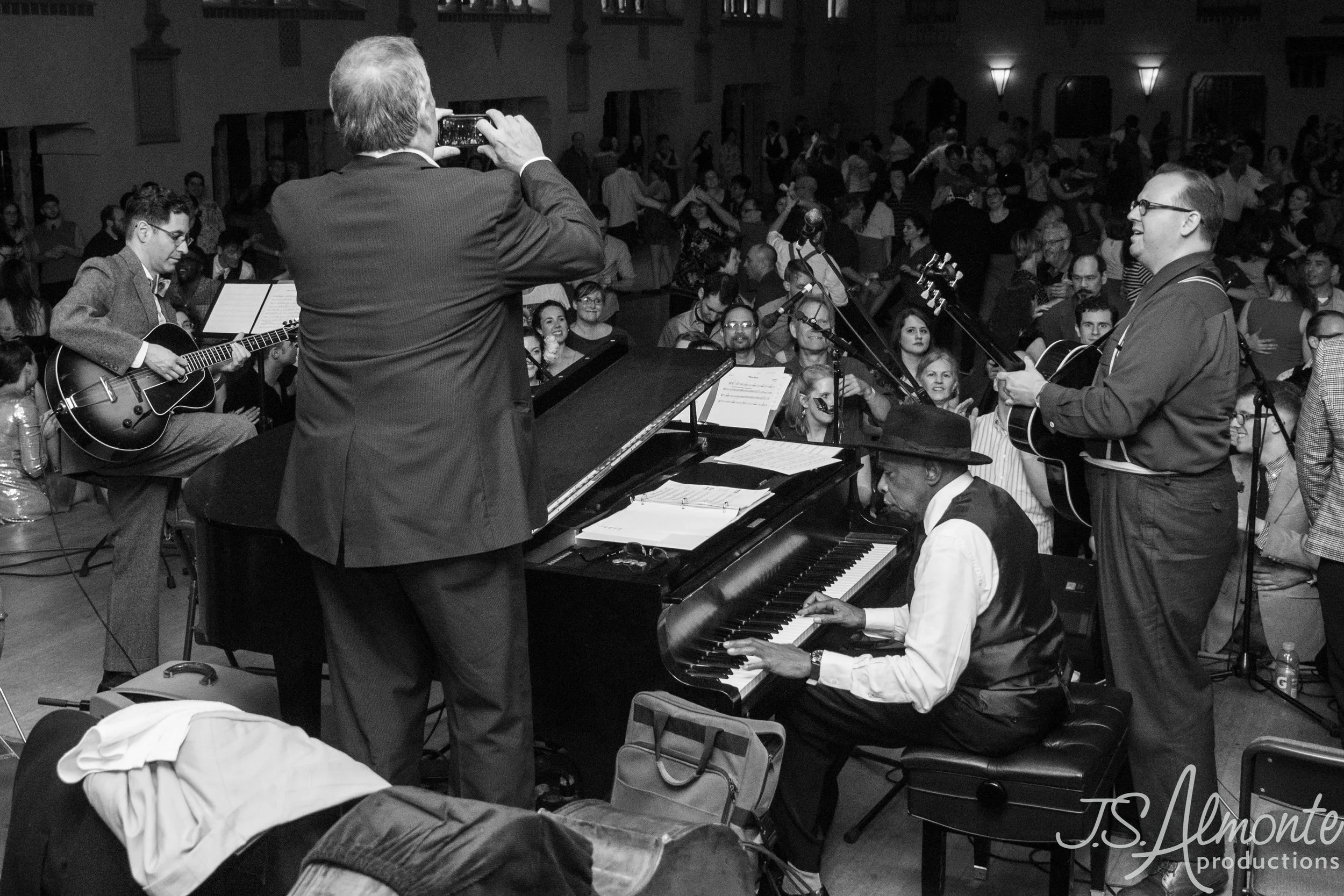
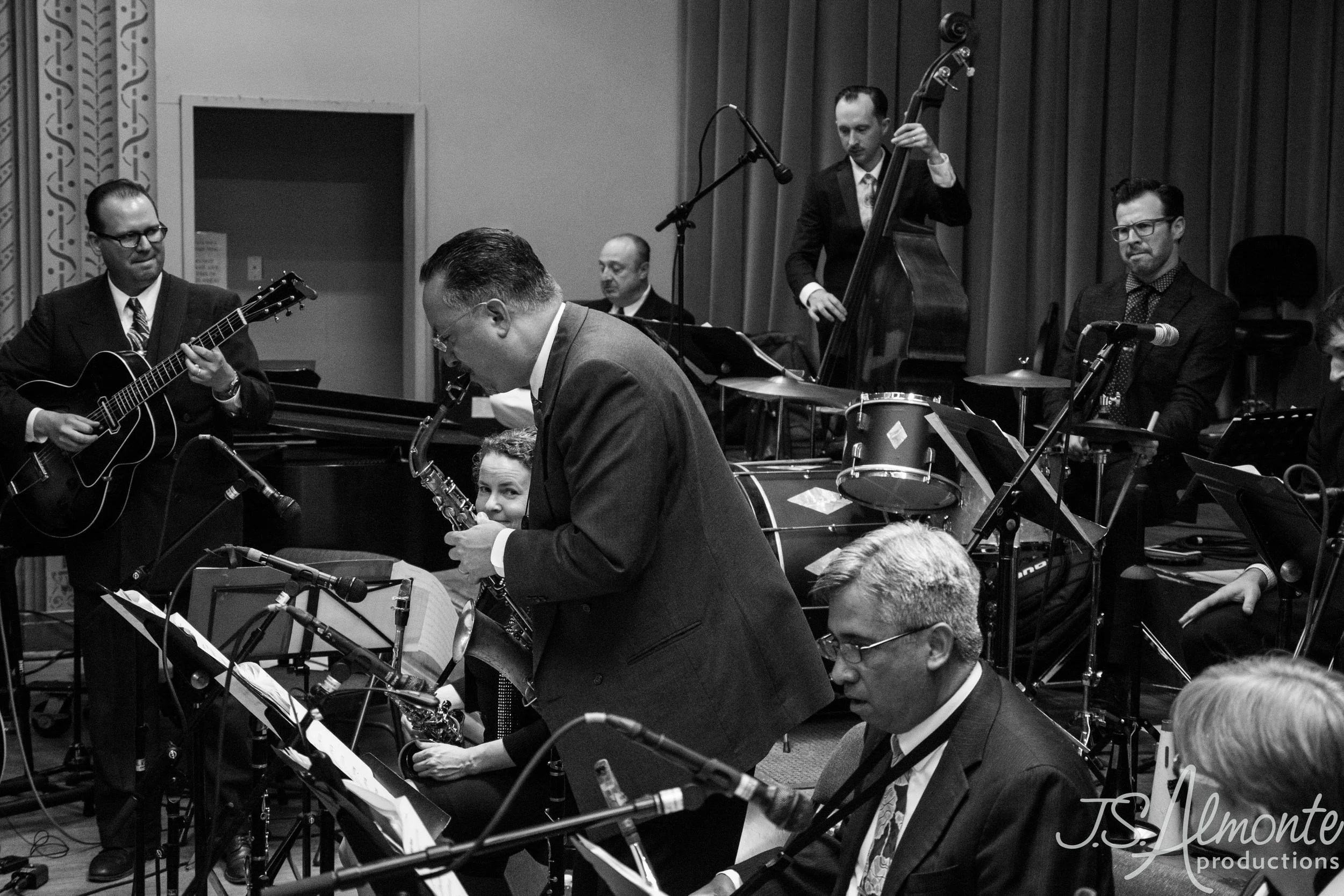
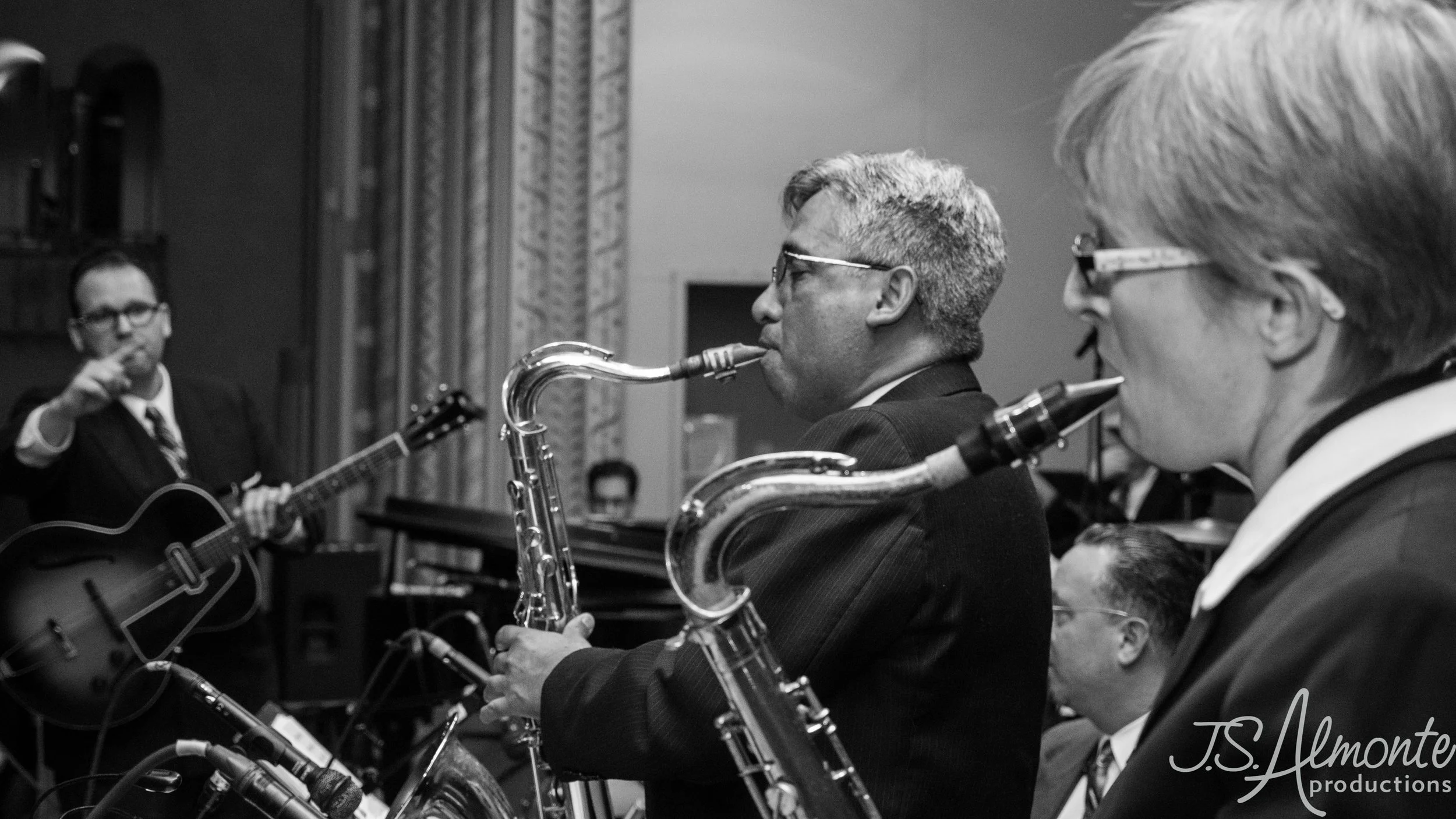
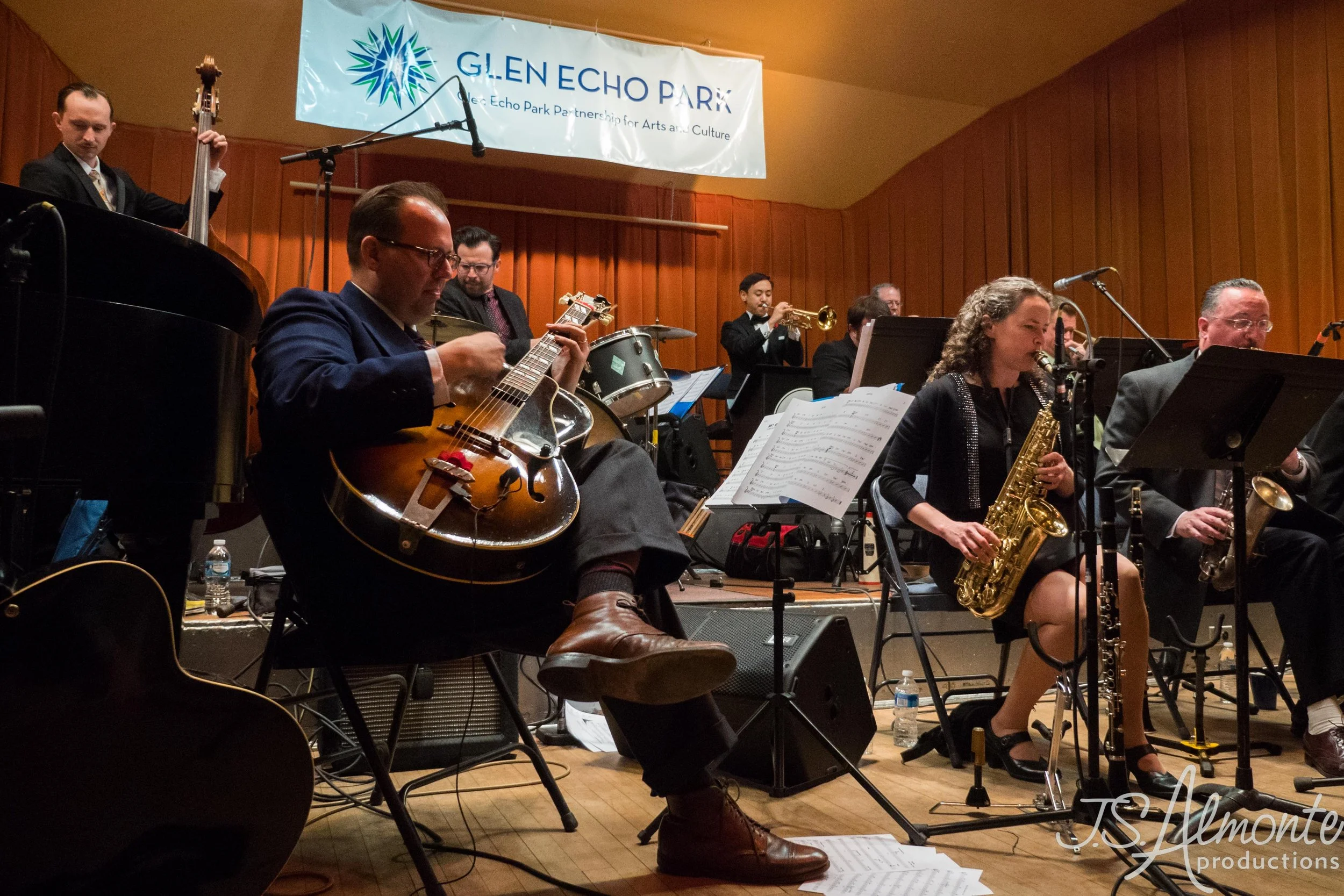
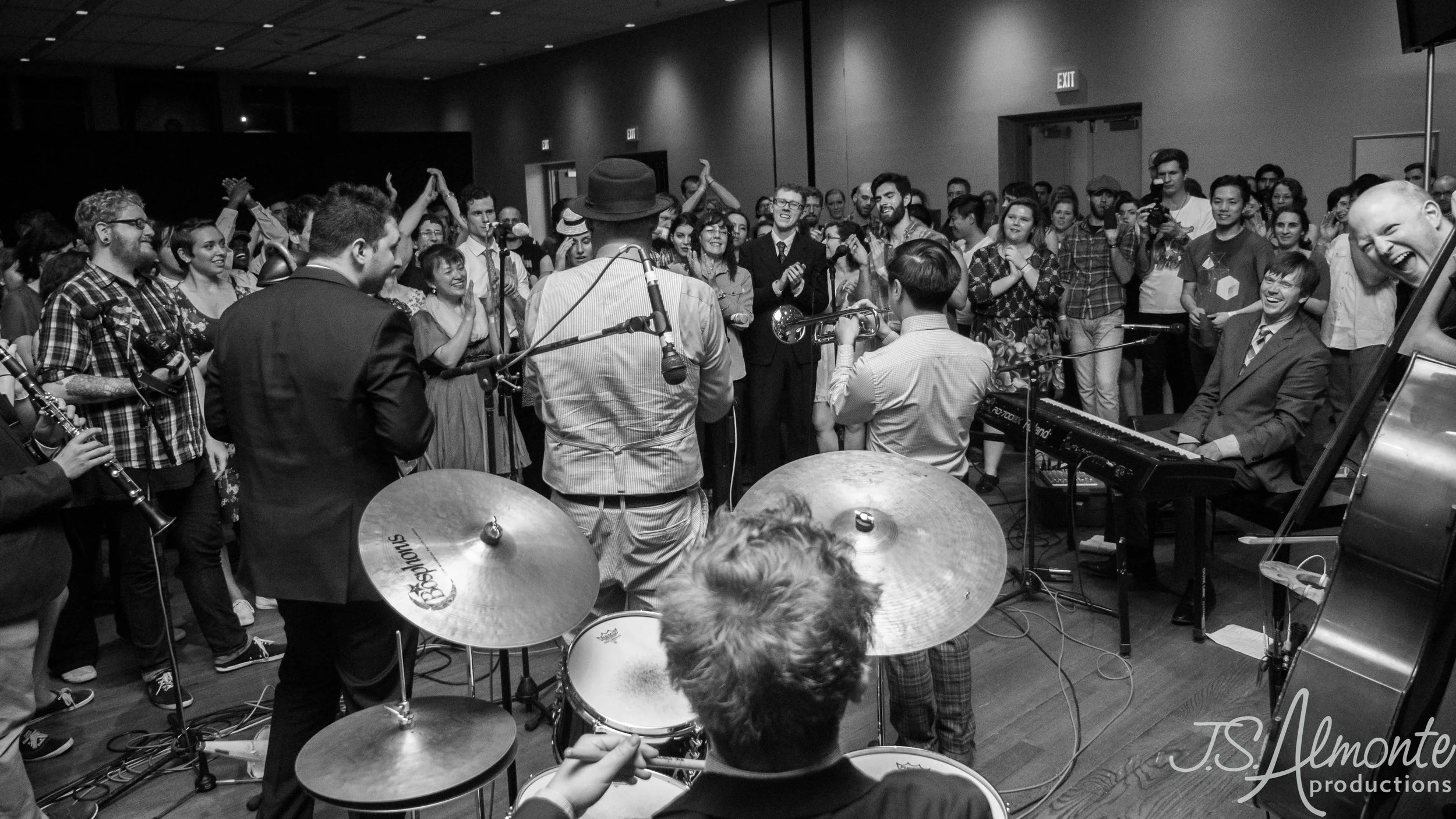
This year also sees the DCLX debut of Michael Gamble leading his own band. At the time he was also one of the lead organizers of Lindy Focus, which had begun featuring big band music every night of his week-long event to kick off this new year. In fact, the big bands at Lindy Focus provided the blueprint for the Jonathan Stout Orchestras that appeared at DCLX and ILHC from this point forward. It’s a full circle moment for a man who admitted that the Battle of the Bands at DCLX 2011 inspired him to take that route. His will be the first of many swing bands from North Carolina that will bolster the DCLX lineup for the next decade.
The DCLX Jam Band on Saturday afternoon was simply several musicians that DCX convinced to play together. They included Michael Gamble, Russ Wilson, Gordon Au, Halley Shoenberg and Mike Faltesek. It was a great way to make additional use of all of the great talent that DCLX was bringing in for the weekend.
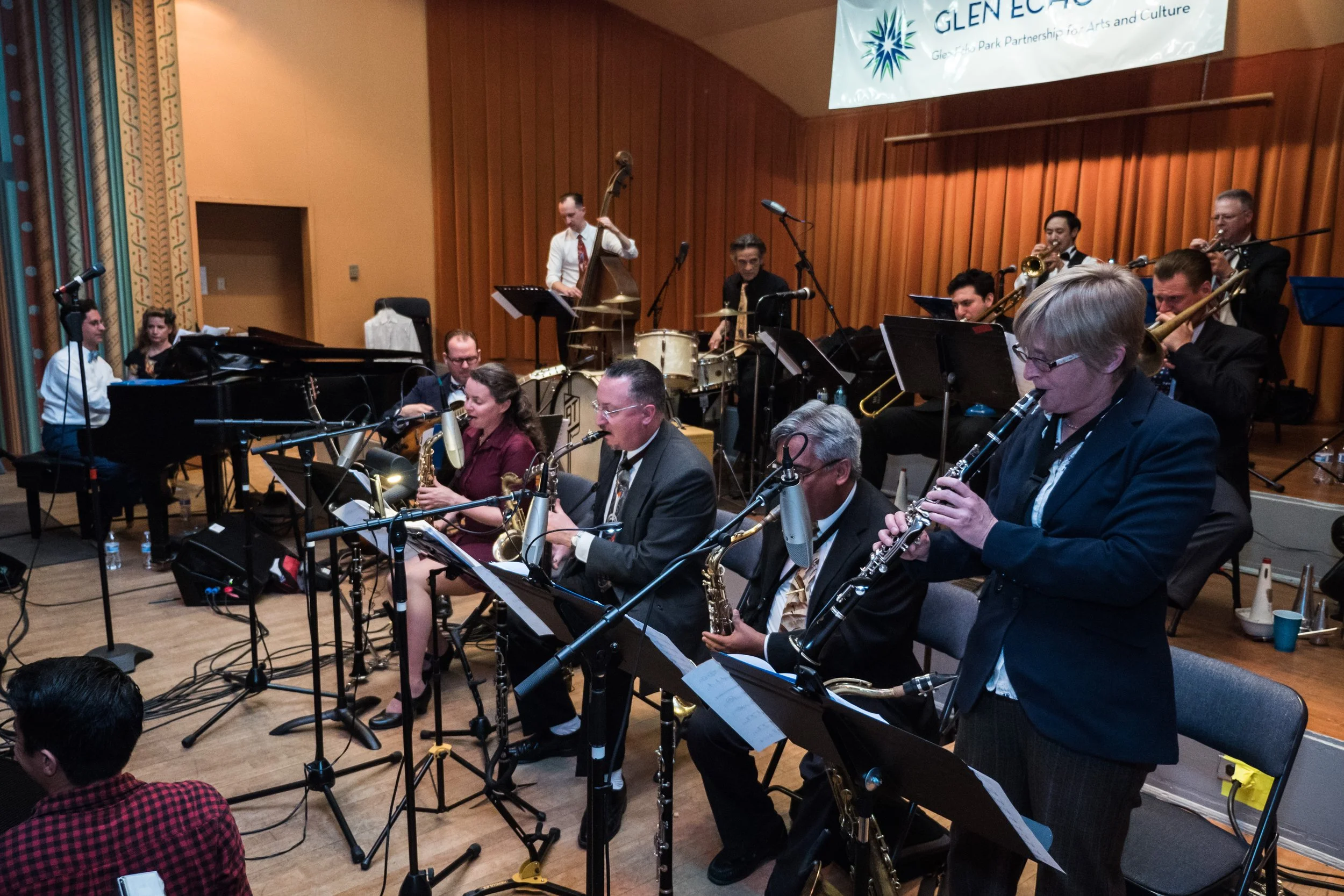
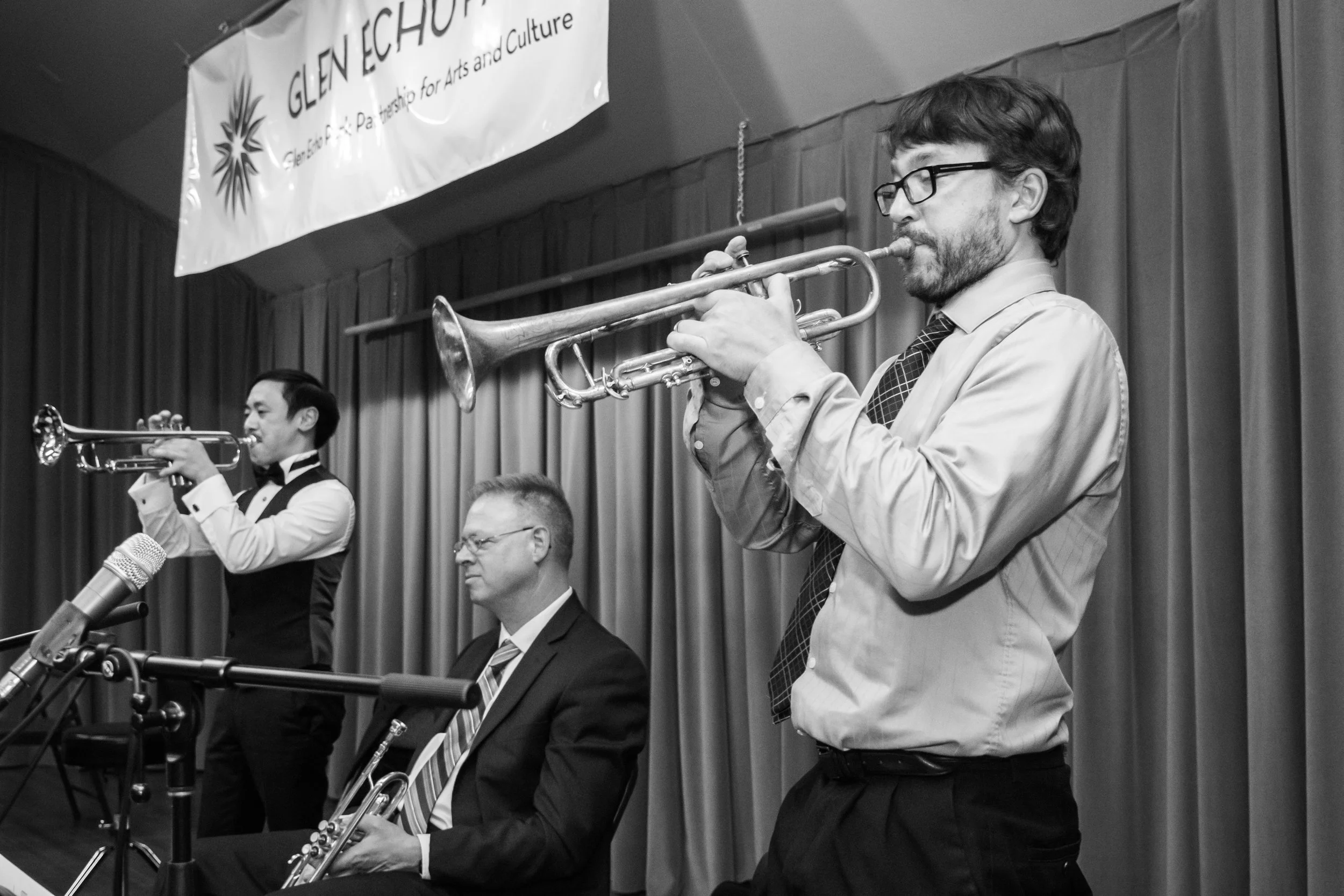
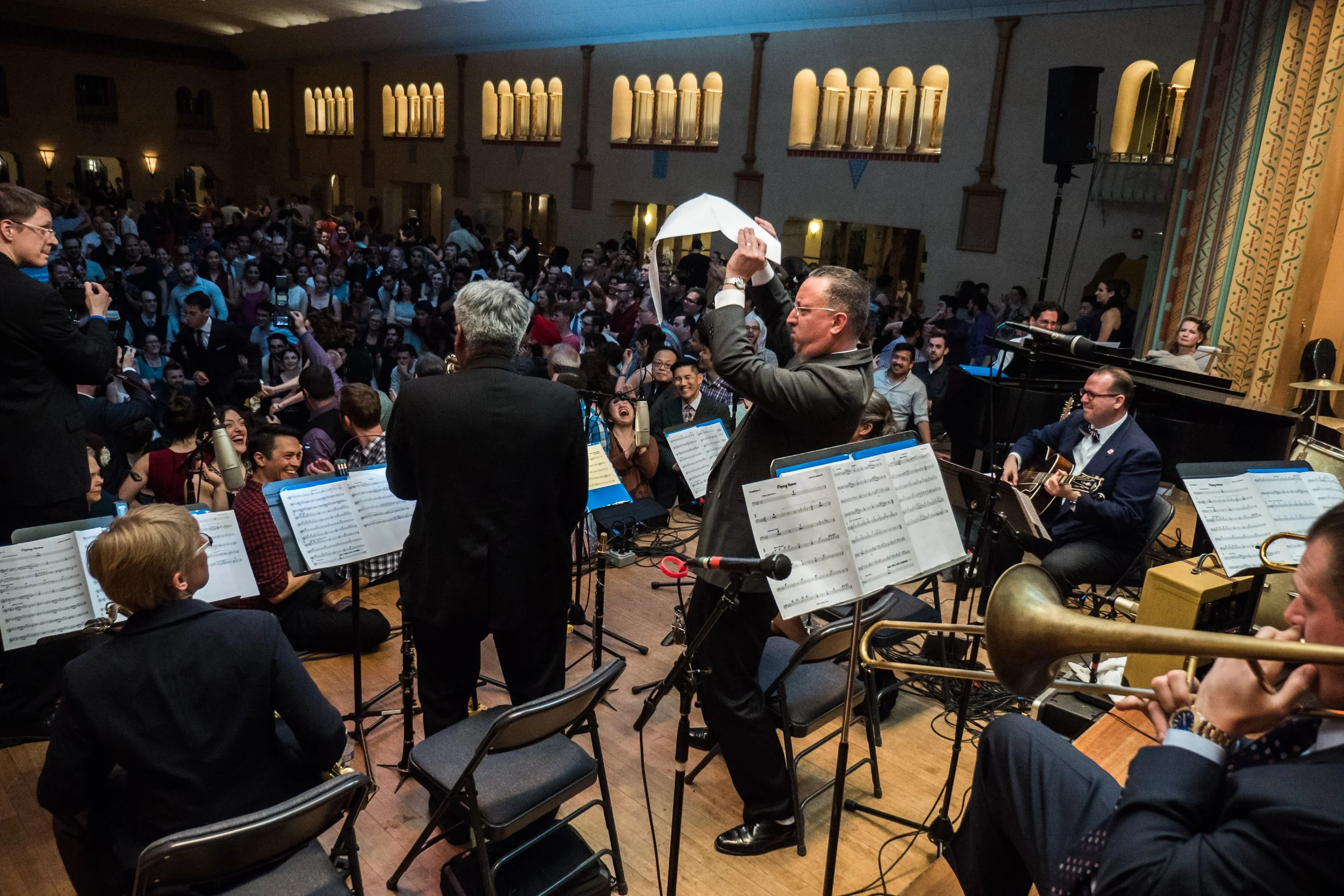
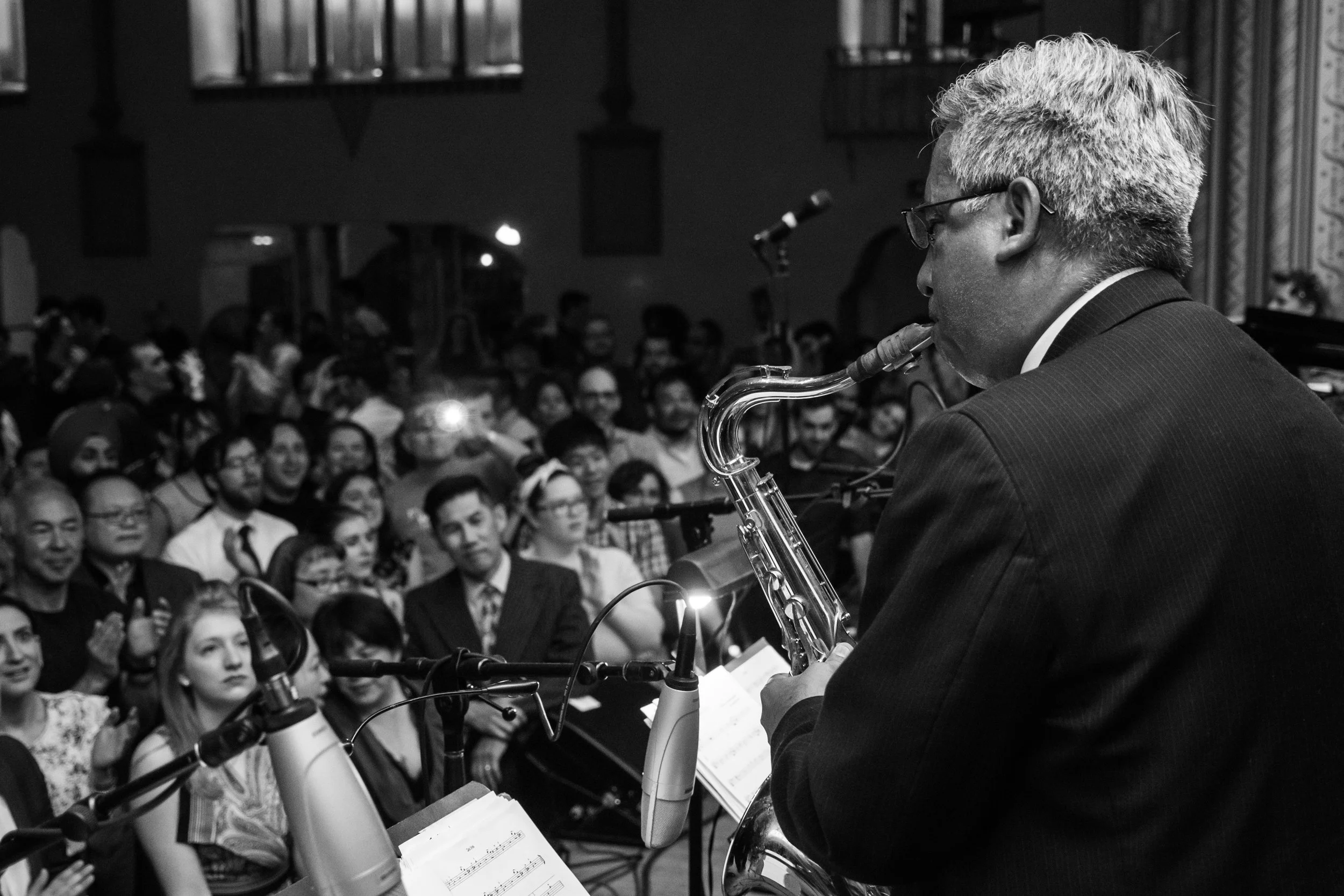
DCLX 2016, April 14-16: 15 Years, 15 Bands
President: Pamela Kaye
Thursday Night Main Band: Sarah Sullivan & The New Old Fashioneds
Thursday Blues Room Band: Full Power Blues
Friday Night Main Band: The Gordon Webster Big Band
Friday Late Night Band: Jonathan Stout & His Campus Five, featuring Hilary Alexander
Friday Blues Room Band: Gordon Webster Tiny Blues Band
Saturday Afternoon Band: Summit Ridge Drive Hot Five with Alexandre Abdoulaev
Blue Sky 5
Saturday Night Main Band: Jonathan Stout Orchestra
Saturday Late Night Band: Gordon Webster & Friends
Michael Gamble & The Rhythm Serenaders
Saturday Blues Room Band: Anna Cecilia & The Big Time
Sunday Afternoon Band: Halley Shoenberg’s Hot Gumbo Swingtet
The Boilermaker Jazz Band
Sunday Night Main Band: Jonathan Stout Orchestra
Sunday Late Night Band: Falty & The Defects
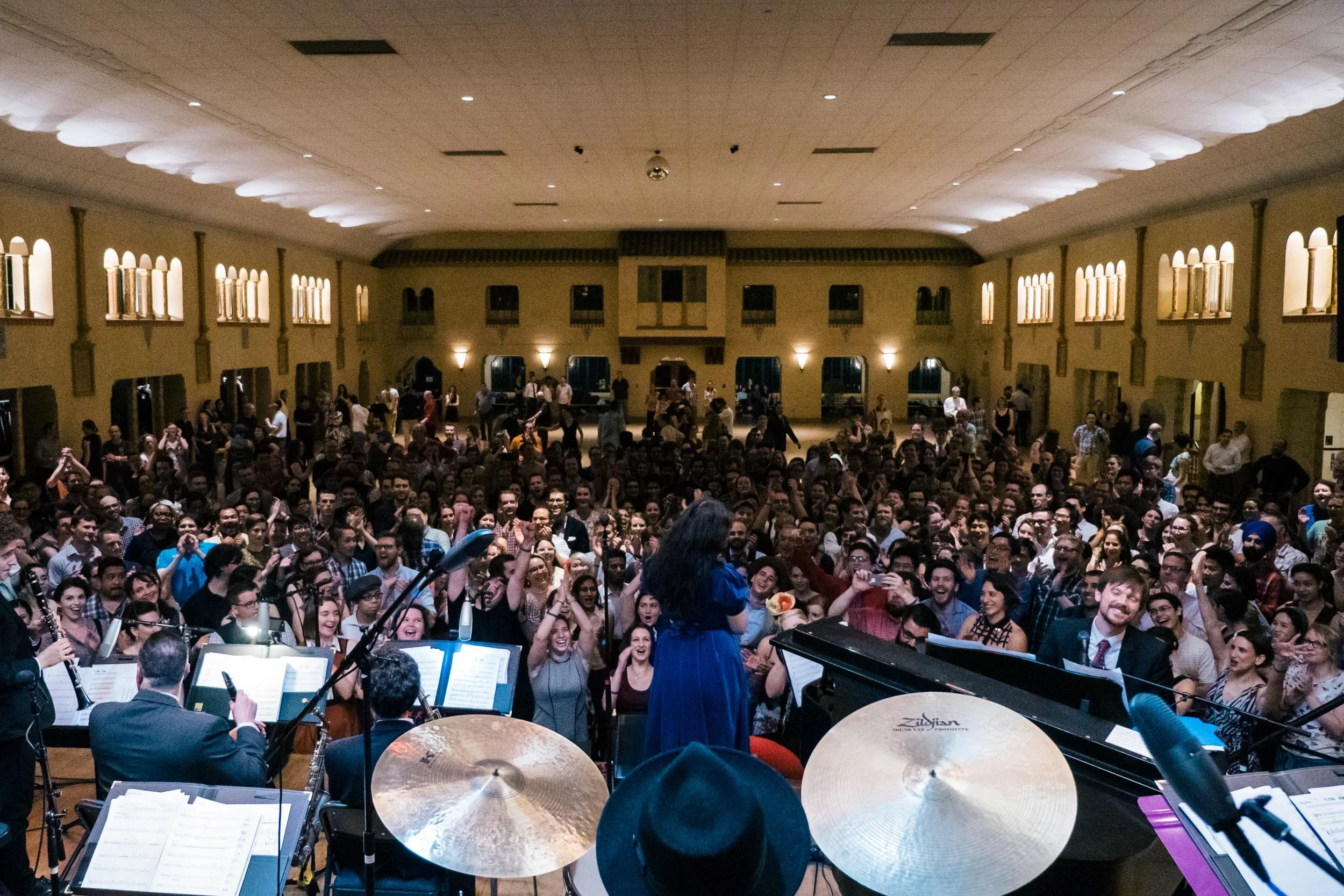
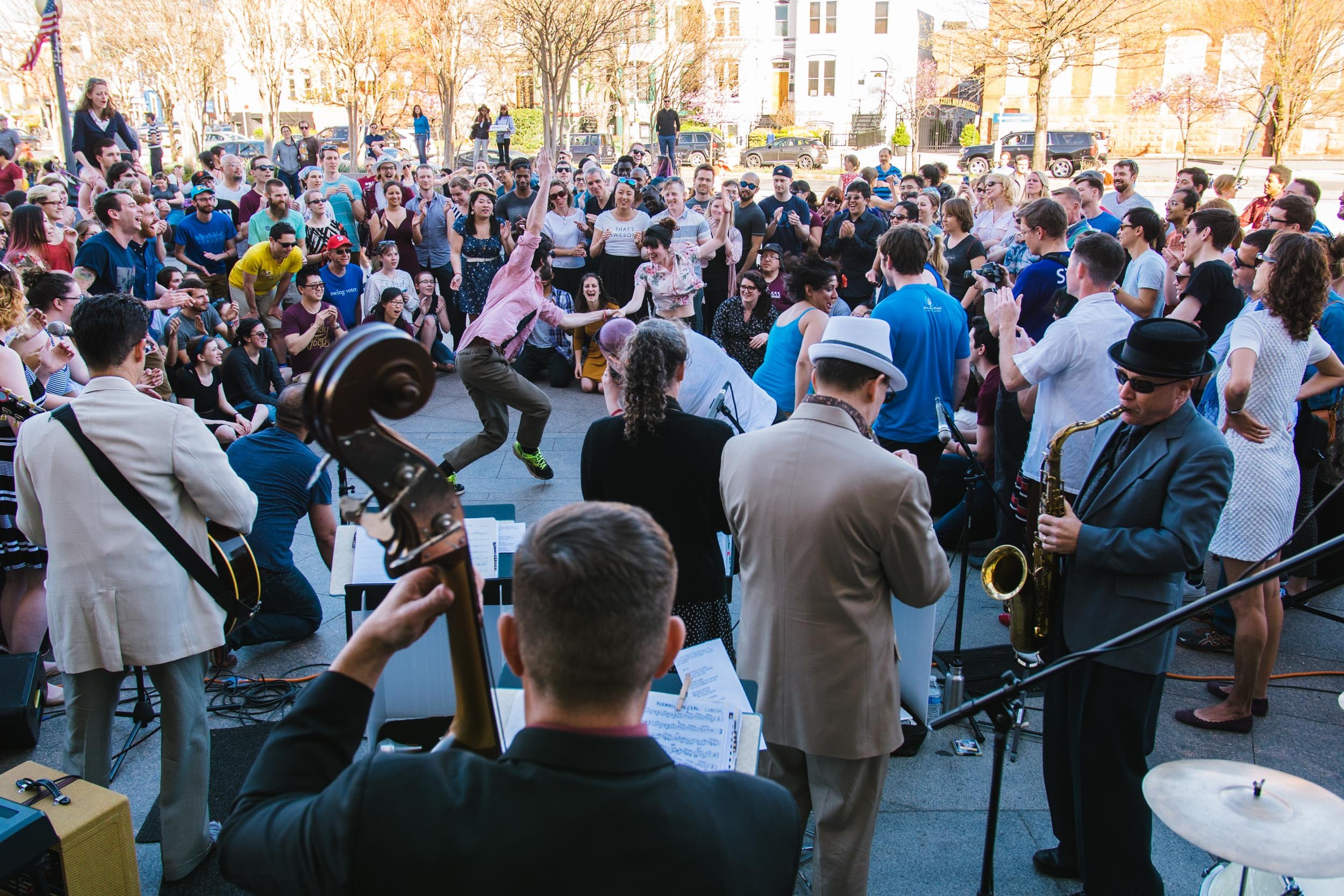
For the 15th anniversary DCLX fielded its most ambitious line up of 15 bands. Every investment that the lindy hop scene made into live music over the previous decade and a half paid off on this weekend: Dancer led bands, live music for the blues room and the afternoon dances, and headlining big bands bolstered by a deep local talent roster.
Of the new names: Sarah Sullivan, one of the owners of The Mobtown Ballroom, brought her band down from Baltimore. Summit Ridge Drive Hot Five was led by Alexandre Abdoulaev, a local musician turned dancer turned musician who led The Butler Parks Hot Serenaders the year before. Anna Cecilia was a singer/dancer from Philadelphia. Halley Shoenberg played reeds as a part of many of the local bands featured previously at DCLX, and was able to lead her own group during the Sunday afternoon dance.
Weirdly enough, there was only one band for each of the main evening dances including one of the few times Gordon Webster led a big band. However, this line up features double bills on both afternoons and a whopping three different bands for both late nights. This is also the first and last time DCLX hosts a Sunday late night dance. They discovered that even the hardest of hard core dancers have a limit.
2017, April 7-9: The Music Goes Round and Round
President: Colin Hay
Friday Night Main Band: Michael Gamble & The Rhythm Serenaders
Friday Late Night Band: The Boilermaker Jazz Band
Charm City Stomp
Friday Blues Room Band: The Ceruleans
Saturday Afternoon Band: The Boilermaker Jazz Band
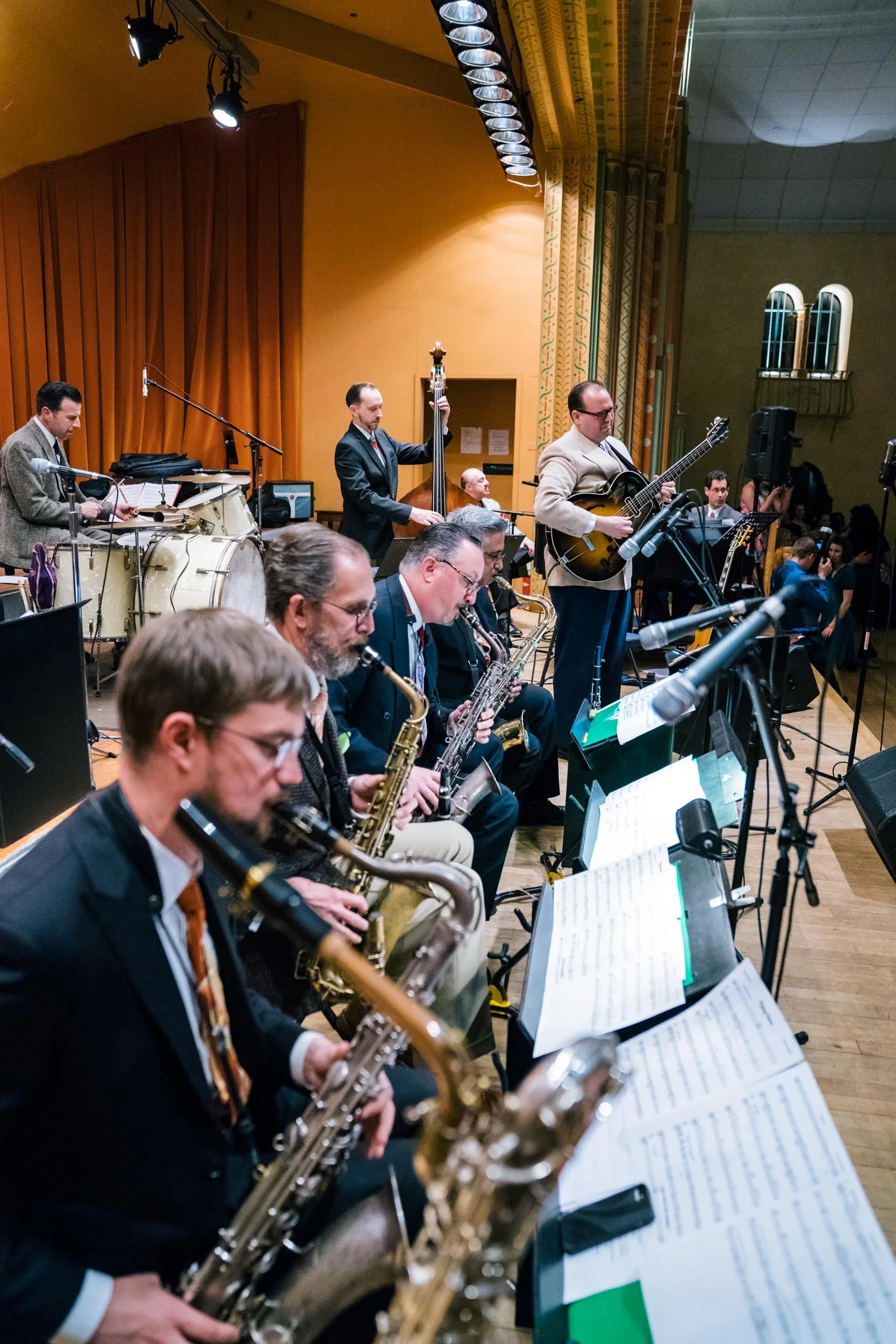
Saturday Night Main Band: Jonathan Stout Orchestra
Saturday Late Night Band: The Russ Wilson Swingtet
Anna Cecilia
Sunday Afternoon Band: Blue Sky 5
Sunday Night Main Band: Gordon Webster & Friends
If you just looked at DCLX, Lindy Focus and maybe Camp Hollywood and ILHC around this time, you may think that big band music became the next big trend, but you would be wrong. Between DCLX and IlHC and Lindy focus, dancers on the east coast heard Jonathan Stout orchestra more often than his home scene in southern California. The economics that led to the end of the original big band era still applied. More musicians cost more money, and only bigger events like the ones I just listed were the only ones that had the resources to feature them on a regular basis. And it wasn't everyone’s thing. A lot of musicians just like the flexibility of playing in a smaller jazz combo than sight reading arrangements all night as you’ll notice with Gordon Webster returning with a smaller jazz combo to wrap up this weekend.
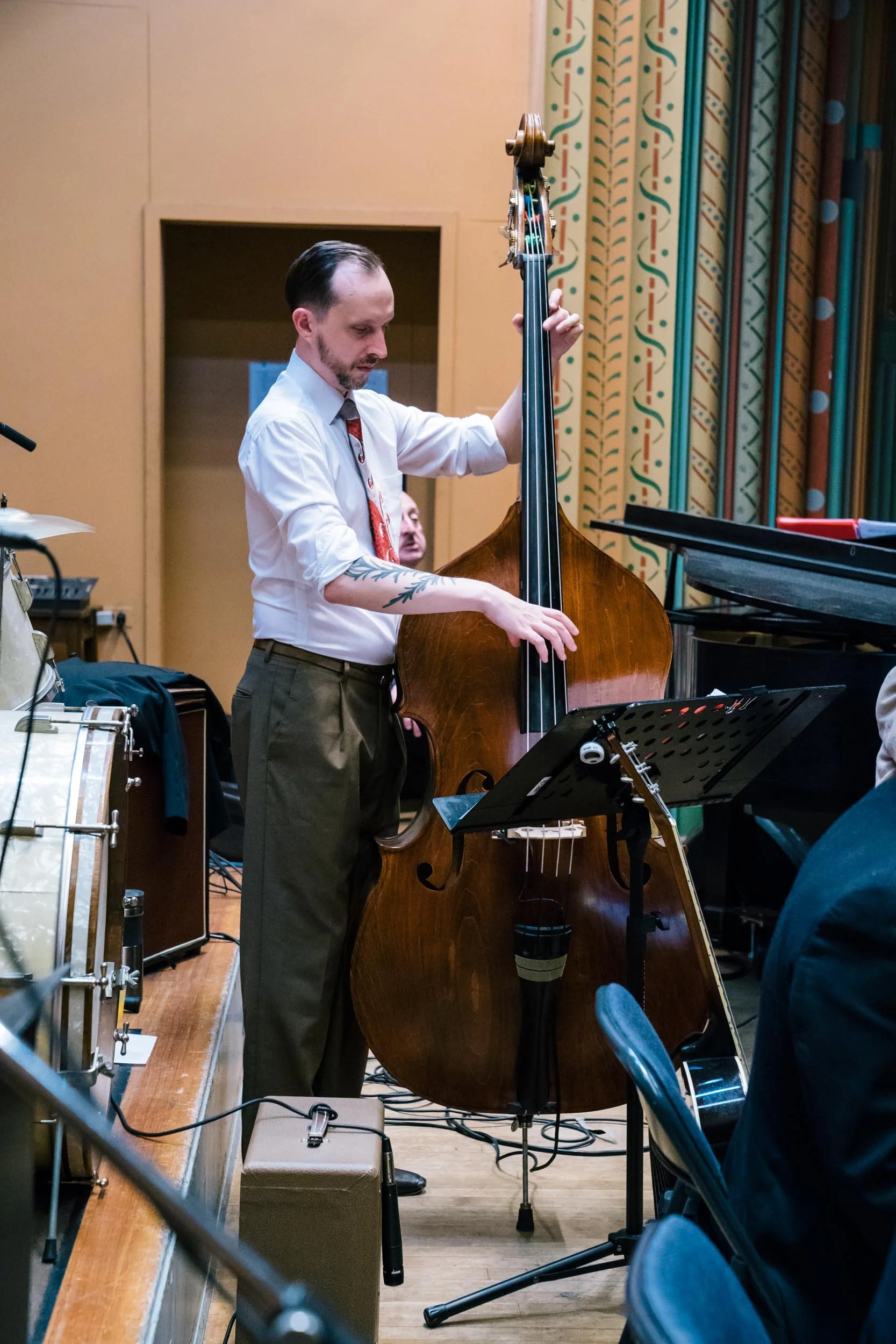
Also of note are The Ceruleans who were another band made up of mostly local dancers and Charm City Stomp the third band led by DMV local musician/dancer Alexandre Abdoulaev.
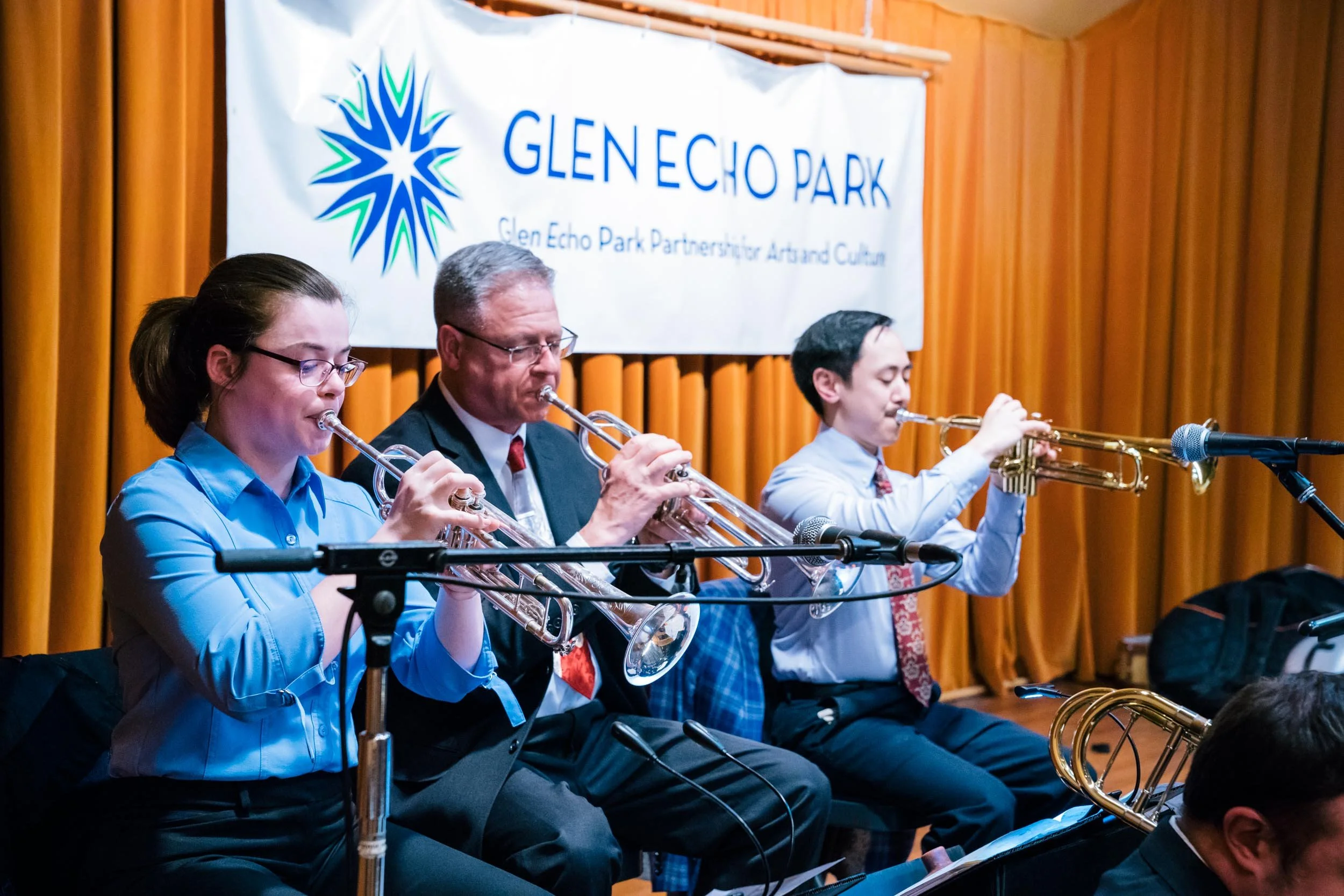
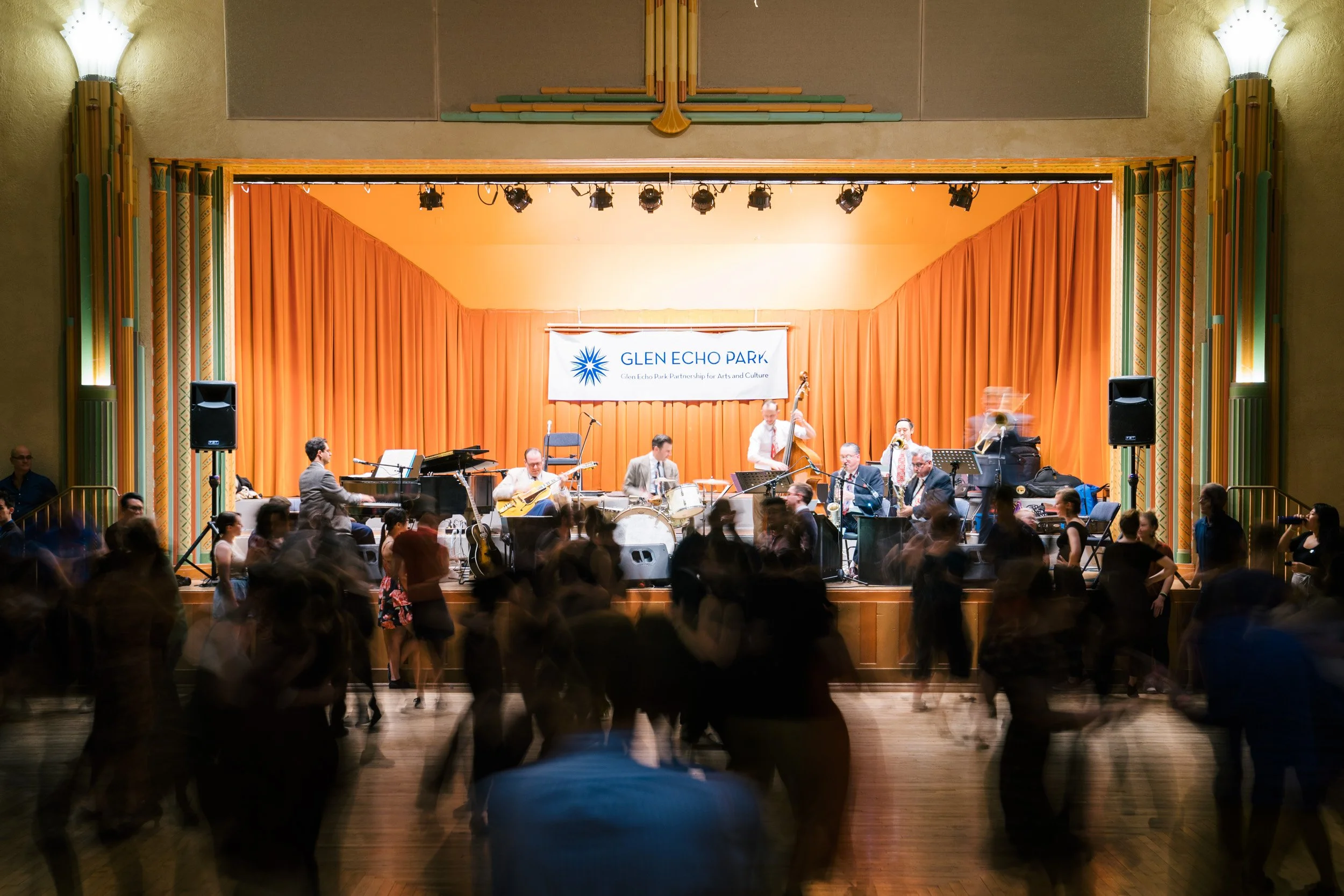
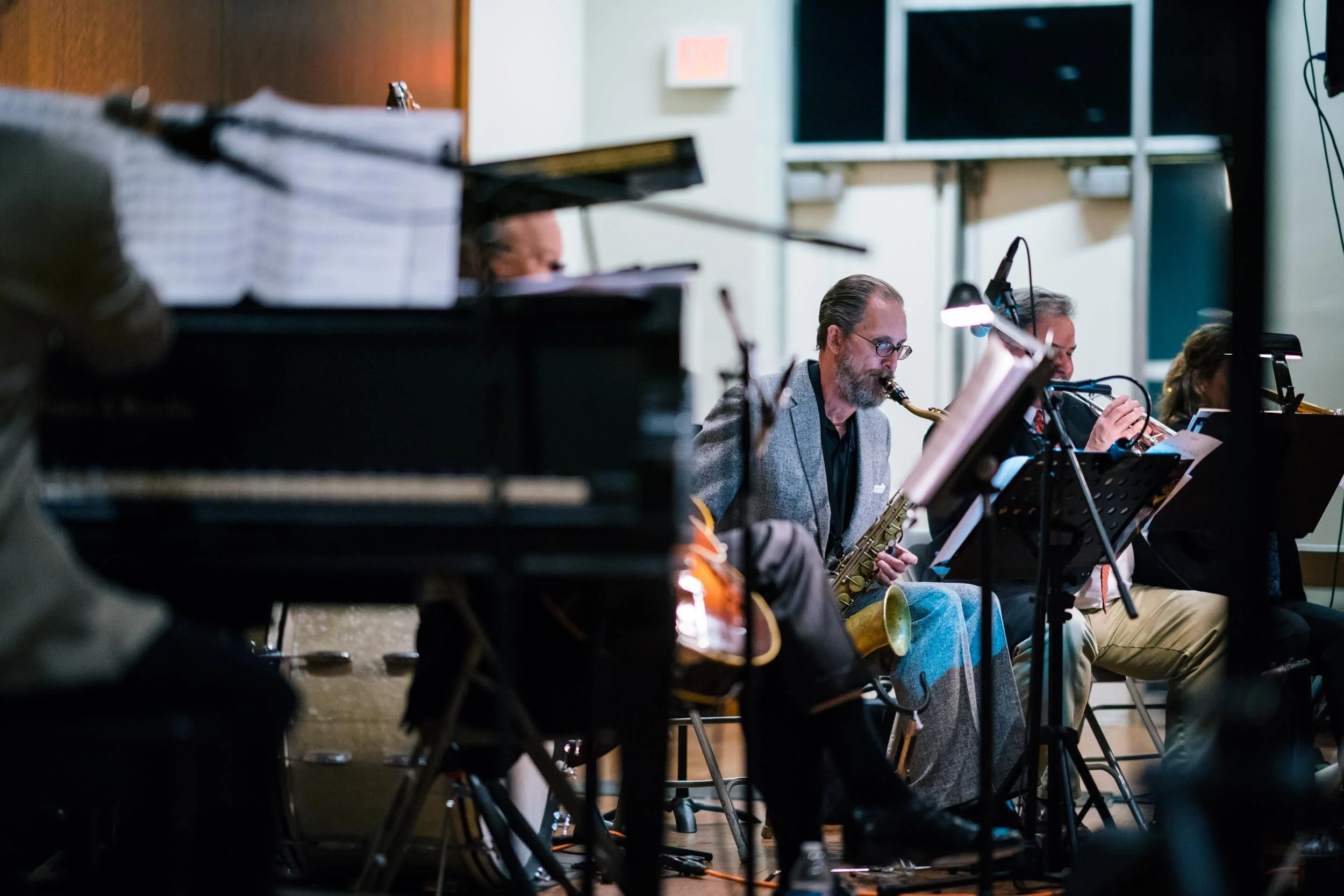
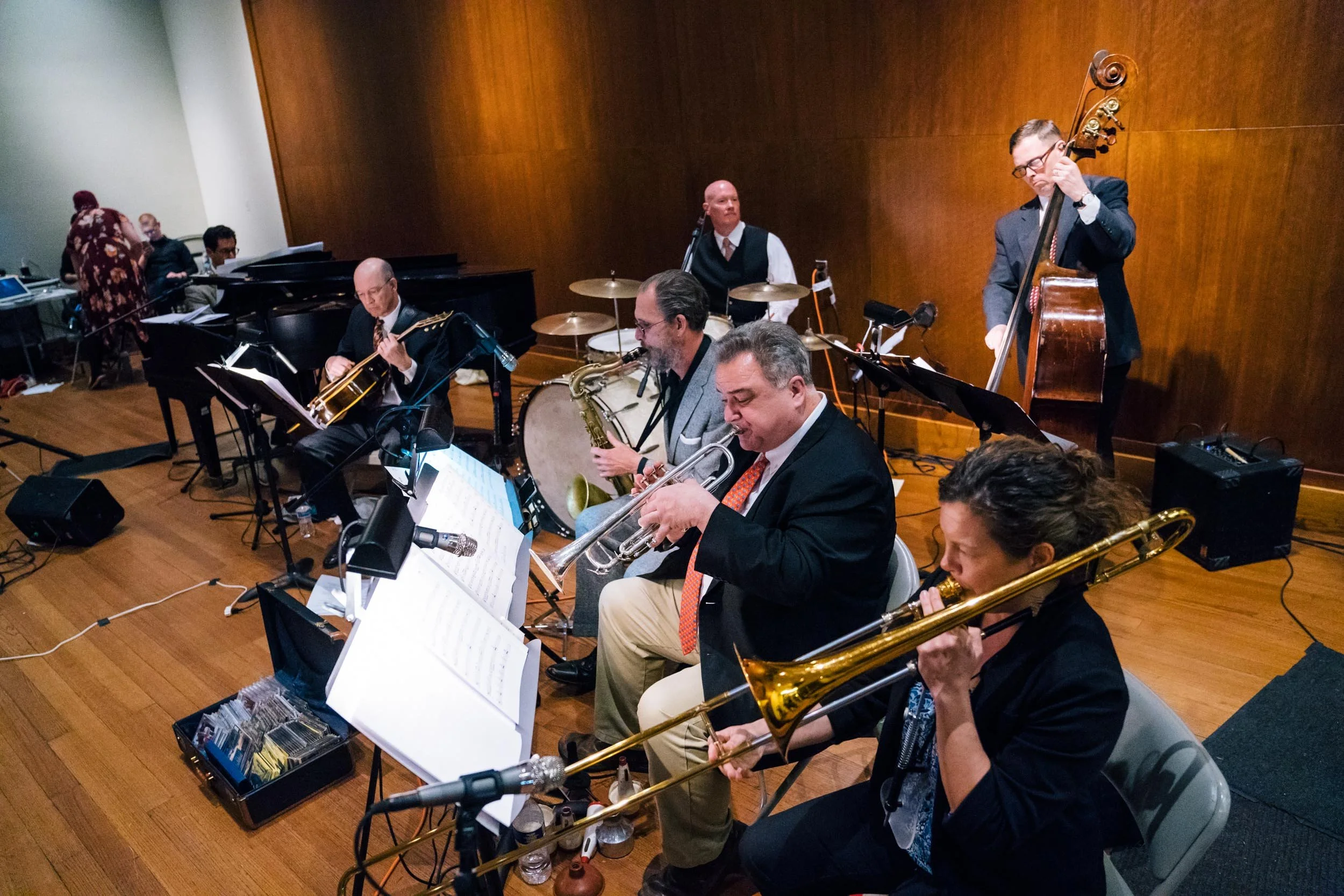
DCLX 2018, April 20-22: Love You Madly
President: Colin Hay
Friday Night Main Band: Michael Gamble & The Rhythm Serenaders
Friday Late Night Band: The Russ Wilson Swingtette
Friday Blues Room Band: The Ceruleans
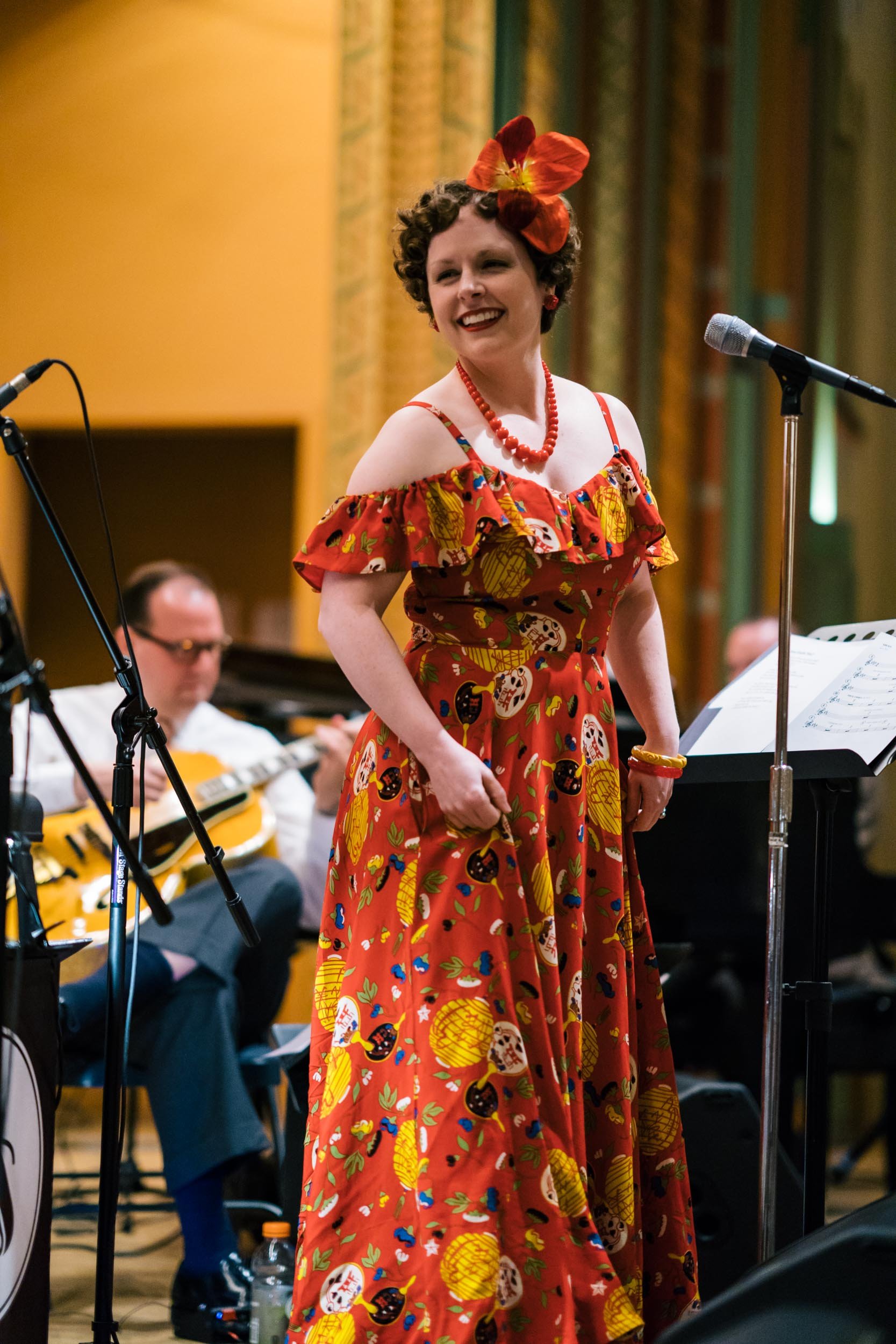
Saturday Afternoon Band: Chelsea Reed & The Fair Weather Five
Saturday Night Main Band: Jonathan Stout Orchestra
Saturday Late Night Band: Candy Jacket Jazz Band
Saturday Blues Room Band: Chelsea Reed
Sunday Afternoon Band: Shannon Gunn & The Bullettes
Sunday Night Main Band: Craig Gildner & The Ivy City 6
Four years after featuring a heavily hot jazz combo line up, DCLX swung the other way with The Candy Jacket Jazz Band led by Josh Collazo, Shannon Gunn and the Bullettes and the debut of Craig Gildner’s fifth form with the Ivy City 6. These bands featured a more modern, post World War 2 swing sound.
Classic big band era music still anchors the main dances, but this shows how some musicians wanted to start exploring the other end of the spectrum after spending quite a bit of time with early swing music sounding music.
This year also marks the DCLX debut of Chelsea Reed and the Fair Weather 5 out of Philadelphia. They initially started out as a more traditional sounding hot jazz band, but over the years, they have transitioned to a broader and more modern sound.
DCLX 2019, April 25-28: Syncopation Without Representation
President: Dylan Kilpatrick
Thursday Night Main Band: Gretchen & The Sidecar Six
Thursday Blues Room Band: Taryn Newborne & The Real Deal
Friday Night Main Band: Michael Gamble & The Rhythm Serenaders Orchestra
Friday Late Night Band: Taryn Newborne & The Real Deal
Friday Blues Room Band: Chelsea Reed
Saturday Afternoon Band: Chelsea Reed & The Fair Weather Five
Saturday Night Main Band: Jonathan Stout Orchestra
Saturday Late Night Band: The Mint Julep Jazz Band
Saturday Blues Room Band: Chelsea Reed & The Fair Weather Five
Sunday Afternoon Band: Shannon Gunn & The Bullettes
Sunday Night Main Band: The Craig Gildner Big Band
Out of the 11 total dances at DCLX 2019, eight featured bands were led or co-led by women. We see the DCLX debuts of local musician/dancer/band leader Gretchen Midgley, the Mint Julep Jazz Band from North Carolina, co-led by Laura Windley, and Taryn Newborne from Atlanta who led her band for two nights. Chelsea Reed returned with her bands for three separate dances on basically the same day. Shannon Gunn and the Bullettes was a local, all women jazz band. Shannon had previously played trombone in Glenn Crytzer’s band during the legendary Battle of the Bands in 2011.
Chelsea Reed anchoring the blues room both nights upped the party vibe of that space. I’ve seen her lead that band at a couple of blues dance events and also a wedding. They play a wide array of jazzy blues and bluesy jazz as well as soul and R&B music that can keep a party going all night.
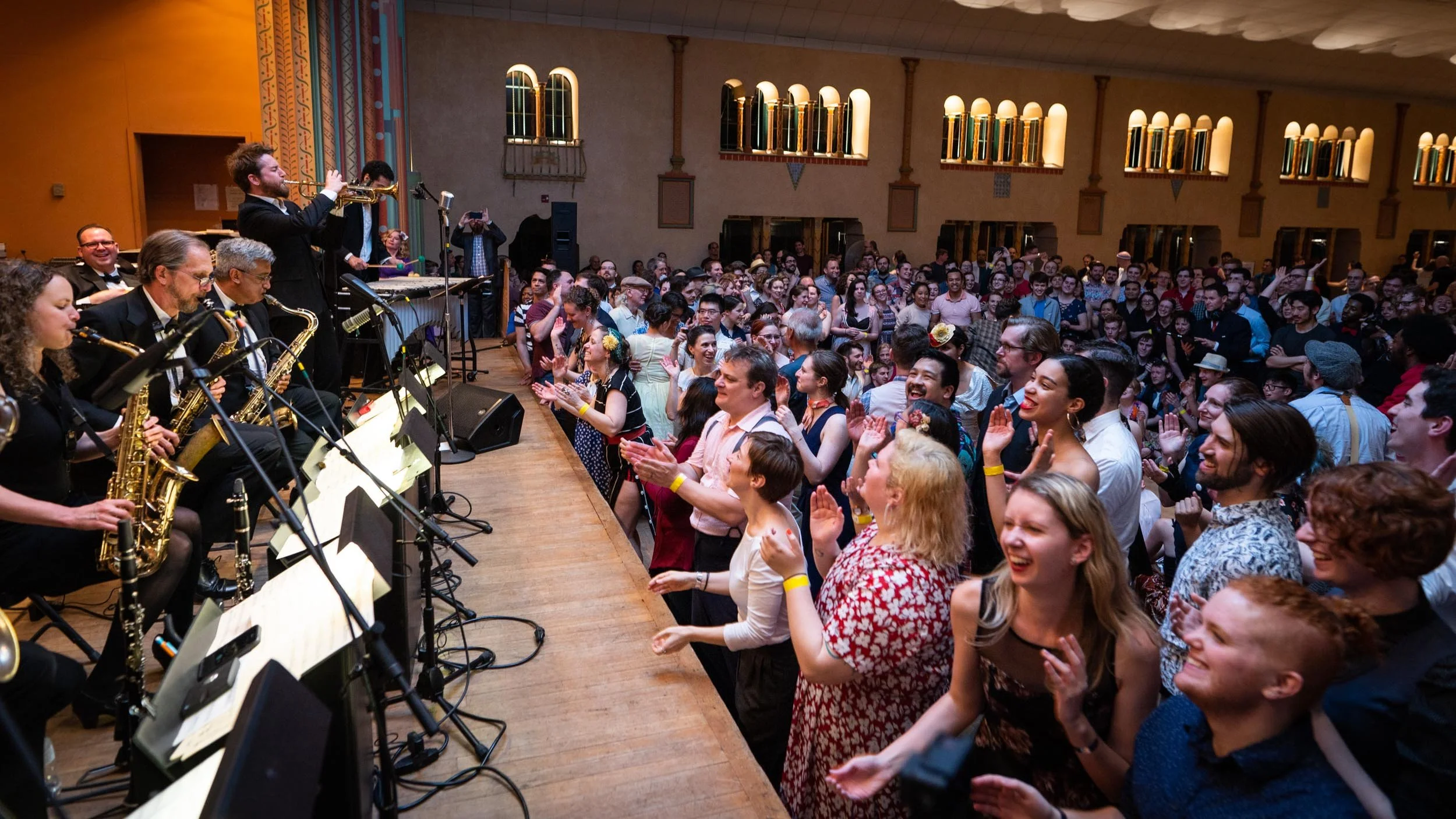
Since the start of exchanges in general, the blues/late night rooms always had a bit of a messy reputation. Whether or not that rep was deserved may be debatable, but blues dance centric events started popping up in the mid 2000s, partly to address that reputation. Still, lindy hop exchanges continued to accommodate the blues dance crowd through that time. Some time in the later 2000s, DCLX opted to have two separate rooms at the late night dances; one focusing on swing and the other on blues. DCLX programmed live jazz at the late nights as much as it could starting in 2005, but only started to be able to afford live music for the blues room in 2016. That was partly to help them fulfill their goal of 15 bands that year. By that time, the blues dance community had a solid array of their own events, but they still flocked to DCLX in large numbers. I think that was partly because the blues dance community was consistently strong in DC for much of that time.
The blues room at DCLX has had a rather tame rep by comparison, but having live music led by the likes of Gordon Webster and Chelsea Reed have been instrumental in keeping that experience at DCLX more of a party rather than an awkward nerd orgy.
DCLX 2020, April 17-19 (planned but cancelled)
President: Dylan Kilpatrick
Friday Night Main Band: The Scott Silbert Orchestra
Friday Late Night Band: Keenan McKenzie and the Riffers
Friday Blues Room Band: Taryn Newborne and the Real Deal
Saturday Afternoon Band: Gretchen & The Sidecar Six
Saturday Night Main Band: Jonathan Stout Orchestra
Saturday Late Night Band: The Mint Julep Jazz Band
Saturday Blues Room Band: Chelsea Reed & The Fair Weather Five
Sunday Afternoon Band: Craig Gildner & The Ivy City Six
Sunday Night Main Band: Michael Gamble & The Rhythm Serenaders Orchestra
This was the advertised line up for 2020, but there was no DCLX that year for obvious reasons. In 2021 the conditions had not improved enough for them to even consider having an event, so I want to use this space to zoom out a bit.
The choice for the main dances on Friday and Saturday was an interesting development after DCLX’s popularity exploded with the Battle of The Bands in 2011. That year featured bands led by leaders from the other side of the country. I mentioned that the 2012 battle had a little bit of an edge to it with DC locals figuratively fighting for more respect from the more nationally oriented DCLX crowd. 11 years later the main dances were to be anchored by two separate DC bands led by longtime DCLX ally, Craig Gildner and relative newcomer Scott Silbert.
The jazz community in and around DC is very underrated especially when it comes to big band musicians. To start off, each branch of the US military has a band. They play public ceremonies, state functions and for the general morale of soldiers and civilians alike. Each of those bands are divided into more specialized groups playing differnet kinds of music like rock, country, R & B and relevant to us: big band jazz. These bands include The US Army Blues, The US Navy Commodores and the US Air Force Airmen of Note, which is a spiritual descendant of Glen Miller’s Army Air Force Band. While all of these bands tour the world, they are primarily based in the Washington, DC area.
This is just the tip of the iceberg for an area that includes numerous big bands like The Smithsonian Jazz Masterworks Orchestra, The Howard University Jazz Ensemble, and more localized bands such as those led by DCLX alumni Tom Cunningham and Brooks Tegler.
When DC based events like DCLX or The International Lindy Hop Championships ever featured an “all star” band, that usually meant a few more well known musicians from around the country supported by this incredible pool of local talent. For decades, DC’s professional big band musician class has been called upon to show up at a moment’s notice to sight read and swing the hell out of a jazz arrangement. Half of each of the bands in the legendary 2011 battle were veteran DC musicians. If you had taken away all of the out of town musicians, you still would have had enough to field a completely DC based orchestra. This year, they would have had enough for two. Soon they would make room for more.
DCLX 2021
President: Sarah Barrett
The world was still slowly coming out of pandemic mode this year, so bands for DCLX 2021 never got past the talking stage. Most notably, Camp Hollywood attempted a comeback towards the end of this summer, but had to cancel with worsening overall conditions in the months leading up to it. If other events had similar plans to come back, then the cancellation of such a high profile event would have made them think twice.
The focus of this post is primarily about DCLX, but exchanges were a significant part of the lindy hop event landscape from the mid 2000s up until the pandemic. Most of them were usually on the smaller side, at least compared to DCLX. However, at one point, you had the option of attending multiple exchanges in a single weekend just in the US alone.
Actually trying to figure out how many dance events that happened over this period would be a herculean task given the fluid nature of the internet, but based on my observations and anecdotal evidence, it seems like the number of lindy hop exchanges was already trending downward through the end of the 2010s. The pandemic slammed the door shut on the vast majority of them. By 2026, the number of exchanges has not recovered, and I’m not sure it ever will.
It's hard to say why this happened, especially considering the varied circumstances of each event, but we can make some educated, broad guesses. These events tended to be run by smaller scenes with smaller pools of resources and fewer organizers. A catastrophic event like the pandemic may have been more than enough to force, or simply allow, many organizers to walk away from these events. In most cases, they left a void that has yet to be filled.
Events like DCLX probably did not help as it was a bit of a goliath, ever expanding the number and scope of live bands it featured. Many events struggled to hire one or two bands for a weekend, and big bands were just out of the question for most of them.
The 2020 line up was going to feature three big bands at DCLX on top of the live music for the afternoons and late nights. A lot of events barely had the capacity to organize one night comparable to DCLX live talent, nevermind a whole weekend. If they tried, I’m sure it put a lot more stress which may have ultimately helped push many organizers out the door.
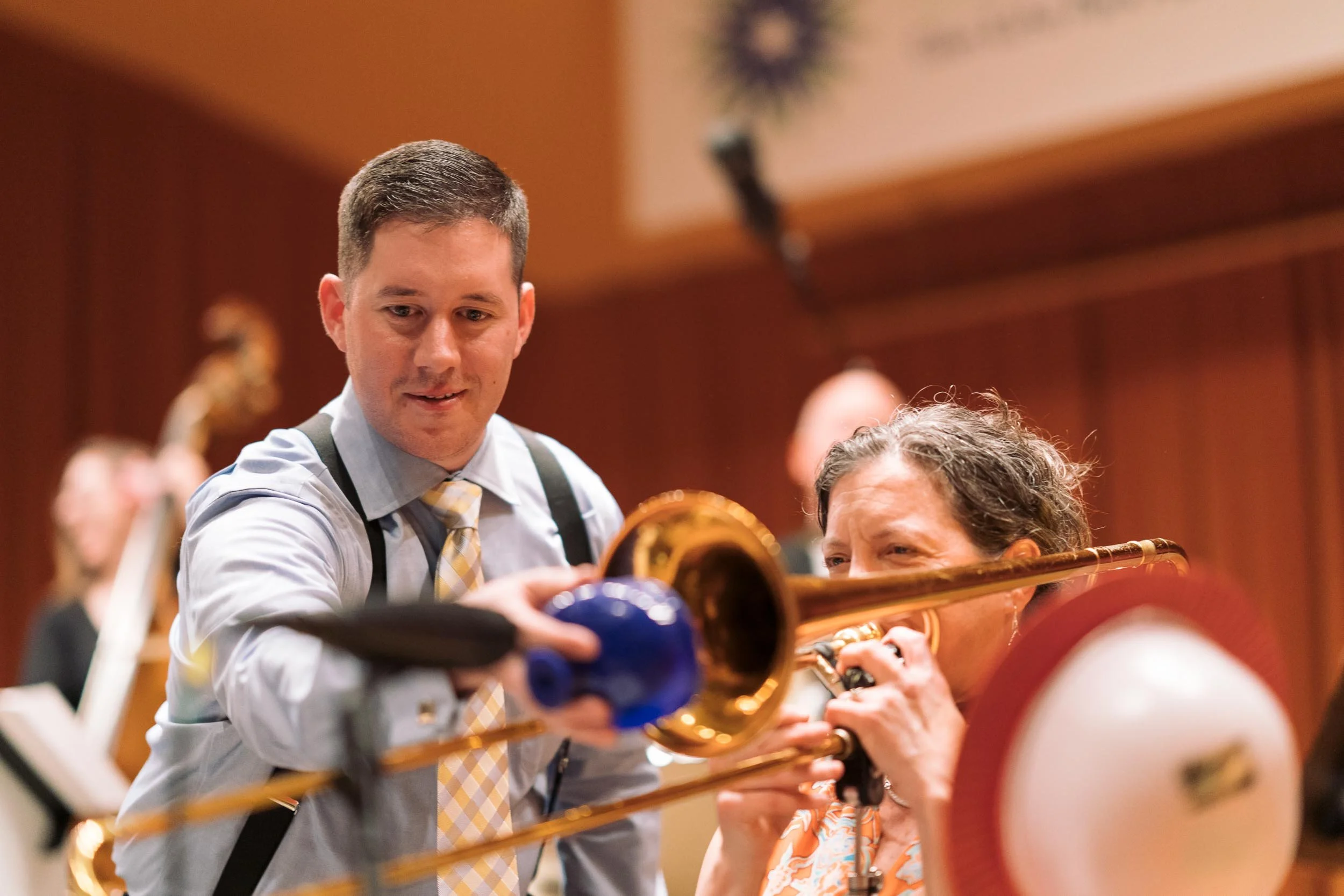
Whatever the reason, the post pandemic scene is a lot lighter for opportunities to just social dance for a whole weekend. DCLX was incredibly fortunate to have some semblance of continuity through this period when many other such organizations just ceased to exist. The unintended consequence of that has probably contributed to elevating DCLX into another level.
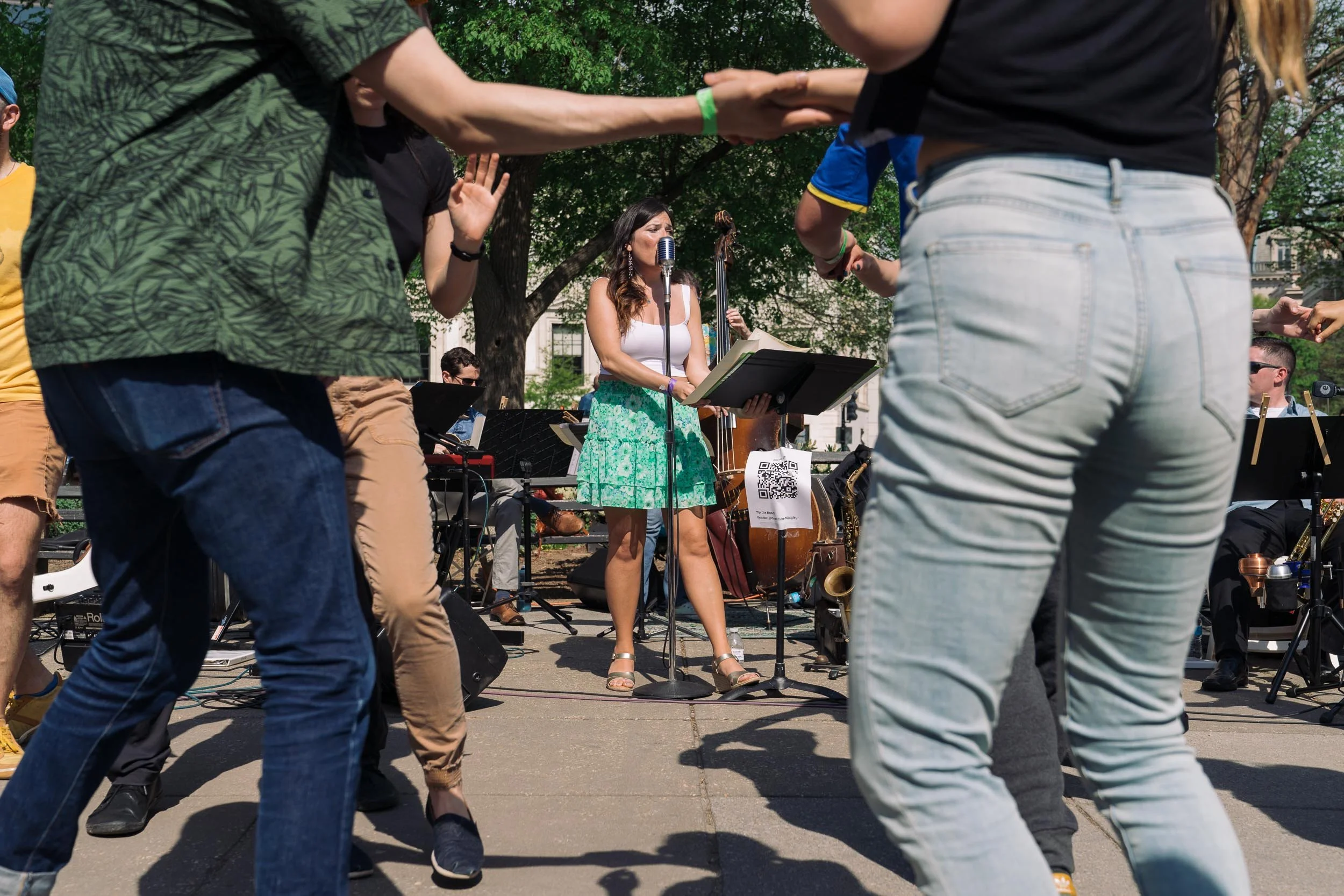
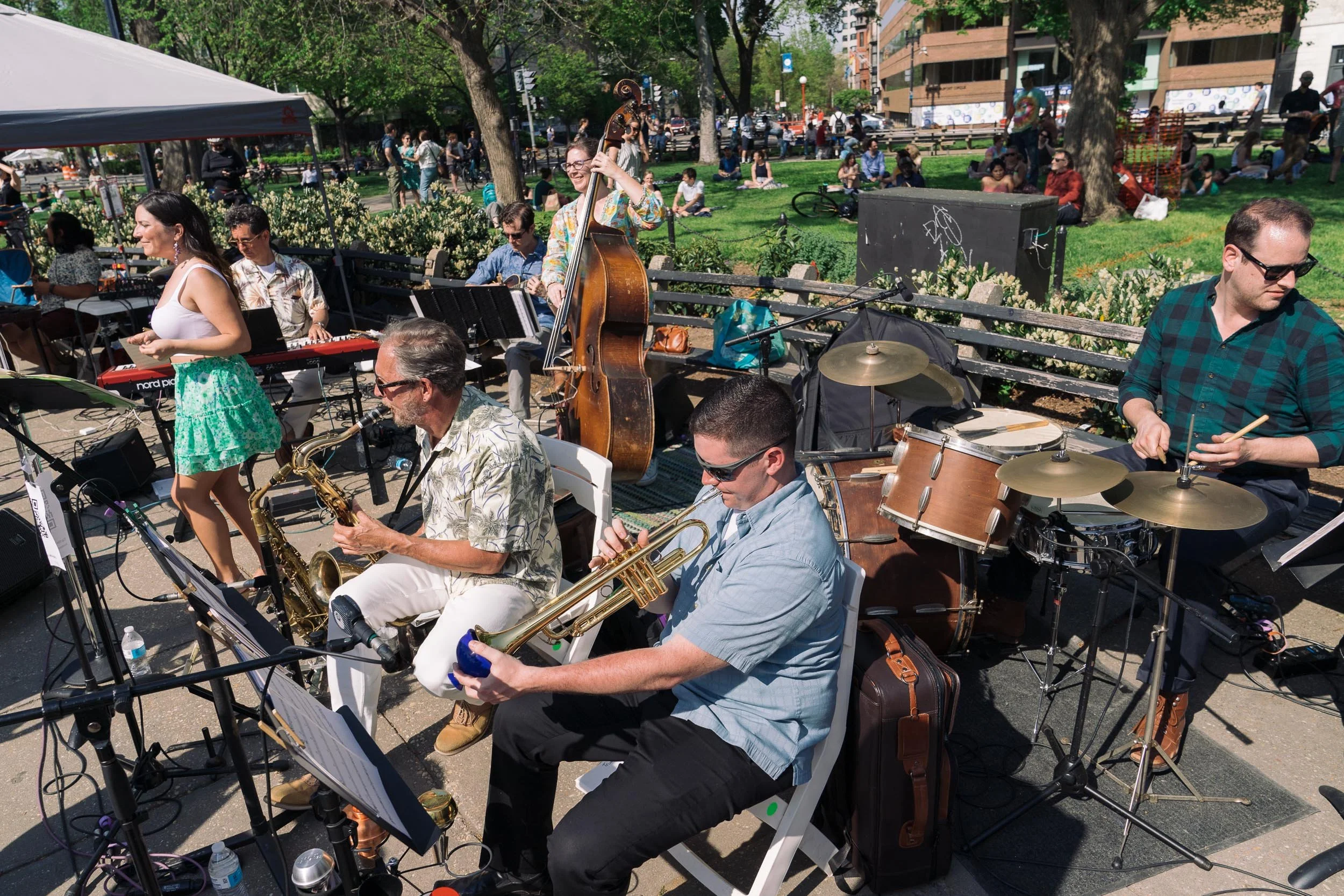
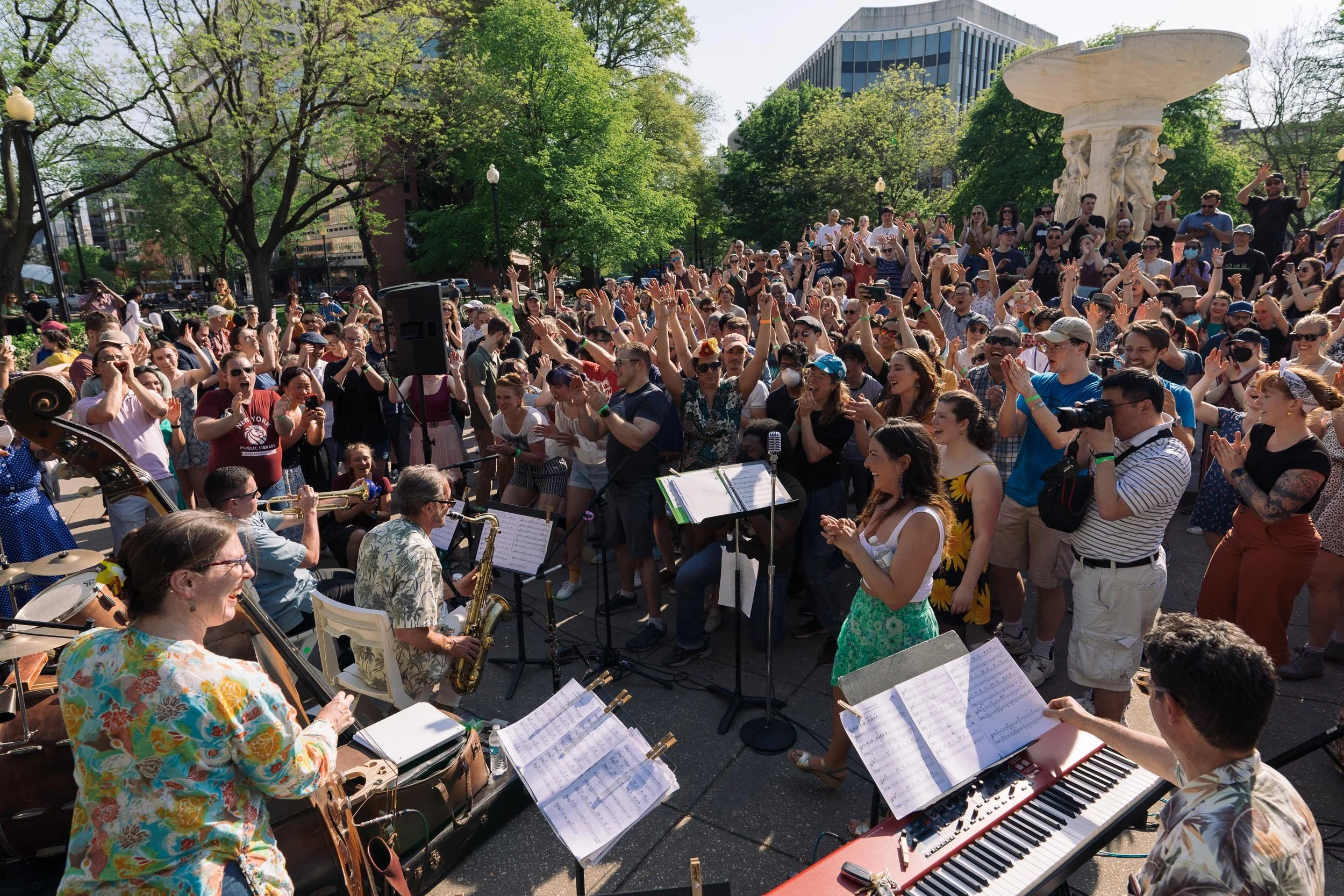
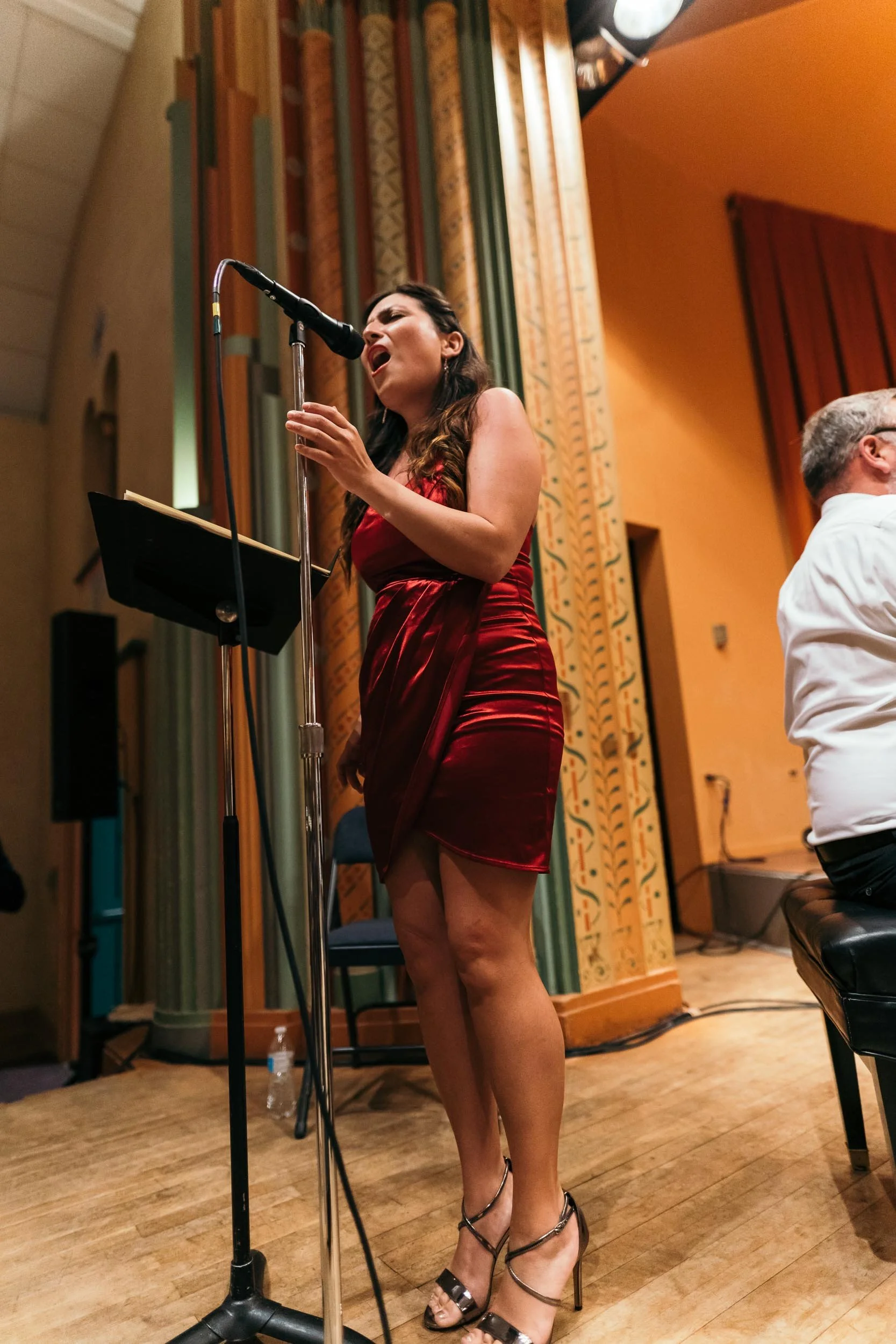
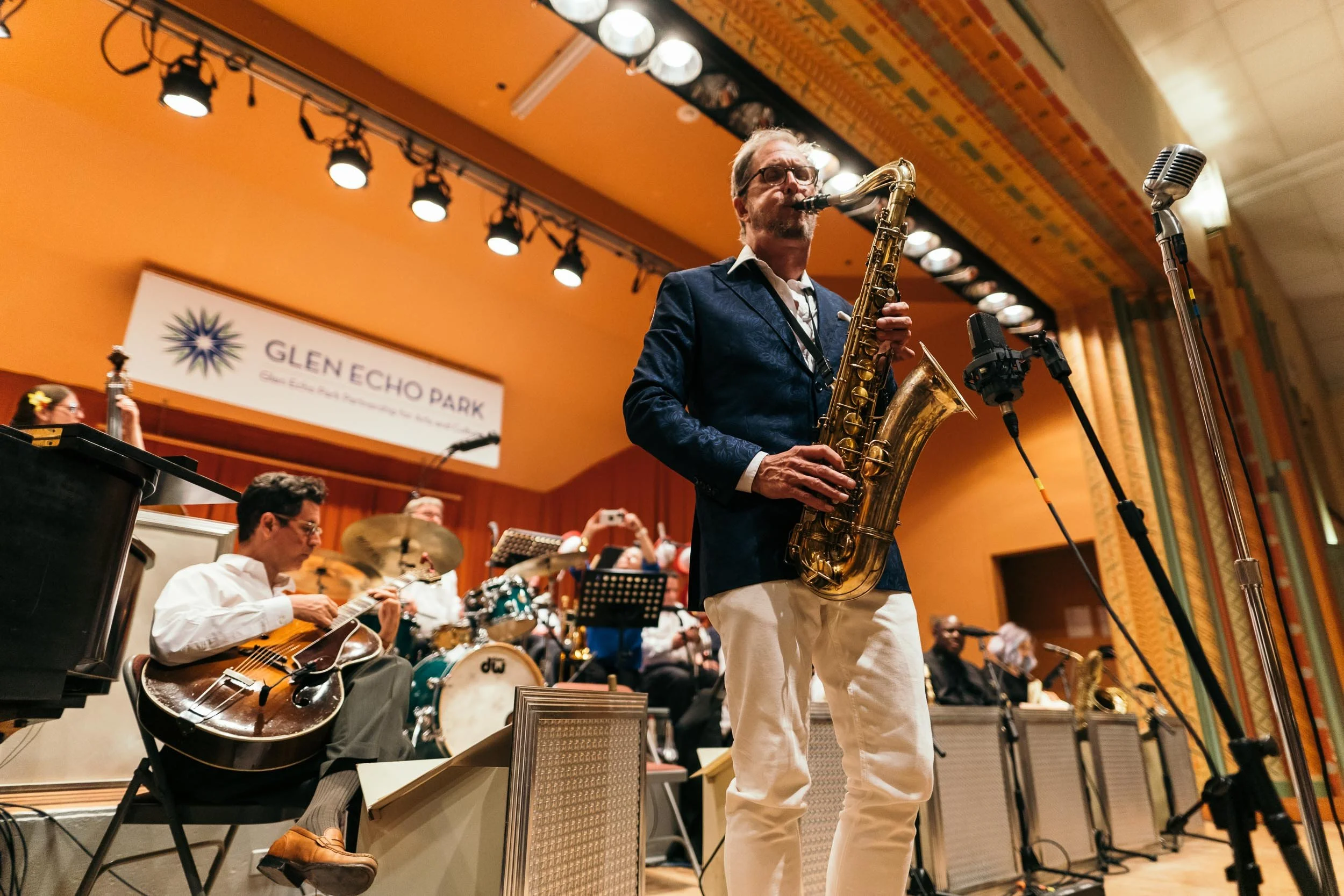
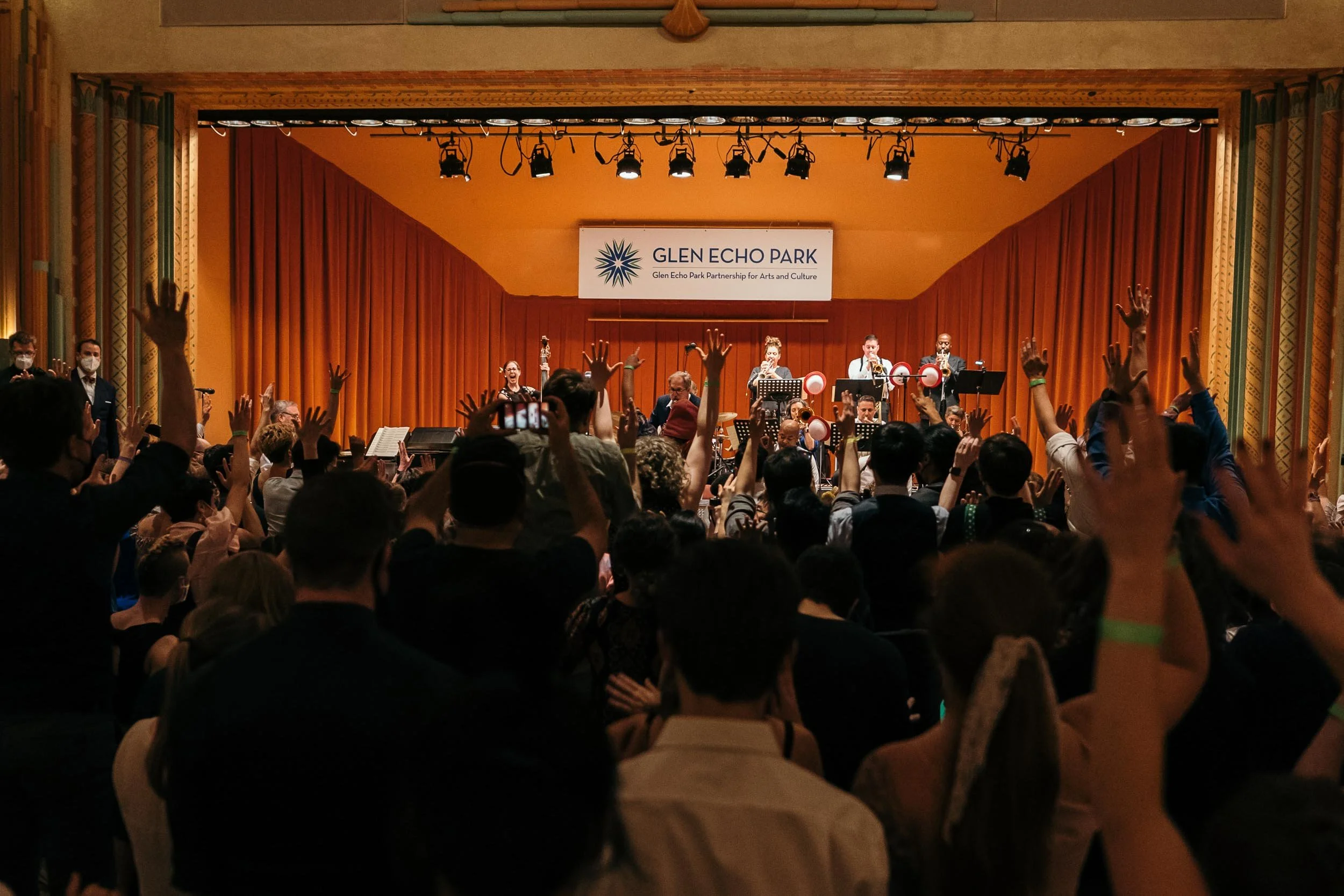
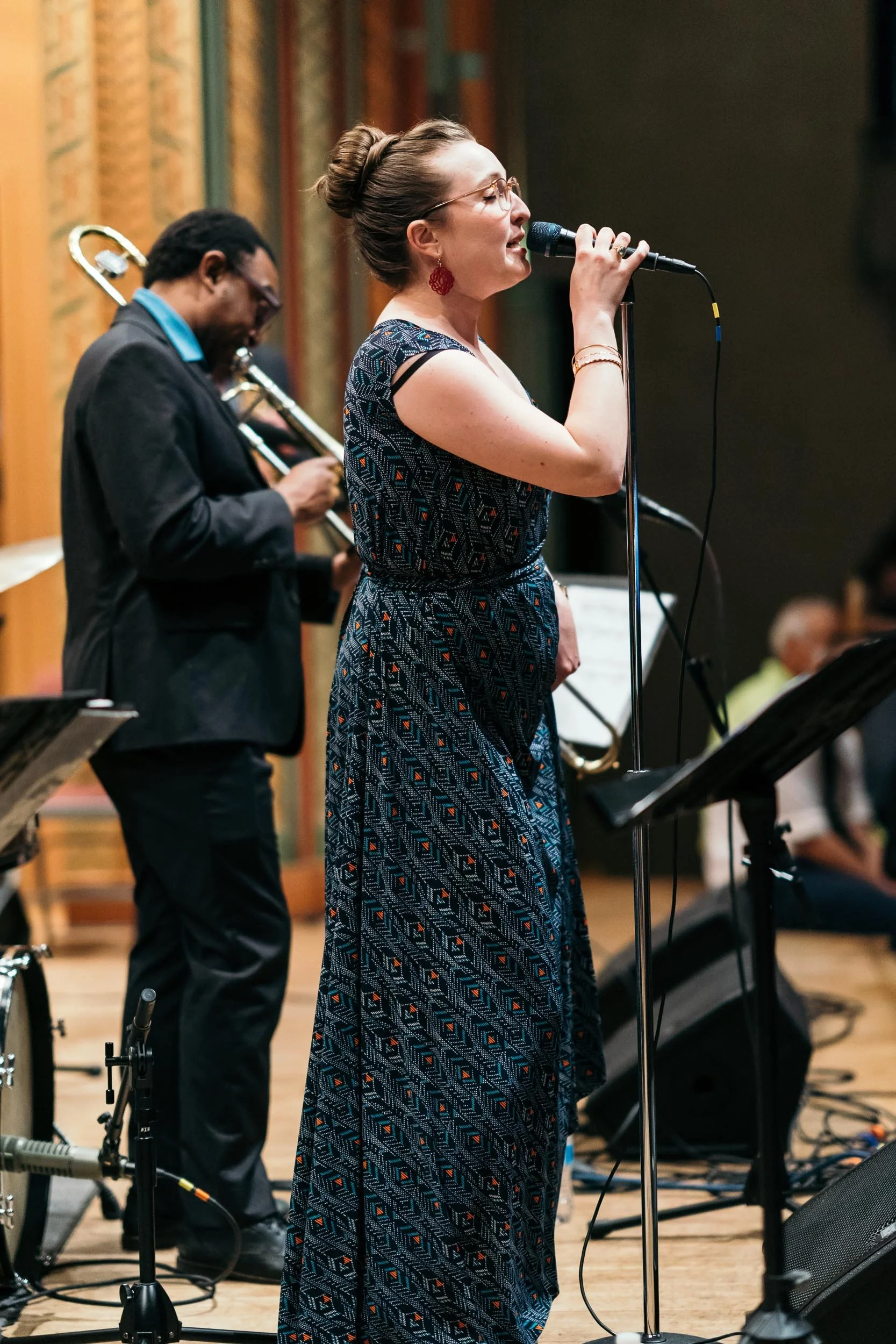
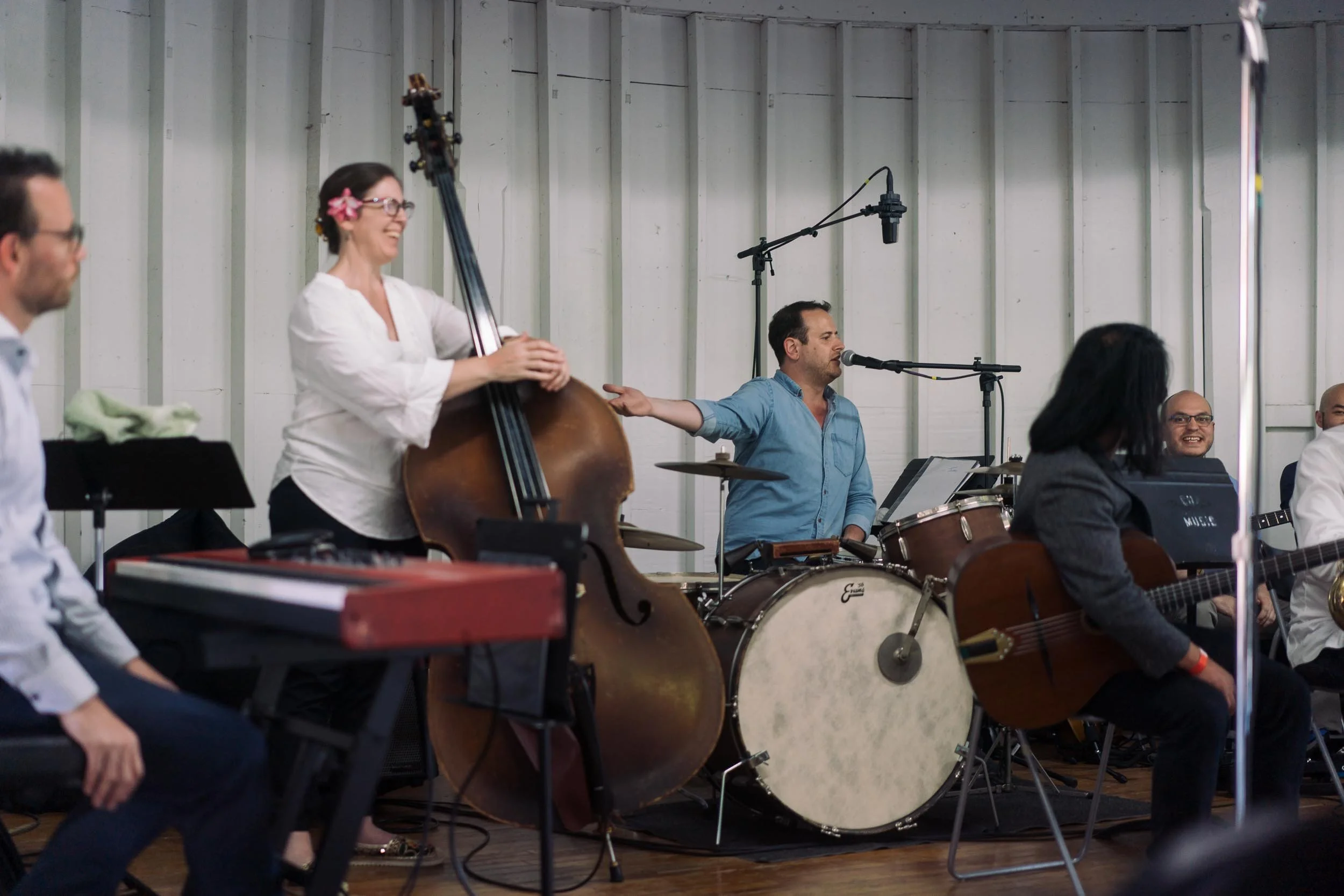
DCLX 2022, April 22-24: Things Ain’t What They Used to Be
President: Sarah Barrett
Friday Night Main Band: Craig Gildner & The Ivy City 6
Saturday Afternoon Band: Gretchen & The Sidecar Six
Saturday Night Main Band: The Scott Silbert Big Band
Saturday Late Night Band: Chelsea Reed & The Fair Weather Five
Sunday Afternoon Band: DCLX Jam Band led by Jon Tigert
DCLX’s return featured the smallest live music line up since 2010, made up almost exclusively of local musicians. The exception being Chelsea Reed’s band from Philadelphia. DCLX played it conservatively because they really had no idea how many people would want to attend a big dance event at that time. The answer was a lot more than they imagined.
Scott Silbert is a relatively late addition to this impressive list of bands, but he is a literal veteran musician, serving as part of the United States Navy Band since the early 1990s. This includes serving as its chief arranger for 15 years until he retired a few years ago. He’s actually played with many of the previously listed DC bands for years. If not at DCLX, then at other gigs around the area. When he retired from the Navy in 2017, he started picking up more swing dance gigs. Credit should probably go to Gretchen Midgley, a lindy hopper turned band leader, who encouraged Scott to use his vast skills in arranging and composing for big bands to dig deeper into swing era music.
During the extended break, Scott Silbert released a full length album of big band music specifically for dancing. In addition to his military band ties, he has also served as a key member of The Smithsonian Jazz Masterworks Orchestra, which is a jazz program authorized by Congress to specifically highlight important jazz artists and works. He has parlayed these connections into assembling some of the finest big bands to grace the stage at Glen Echo for DCLX.
Also, an interesting innovation started this year as a low risk option to provide live music for an unknown number of dancers was the Sunday afternoon Jam Band led by Jon Tigert. Yet another musician turned dancer turned musician, Jon was a good choice for this experiment to encourage other dancers dabbling in music to play in front of a live audience in a very chill, low stakes setting. It has since turned into a bit of a tradition at DCLX as another way to connect the dancers to the music.
There is no Sunday evening band listed because there was no Sunday evening dance. That’s how cautious DCLX was in planning this year. The event ended with a DJ battle following the jam band that went from 5 PM to 7 PM that day, the earliest a DCLX has ever ended.
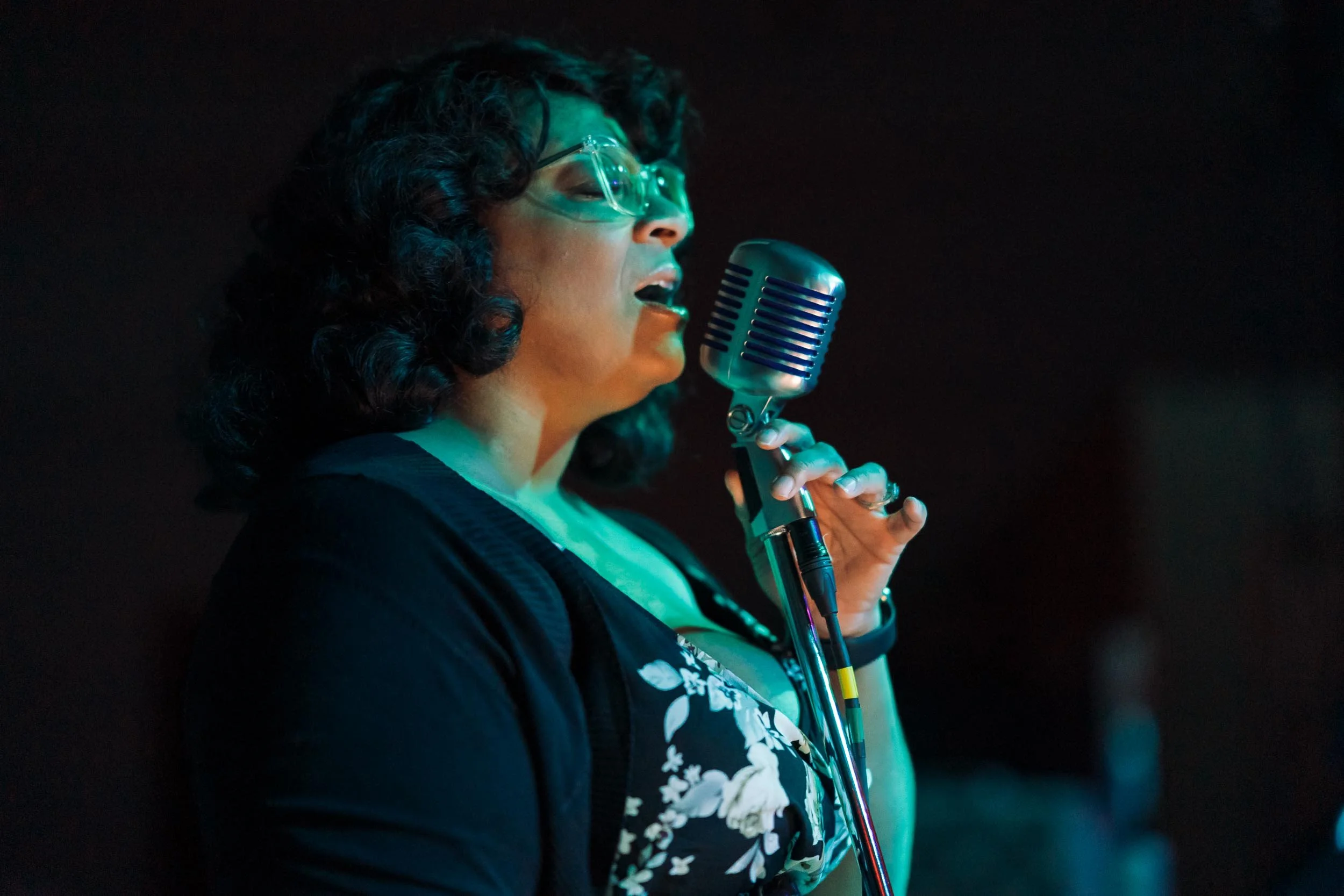
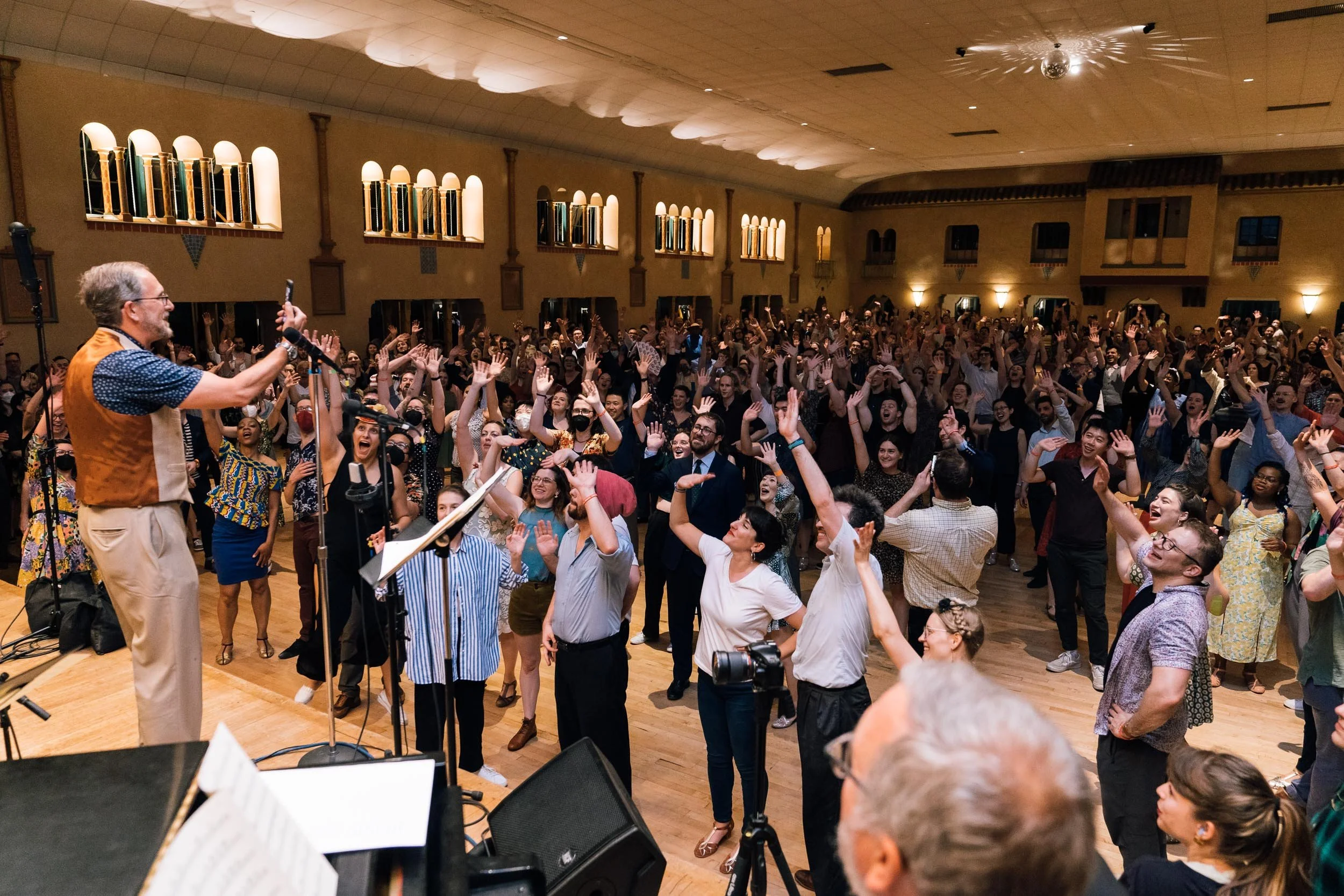
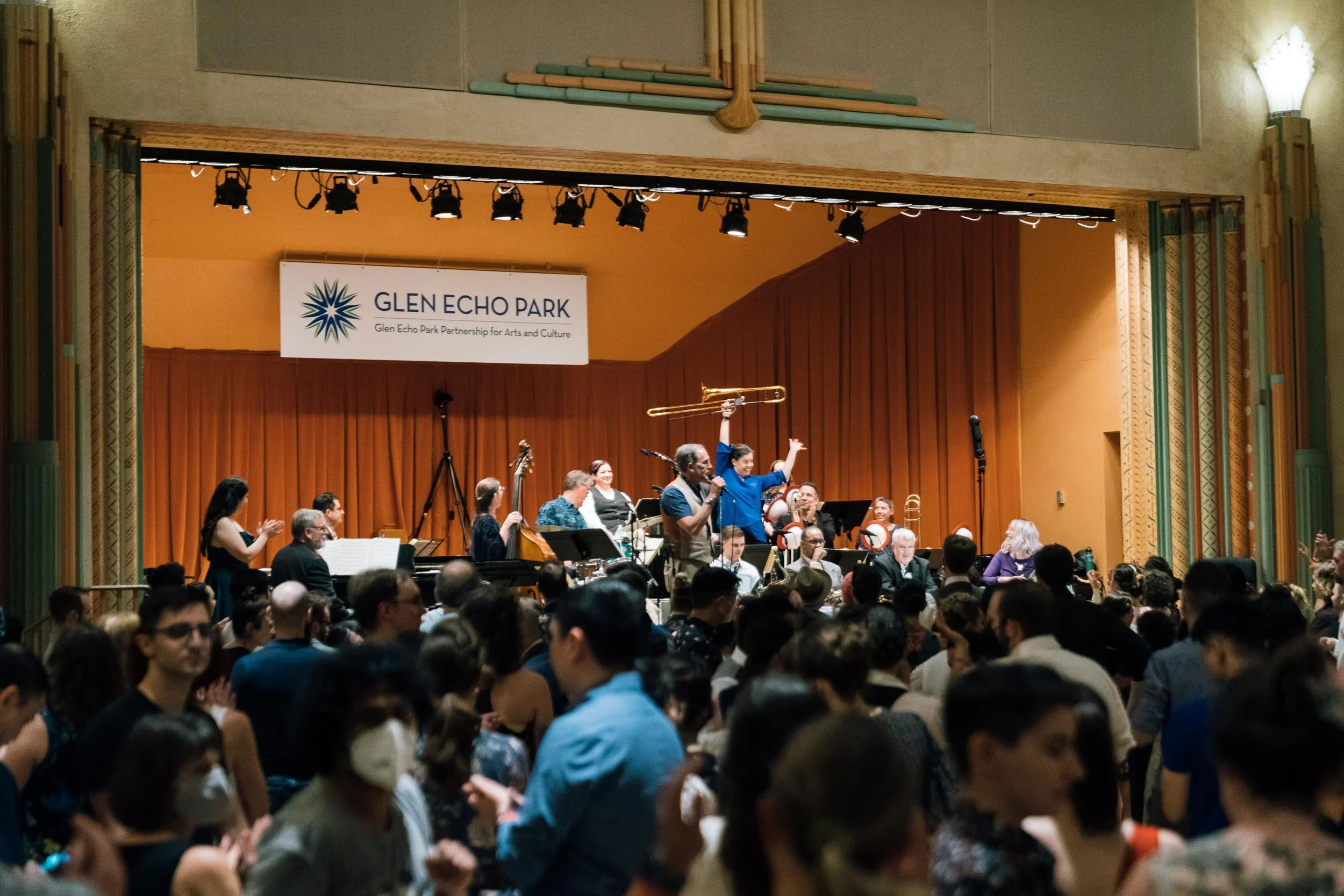
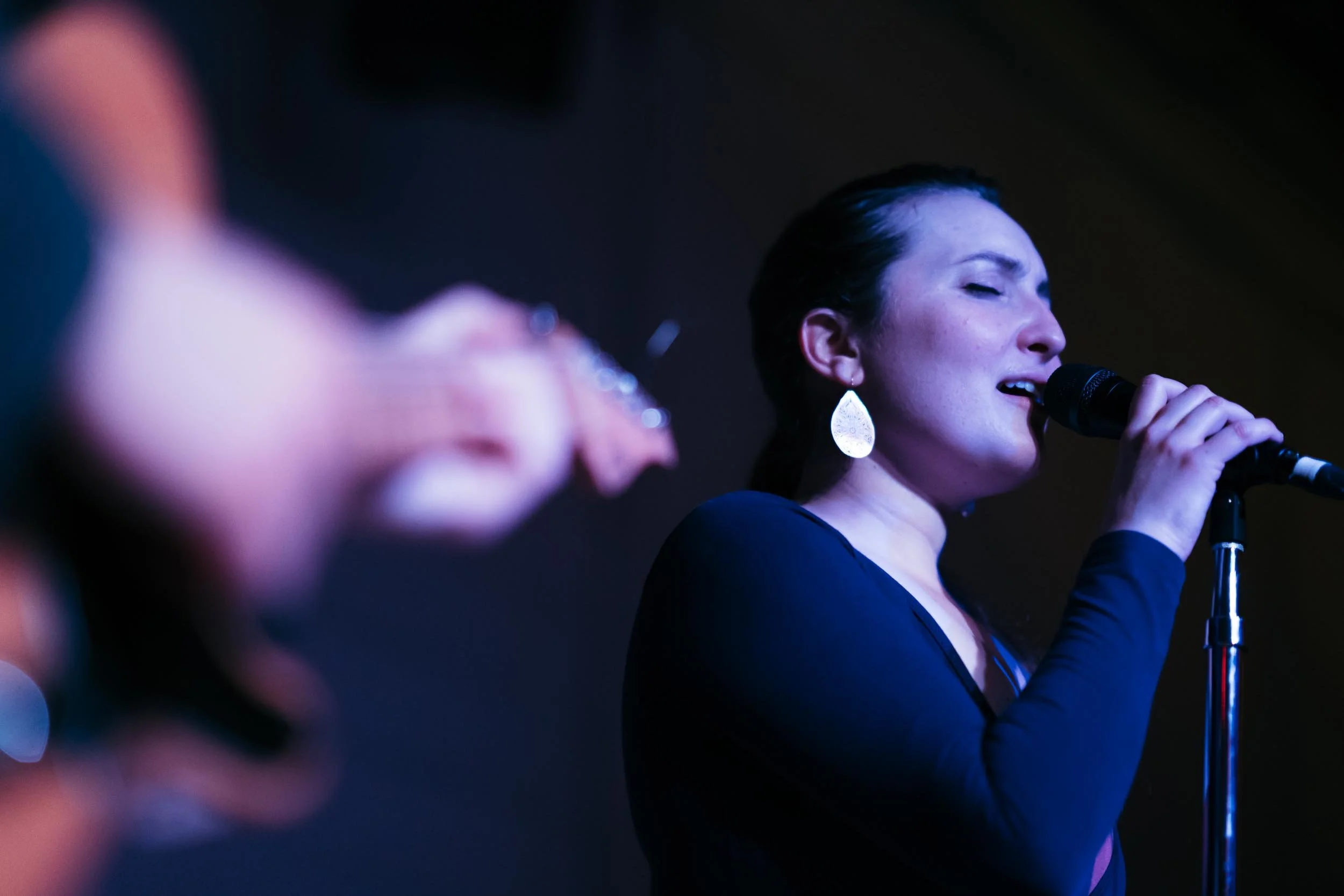
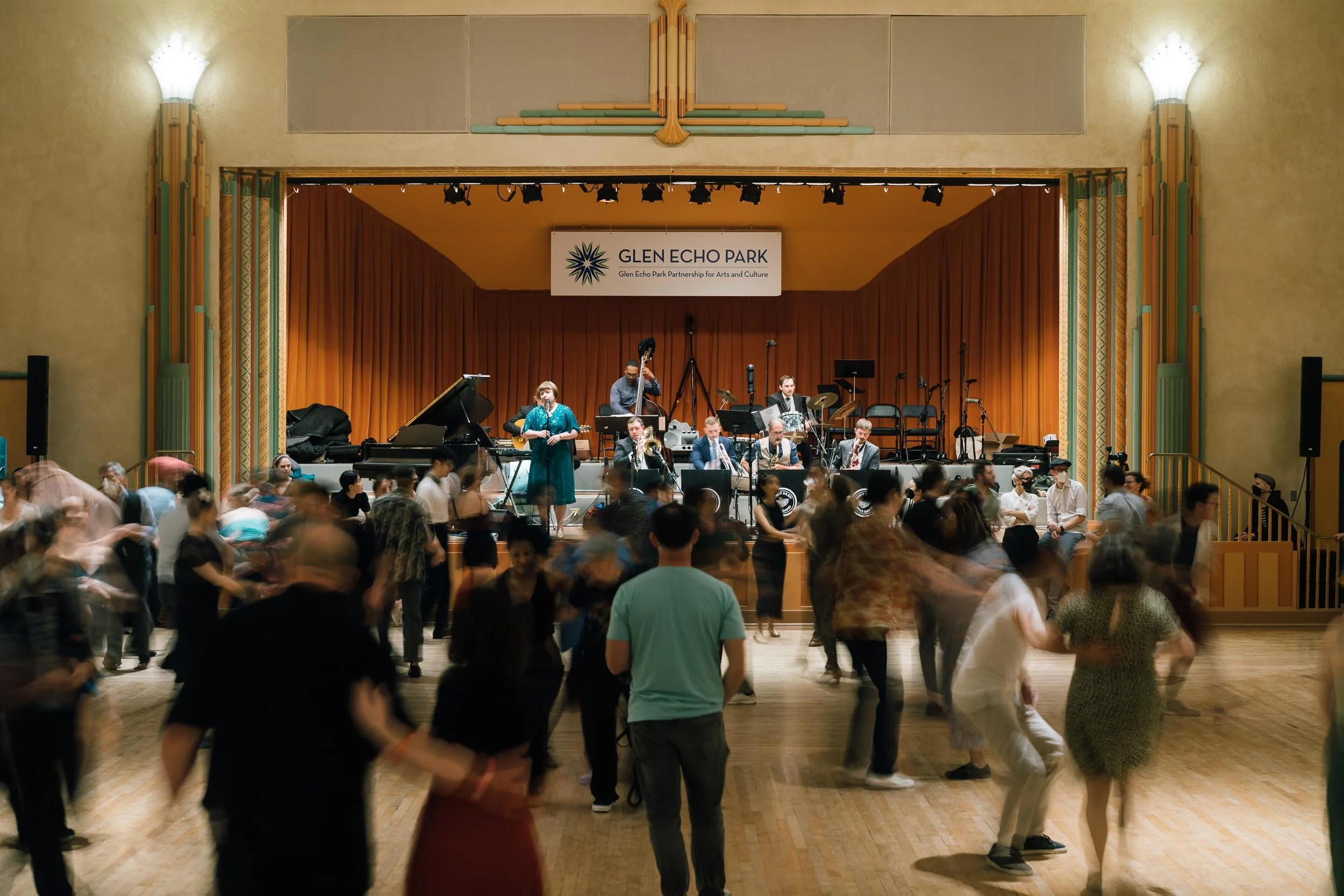
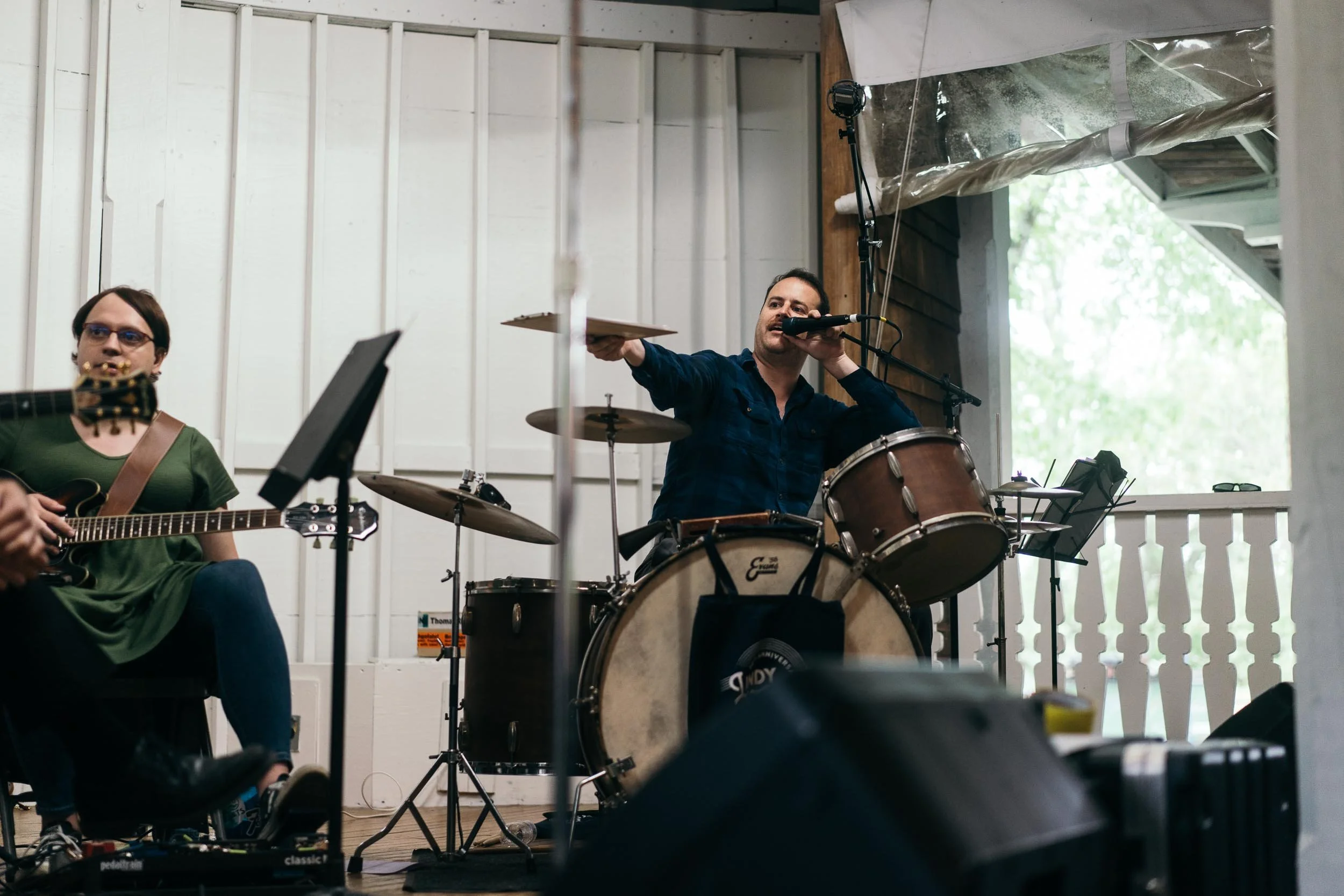
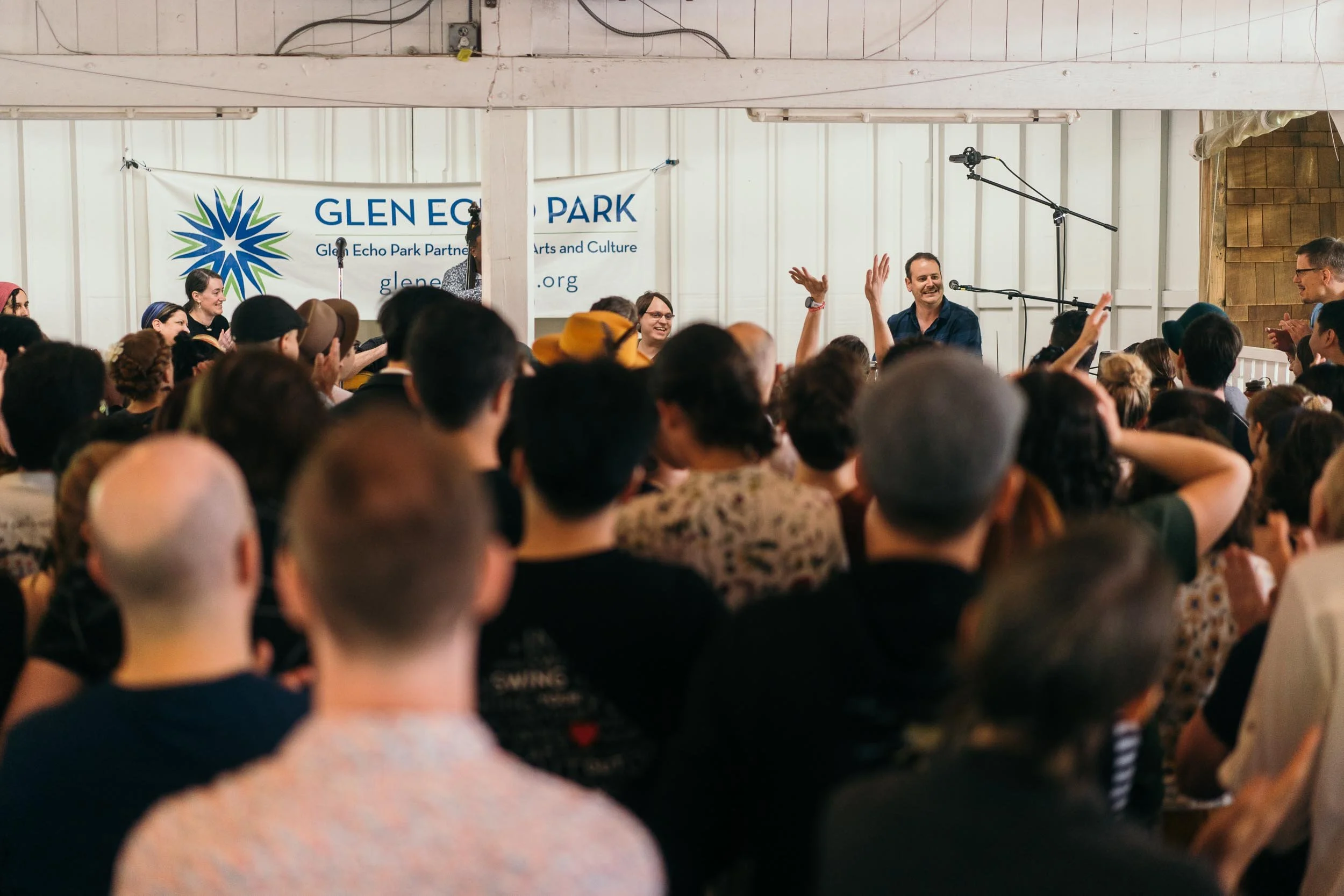
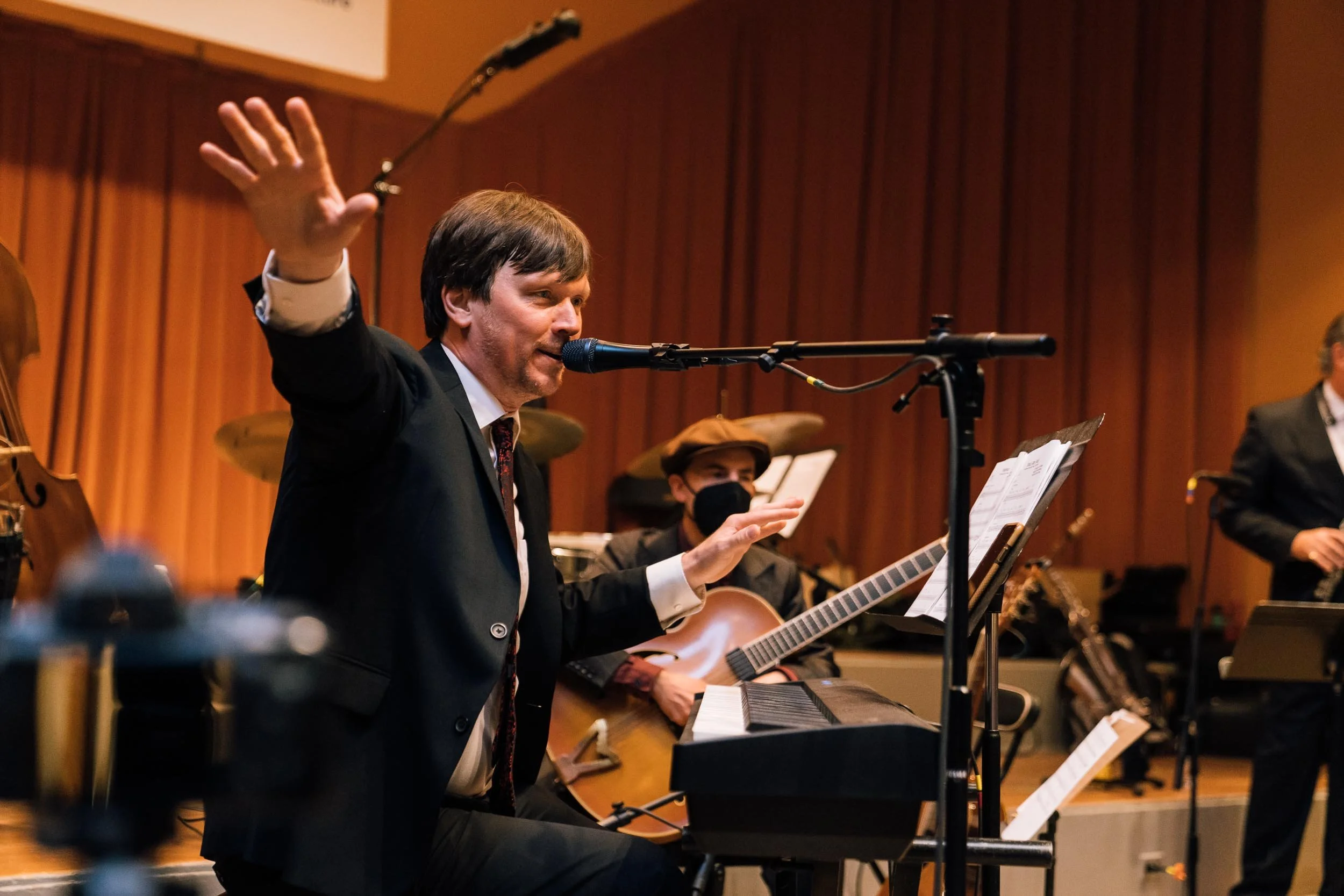
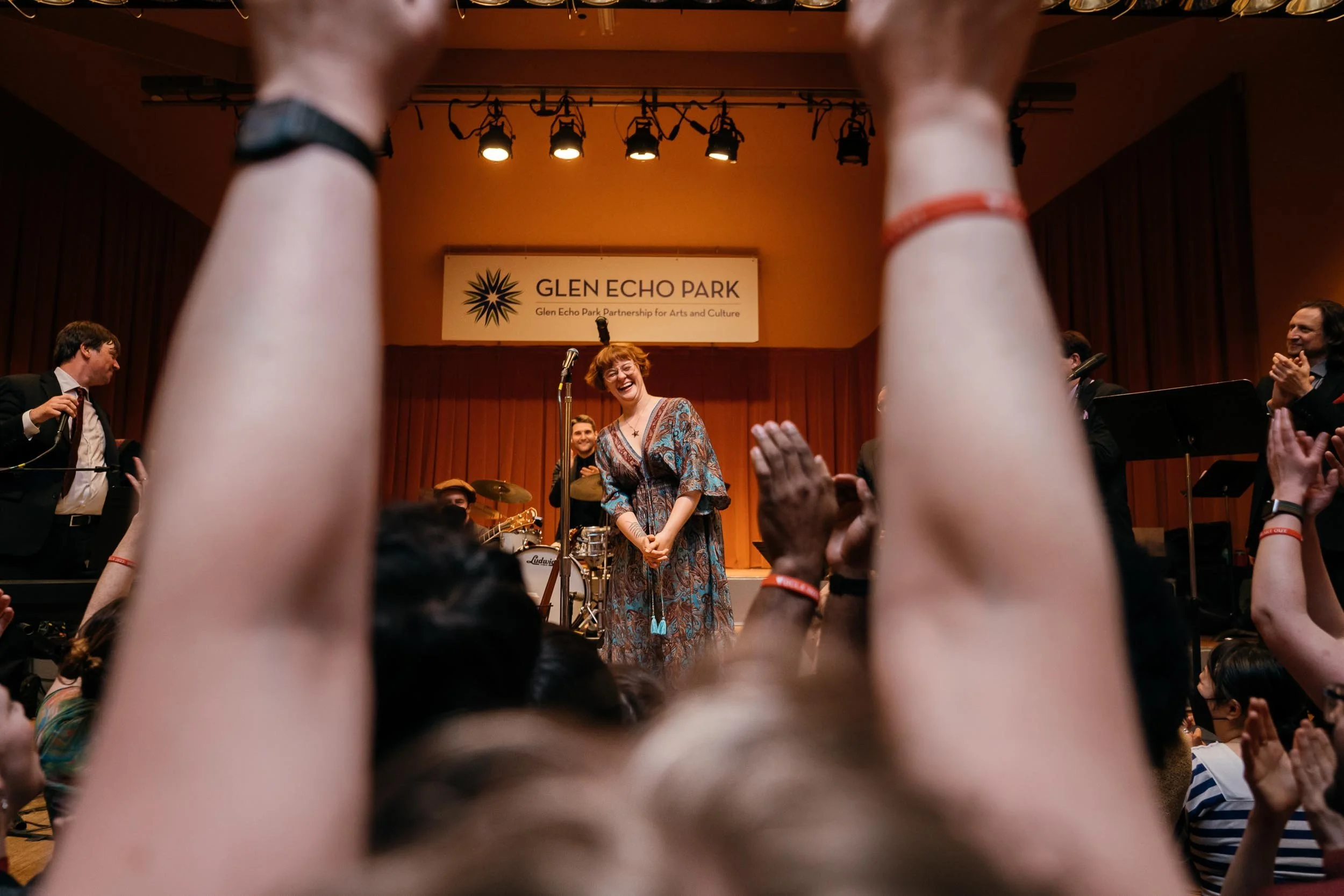
DCLX 2023, April 21-23: Swing Your Heart Out
President: Amanda Gerken
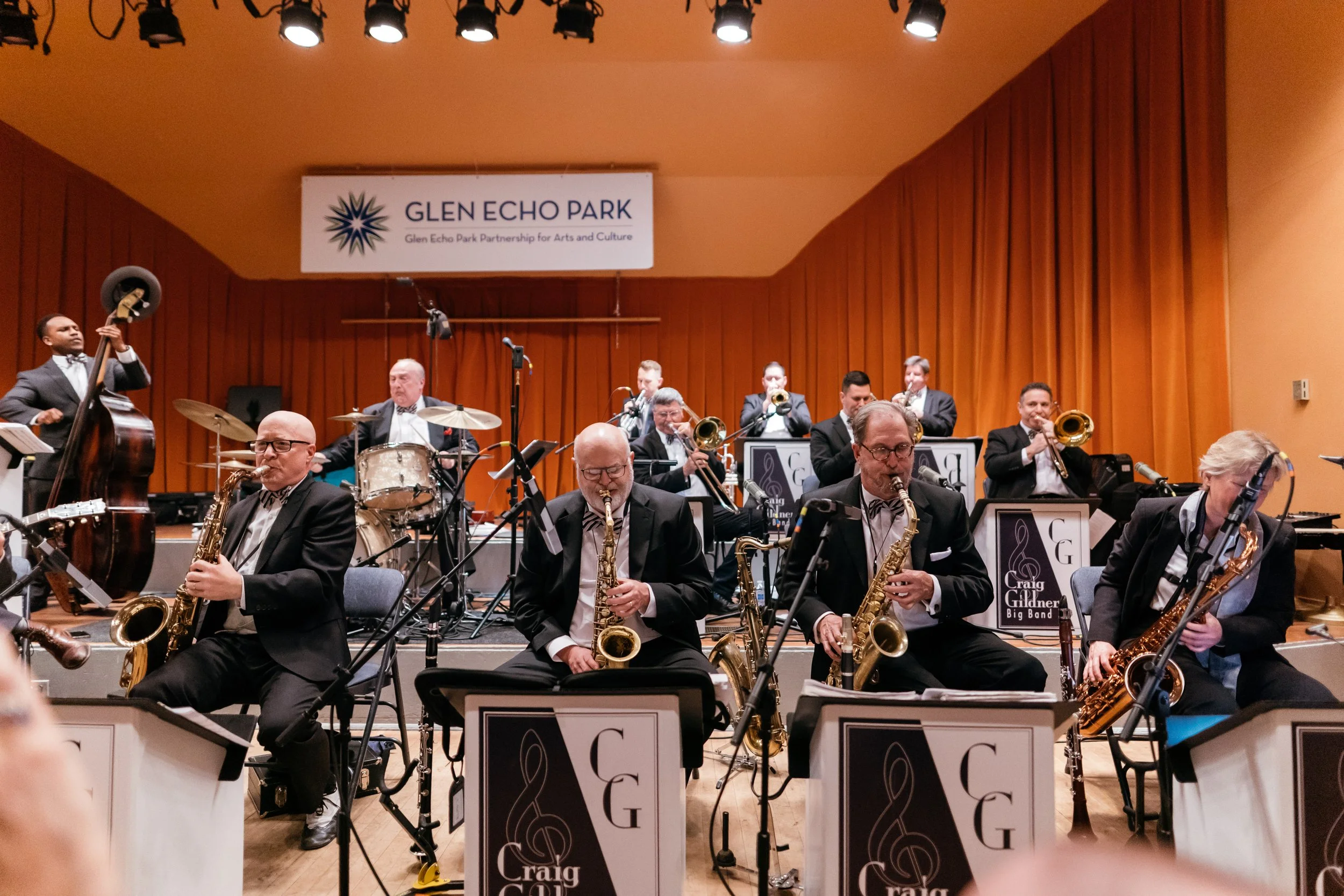
Friday Night Main Band: The Craig Gildner Big Band
Friday Late Night Band: Keenan Mckenzie & The Riffers
Friday Blues Room Band: Taryn Newborne & The Real Deal
Saturday Afternoon Band: Chelsea Reed & The Fair Weather Band
Saturday Night Main Band: The Scott Silbert Big Band
Saturday Late Night Band: The Mint Julep Jazz Band
Saturday Blues Room Band: Chelsea Reed & The Fair Weather Band
Sunday Afternoon Band: Jon Tigert’s Hangover Jam Band
Sunday Night Main Band: Gordon Webster & Friends
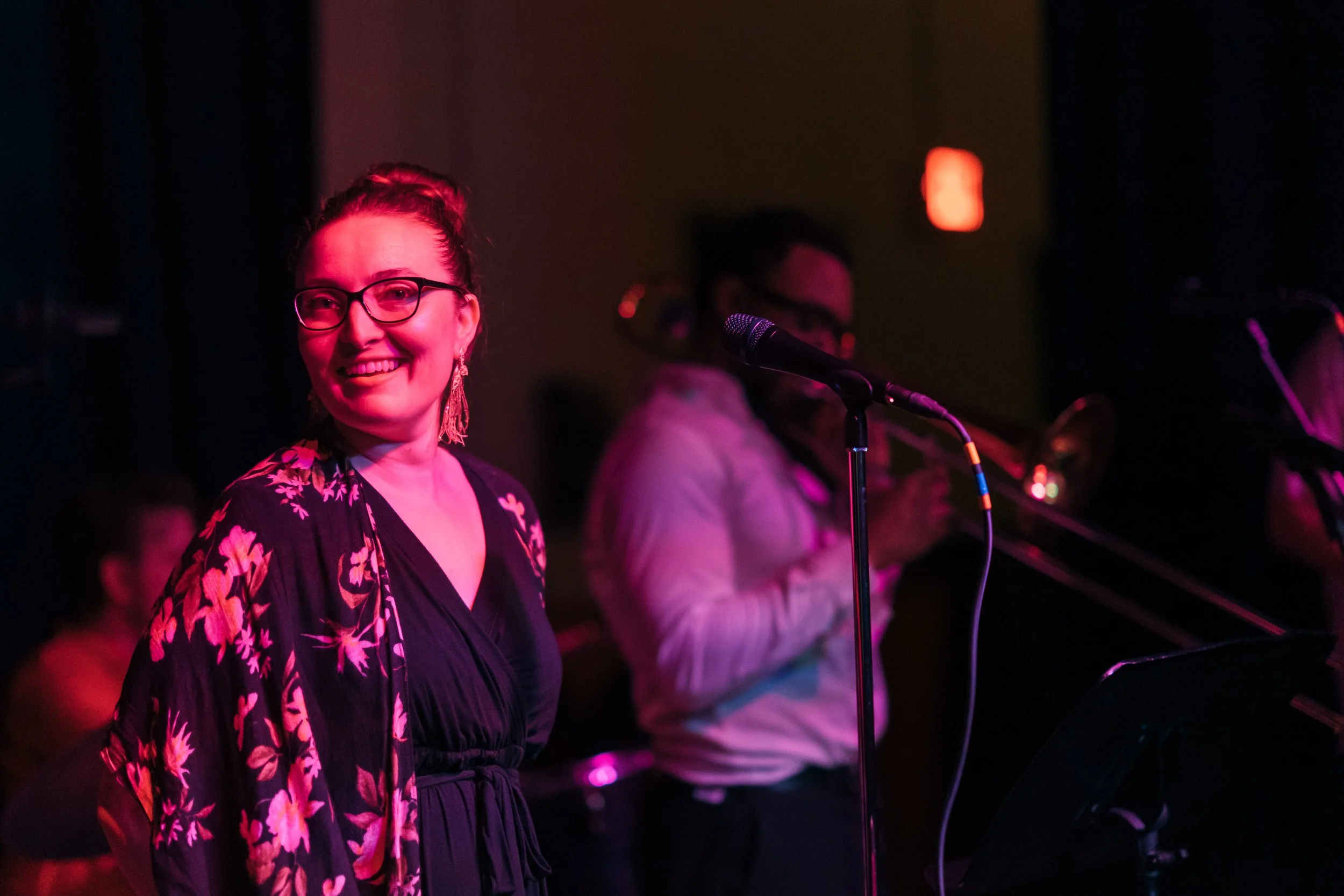
The surprise success of 2022 emboldened DCLX to return to a full line up of live music. Keenan Mckenzie, another musician out of North Carolina, finally made his DCLX debut 2 years after he was first announced. He was joined by returning favorites Taryn Newborne, Chelsea Reed, The Mint Julep Jazz Band and Gordon Webster.
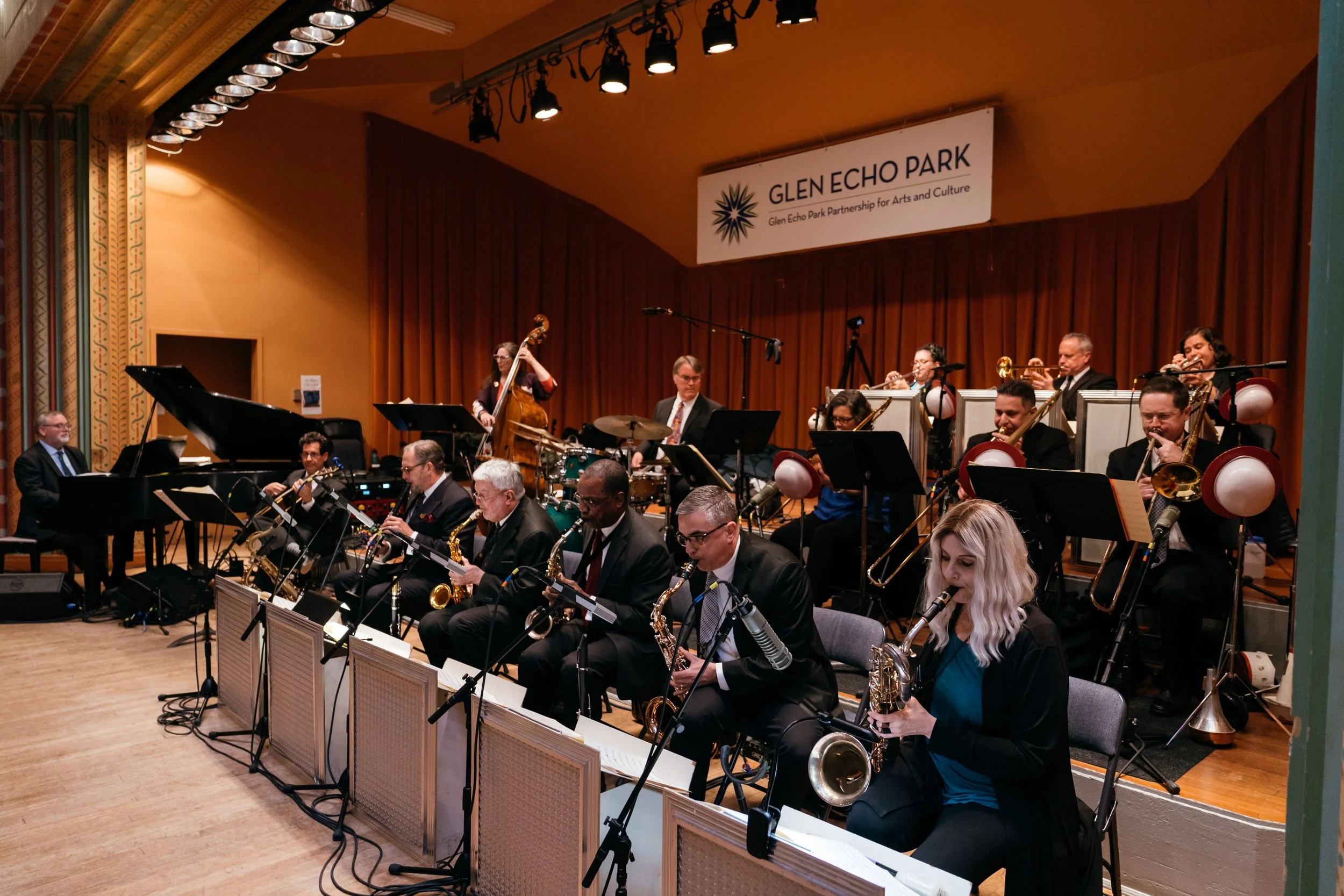
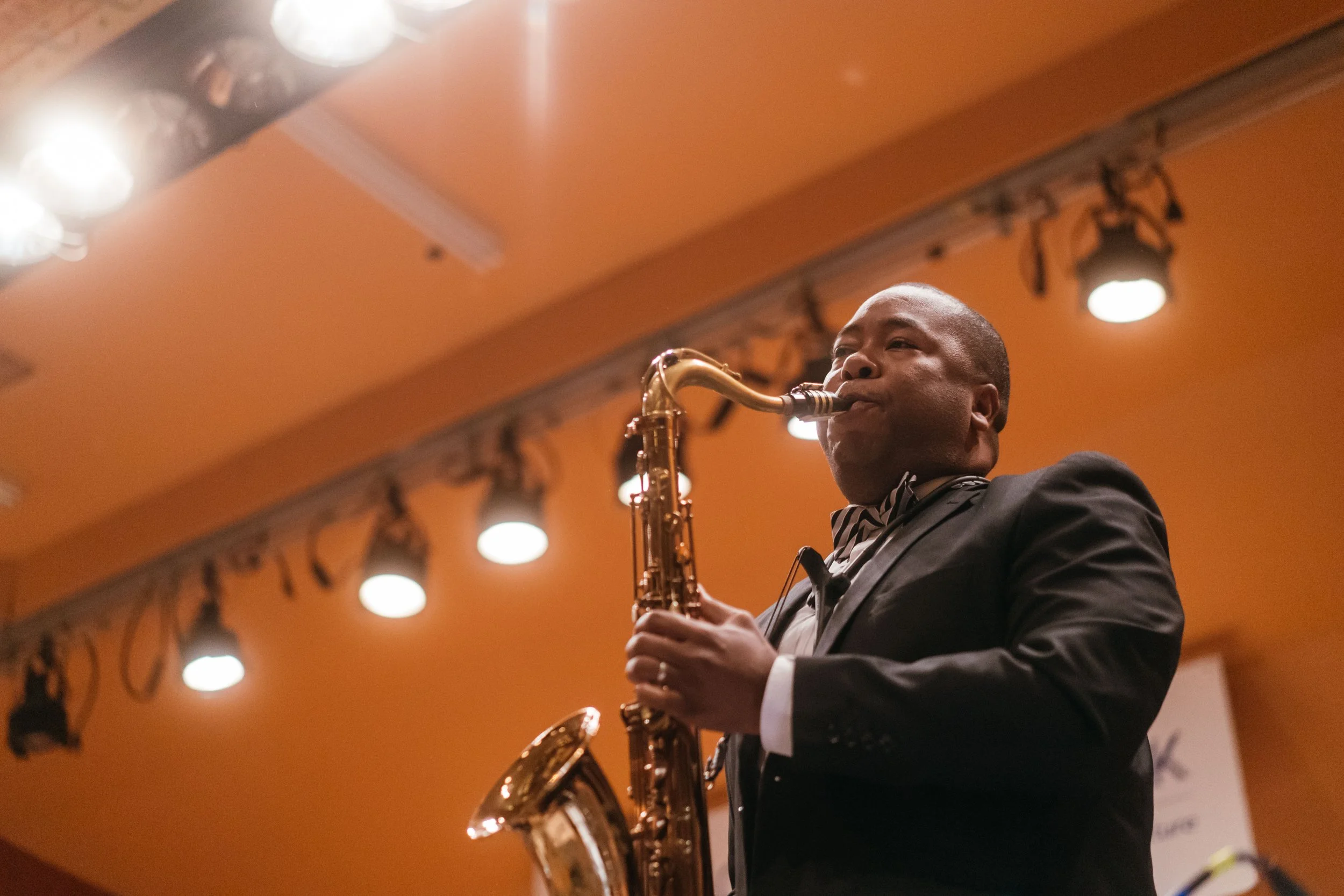
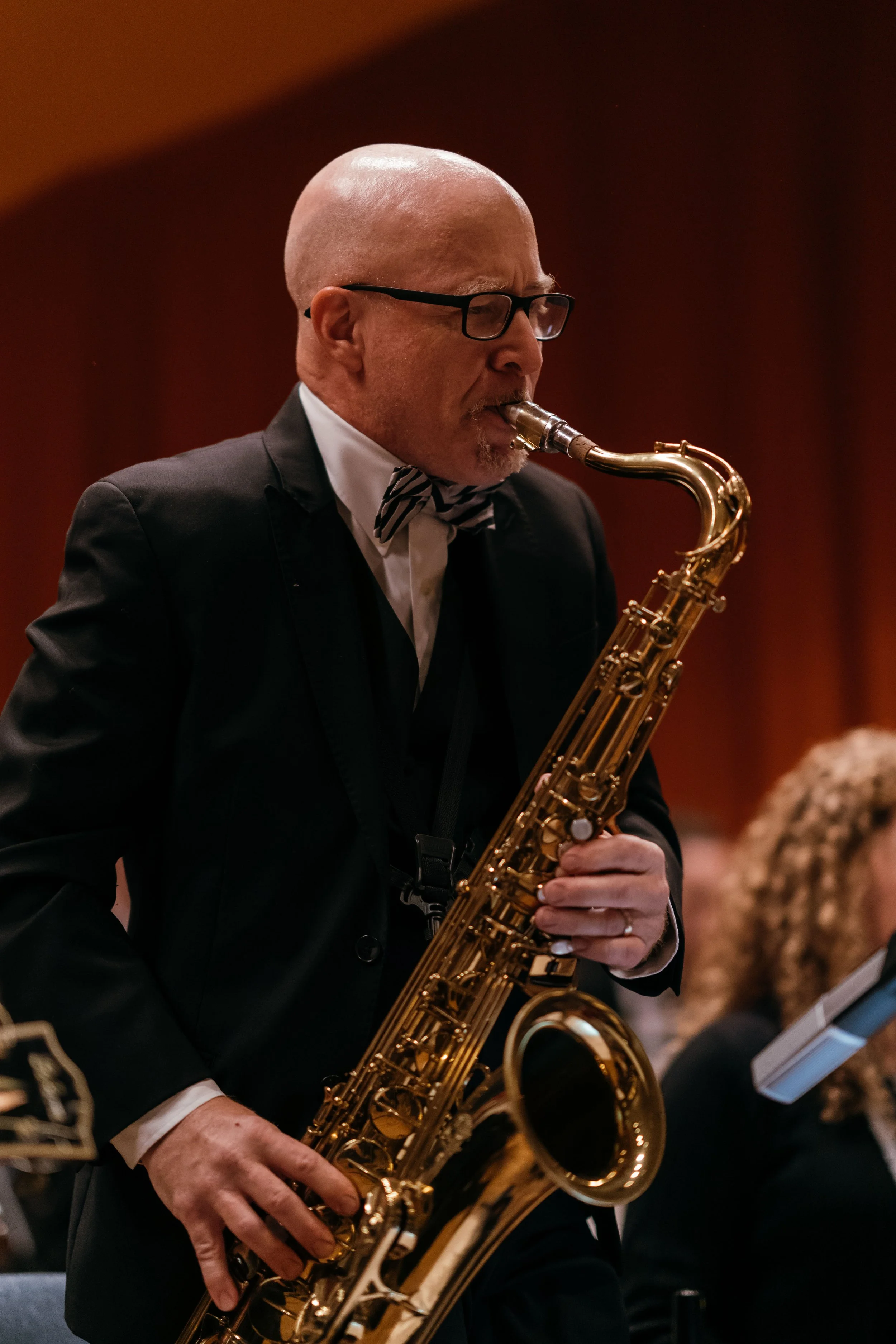
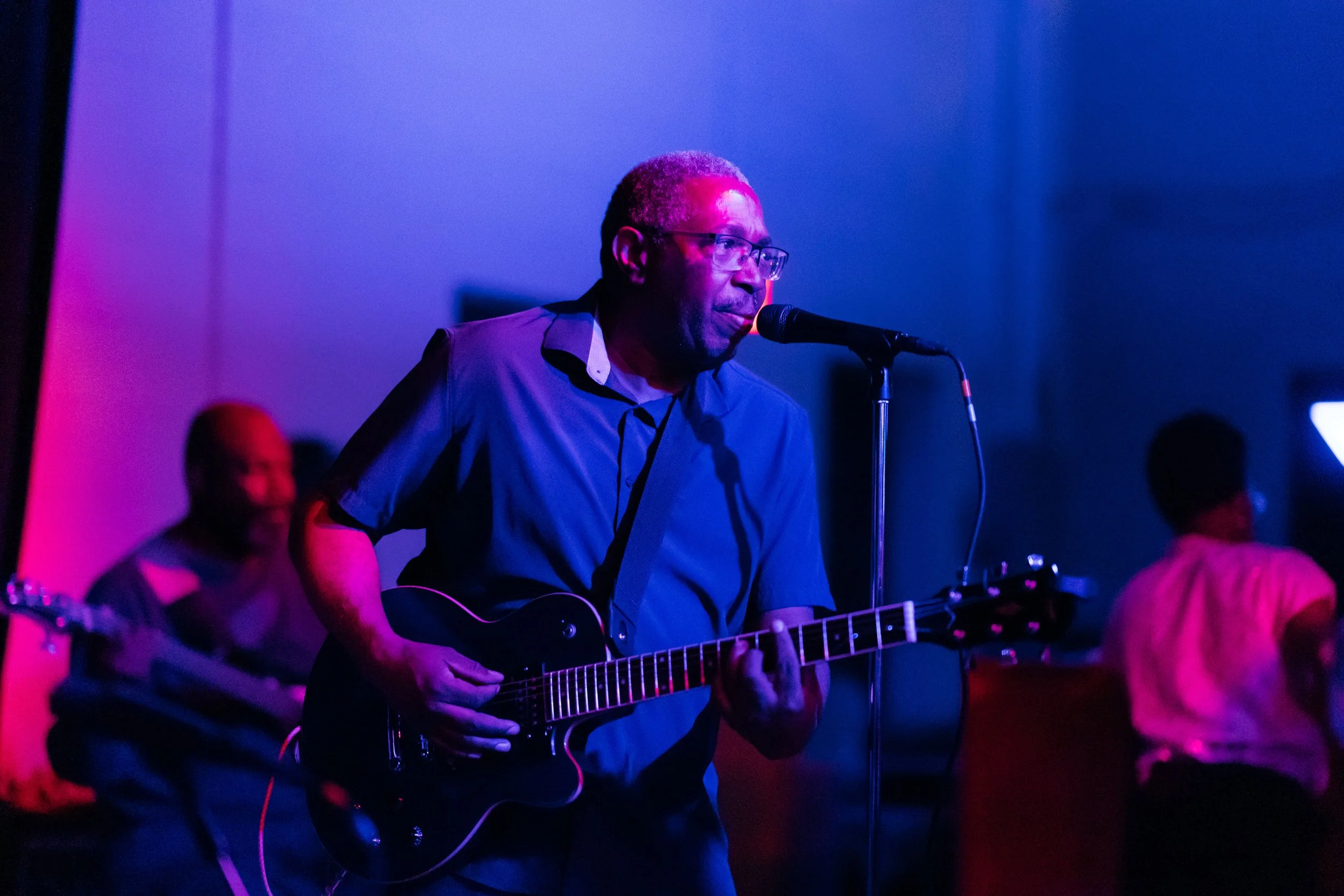
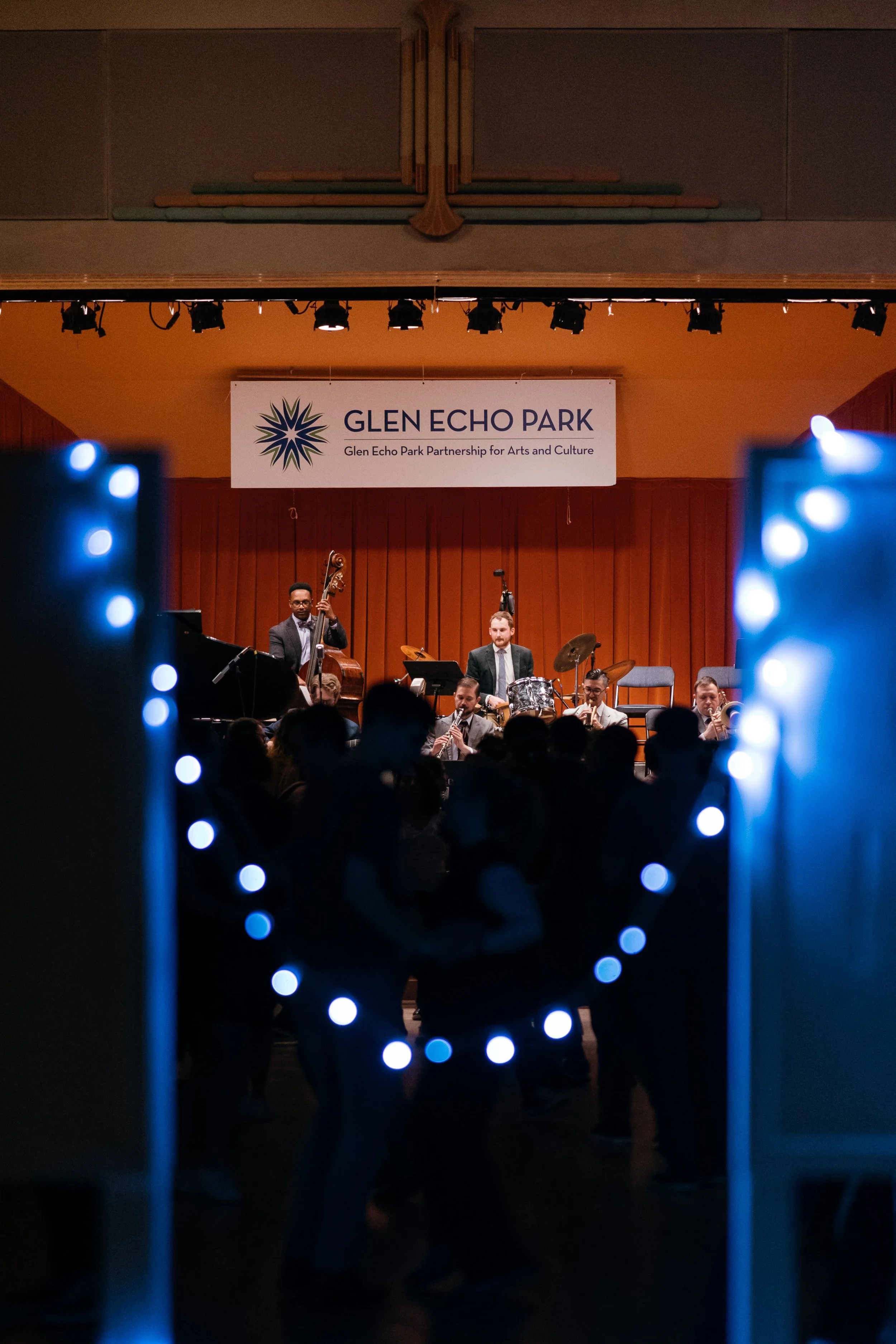
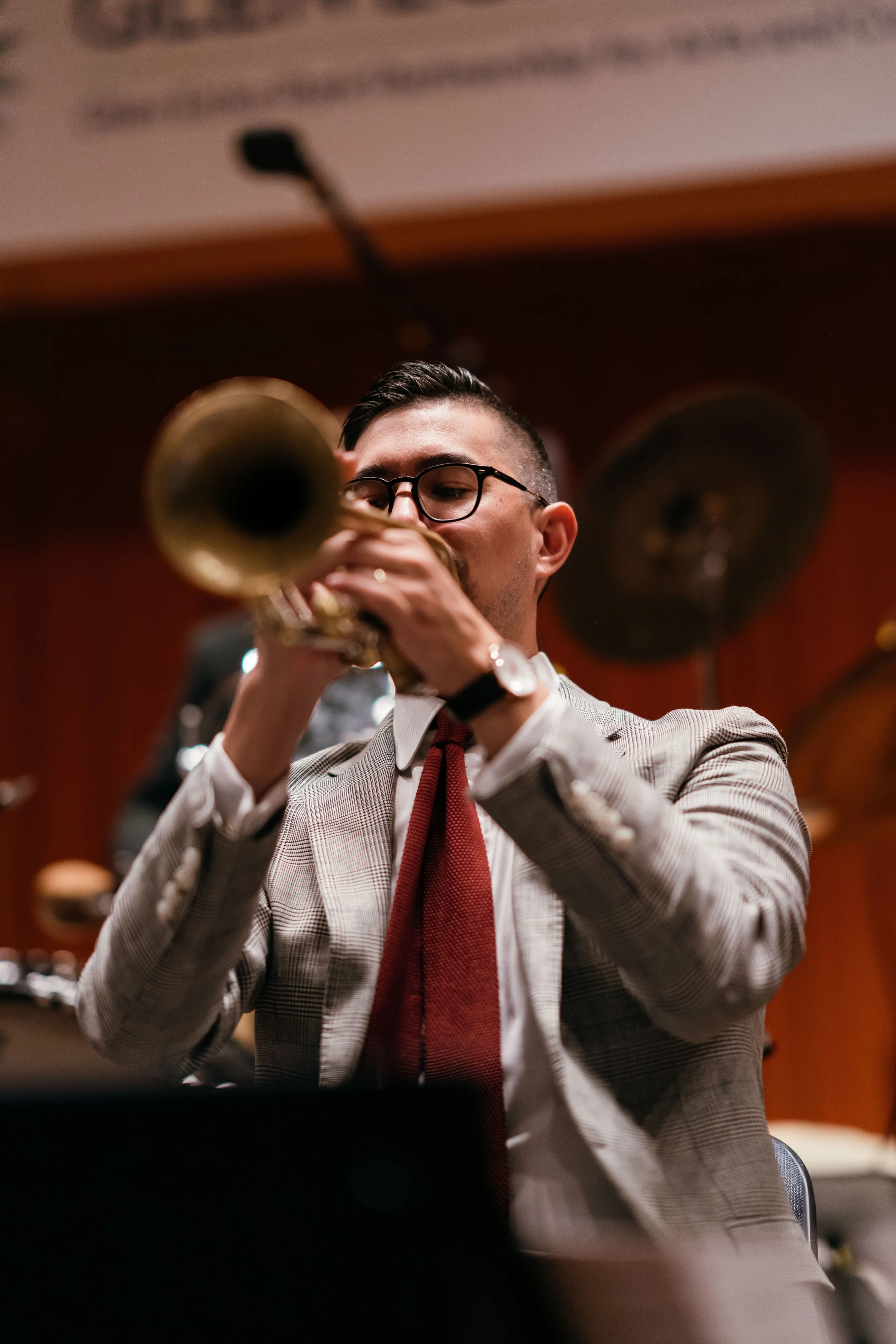
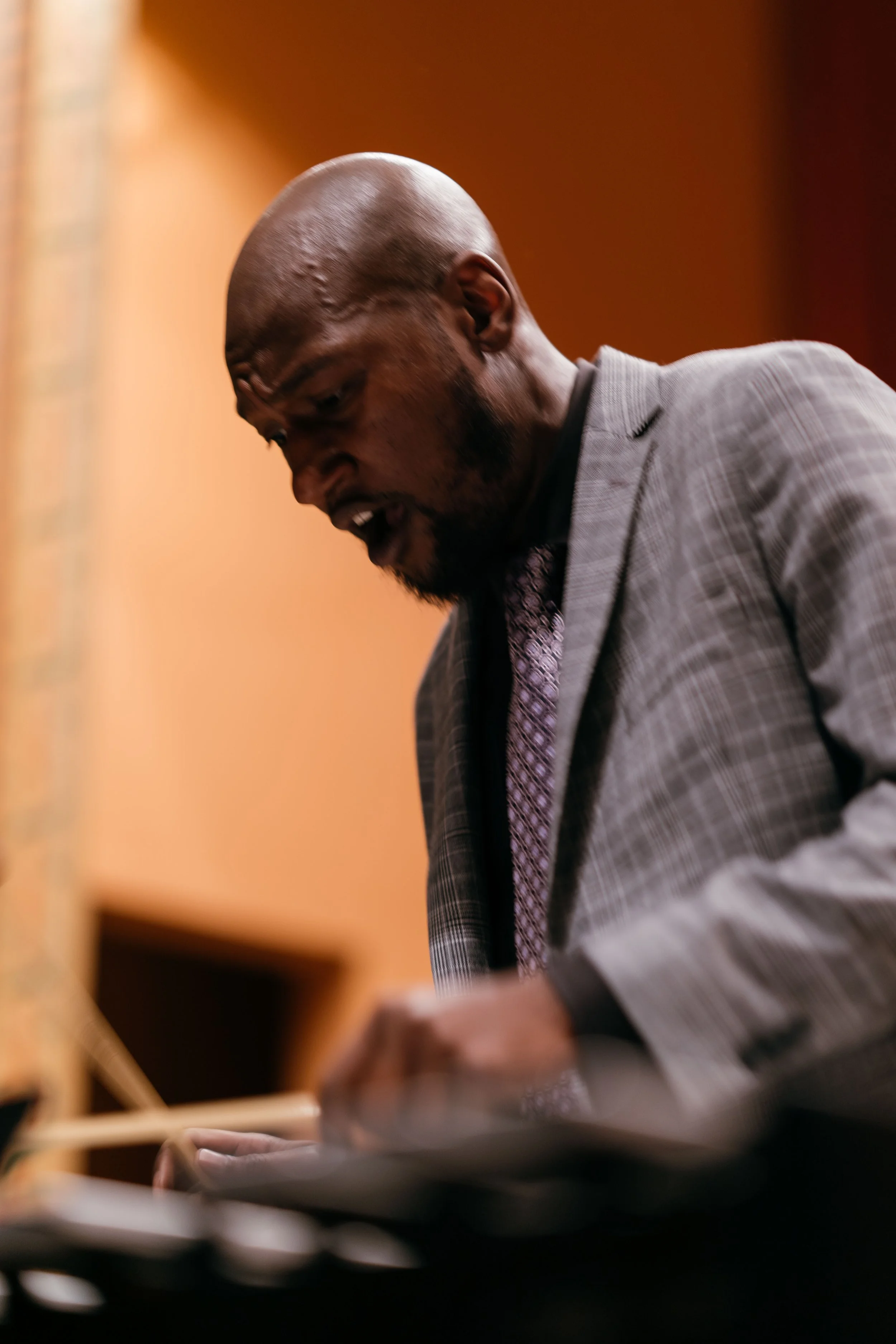
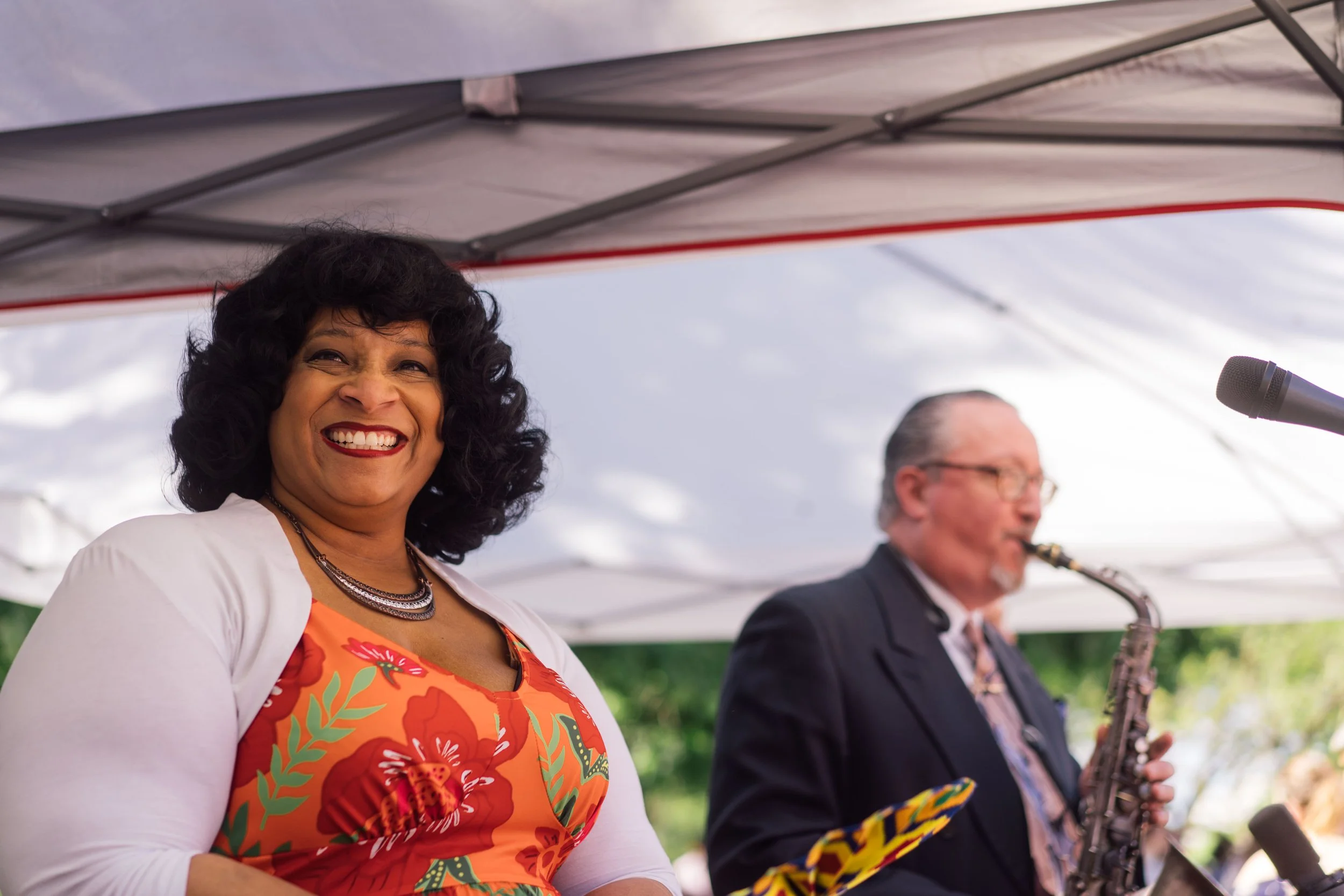
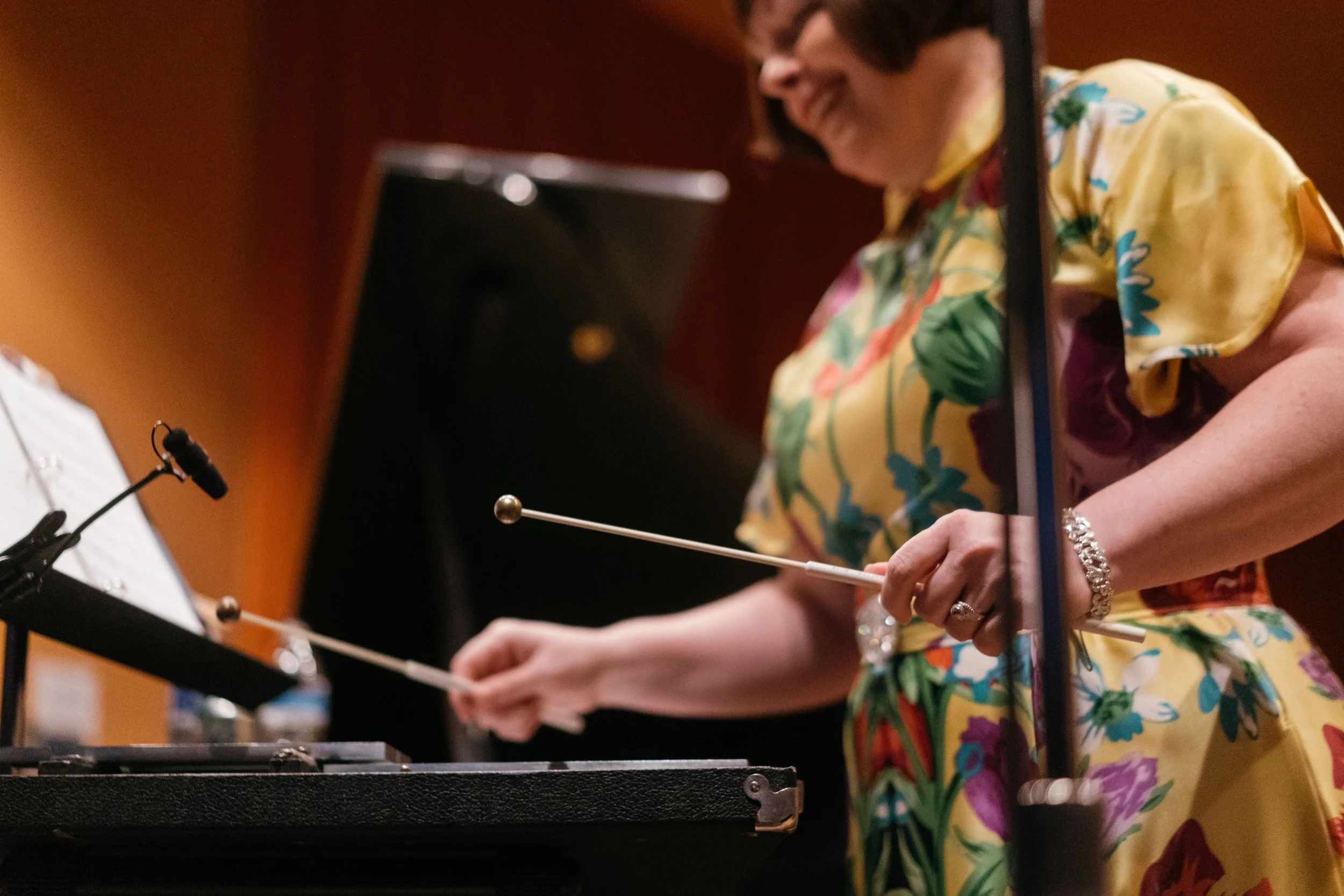
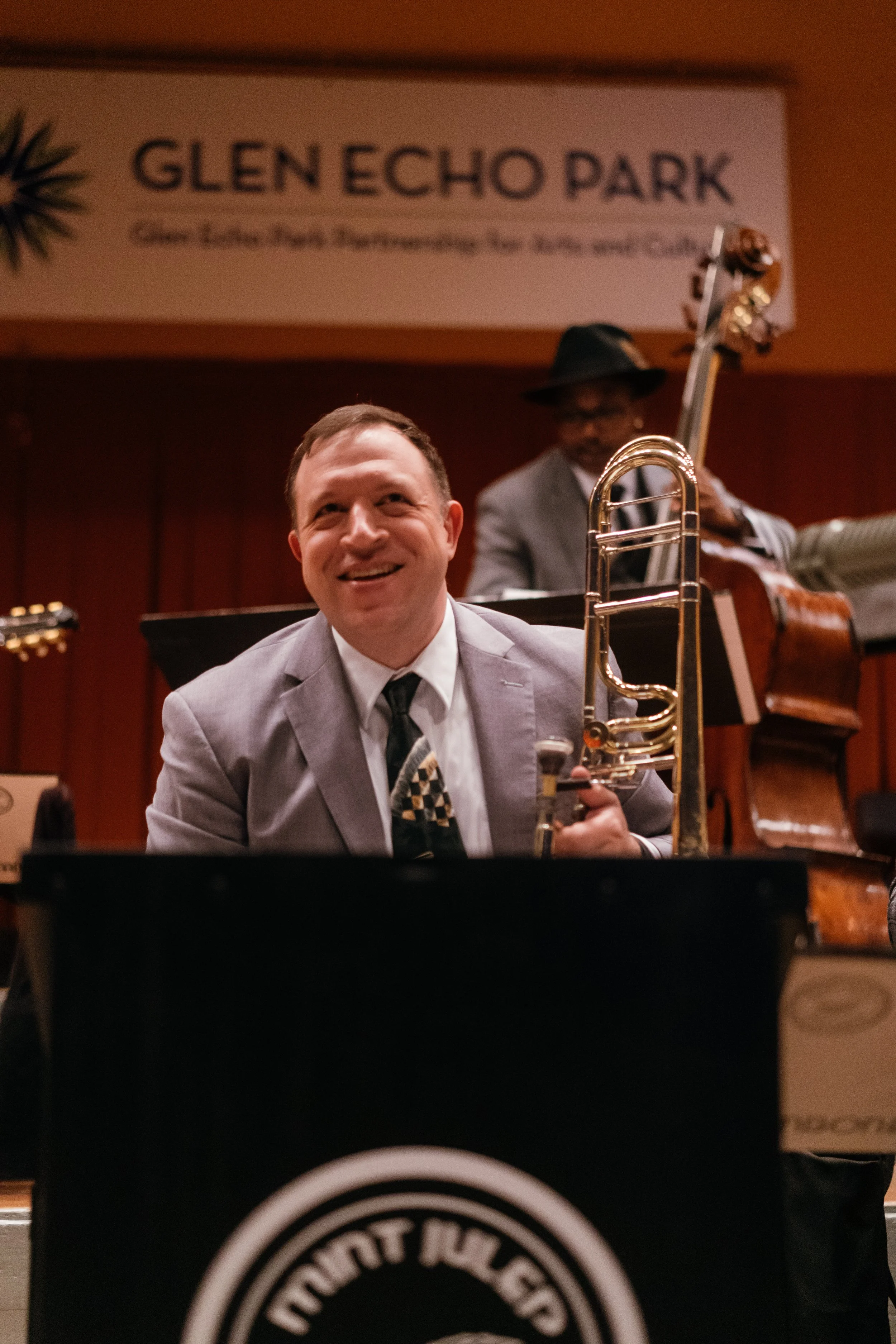
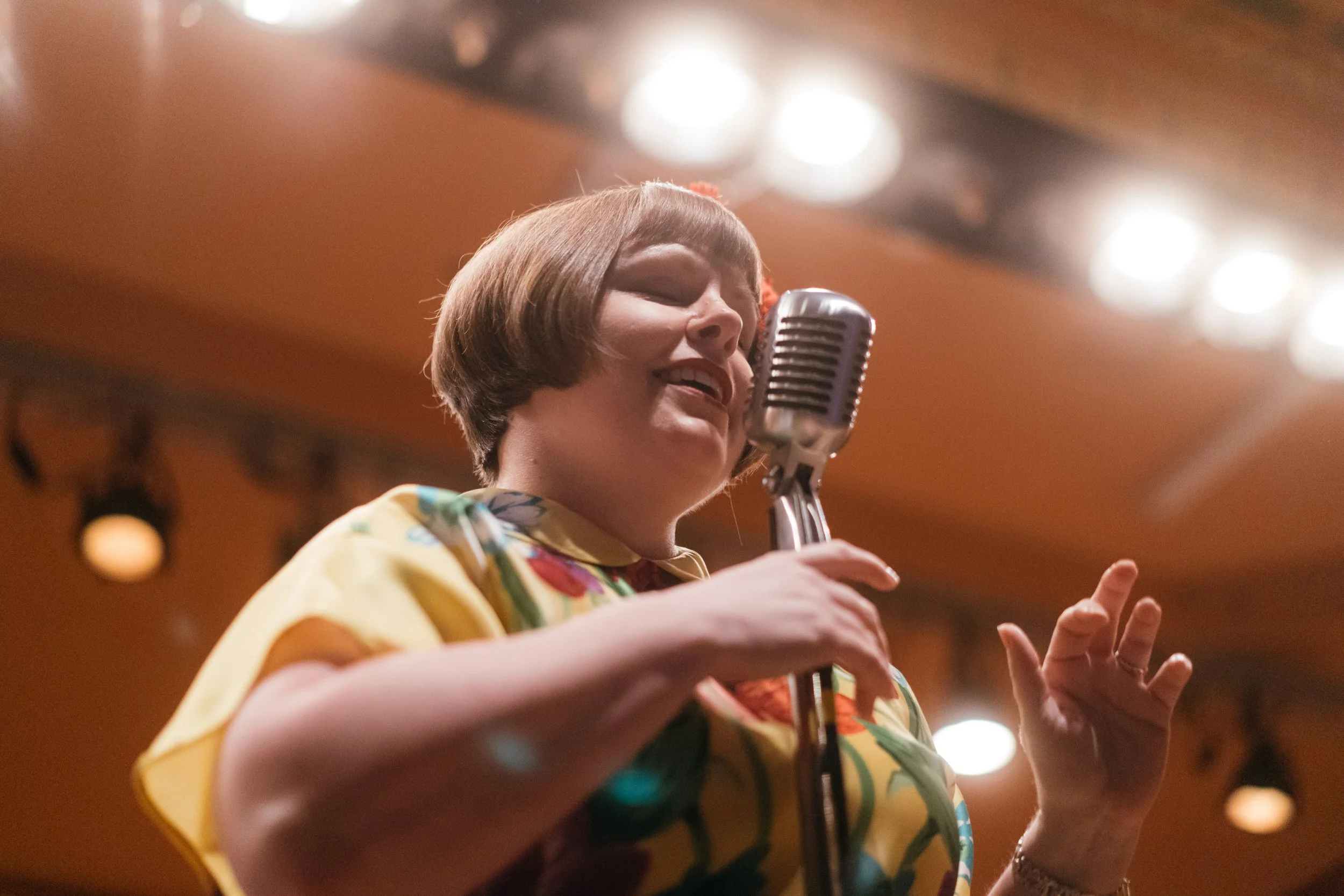
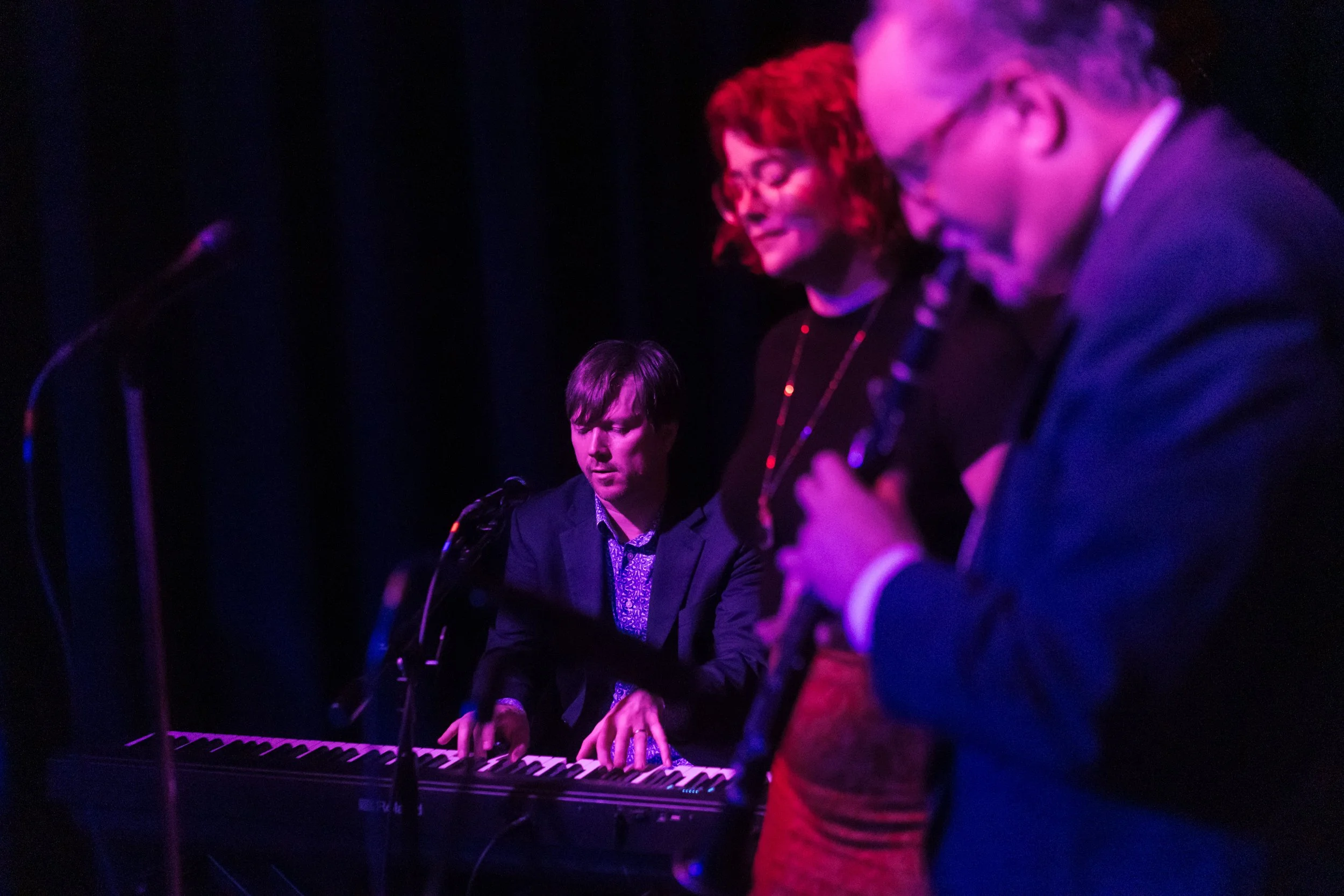
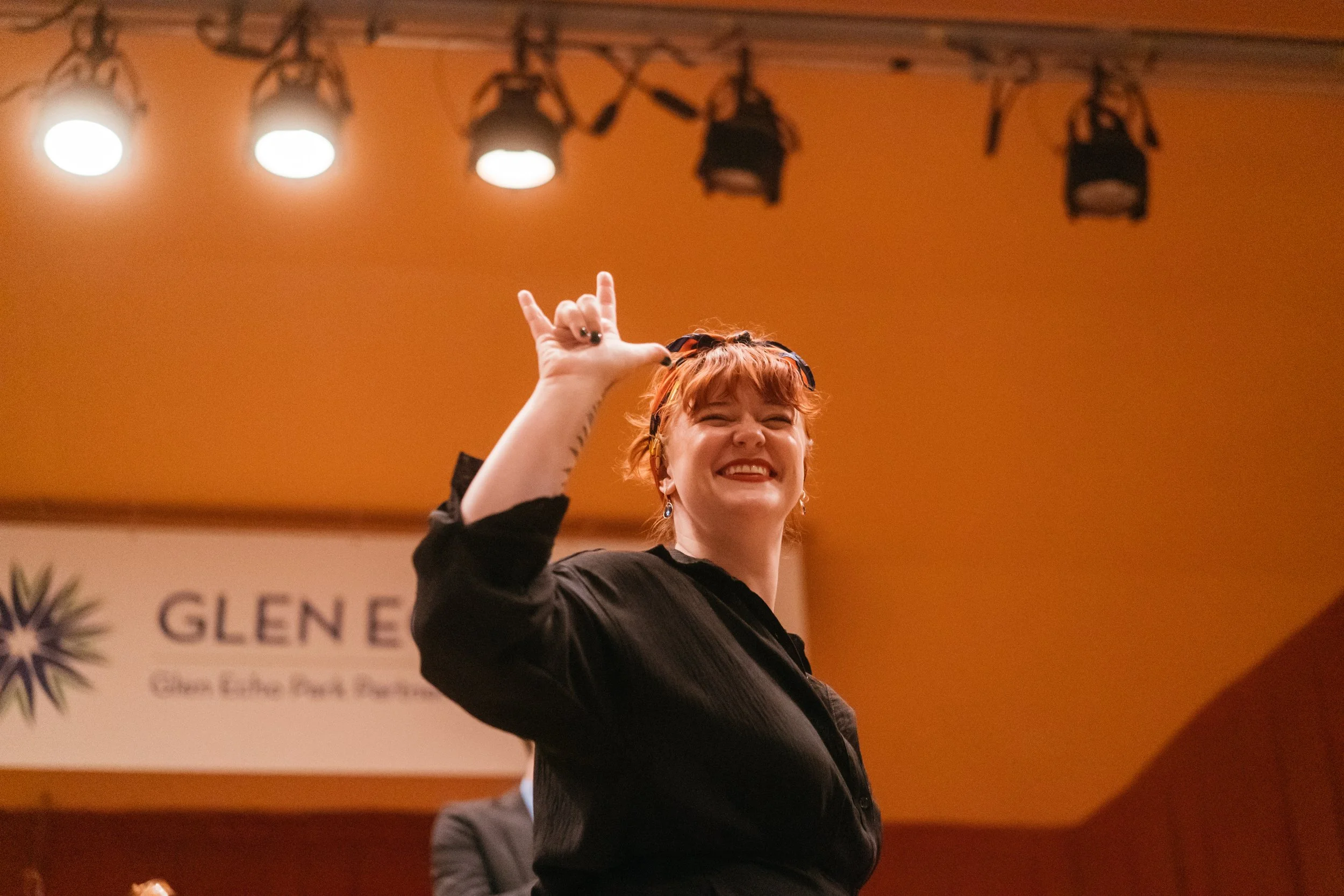
DCLX 2024, April 19-21: All The Cats Join In
President: Kimberly Marquette
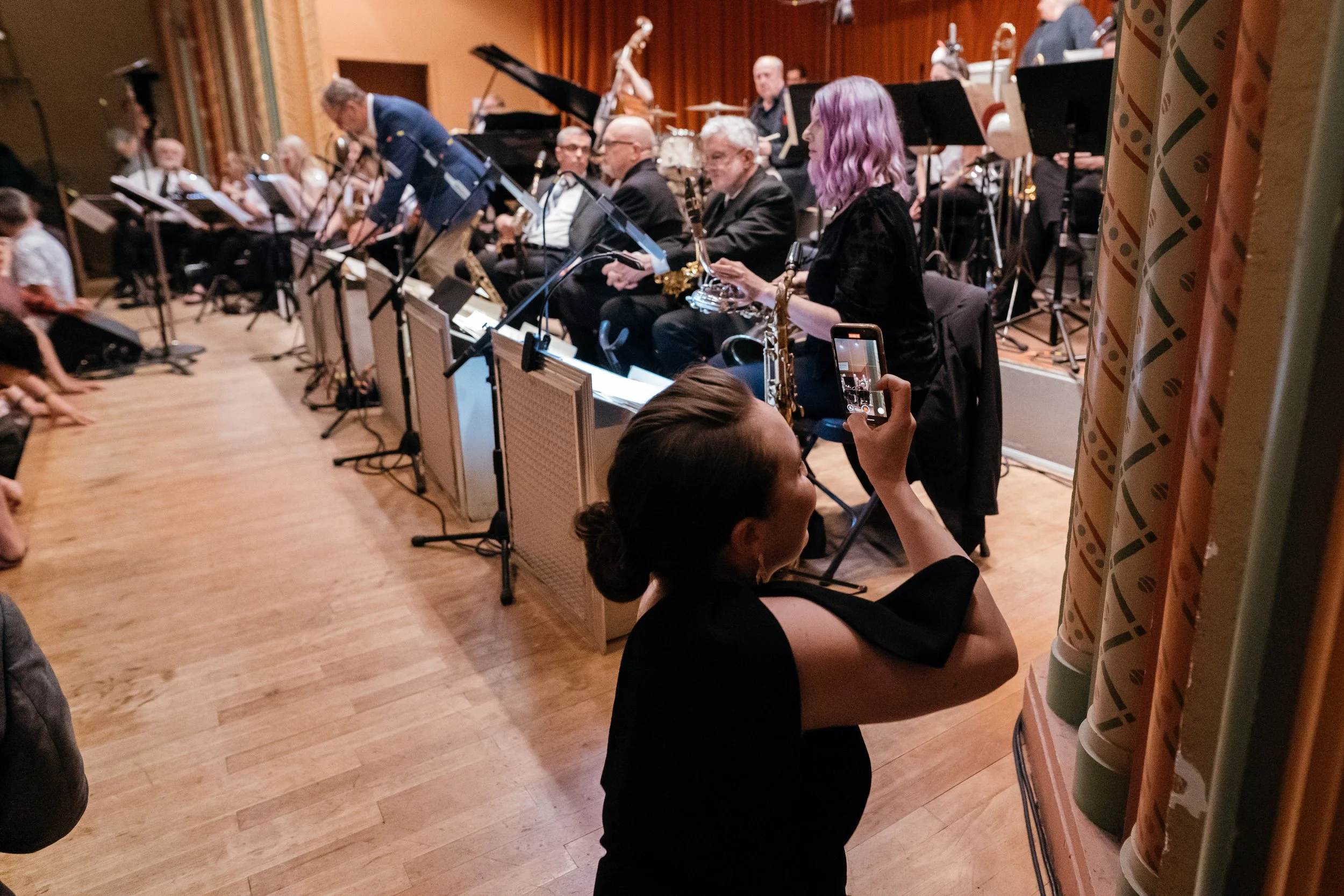
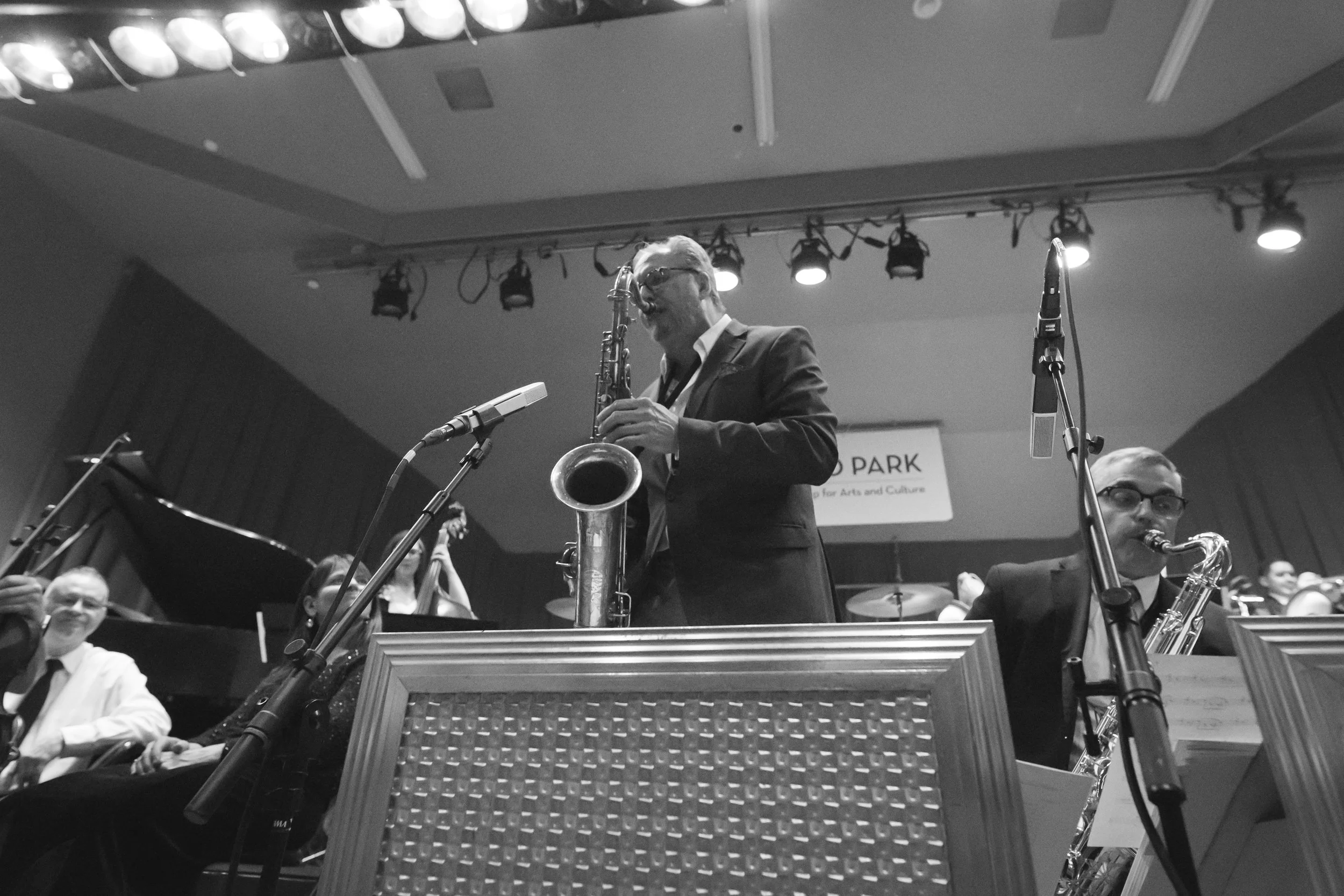
Friday Night Main Band: The Craig Gildner Big Band
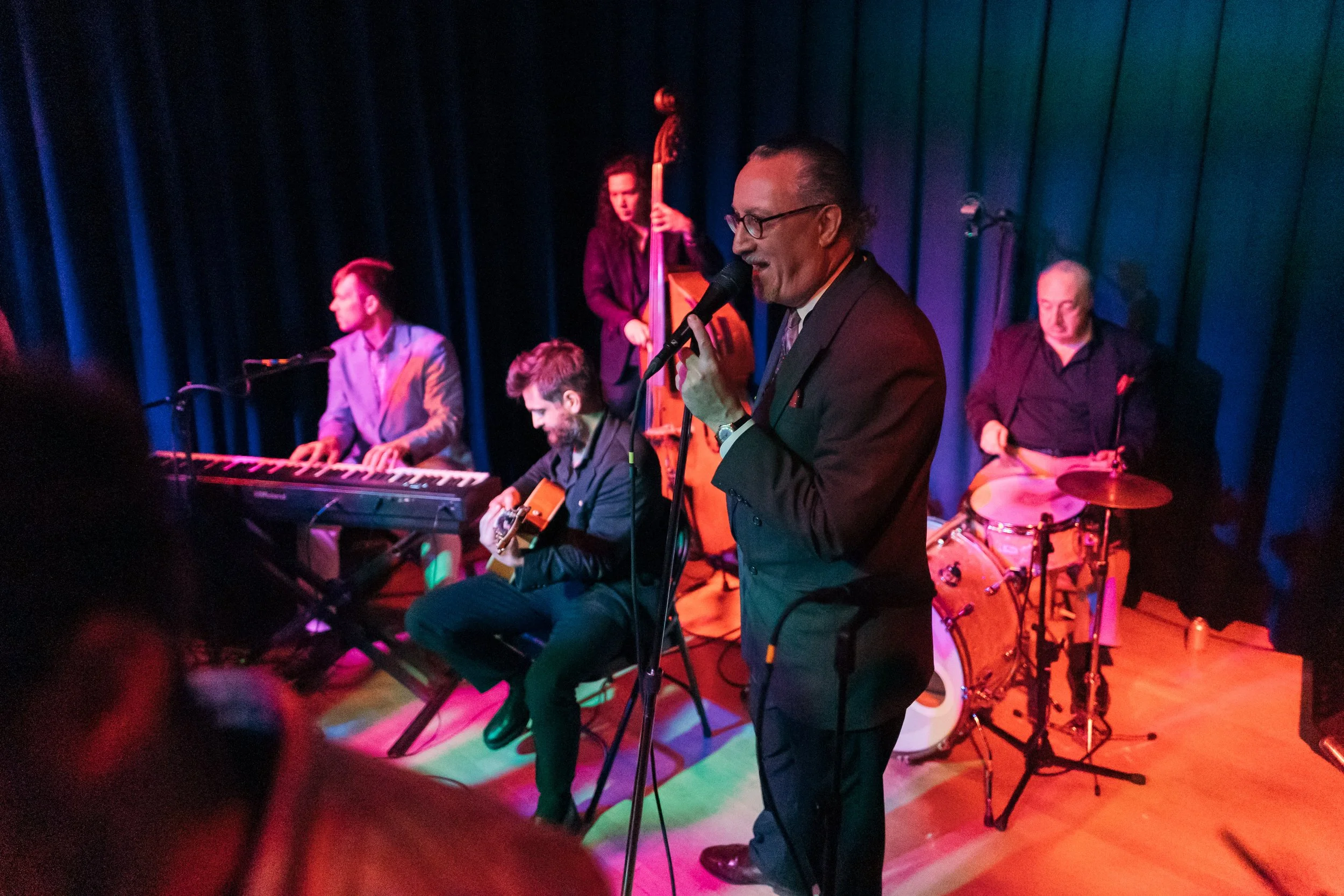
Friday Late Night Band: Keenan Mckenzie & The Riffers
Friday Blues Room Band: Clarence “The Blues Man” Turner
Saturday Afternoon Band: The Boilermaker Jazz Band featuring Taryn Newborne
Saturday Night Main Band: The Scott Silbert Big Band
Saturday Late Night Band: The Mint Julep Jazz Band
Saturday Blues Room Band: Gordon Webster Band (Blues Edition)
Sunday Afternoon Band: Jon Tigert’s Hangover Jam Band
Sunday Night Main Band: Gordon Webster Band featuring Hannah Gill
This year sees the return of the Boilermaker Jazz Band, but the record holder for longest time between headlining DCLX stints belongs to Clarence “The Blues Man” Turner. A local DC blues musician, Clarence first played DCLX in 2006. Although he is also a member of Full Power Blues which played at the DCLX 2016. As I mentioned before, DC has had a pretty significantly sized blues dance community for almost two decades now. While DCLX has always welcomed them, the event has often opted for bands that played more towards the bluesy jazz end of the late night music spectrum than just straight up blues music. Being in the Spanish Ballroom, which included DC’s main weekly blues dance venue, The Backroom, allowed a little more flexibility to accommodate hard core blues dancers.
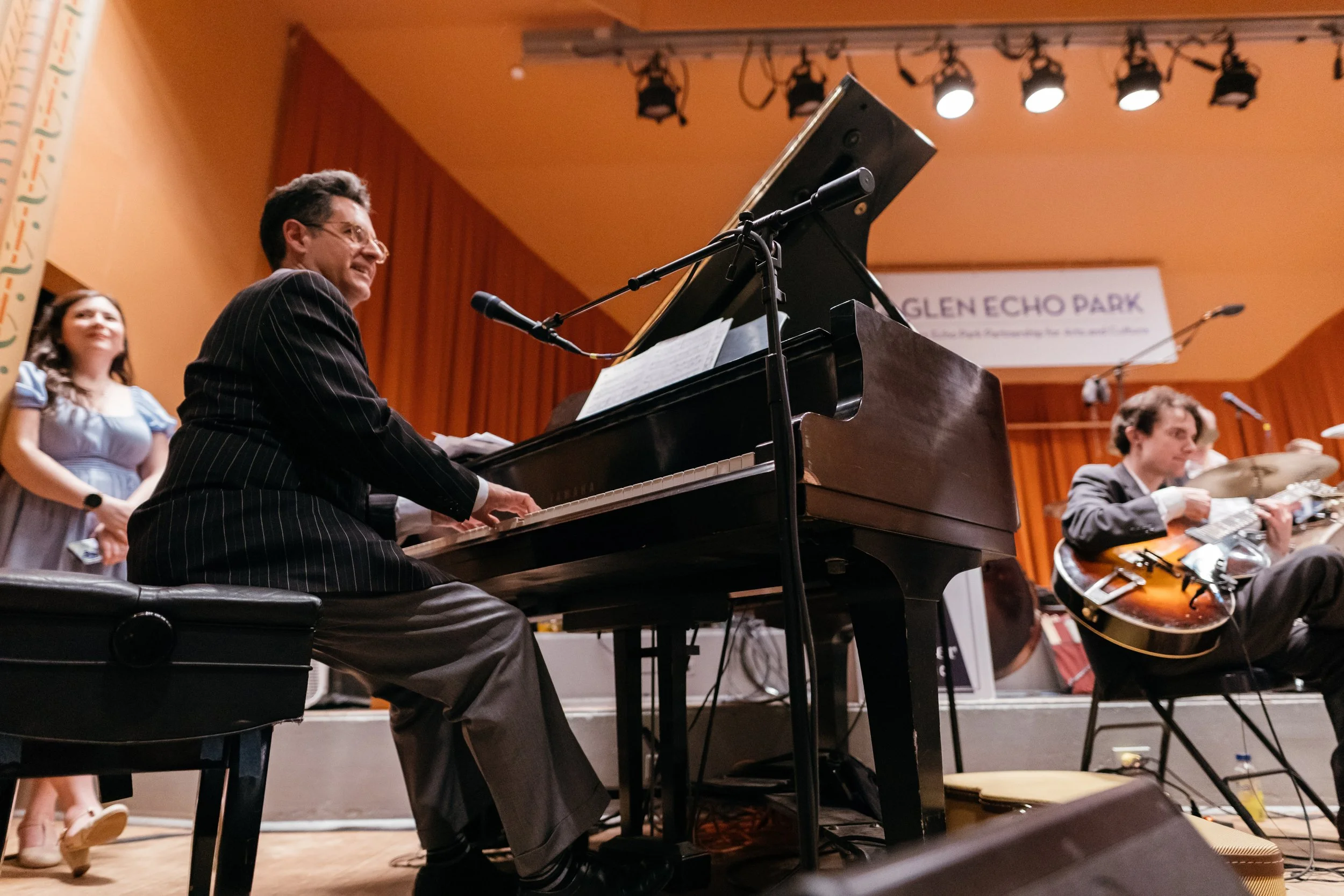
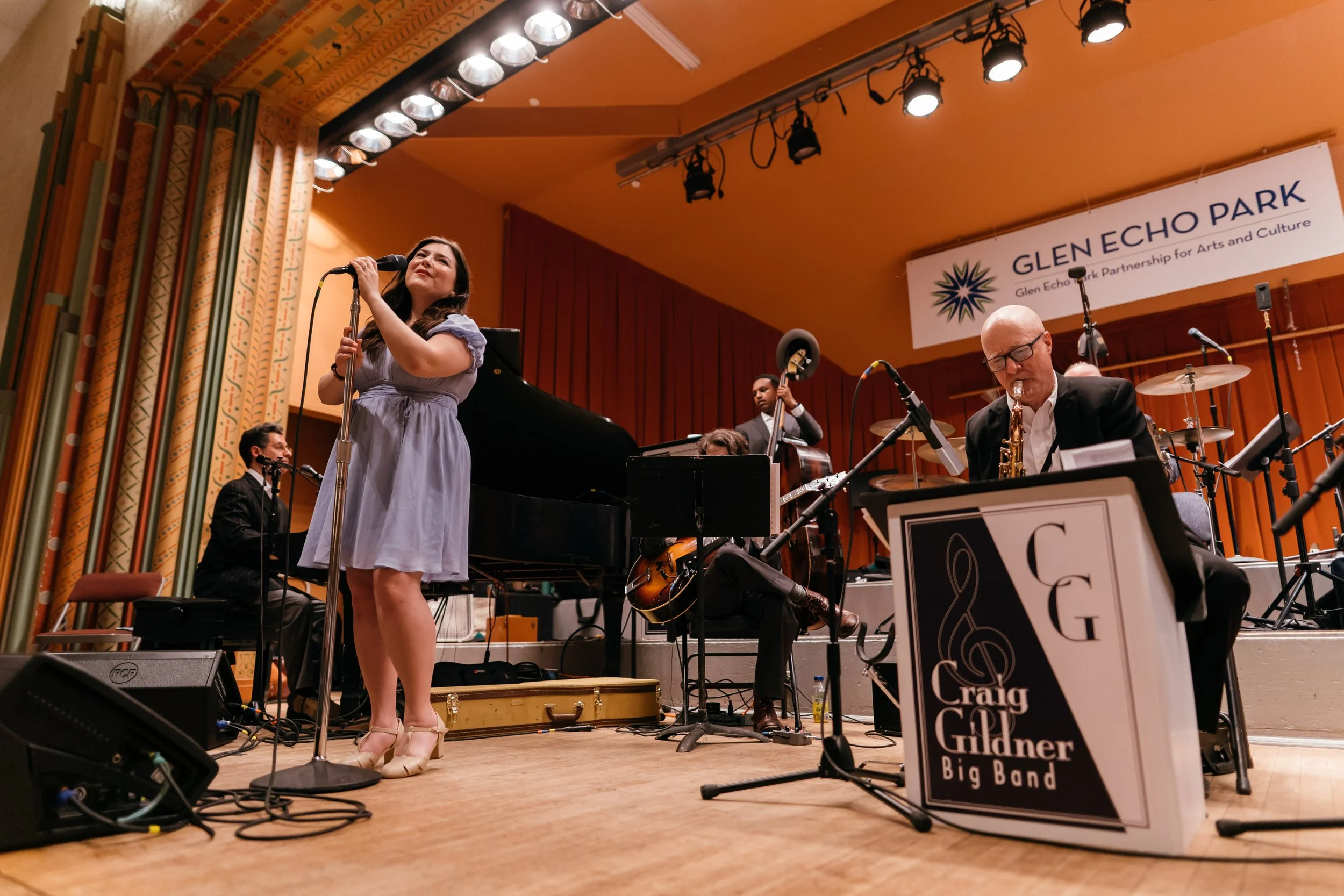
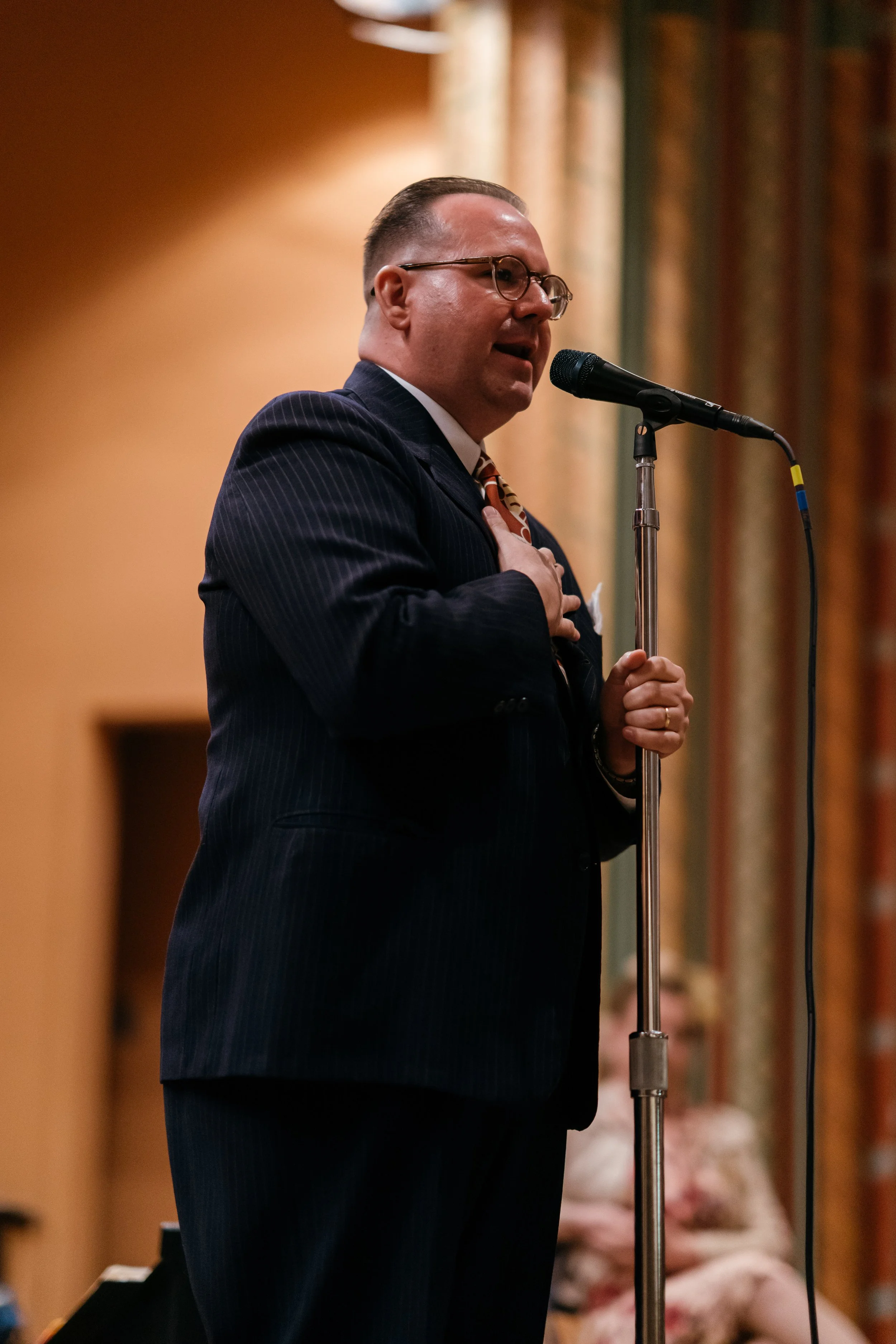
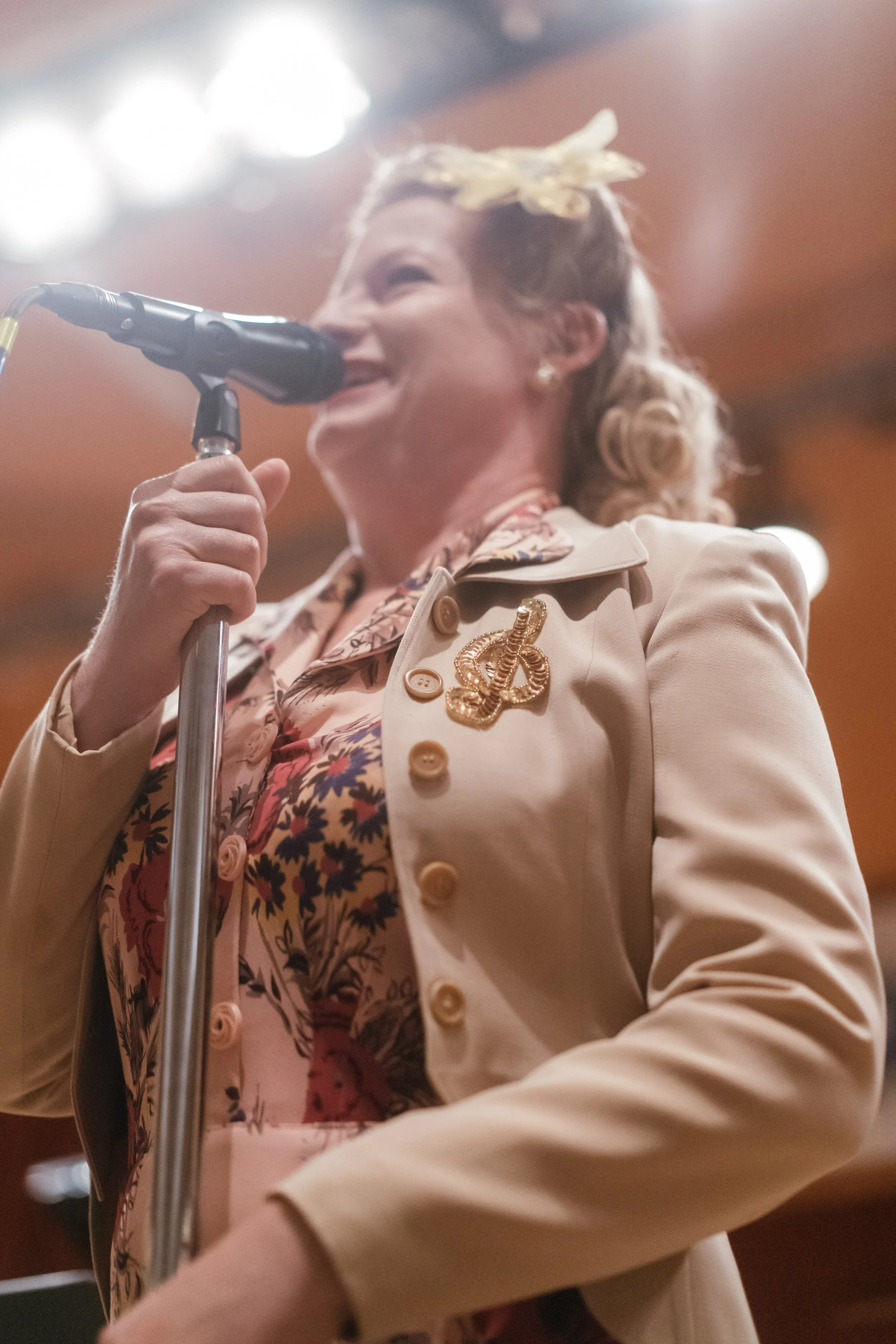
DCLX 2025, April 25-27: Jump for Joy
President: Kimberly Marquette
Friday Night Main Band: The Craig Gildner Big Band
Friday Late Night Band: Gordon Webster Band featuring Hannah Gill
Friday Blues Room Band: Chelsea Reed & The Fair Weather Band
Saturday Afternoon Band: Paul Cosentino and The Boilermaker Jazz Band
Saturday Night Main Band: Scott Silbert’s “Biggest” Band
Saturday Late Night Band: Keenan McKenzie & The Riffers
Saturday Blues Room Band: Gordon Webster Band (Blues Edition)
Sunday Afternoon Band: Jon Tigert’s Hangover Jam Band
Sunday Night Main Band: Jonathan Stout & His Campus Five, featuring Hilary Alexander
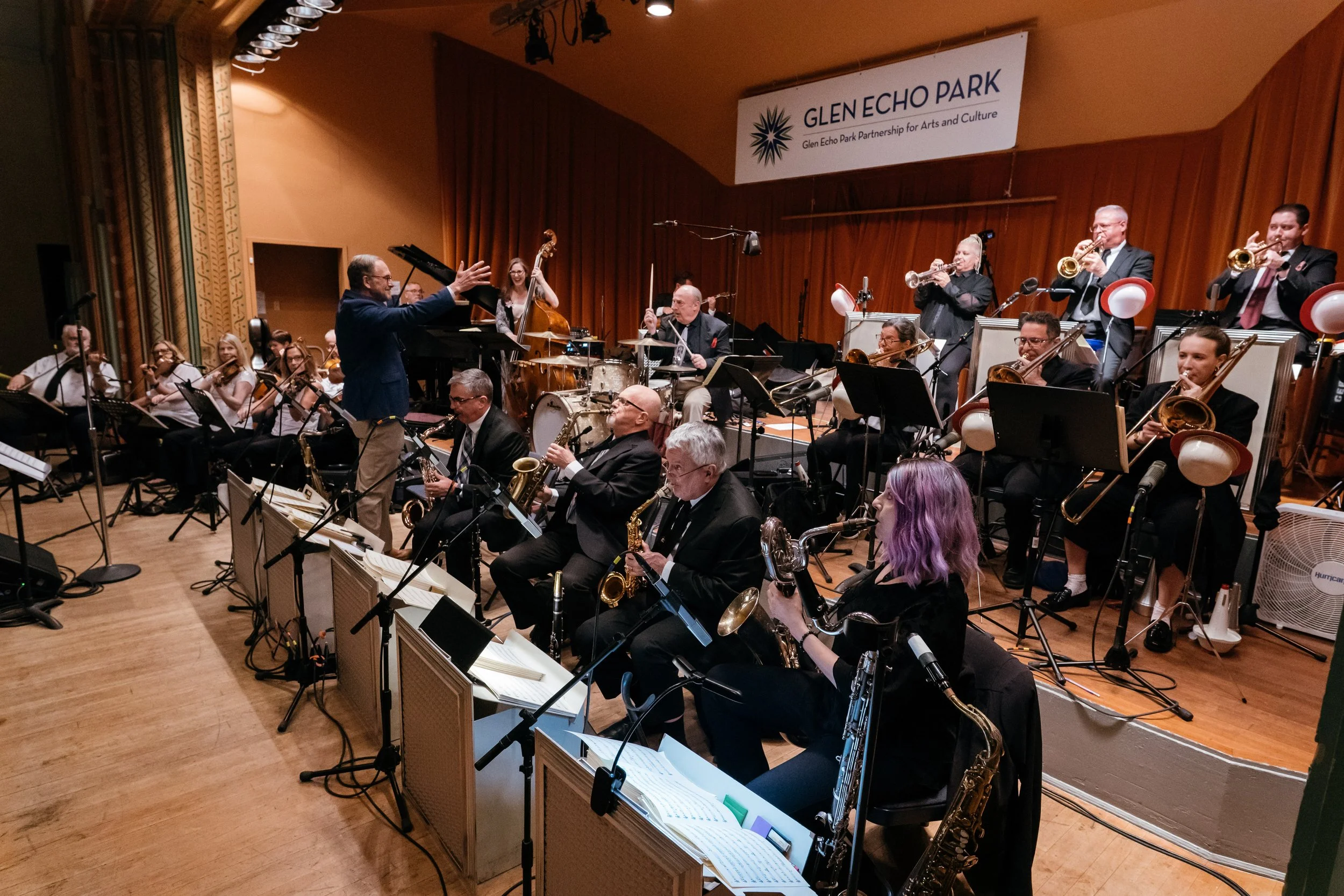
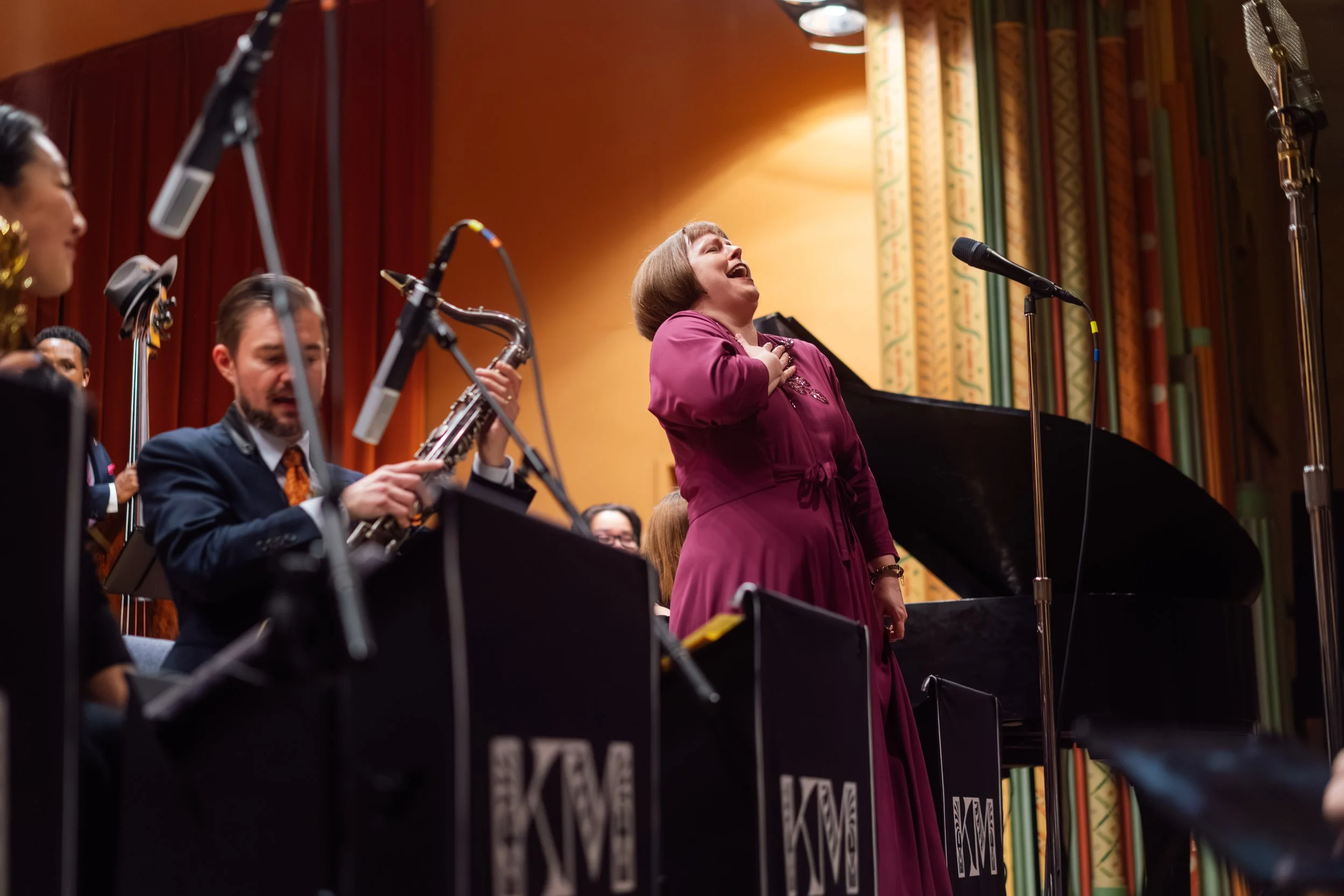
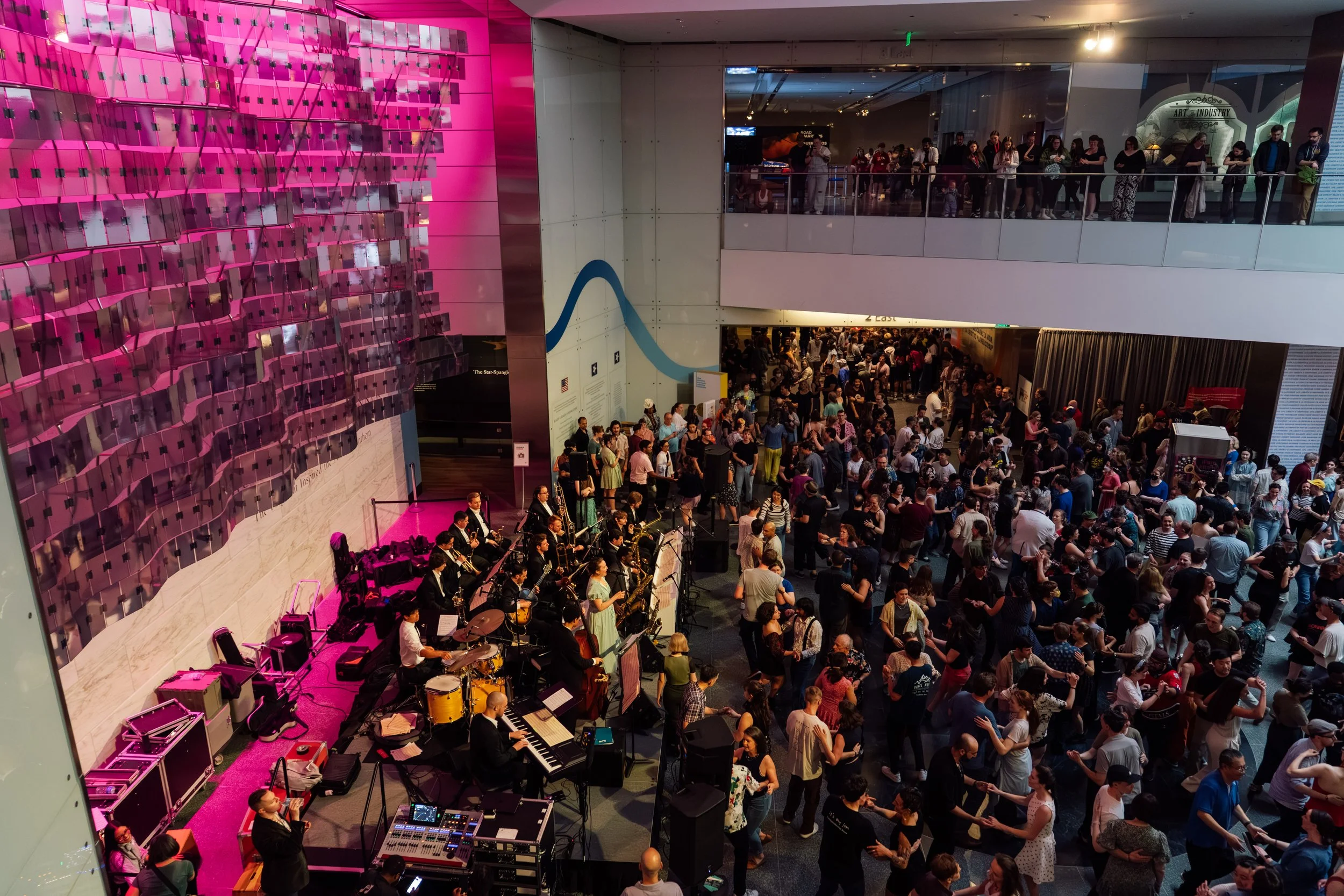
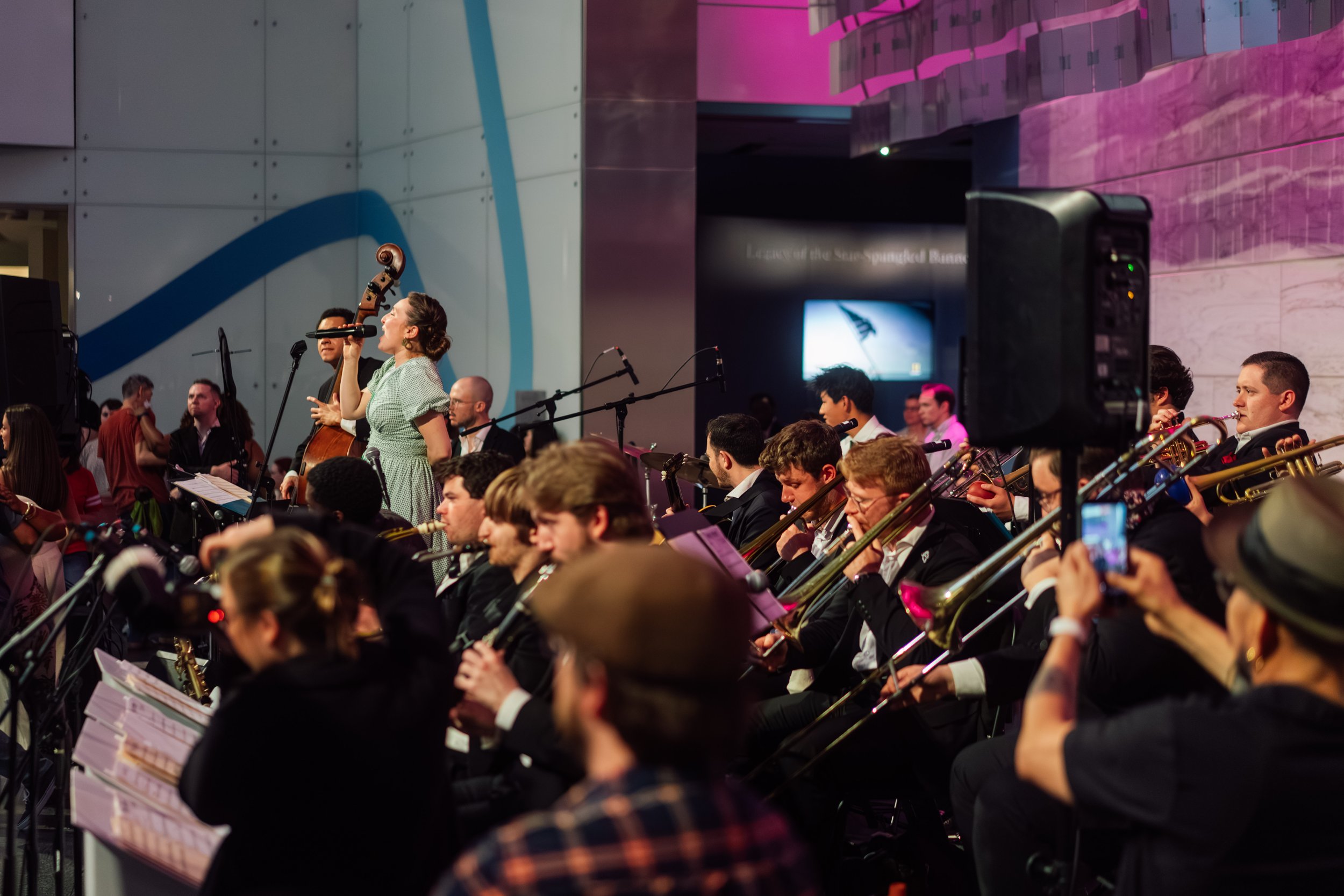
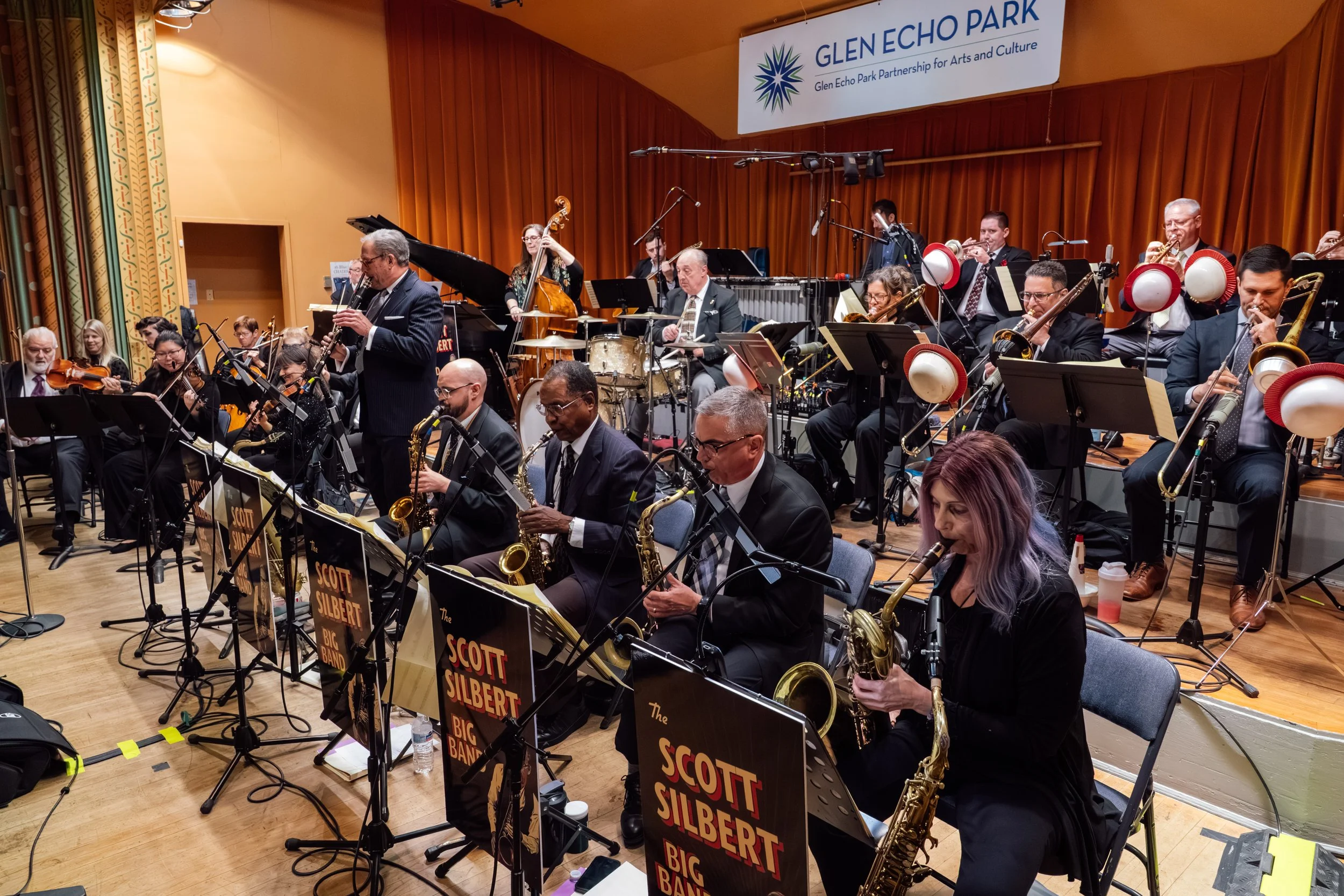
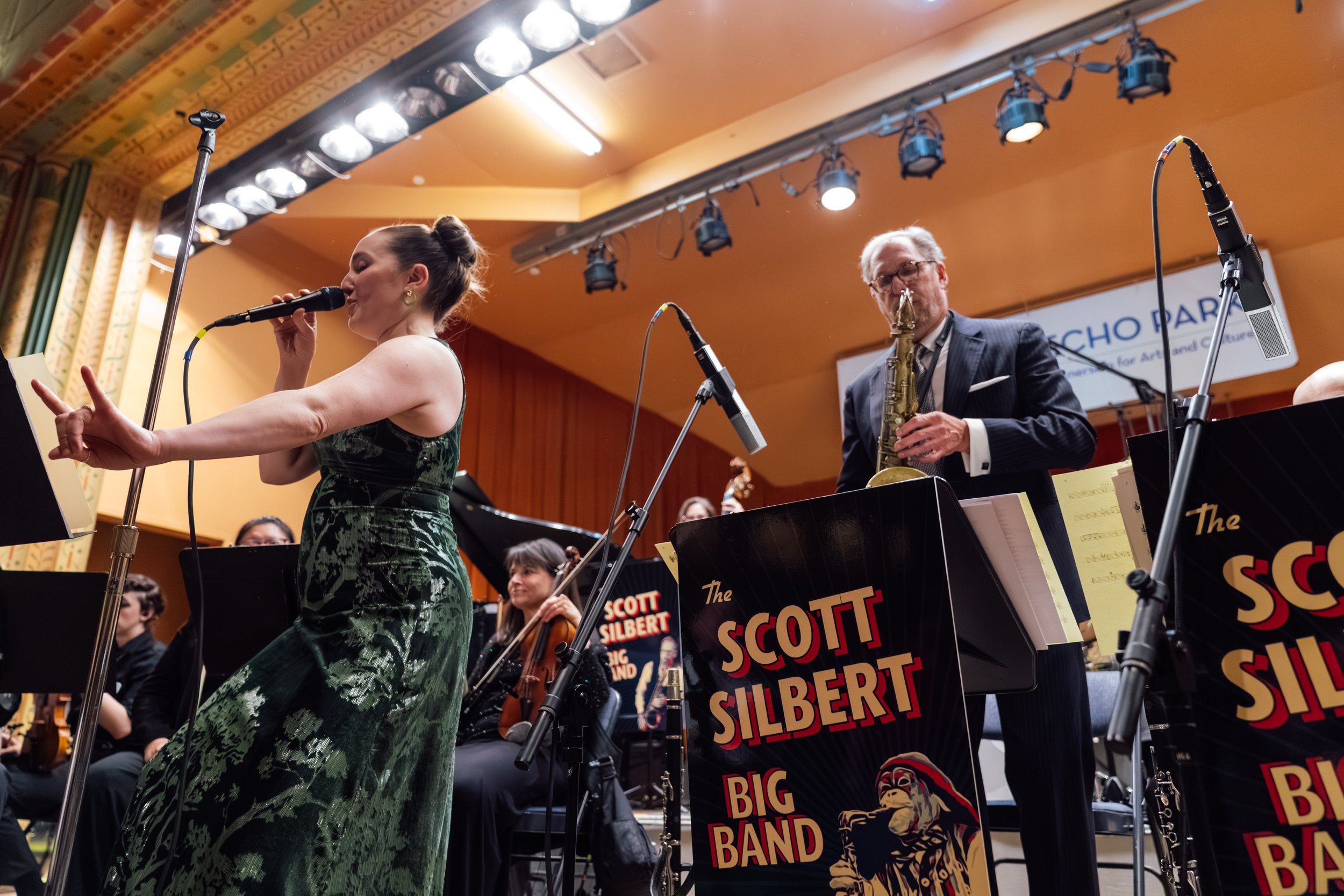
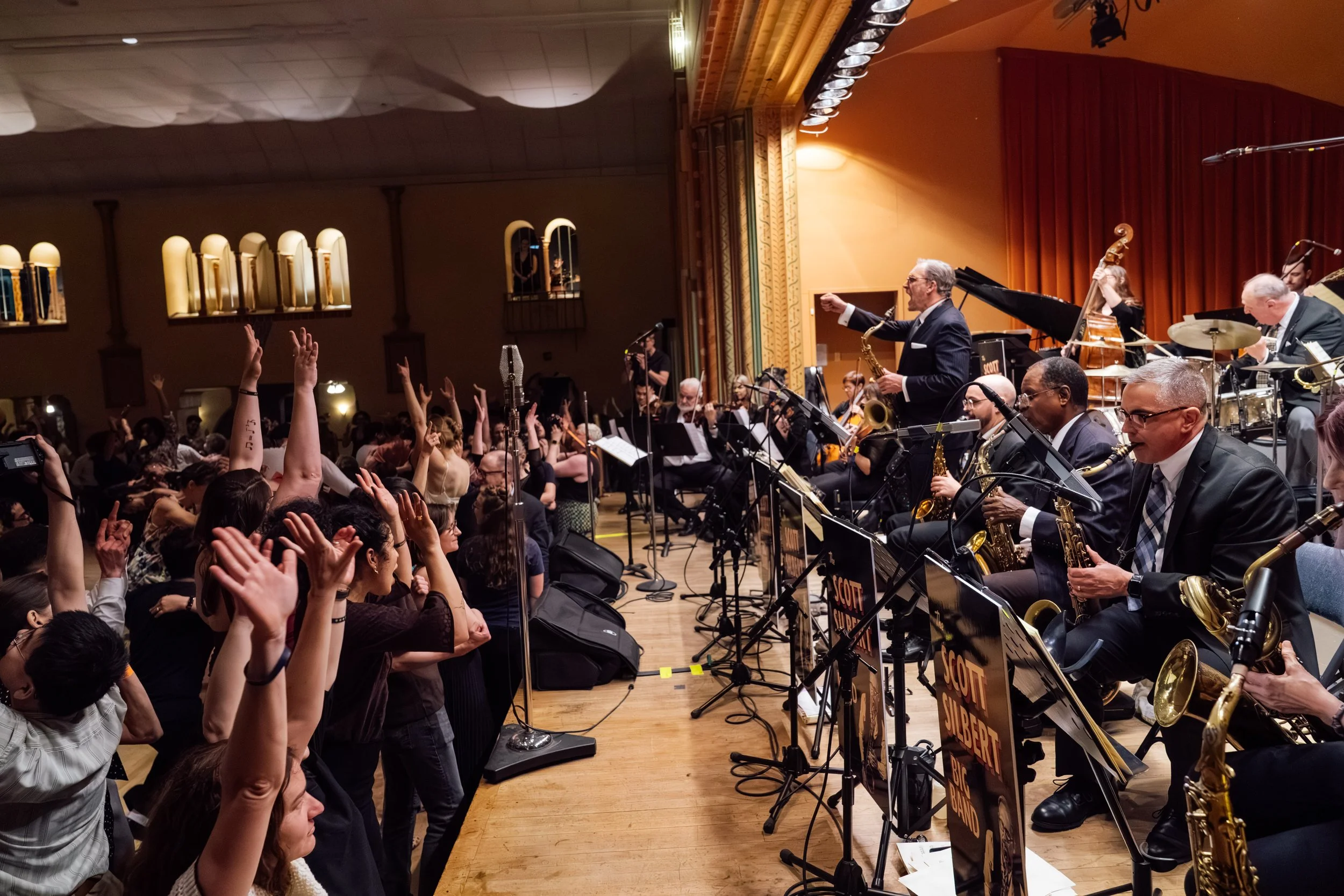
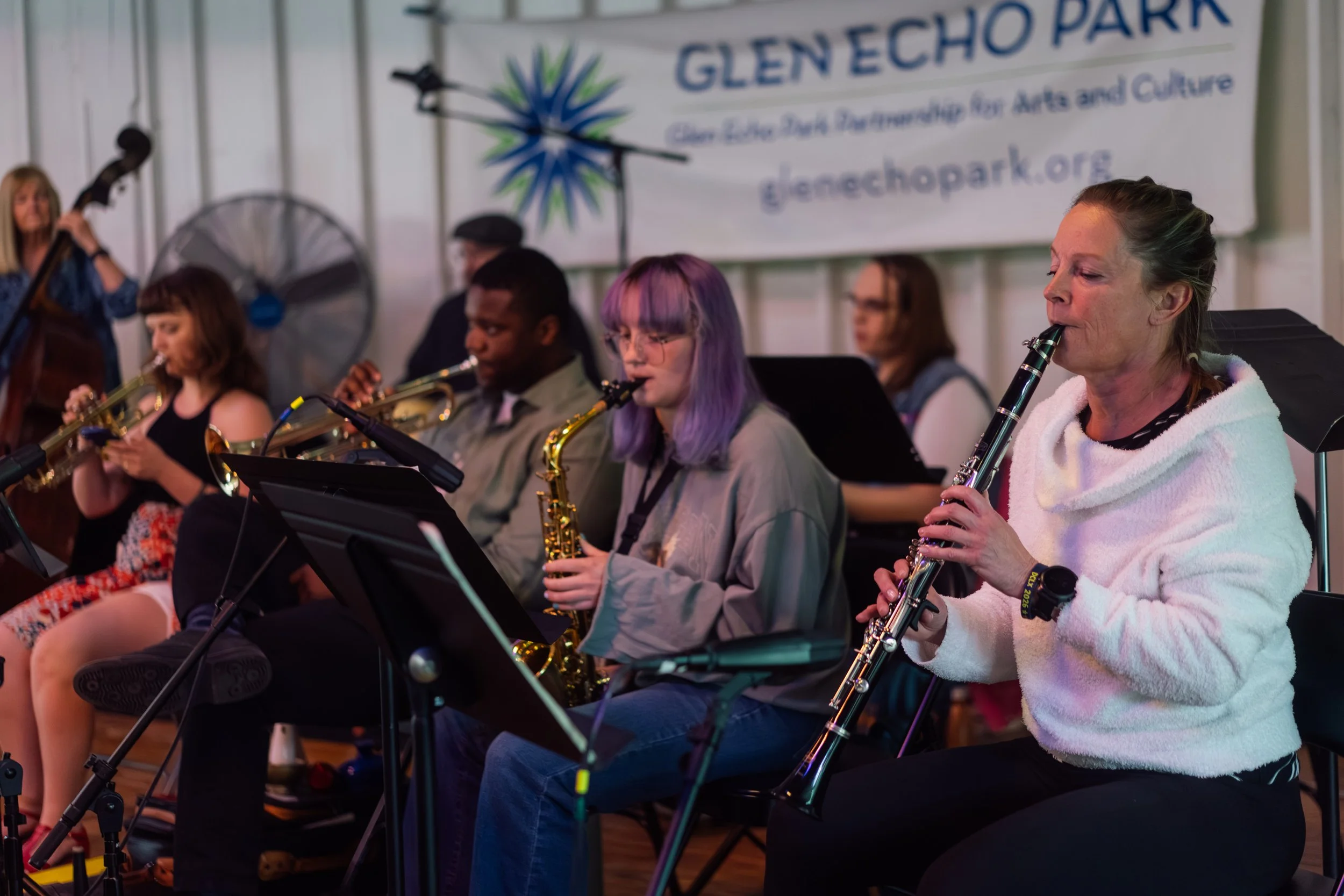
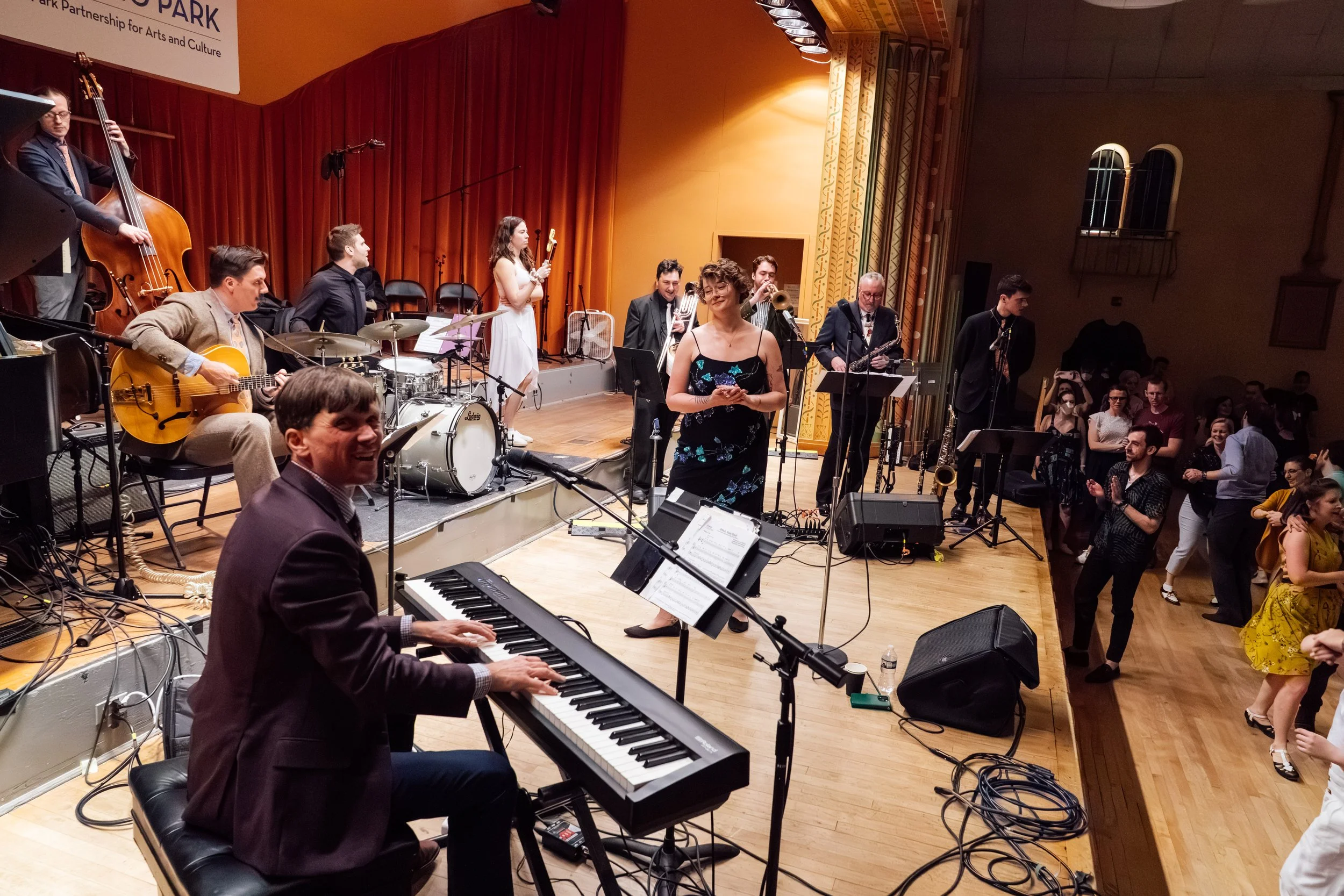
My longer side bars about Scott Silbert and the local DC jazz musician community was basically to set up the ambitious debut of Scott Silbert’s “Biggest” Band.
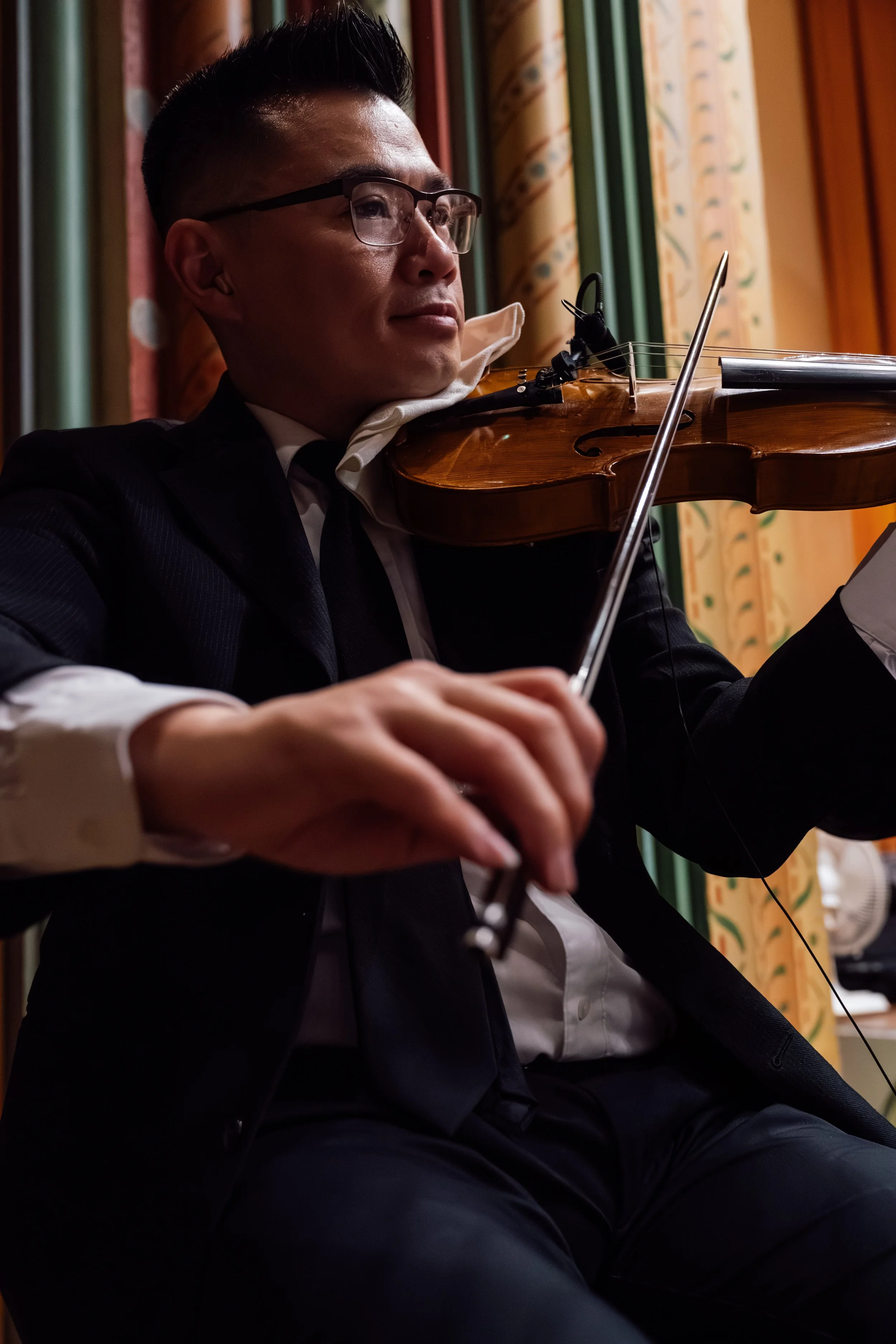
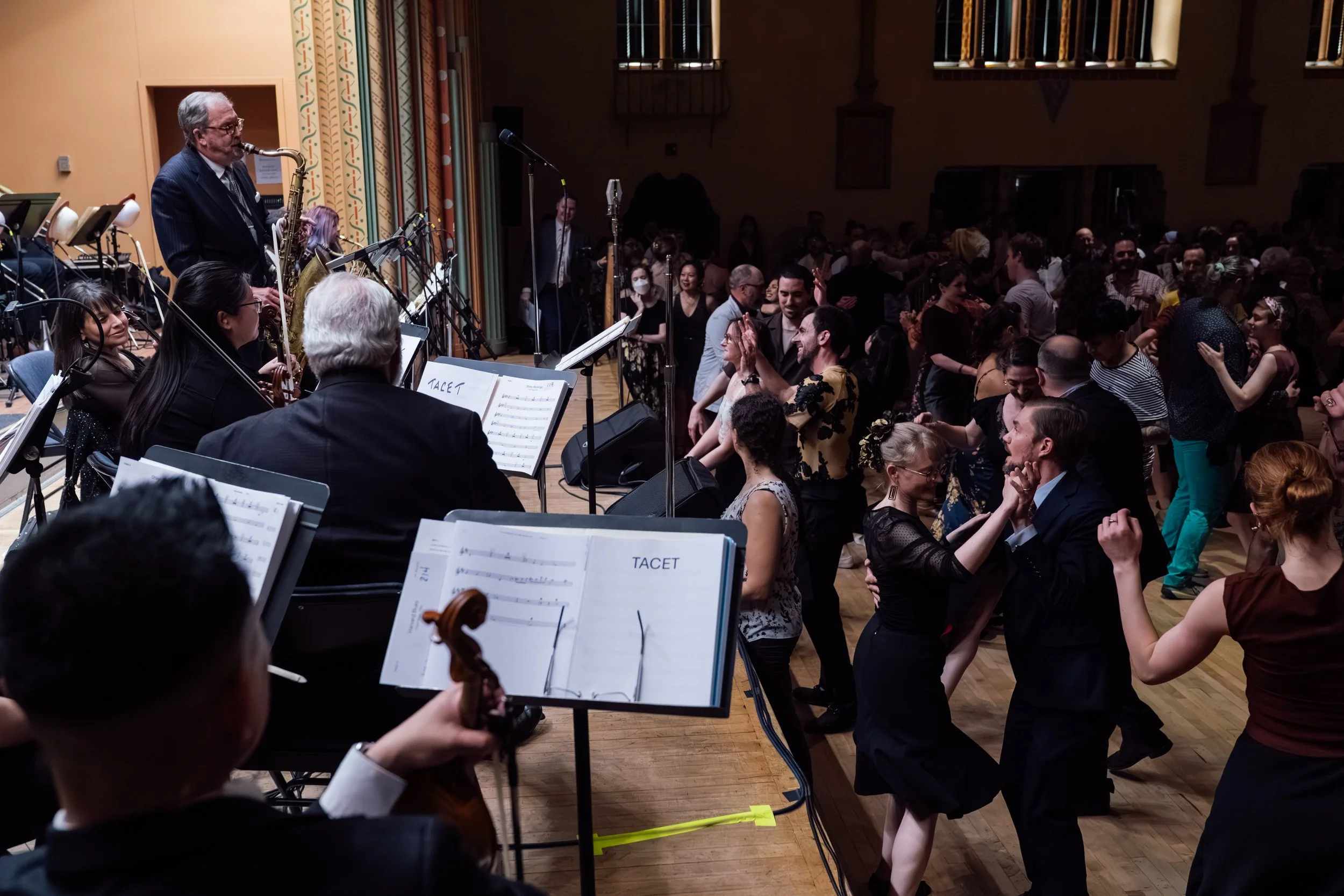
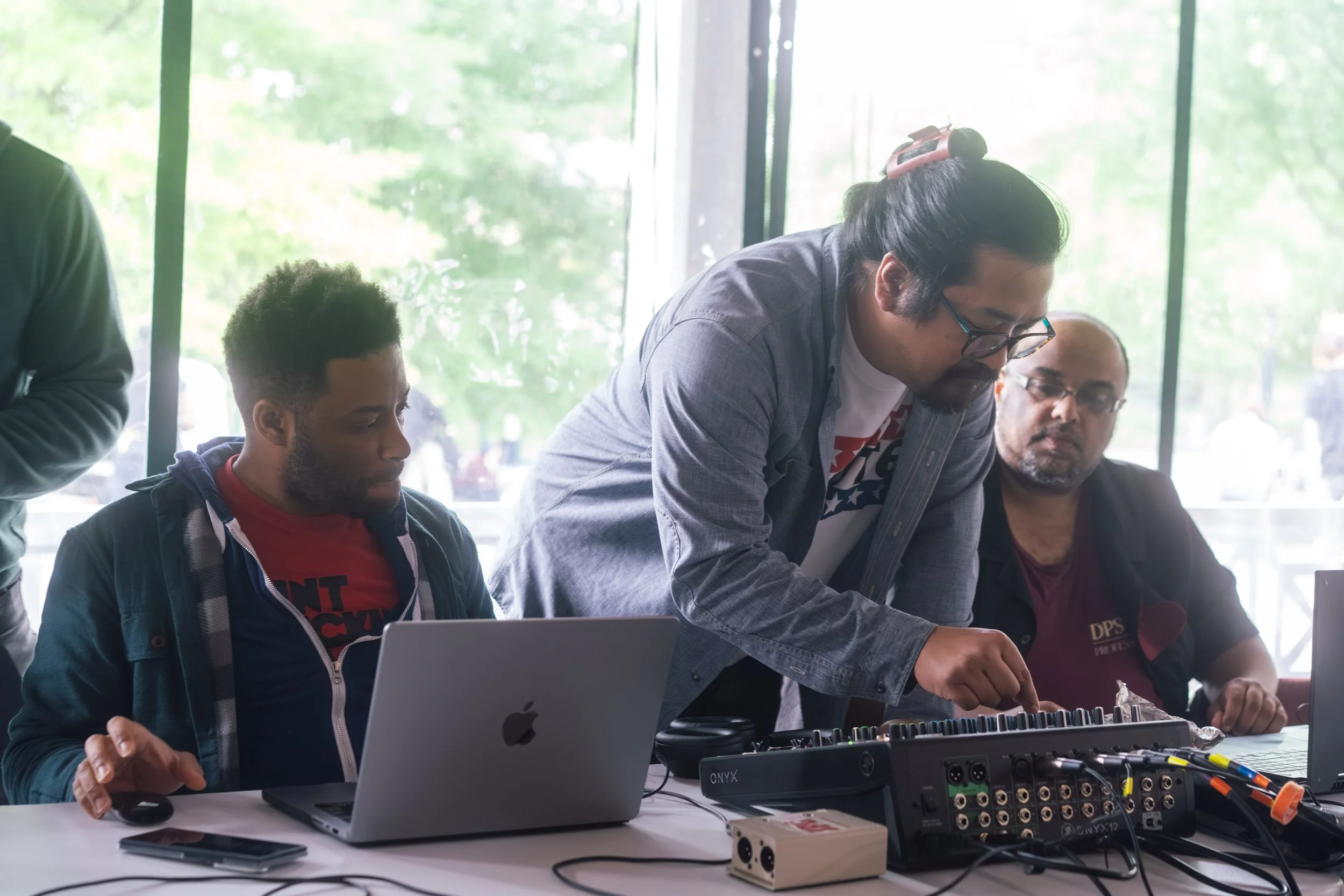
The idea of expanding the band out to include a string section was actually first proposed by dancer turned sound technician, John Mortenson, who has provided his services to DCLX for many years. The proposal more than intrigued Scott who is uniquely qualified to pull it off with his connections and his musical background. He was chief arranger for the US Navy Band for 15 years. Not just for the jazz band, but for that entire program, which can be called upon to play virtually any kind of music.
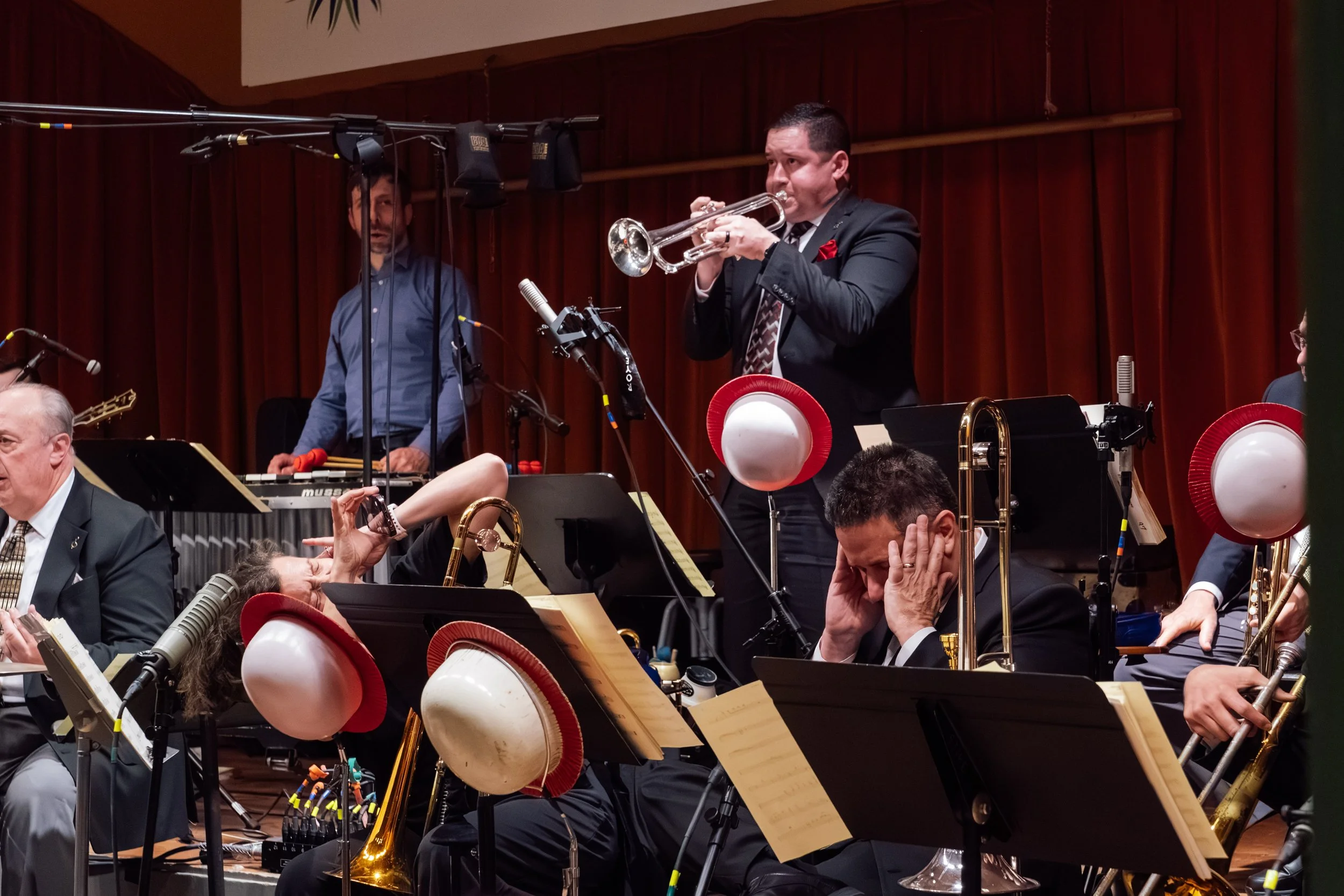
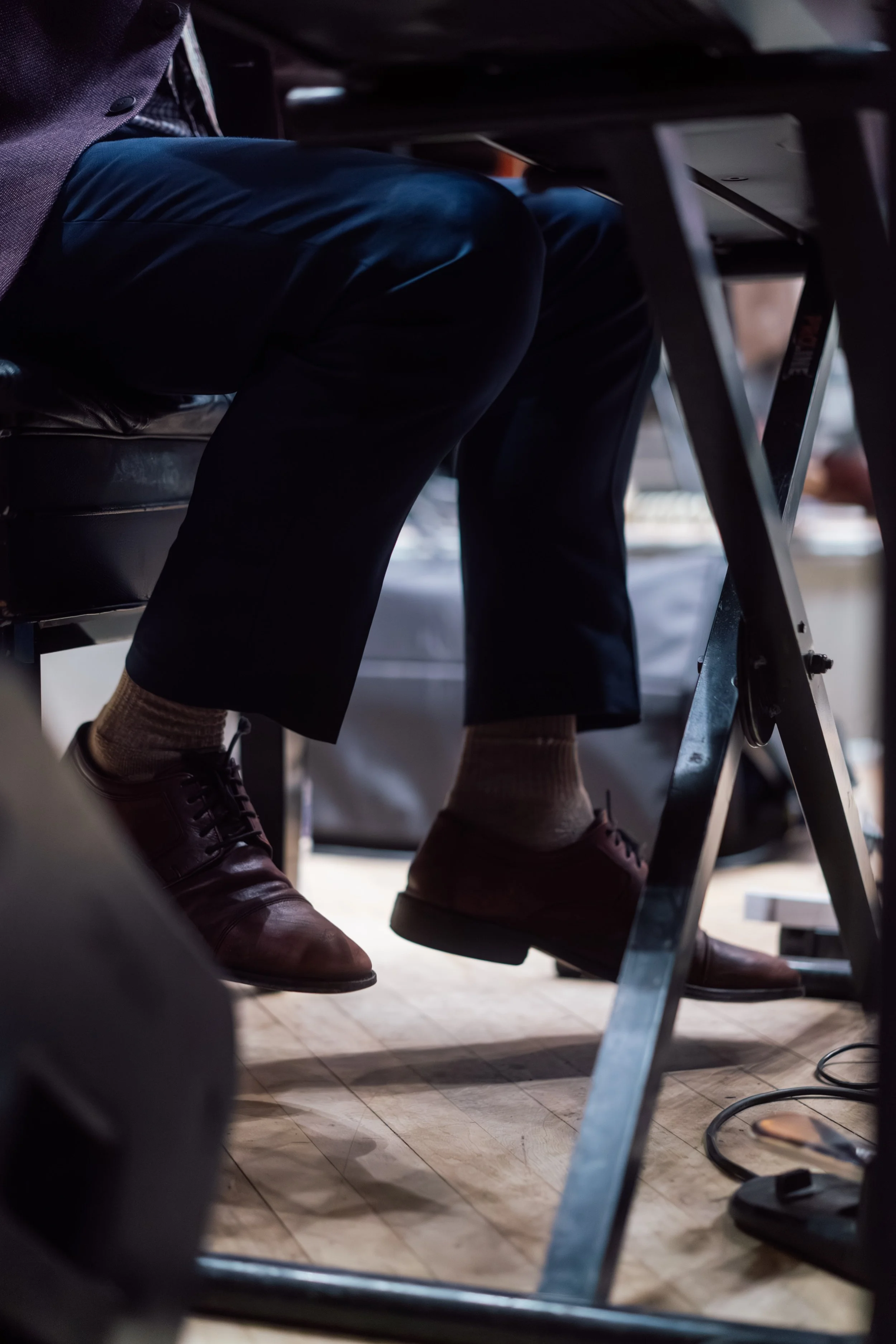
It was very educational to watch Scott assemble the band for the first time for that sound check on Saturday night, and to witness how facile he was in communicating what he wanted from so many different kinds of musicians. The result was what I remember as one of the most luscious nights of music that I've ever experienced.
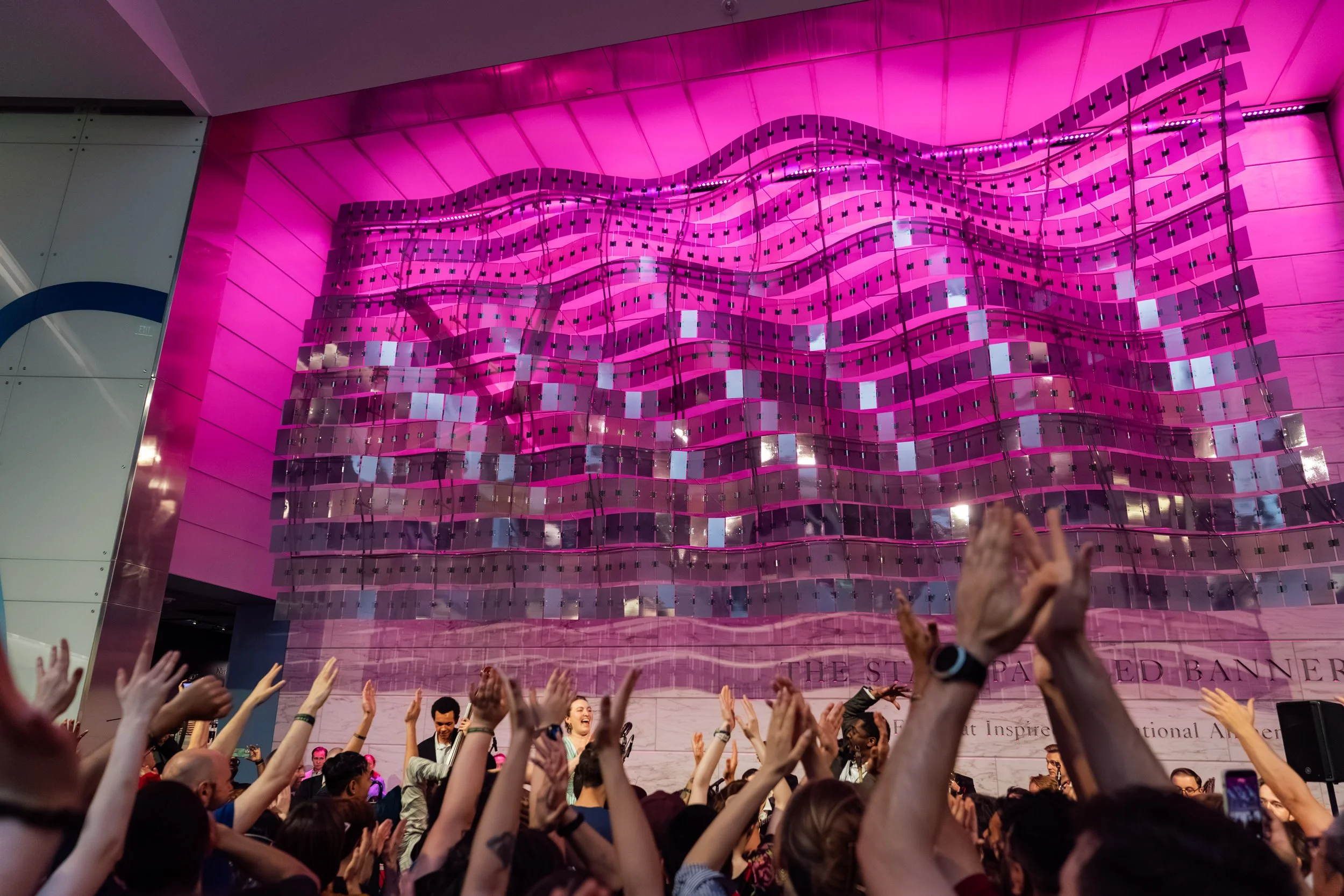
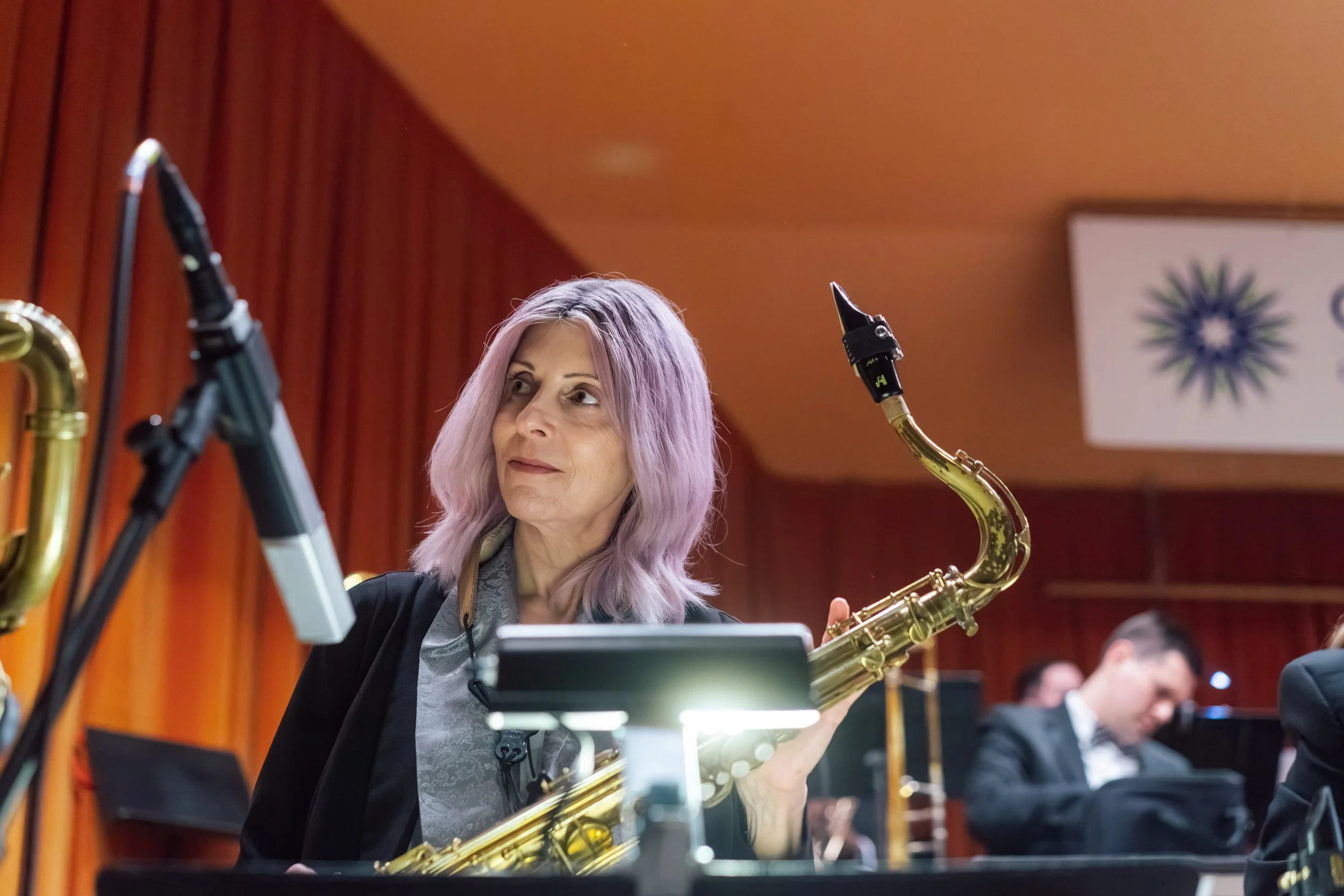
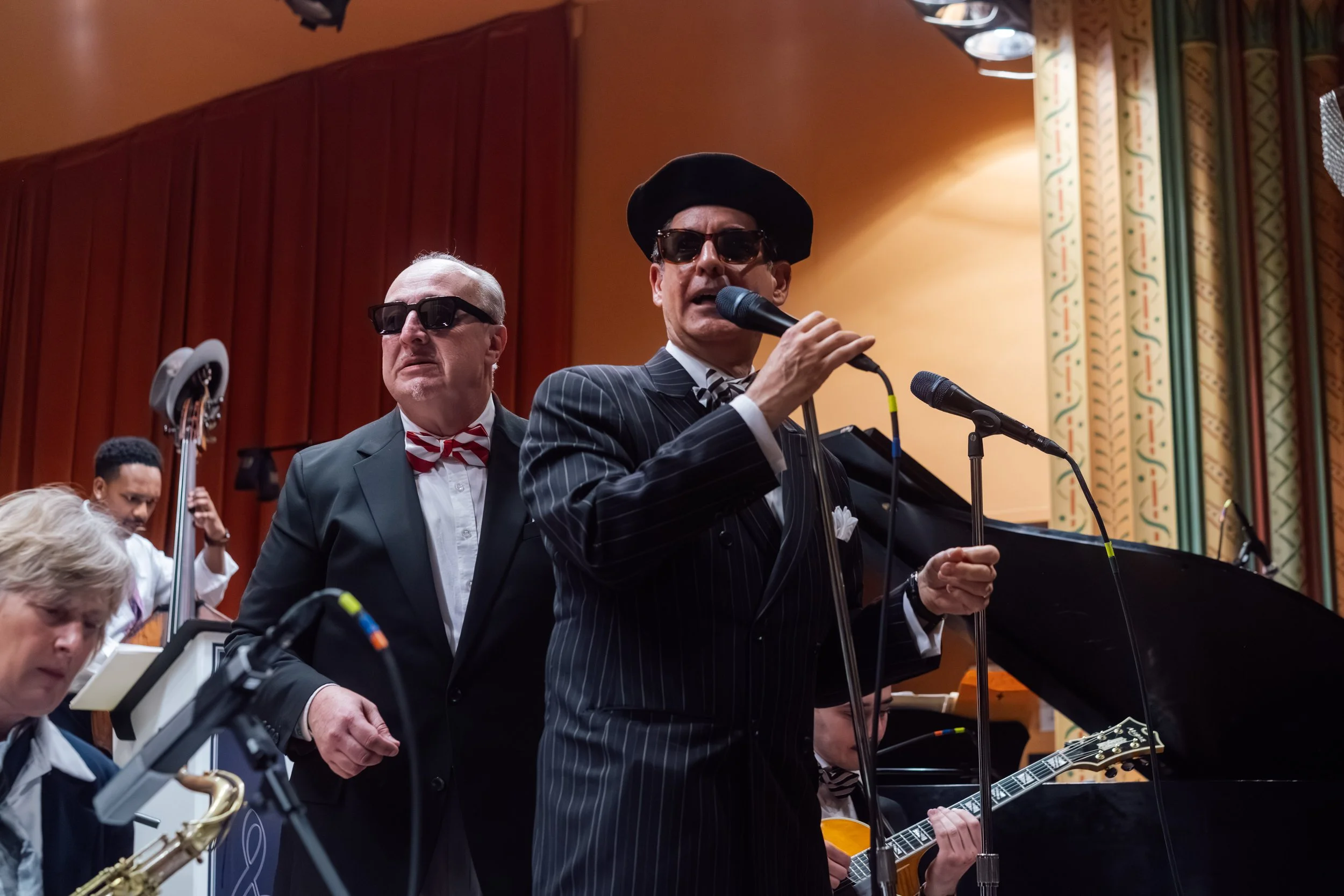
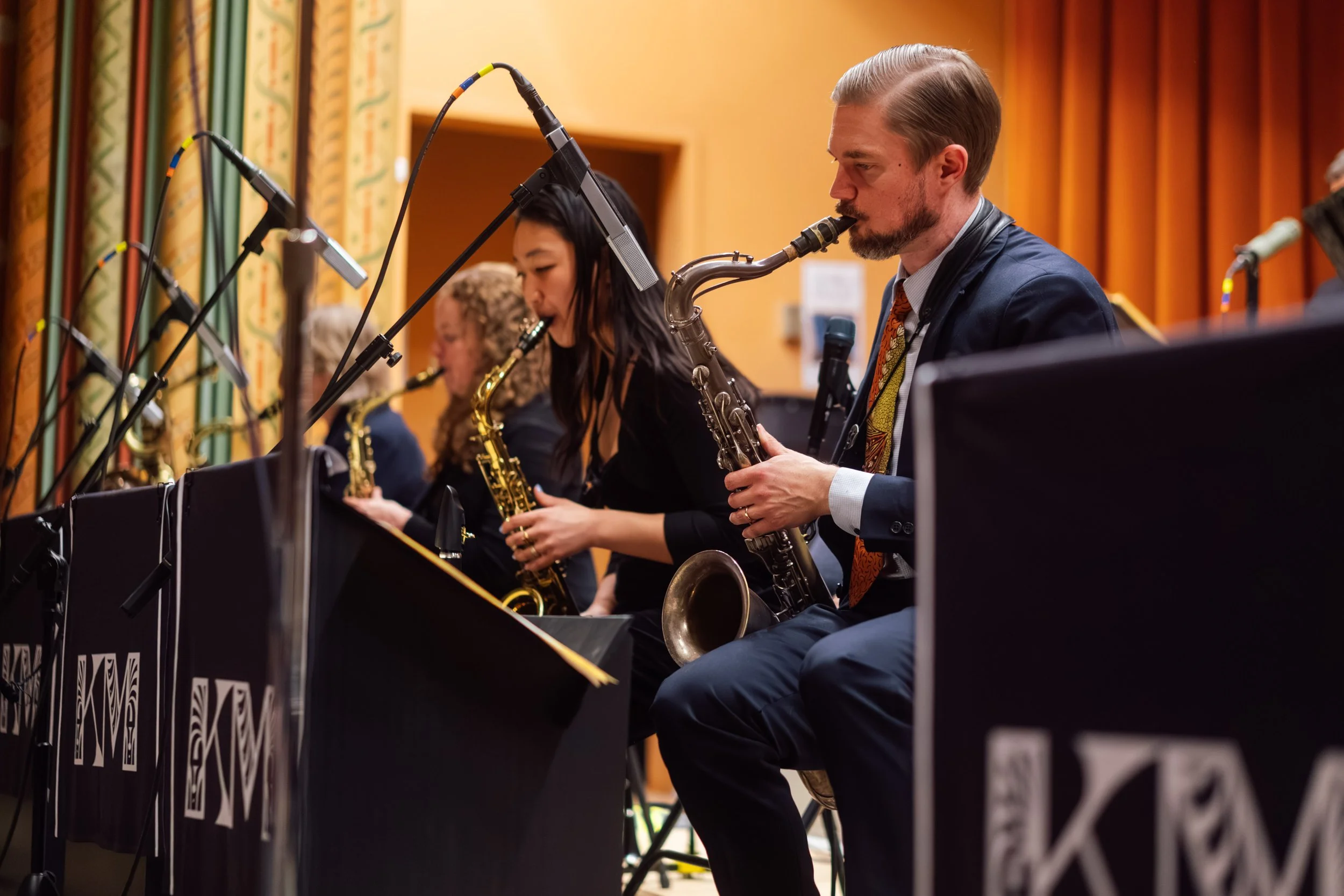
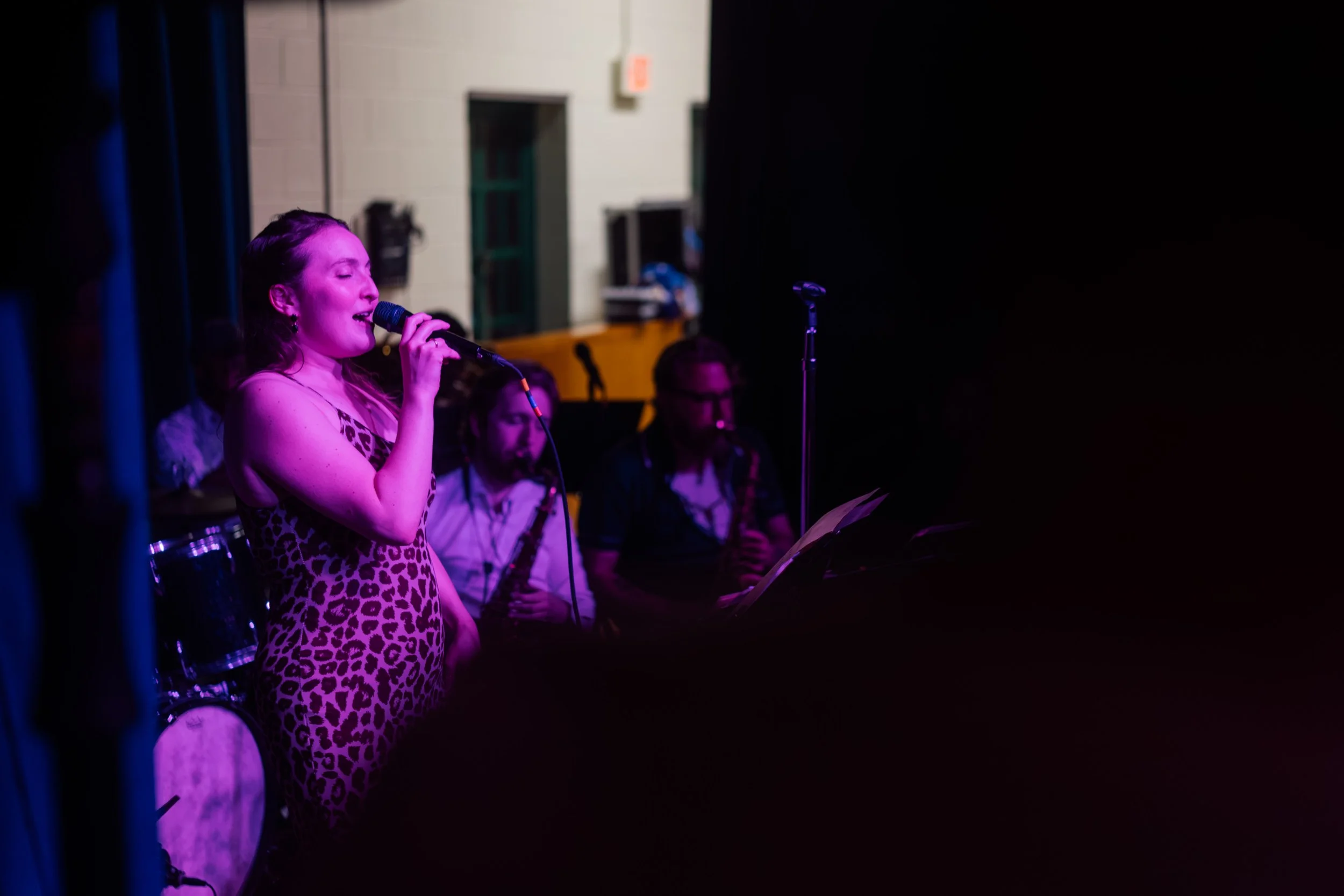
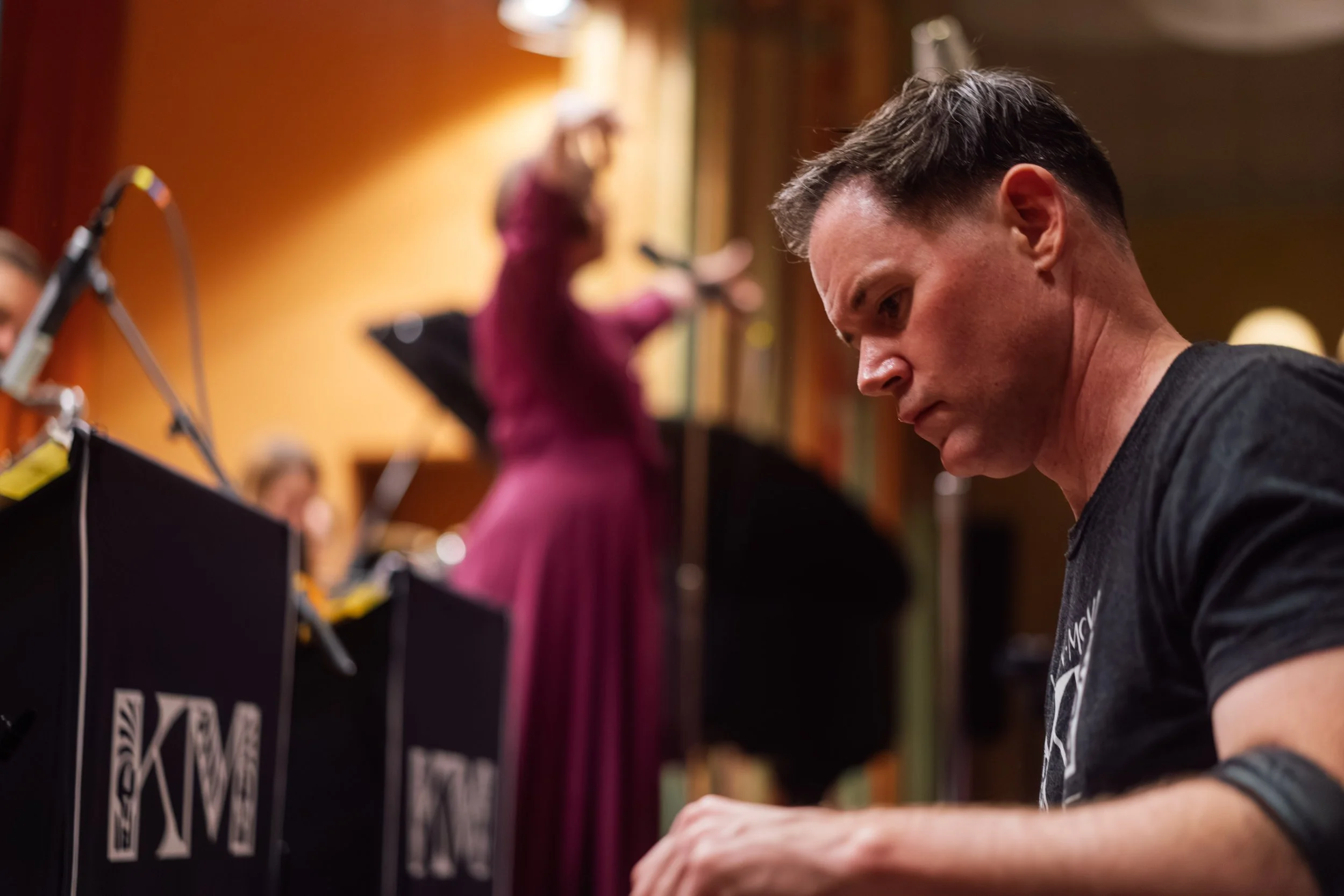
DCLX 2026, April 24-26: Shout and Feel It
President: Kimberly Marquette
Friday Night Main Band: The Craig Gildner Big Band
Friday Late Night Band: Keenan McKenzie's Big Band
Friday Blues Room Band: Chelsea Reed & The Fair Weather Band
Saturday Afternoon Band: Josh Lee & The Extended Family
Saturday Night Main Band: Scott Silbert’s “Biggest” Big Band
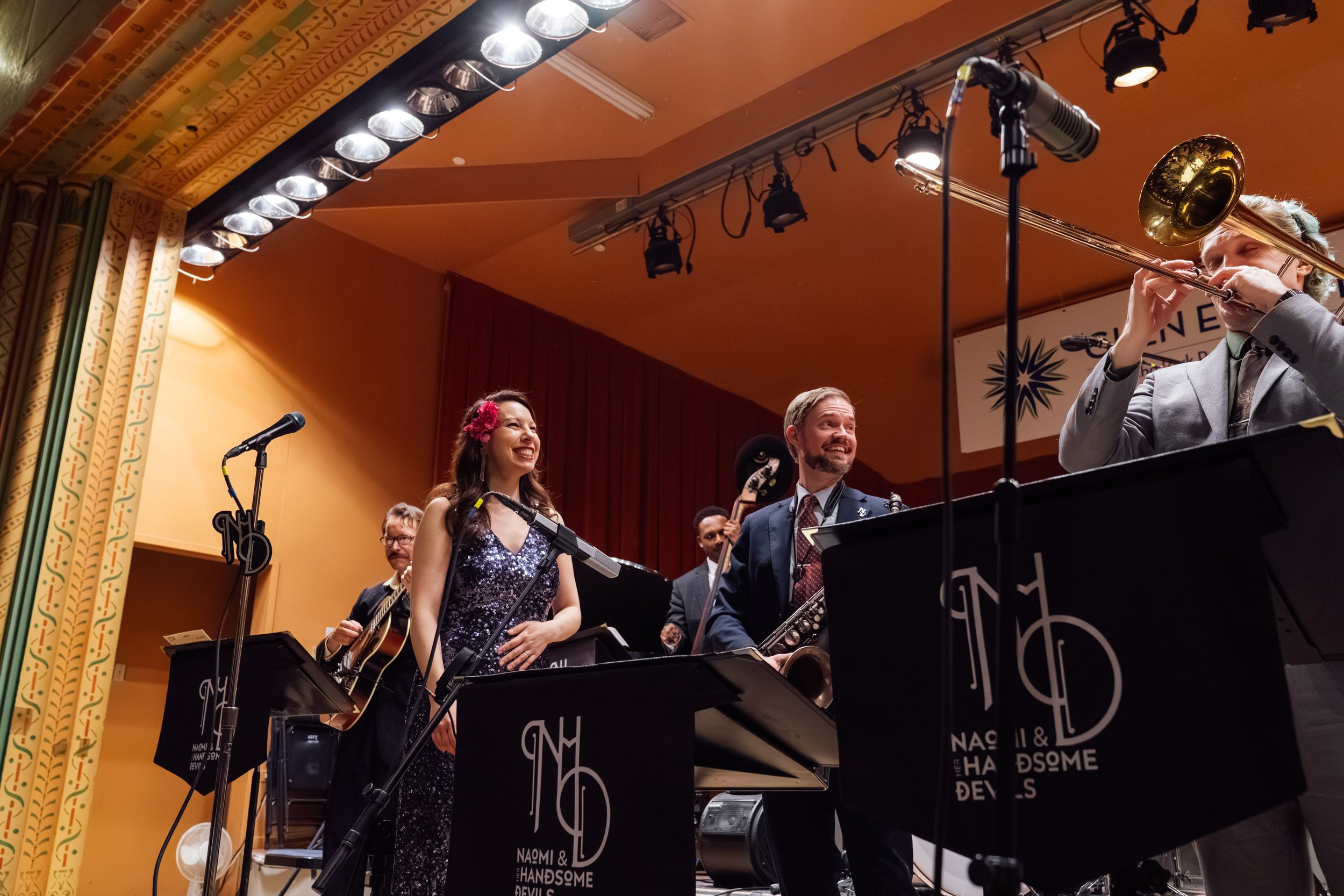
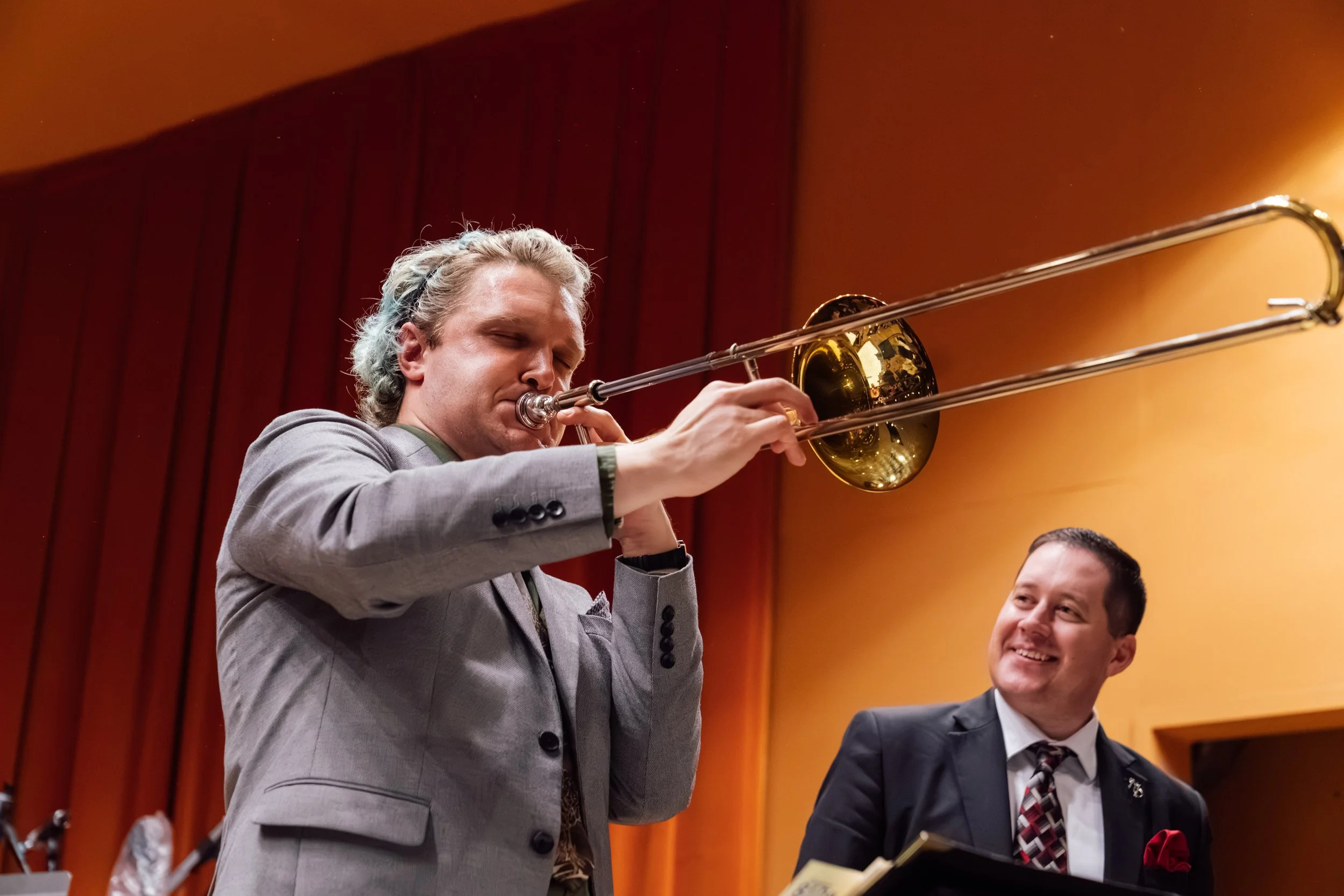
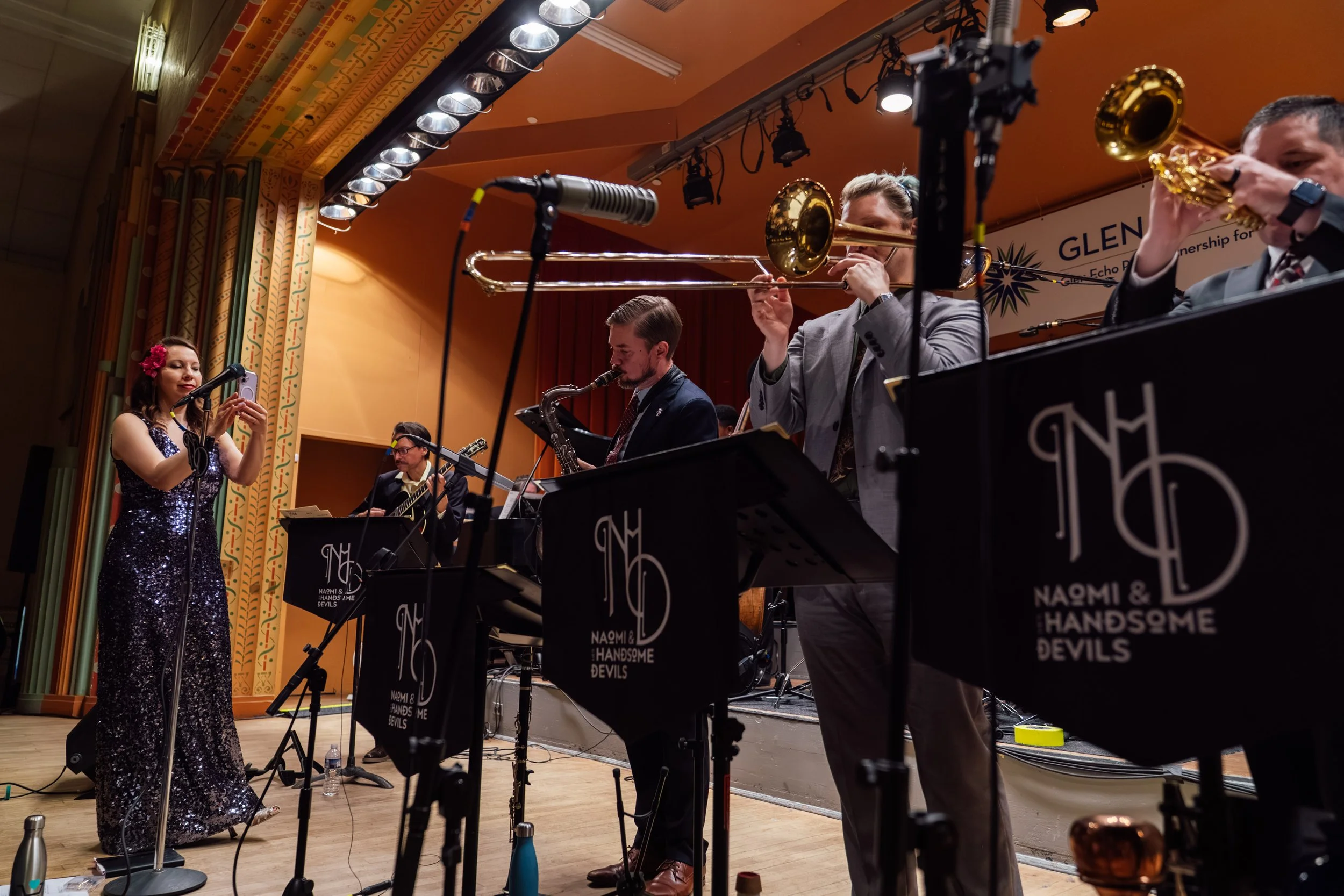
Saturday Late Night Band: Naomi & Her Handsome Devils
Saturday Blues Room Band: Gordon Webster Band (Blues Edition)
Sunday Afternoon Band: Jon Tigert’s Hangover Jam Band
Sunday Night Main Band: Gordon Webster Band
This next opinion would be recency biased, but after reviewing the past 24 years of music, I think I can confidently say that DCLX 2026 was probably one of the best editions of the event from start to finish. It was so anticipated that it sold out of full weekend passes within one week of opening registration at the beginning of the year.
DCLX scheduling four straight dances of big band music was a flex on par with the 2011 and 2012 battles or the 15 bands for the 15th anniversary. Lindy Focus has become world famous by featuring five straight nights of big bands, but that's essentially the same group of musicians every night. The four big bands at DCLX featured largely different line ups of musicians with very little overlap even when most of them were from the DC area. The main exception was newcomer Josh Lee’s Extended Family that came with him mostly from the Philadelphia area. Because of that, those four big bands all had very distinct styles and sounds that were capped off by Scott Silbert’s “Biggest” Big Band, which lived up to its name even when compared to the previous year’s version.
With all the familiar faces, DCLX was still able to bring a “new” band with Naomi & Her Handsome Devils. It was great to see the DC lindy hop scene’s favorite daughter return and take her place in such a powerhouse line up. She actually may have been DC’s first dancer turned musician. She had a musical theater background but had only just started singing with jazz bands like the Boilermakers and Gordon Webster shortly before she moved to New York City. As one of the most in demand instructors in the world, it wasn’t until 2026 when the stars aligned for her to play at DCLX.
The DCLX Secret Sauce
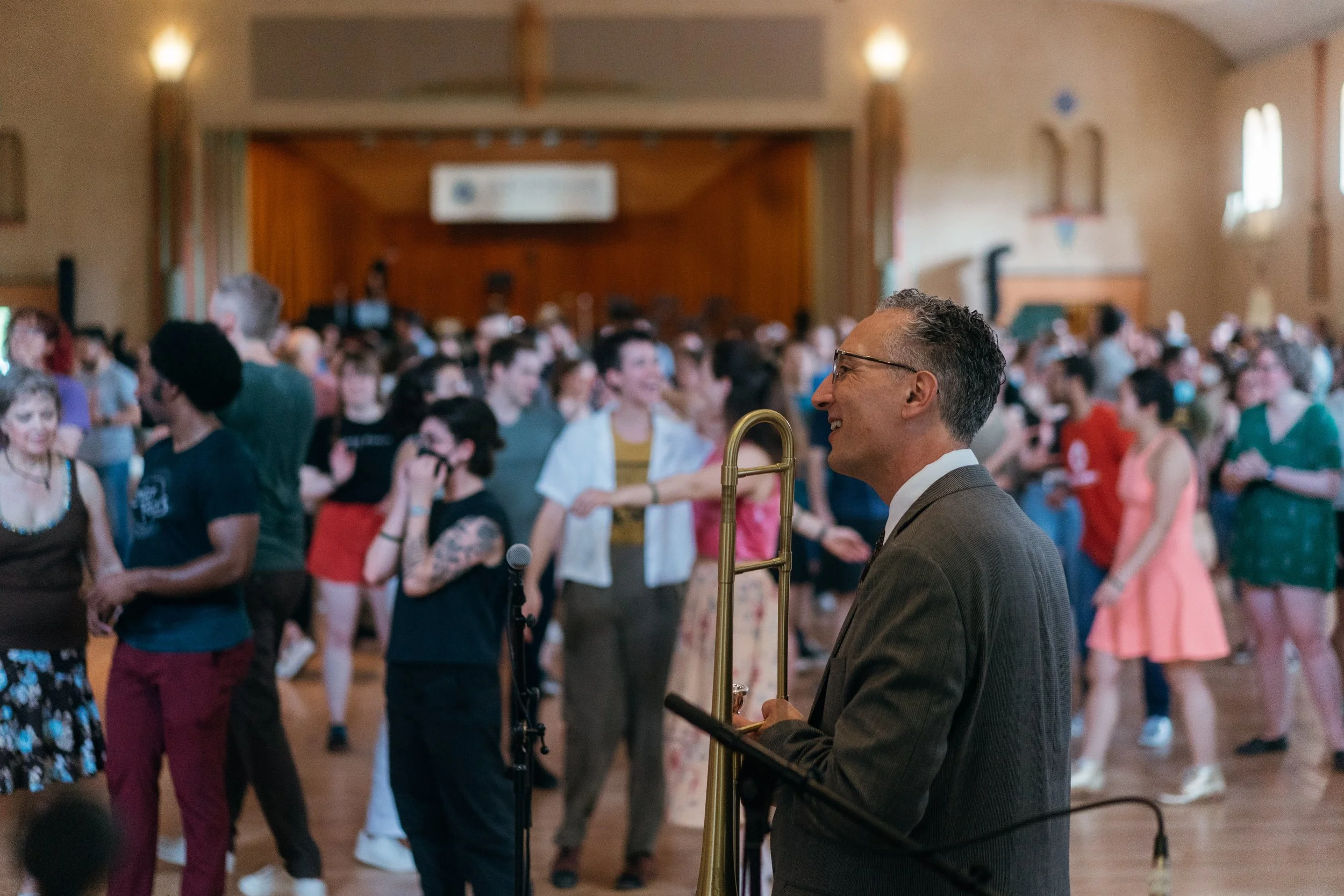
We’ve lamented the loss of exchanges over the years, but in a sense, DCLX is no longer an exchange either. The original point of the exchanges was to foster interactions between small groups of dancers. DCLX is a full blown swing dance music festival. Maybe you can say the exchange is now between dancers and musicians, but that seems to imply a more intellectual exercise.
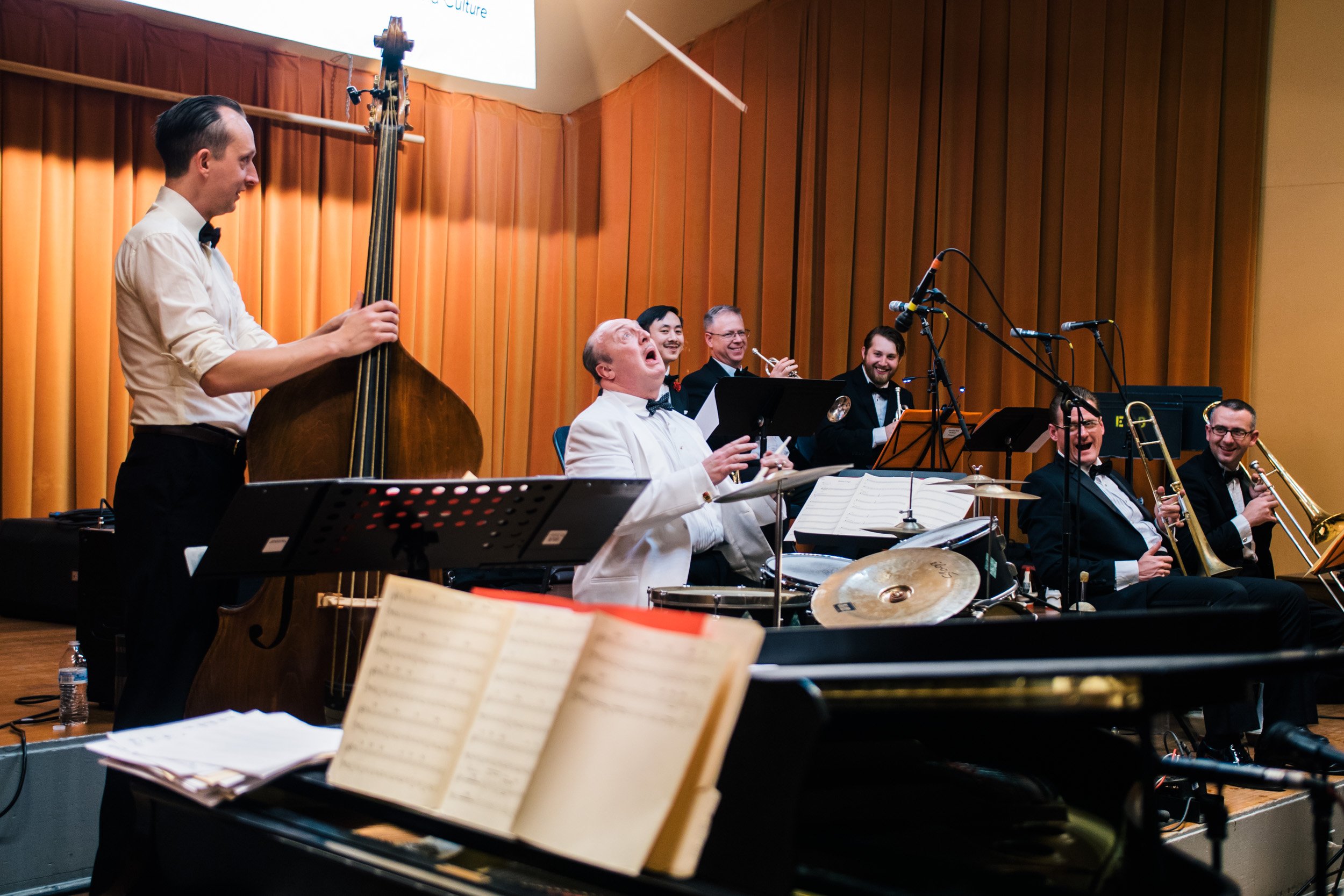
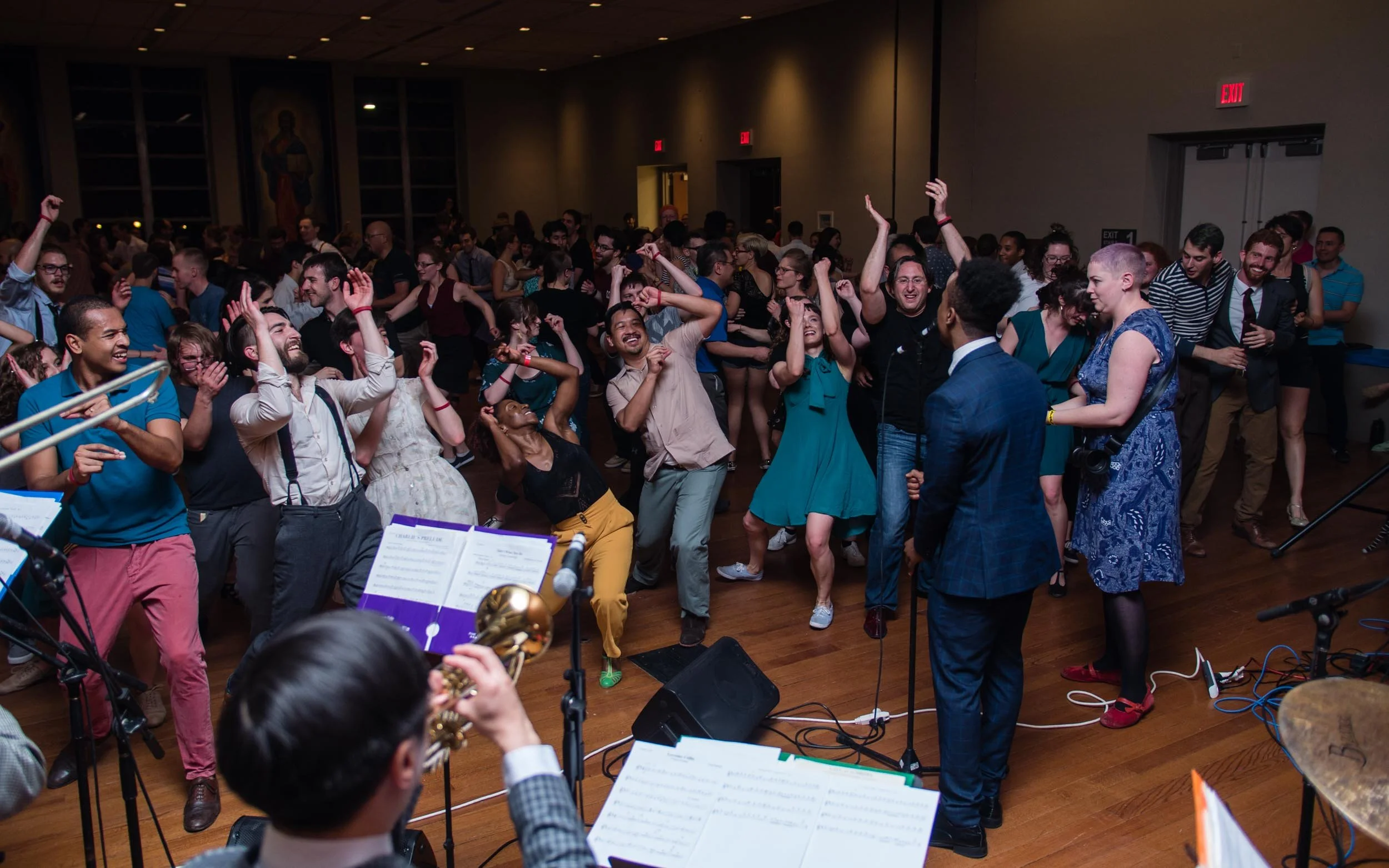
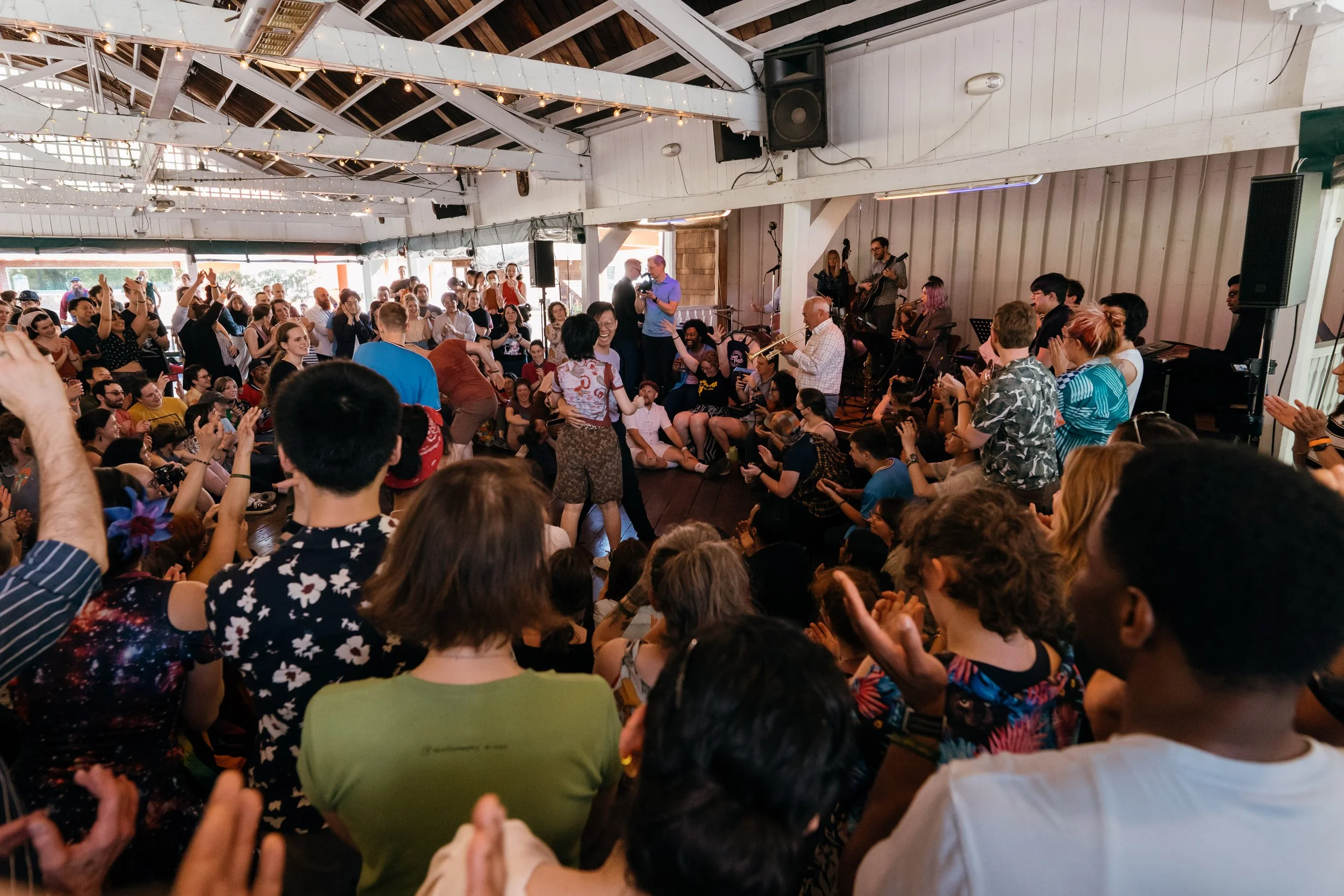
I like to think back to the Sunday night dance at DCLX 2014 with Gordon Webster. A group of drunk dudes were passing by, but upon hearing the music over the din of the busy U St corridor, they impulsively bought tickets. They had no idea what DCLX or lindy hop was. This photo is of one of them having a damn near religious experience during Gordon Webster’s finale. I have no idea what happened to him after that, but part of me likes to imagine him going to random jazz bars around the country, wondering why none of them are nearly as energetic as that spring night in 2014.
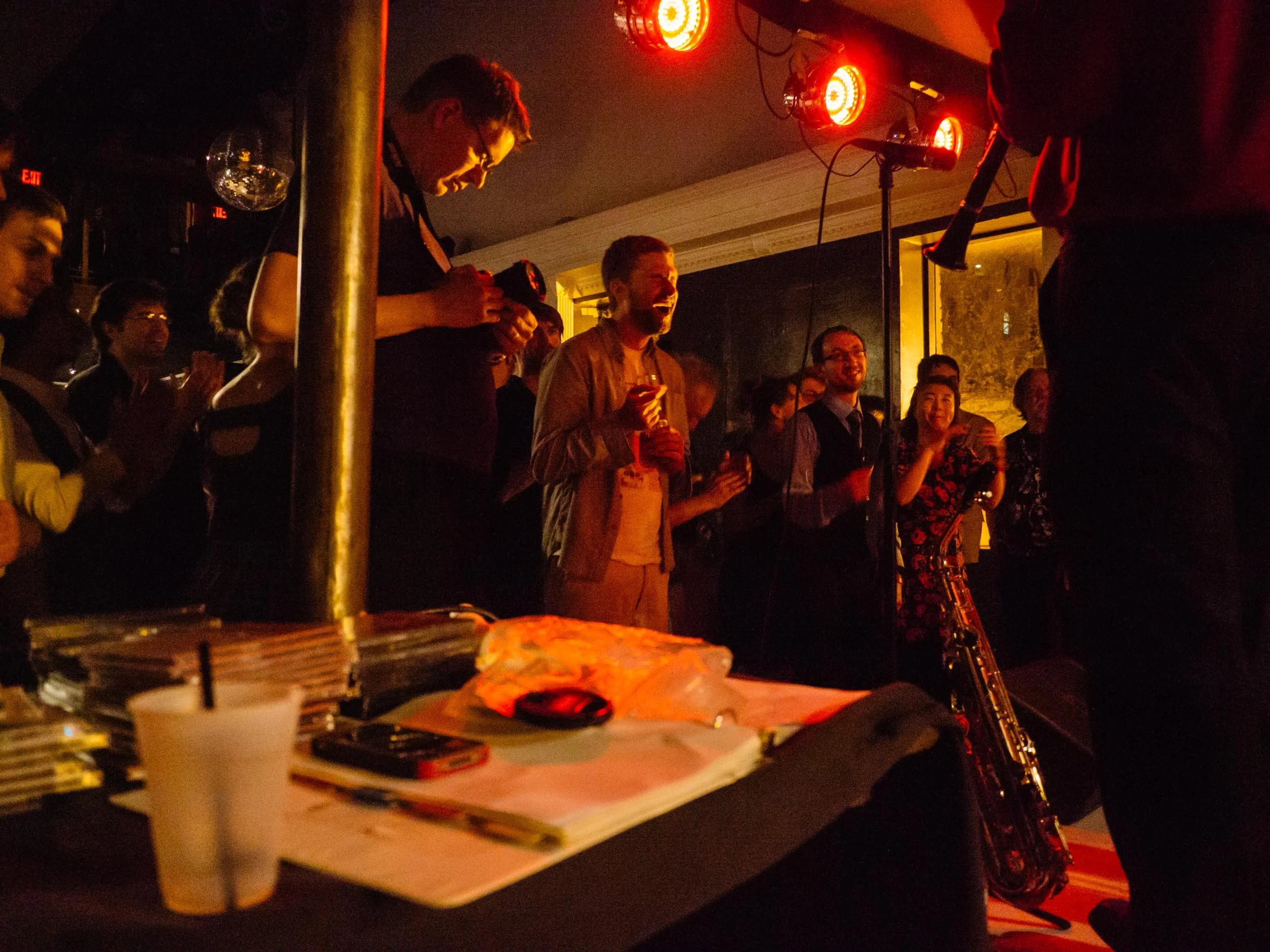
The phrase “greater than the sum of its parts” is often applied to circumstances when less than ideal pieces end up creating something disproportionately great. Other cities may have more dancers and others a bigger music scene. In the case of DCLX, its built in advantages include: DC’s location on the east coast, The Spanish Ballroom as one of the the most beautiful venues in the world that hosts regularly occurring dances, an established and underrated jazz and blues community, and a period of time when the DC scene was the center of the Lindy-verse.
But the secret sauce that has mixed these ingredients and has consistently created a 5 star dance menu every year has been the DCLX committee. You’ll notice that I haven’t mentioned any specific people behind any particular decisions because there have been so many damn people involved over the years. It’s hard to track who did what. My ears do tend to perk up when I’m at another event and someone refers to the evening’s event or floor captain. I introduced the term when I was co-chairman of DCLX in 2003 as a way to distribute responsibilities across the committee after we had decided to host dances independent of the other local organizers. Did other events pick up the nomenclature, trying to replicate the success of DCLX? We’ll never know, but I like to think that DCLX has been a good role model to other events in the lindy hop scene.
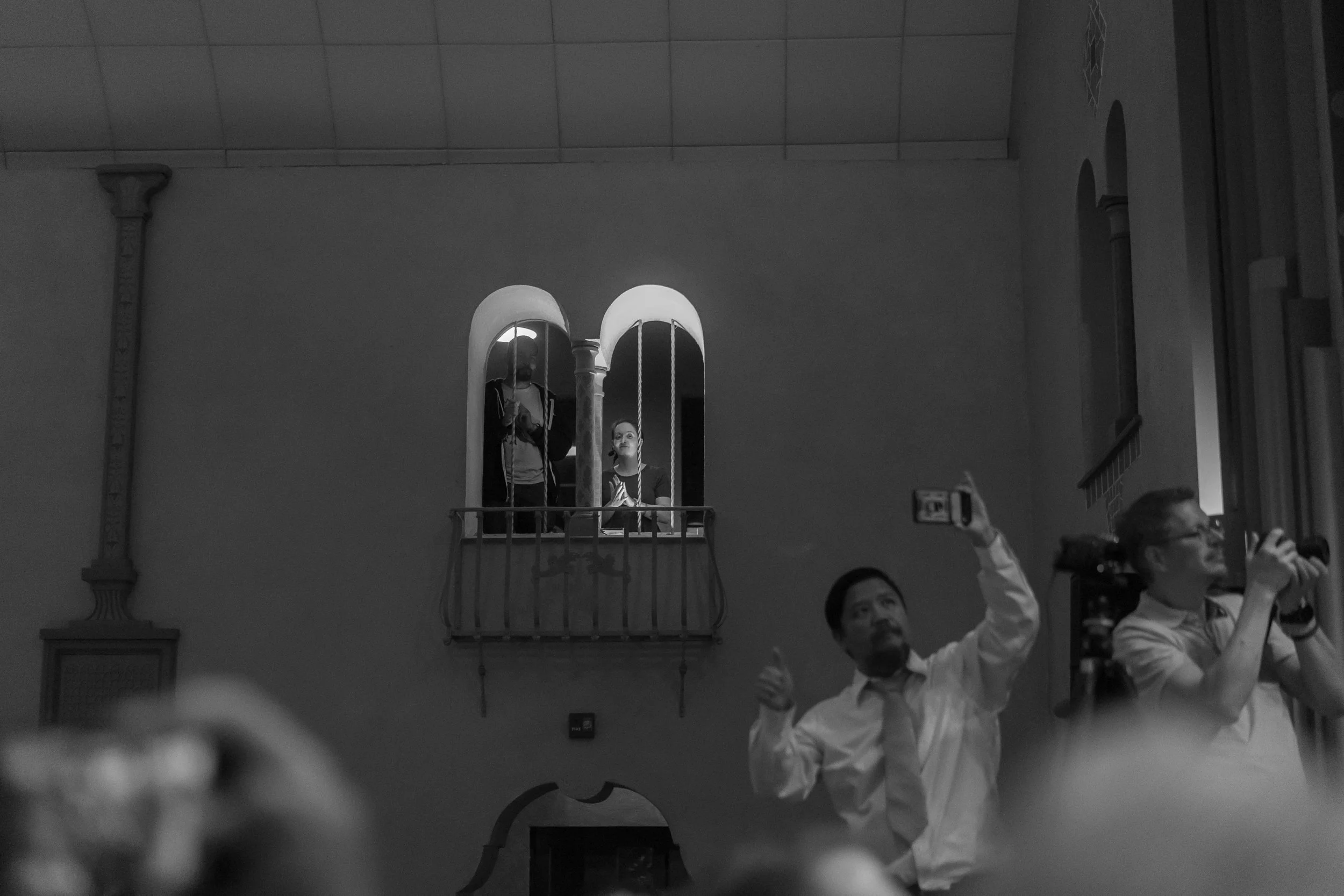
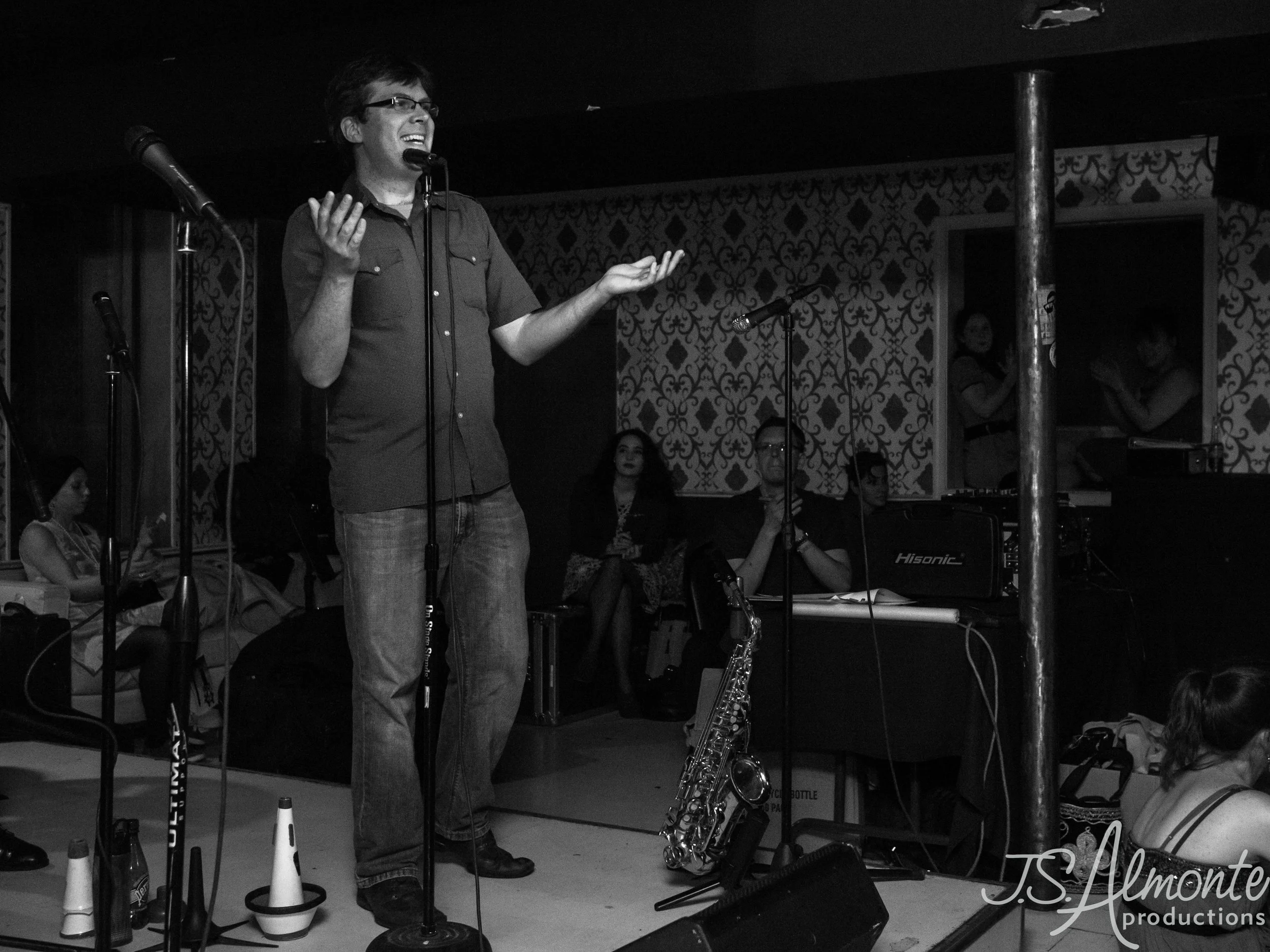
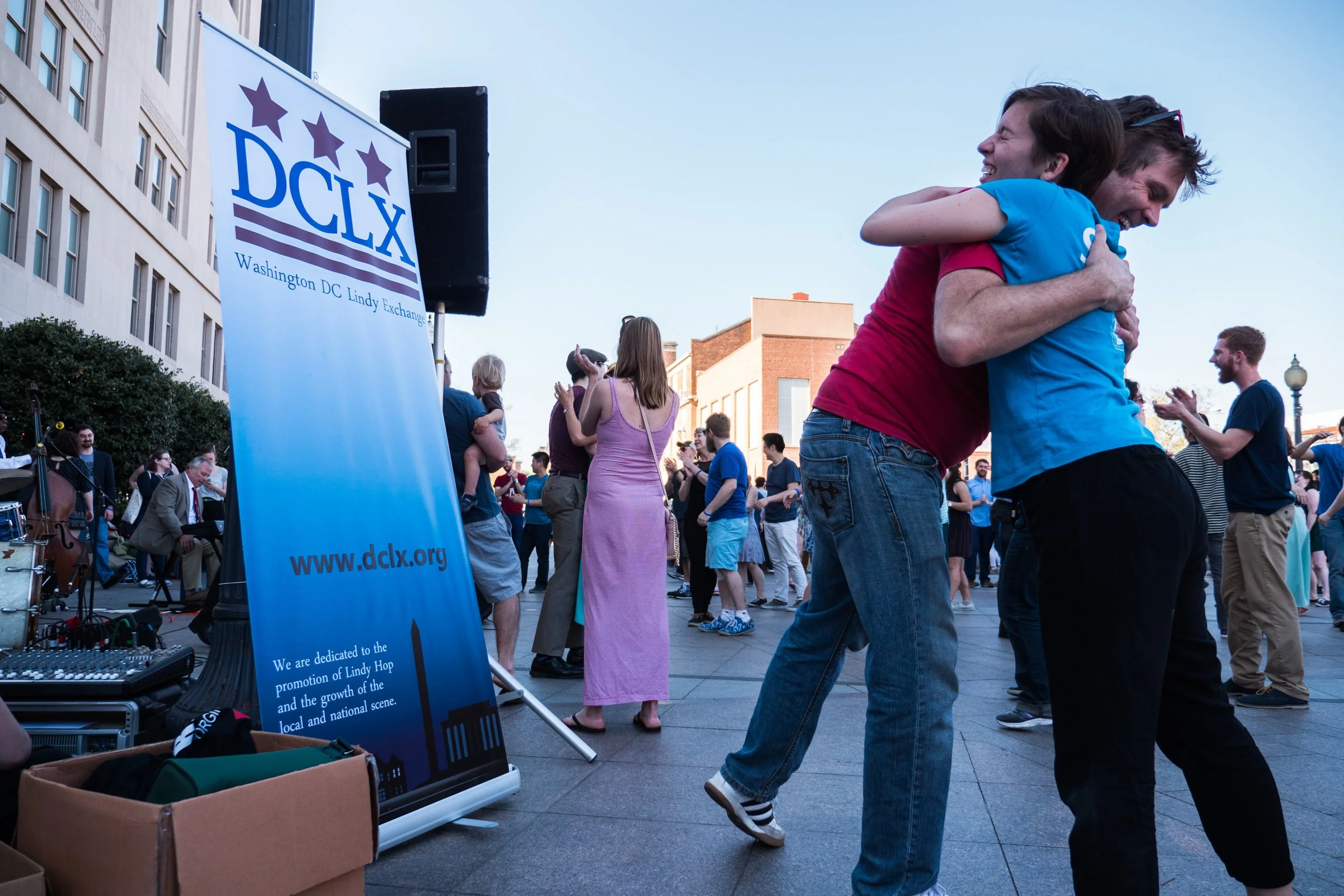
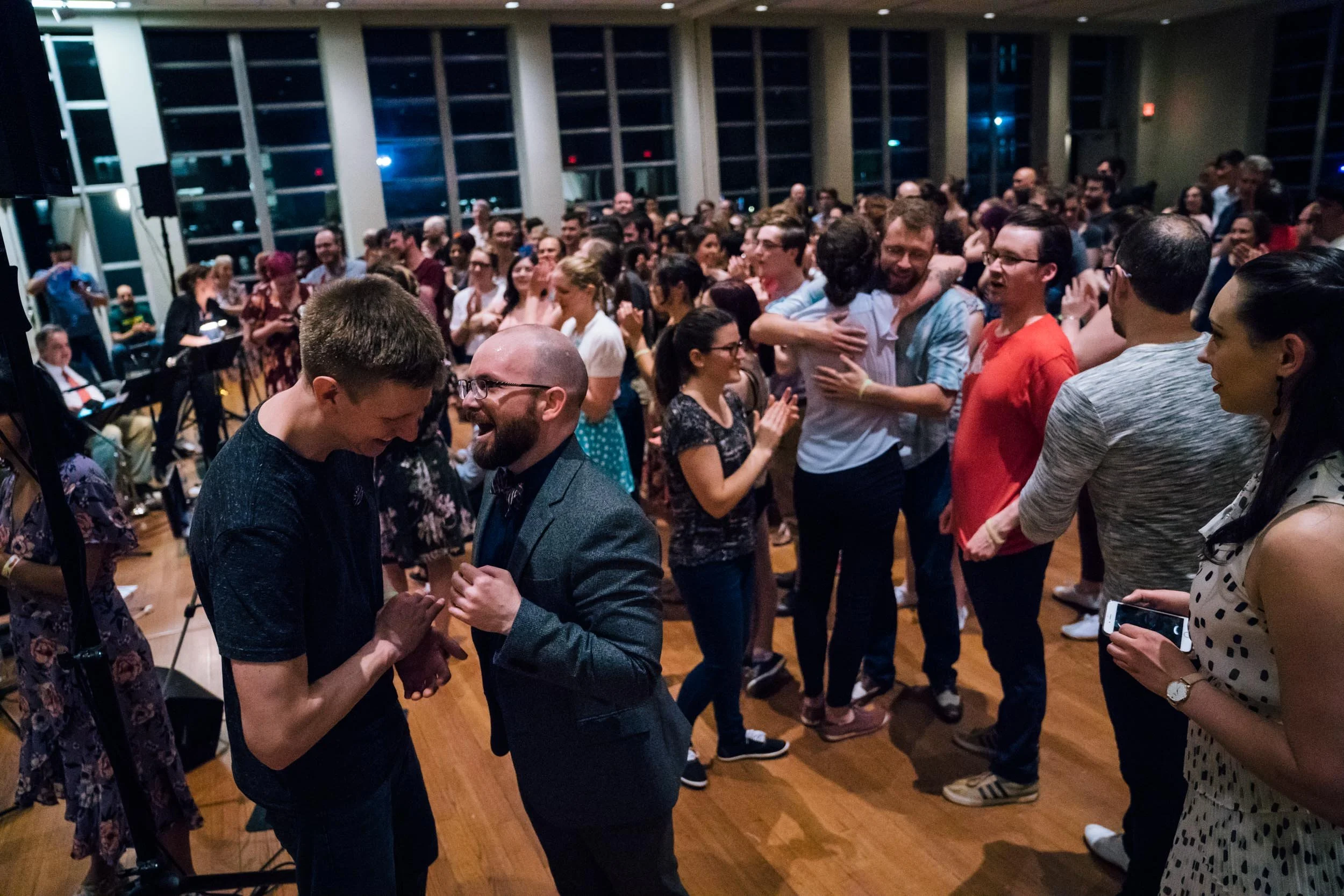
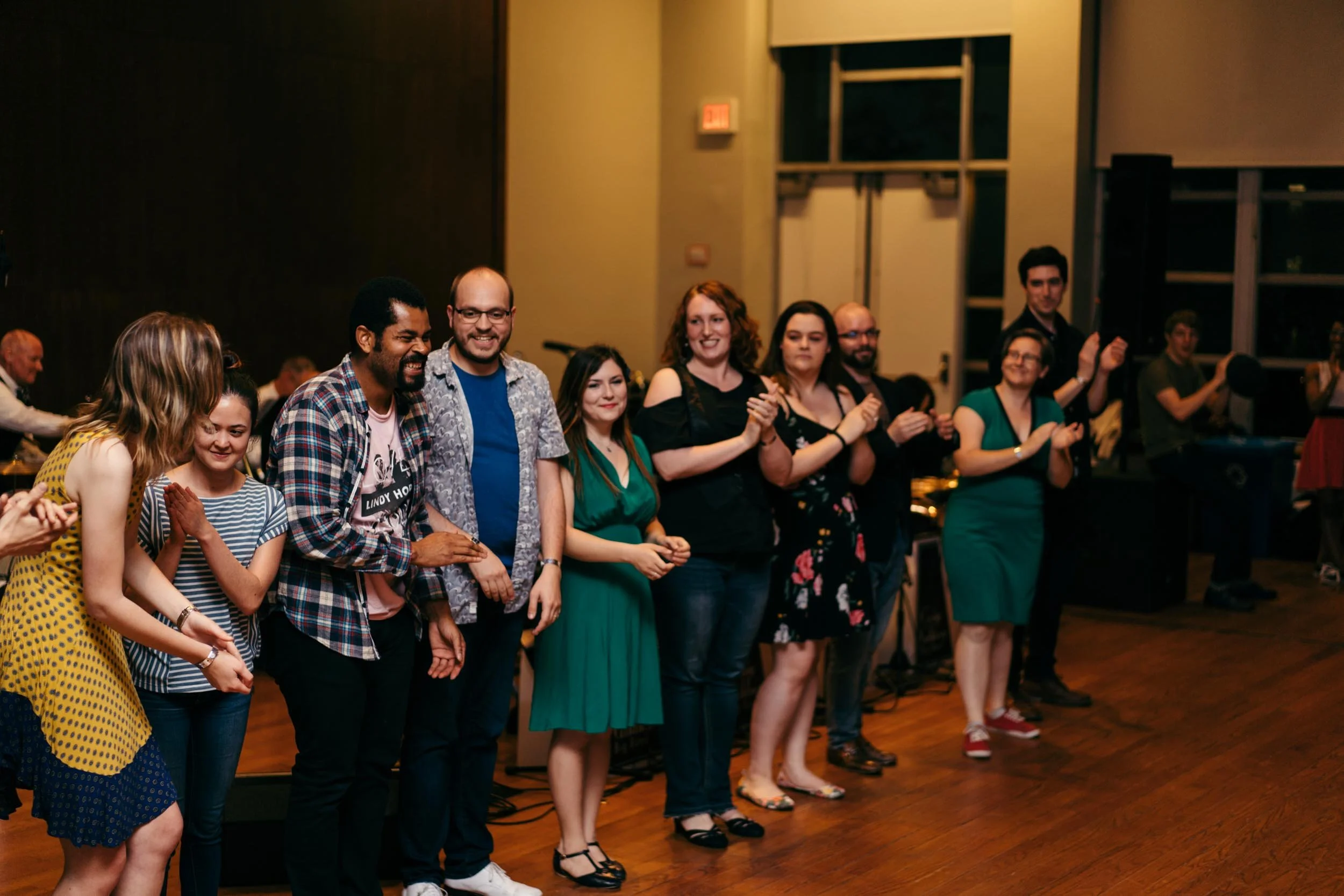
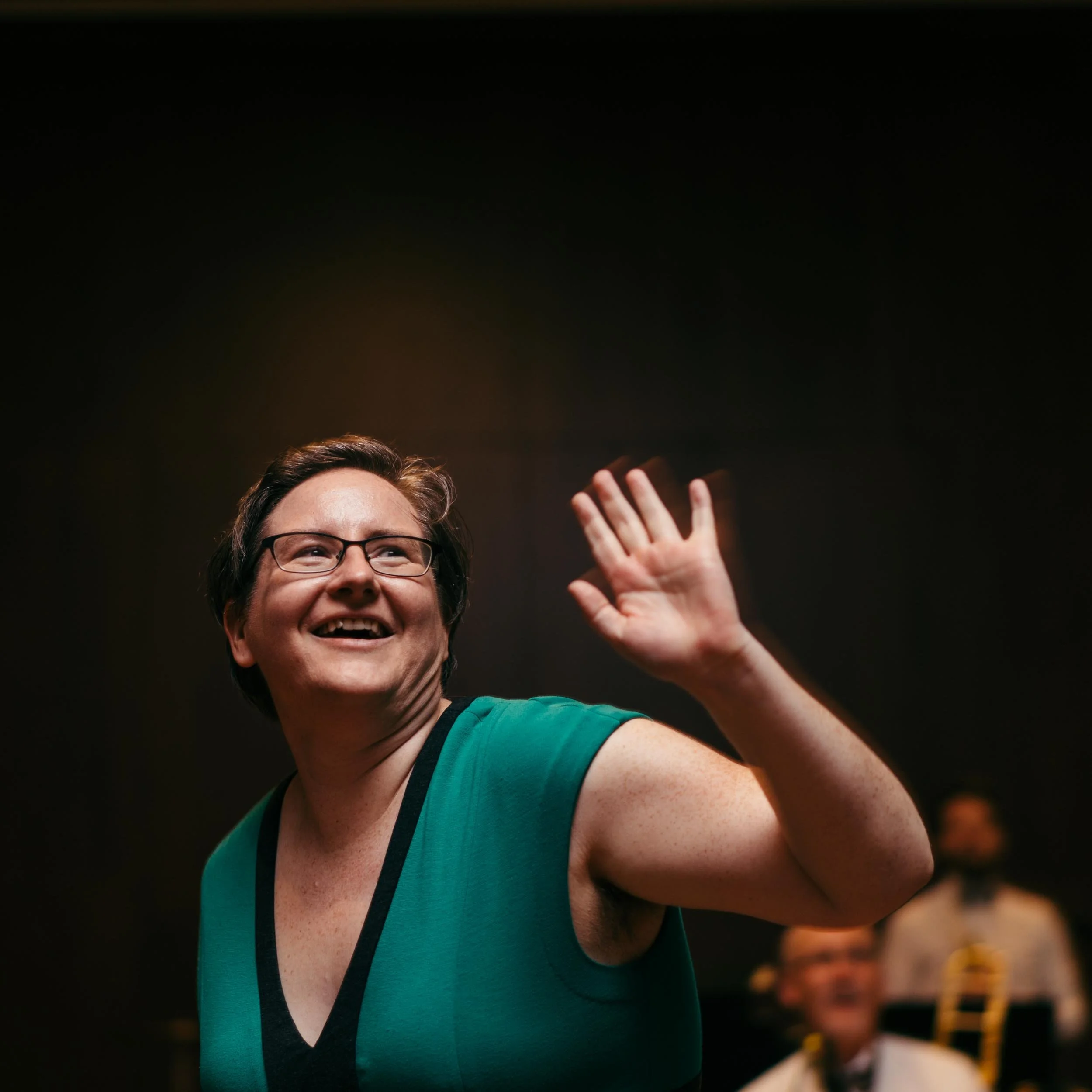
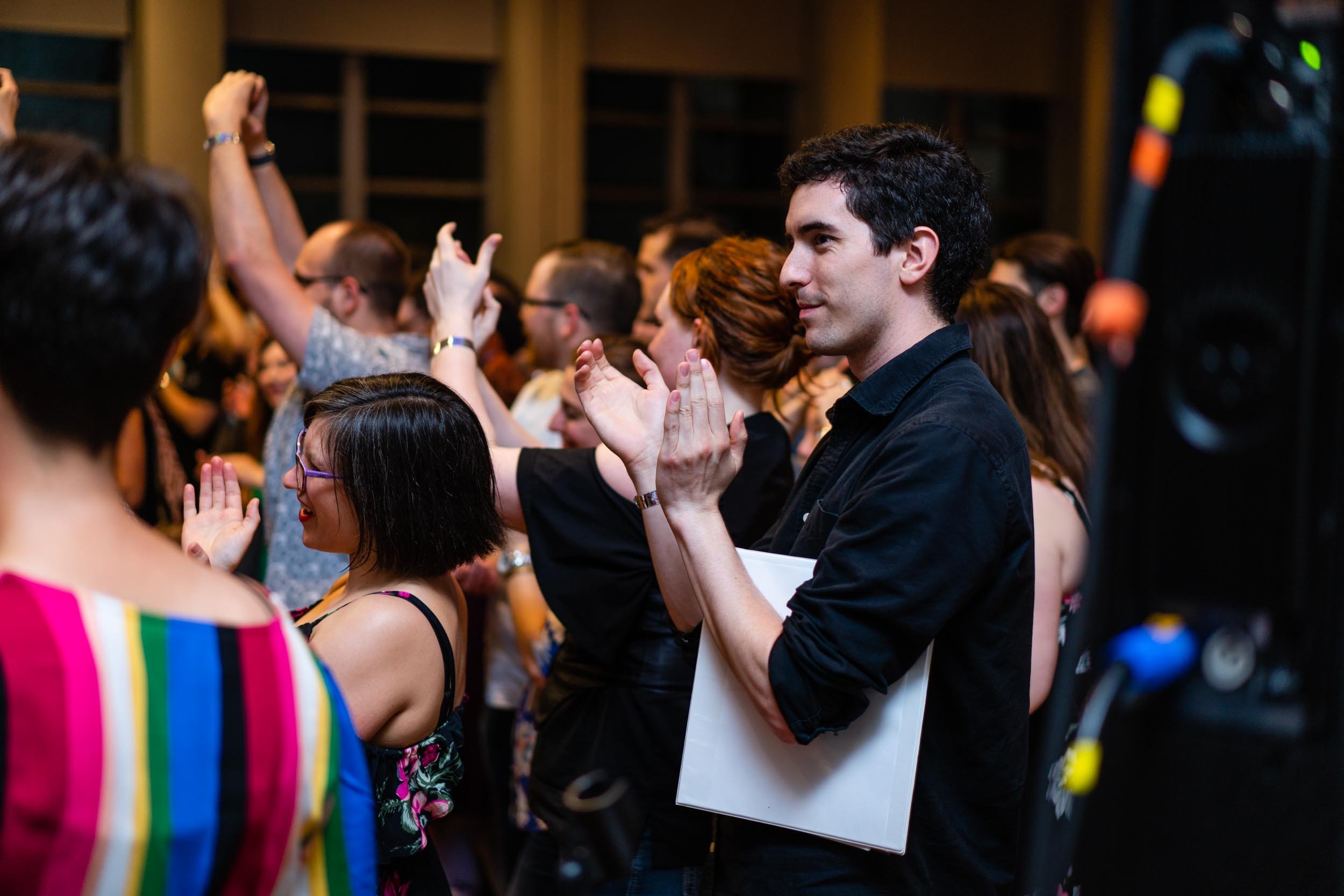
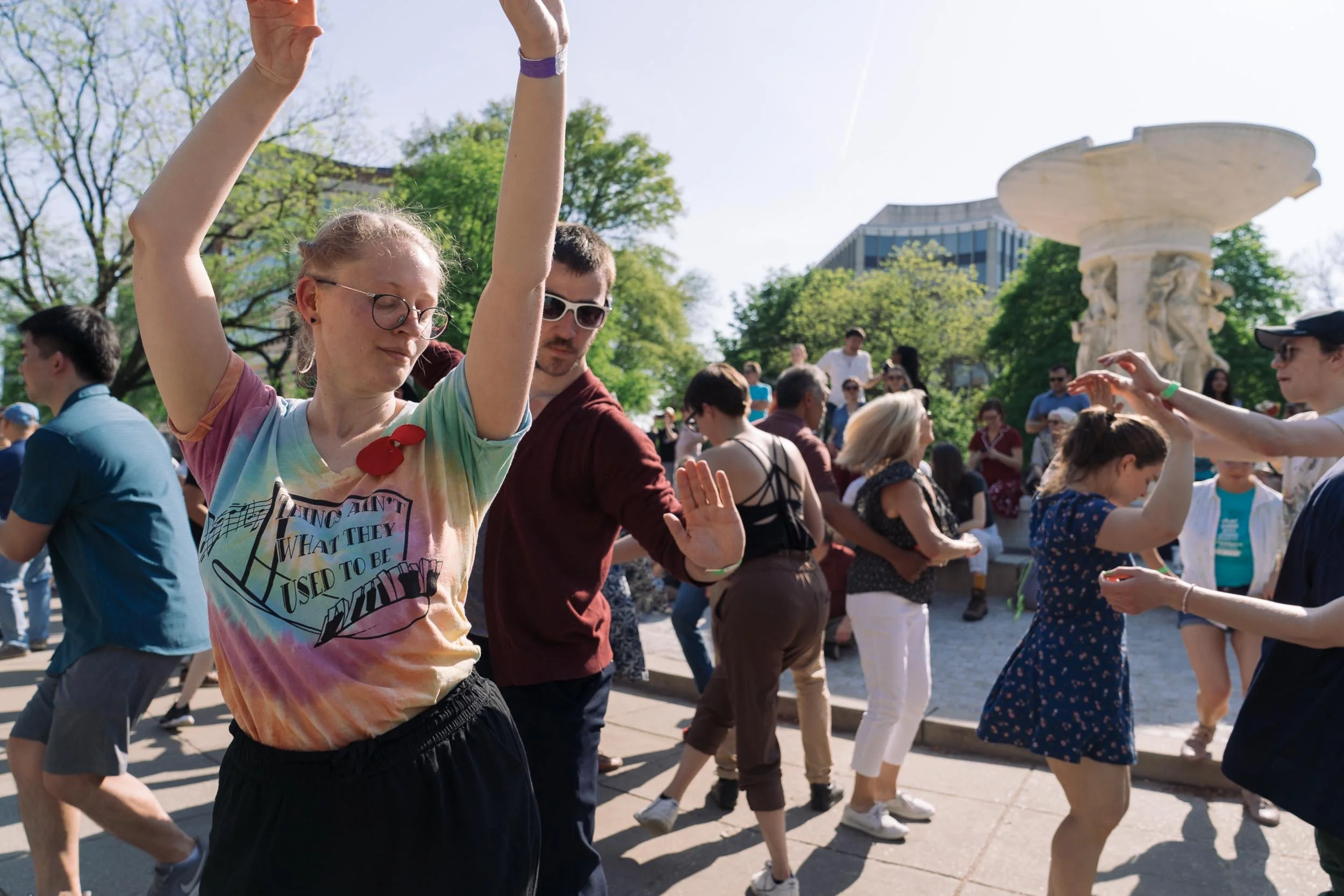
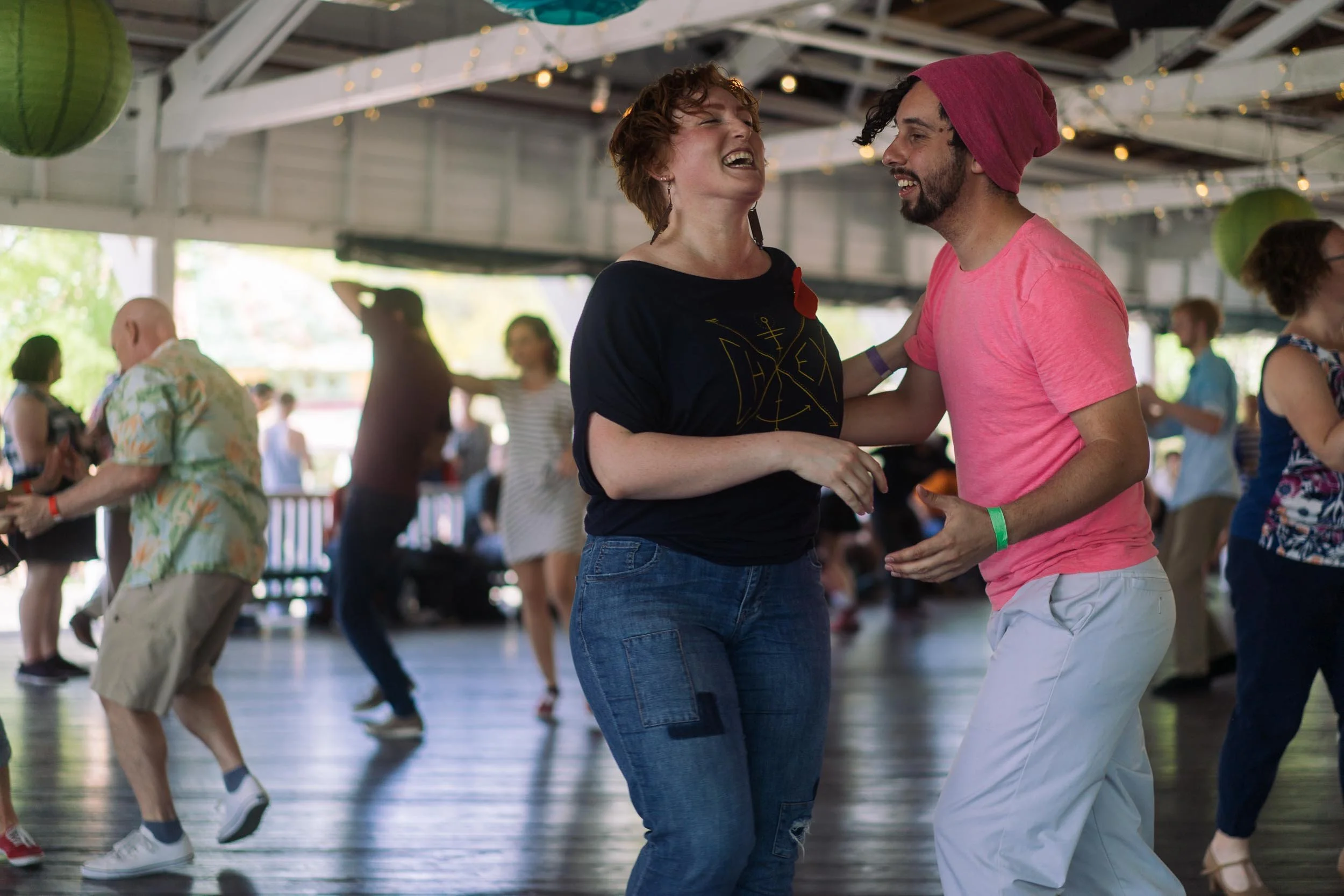
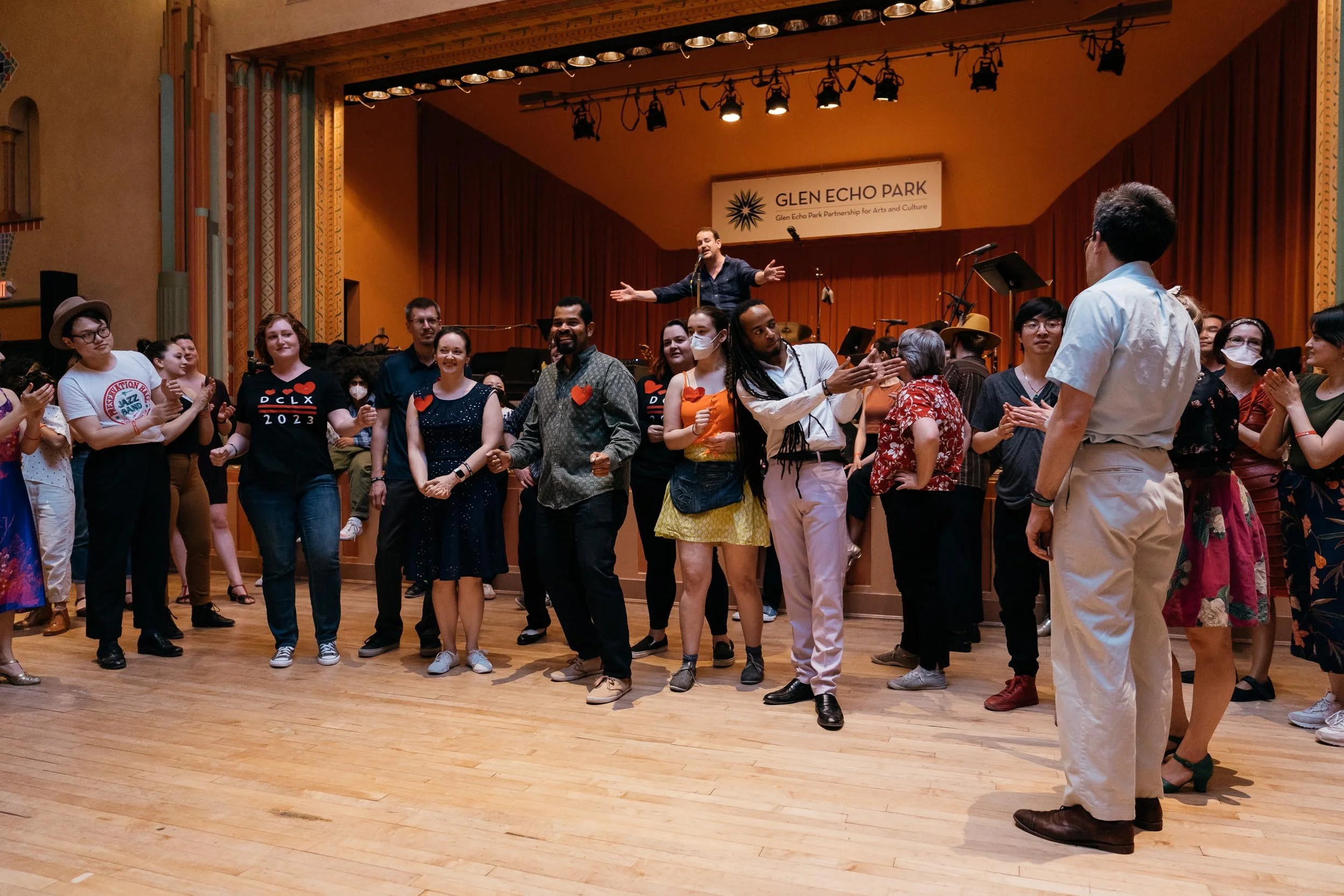
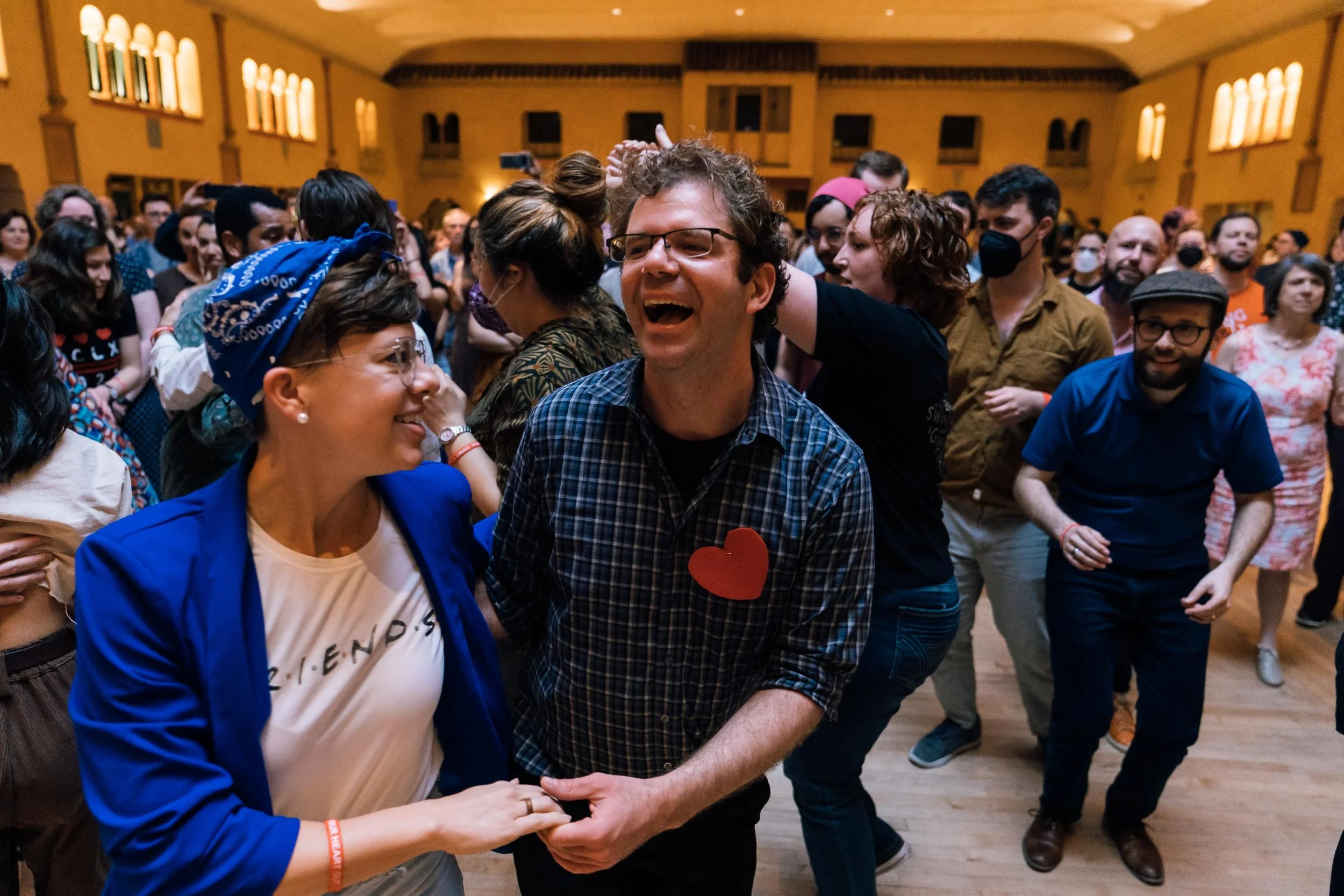
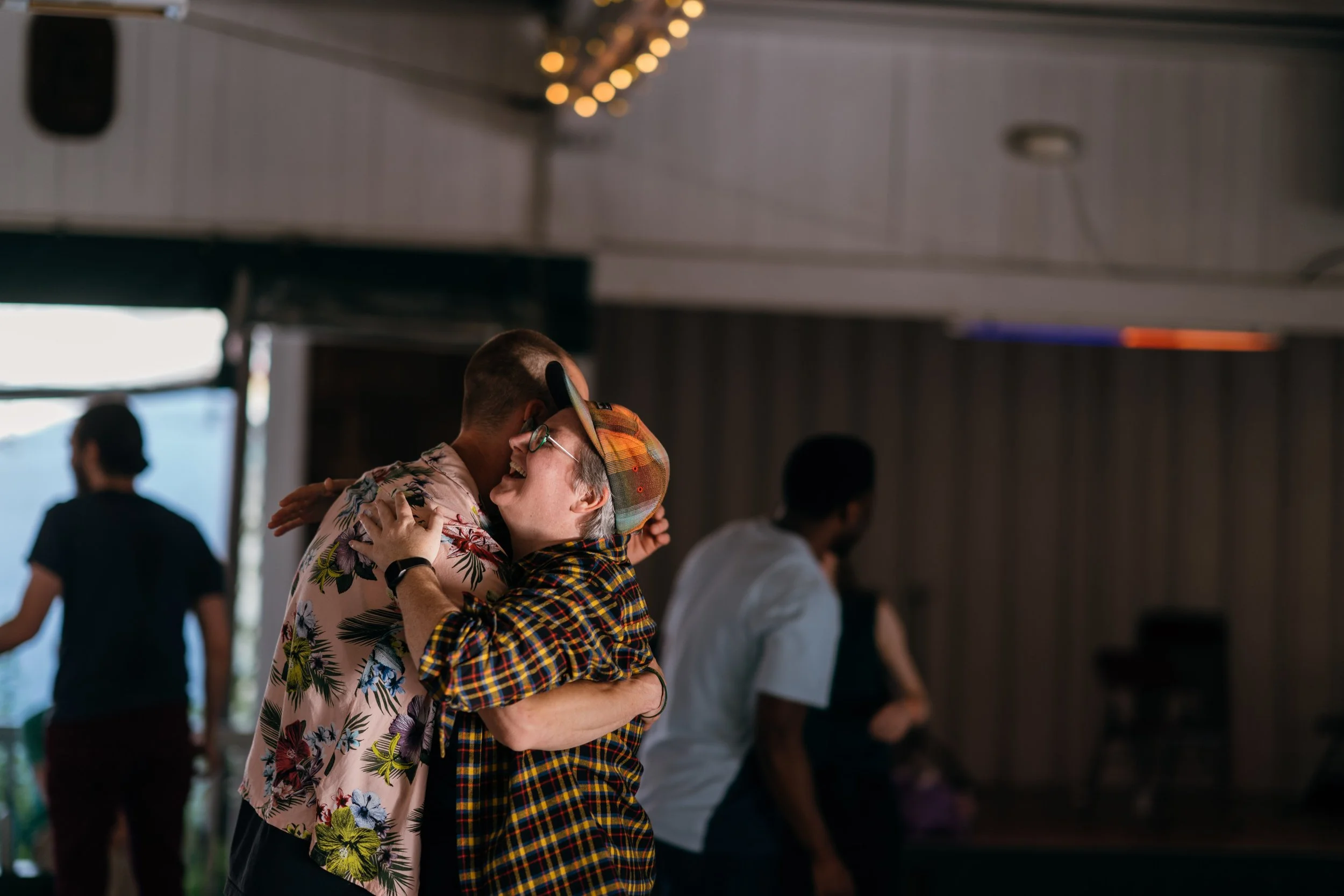
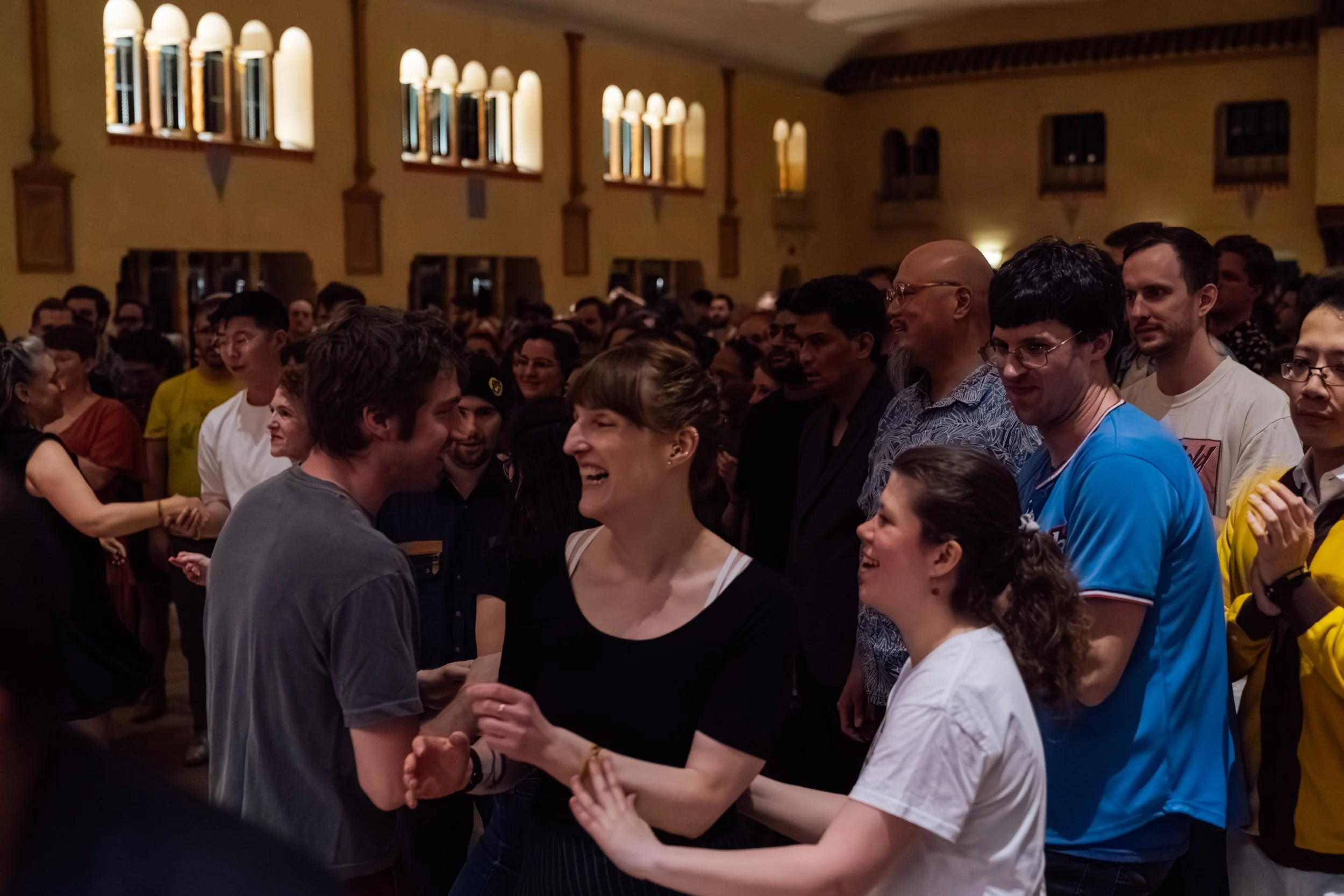
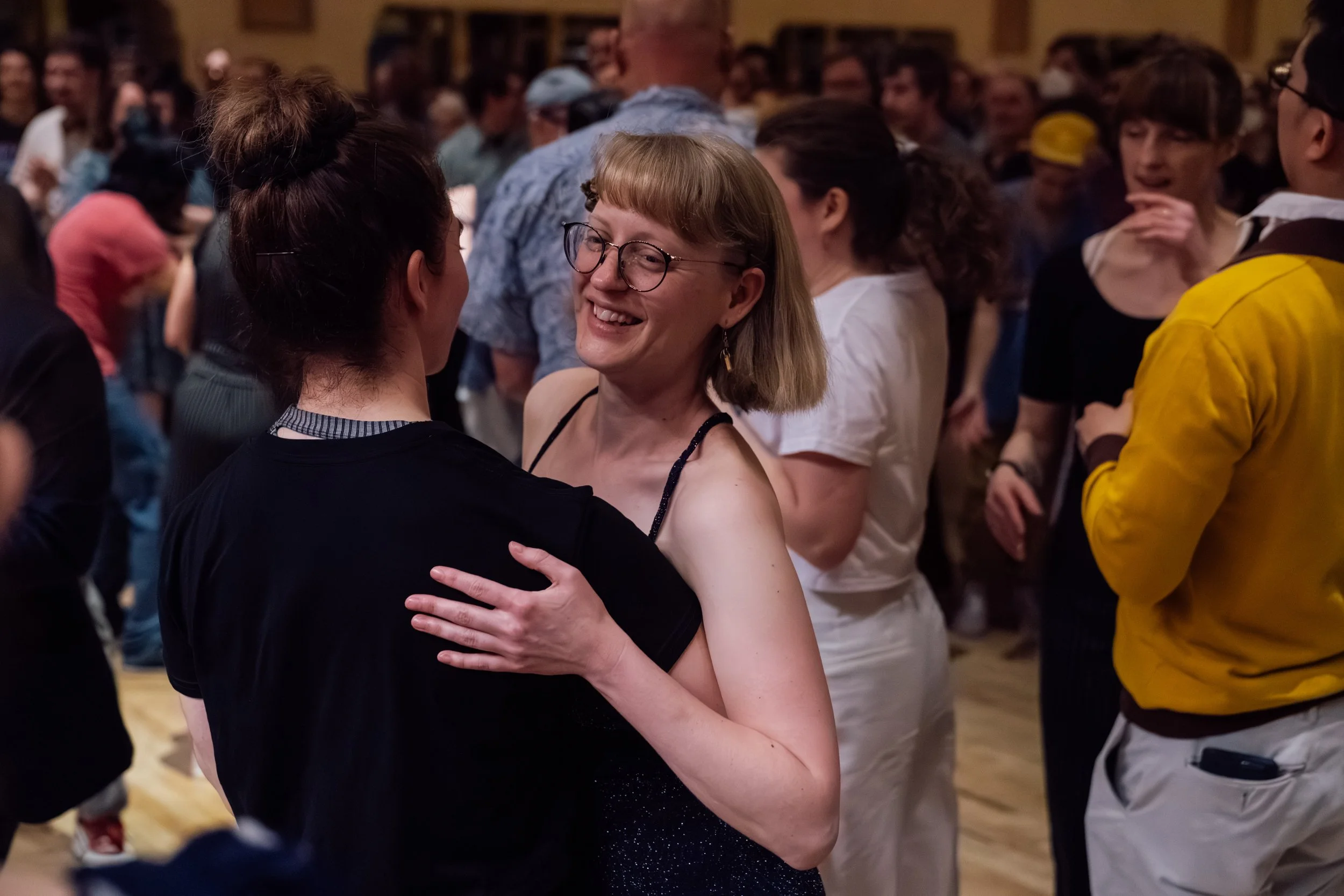
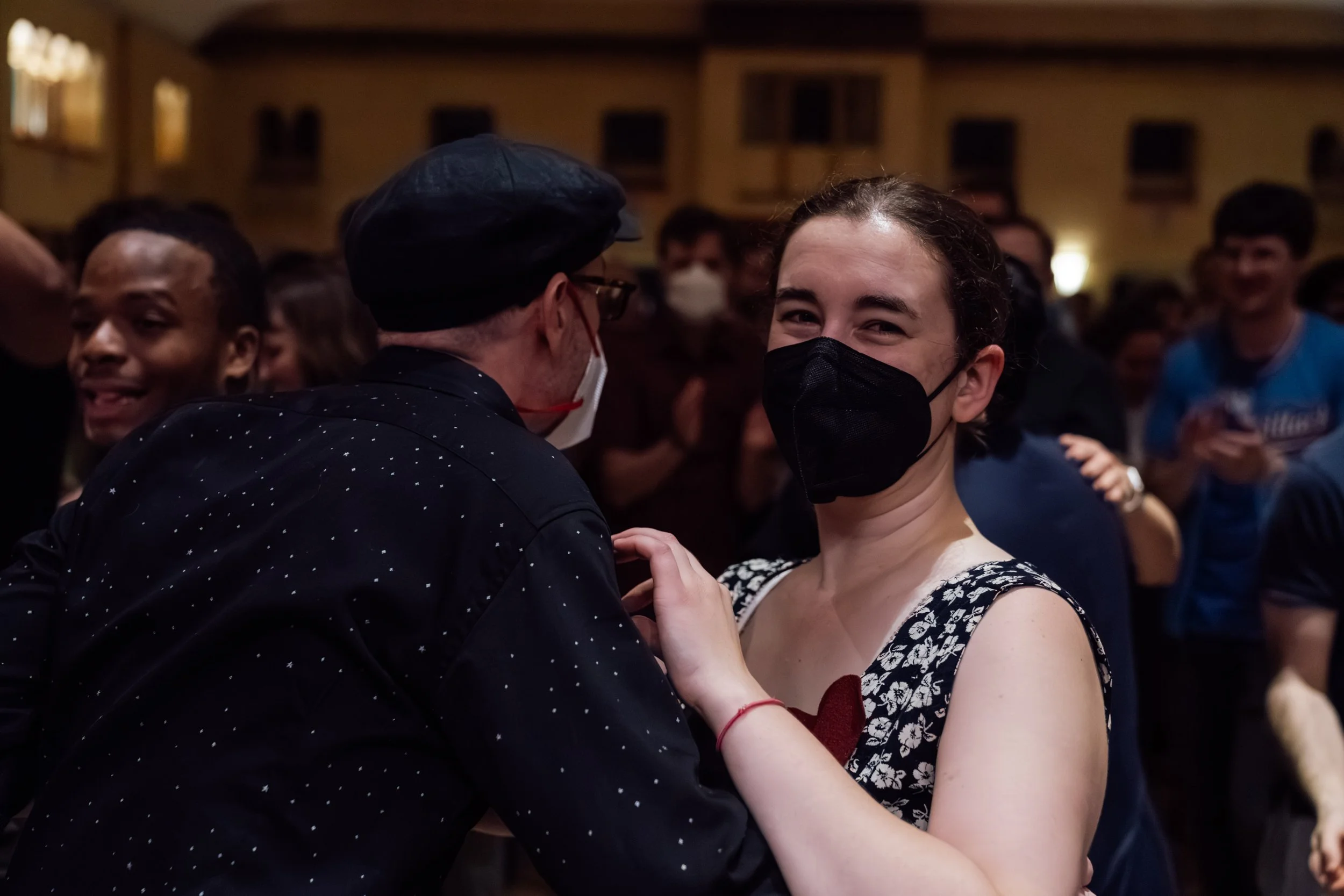
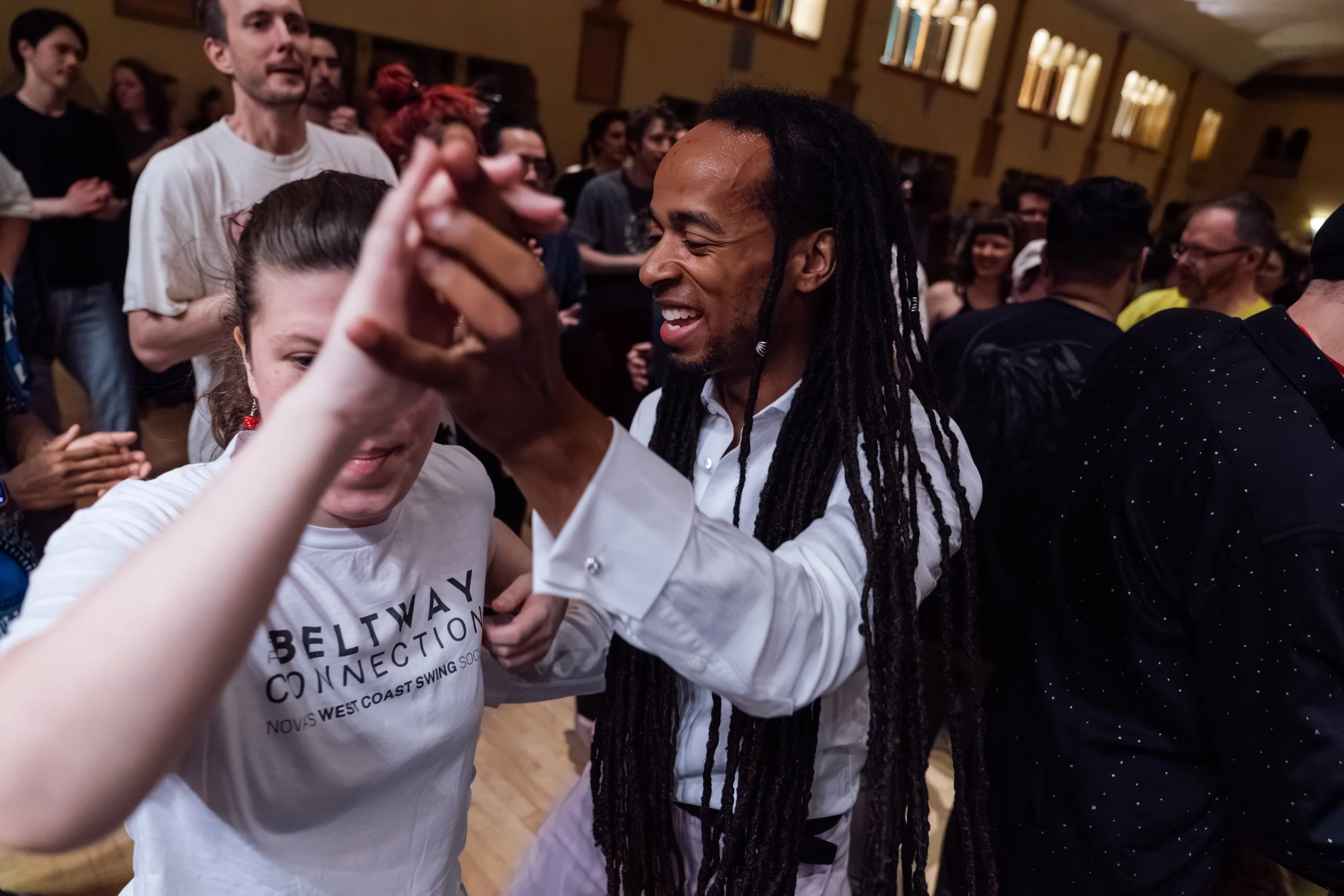
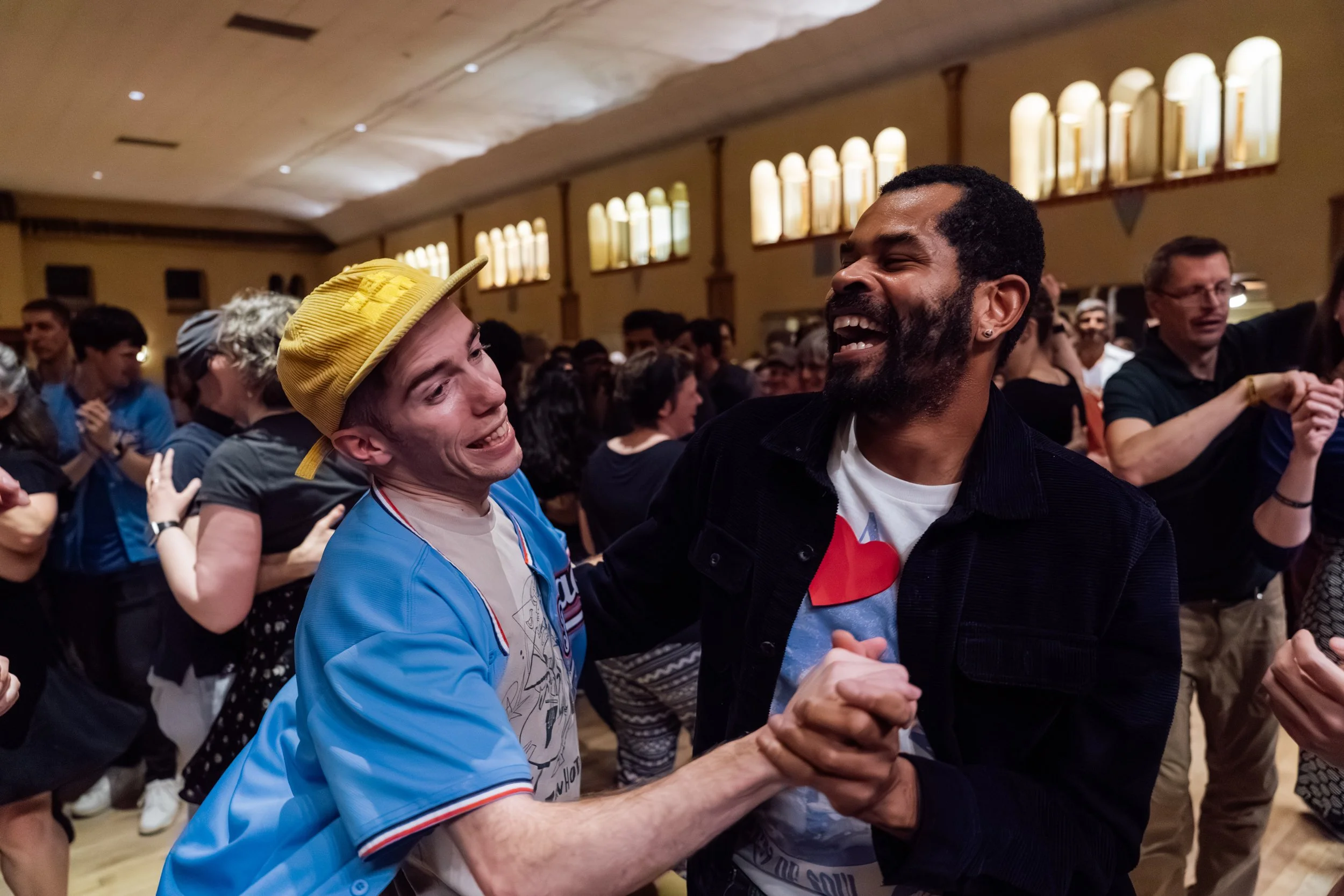
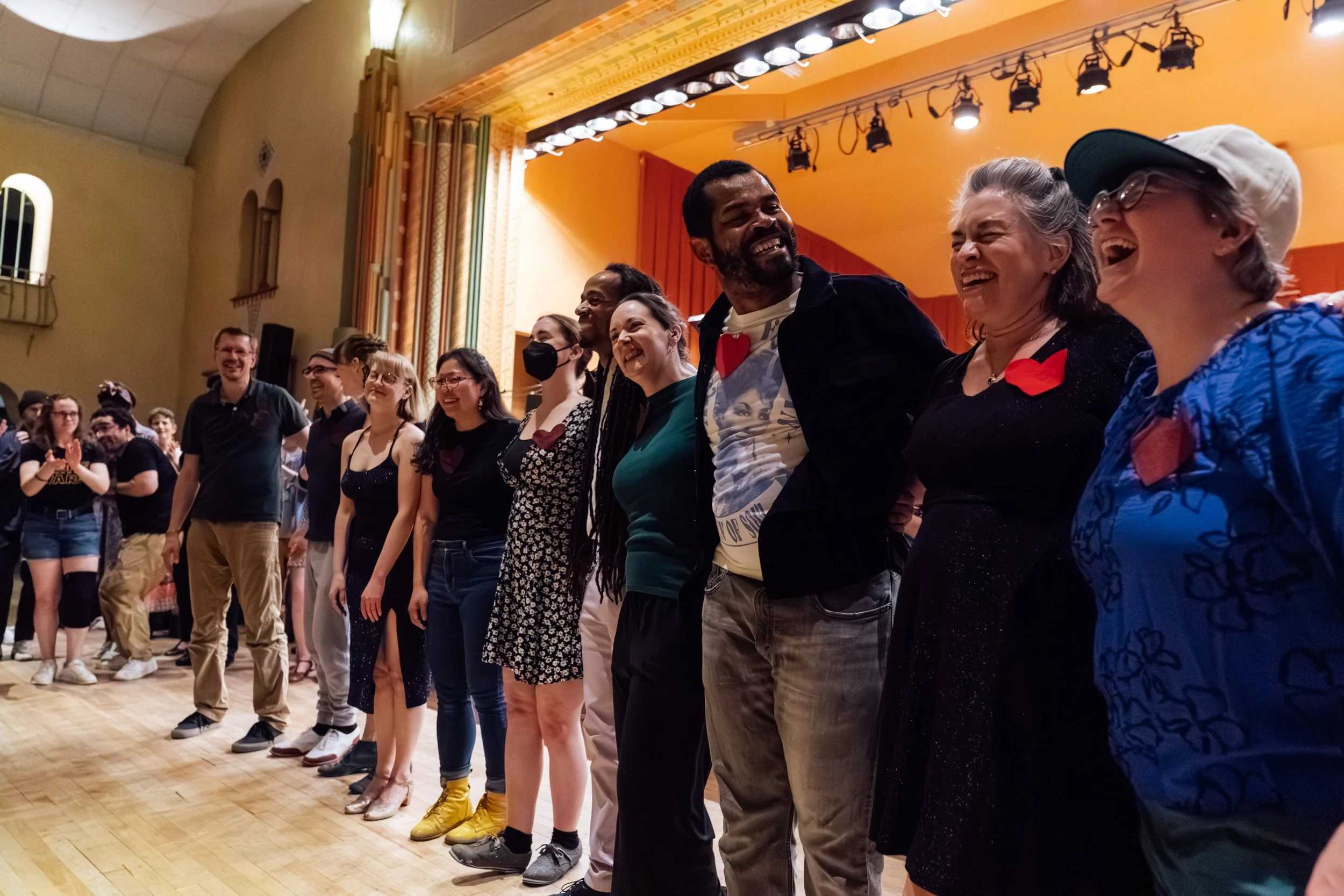
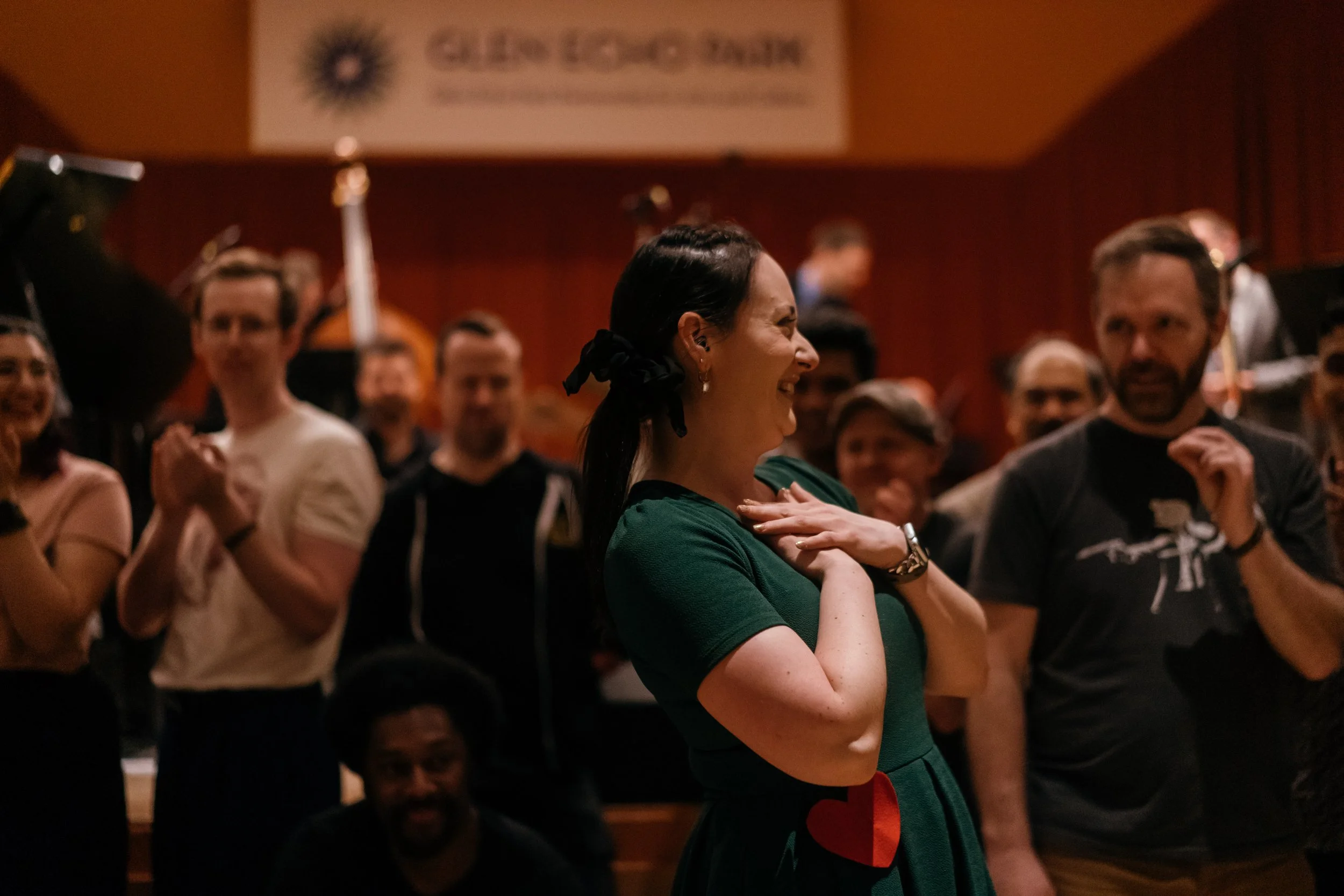
That’s kinda the curse of working behind the scenes of these sorts of events and part of the reason why many organizers and events have short cycles of success, if any at all. I’ve mentioned many times that glory is fleeting in lindy hop in relation to competitions, but it is non-existent as a dance event organizer.
This is probably another big reason why the number of lindy hop exchanges have fallen off dramatically over the years. Exchanges, assuming you stick to the social dance only model, aren’t very good money making ventures. Most dance organizers know that classes are the more reliable path to profitability. If an event can’t make money, or loses it, then the stress and criticism makes organizing it less appealing.
That makes staging a successful event one time quite an accomplishment. An all volunteer, non profit group project lasting and becoming more successful over the course of almost 25 years is nothing short of monumental. If you have your doubts, then think of the hundreds of dance events that don’t happen anymore as your proof as to why a phenomena like DCLX is an exception to the rule.
Turnover in a committee setting is predictable. The 2002 committee would be unrecognizable to the one in 2026. Fortunately DCLX has been able to create a virtuous cycle of quality attracting quality for 25 years.
I haven’t named too many individual committee members here, but if DCLX ever had a hall of fame then I would nominate Donna Barker as the first inductee. She started teaching swing dance in the 1980s and was a key member of the committee in the early years of DCLX. During one of our meetings for the first DCLX, someone asked what would we do if the event lost money. We just kinda stared at each other uncomfortably and hoped that it wouldn’t come to that. A few years later, Donna mentioned to me that she would have covered it, but she had faith that she would not have to.
Through her experience and connections, she acted as a sort of consigliere for the early committees, subtly shepherding those of us with more enthusiasm than experience through the process of building what would become one of the largest events of its kind. She went on to be on staff of The Glen Echo Park Partnership for Arts and Culture, Inc. managing the ballroom directly so as many people could enjoy it as possible. She is also the person that came up with the idea that became The Jam Cellar, which is the precursor to New Columbia Swing.
You don’t know her because she never needed the spotlight or the recognition. That’s part of the culture of a lot of people who work in DC, who often work for or are adjacent to the federal government: Do all of the work, get all of the blame, and none of the glory. The fact is that DCLX, like the Lindy Hop scene at large, is mostly held together by people who are better at managing spreadsheets than they are at transitioning between Charleston and swingouts. Luckily, DCLX organizers also have had a great taste in music.
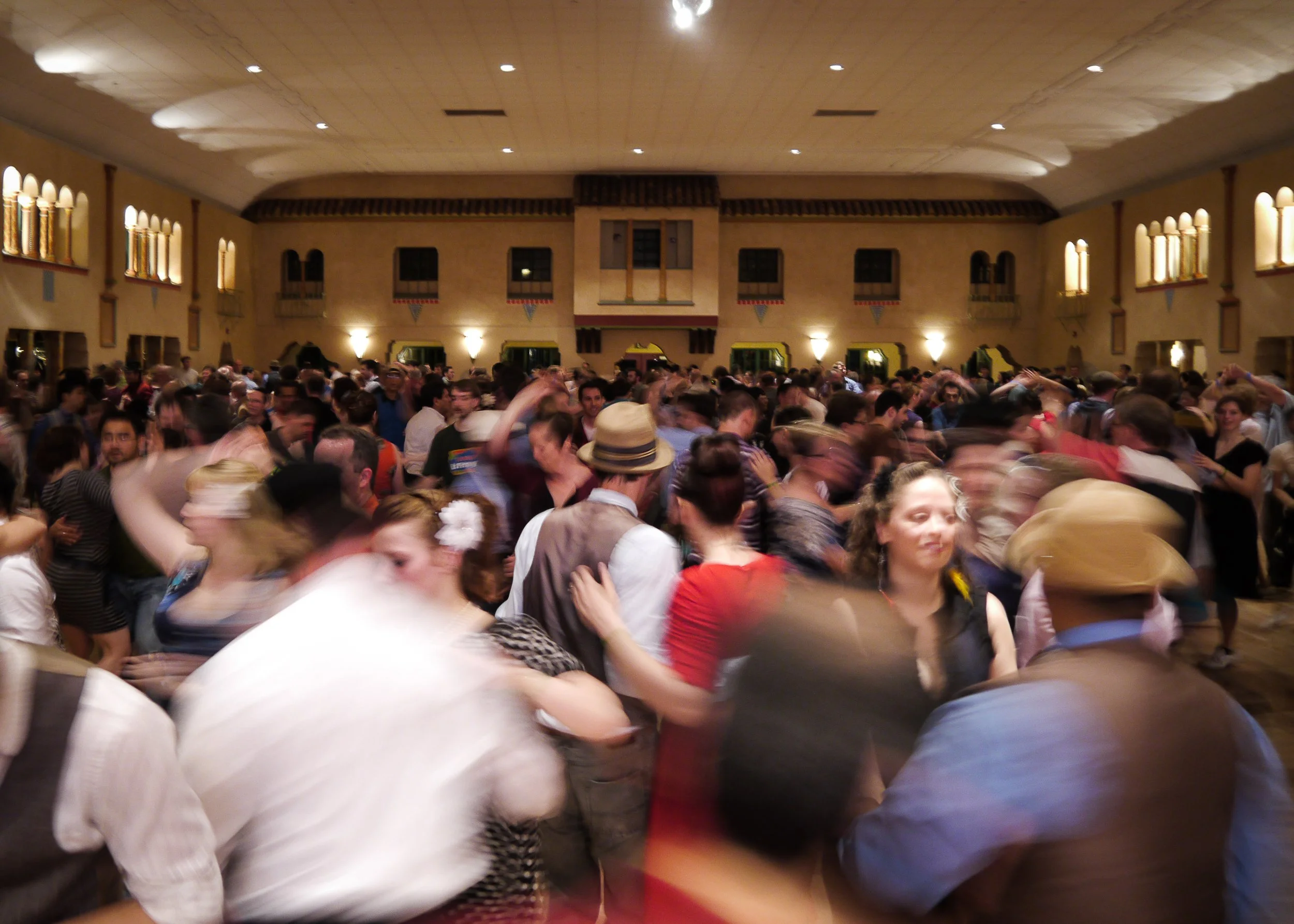
DCLX was always a bigger event compared to most. Remarkably, in the 2020s, it has ascended into a truly national level gathering that is now in its own category as a purely social dance event. It is essentially the national exchange of the United States; Coachella for lindy hoppers. There is not another event in the world that compares to it. There is also a good case for it being one of the best social dance events for blues dance and balboa. Collegiate Shag too.
DCLX has achieved all of this over 24 years by never losing sight of its reason for being as an opportunity to experience the music and dance with other people looking to do the same. Year 25 should be a banger.
Special Thanks to David Soltysik for tirelessly recording DCLX over the years. DCLX Playlists by Year
In Memoriam
André Enceneat, 1963 – 2020
Tom Cunningham, December 23, 1952 - May 9, 2026
Ernest McCarty, Jr., March 26, 1941 — December 11, 2025